
Before you even think about replacing windows, it's worth knowing that a few simple, low-cost tricks can make a surprising difference to the noise levels in your home. These are the quick wins, your first line of defence against the daily racket.
Especially if you're in a busy spot like Yorkshire or Newcastle, where traffic noise is a constant companion, starting with these basics can bring some much-needed peace without breaking the bank.
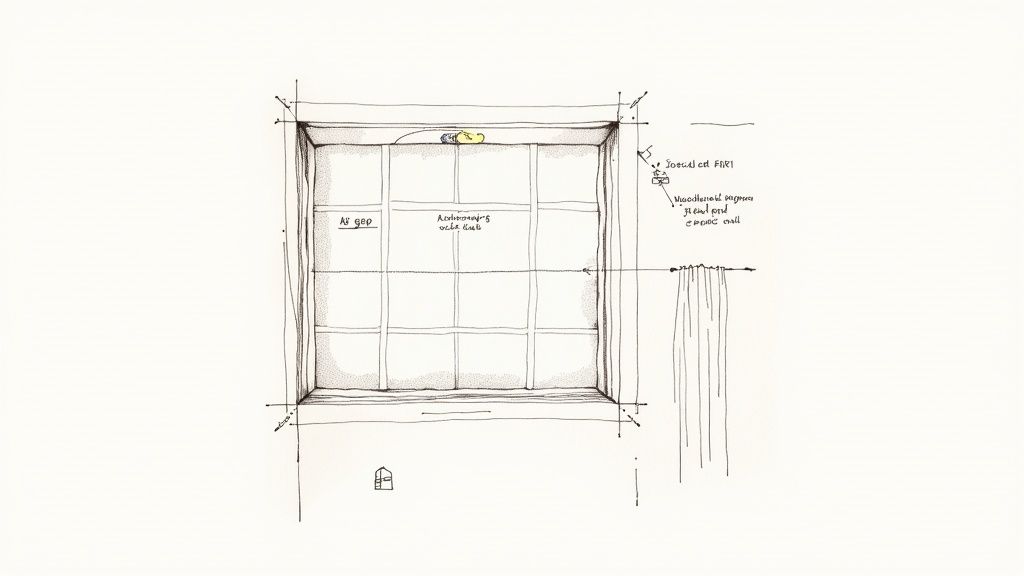
Think of sound like a draught – it will find and exploit the tiniest opening to get inside. The first, and most important, job is to hunt down and block these weak points. It’s amazing how much noise sneaks through gaps you never even knew were there.
Take a close look at your window frames, both inside and out. Over the years, natural movement and shrinkage can open up small cracks between the frame and the surrounding wall. These are direct channels for sound to pour into your rooms.
Once you’ve spotted them, the fix is pretty straightforward. Get yourself a good quality acoustic sealant or caulk and meticulously fill every gap you can find. This isn't your standard decorator's caulk; acoustic sealant is specifically designed to stay flexible and absorb sound vibrations, stopping new cracks from appearing as your house settles.
Another major weak spot is the seal between the opening part of the window (the sash) and the fixed frame. Even when your window is shut tight, a worn or flattened seal leaves a tiny, invisible gap that lets in a surprising amount of noise.
Applying new weatherstripping is an easy and incredibly effective DIY job. You can get self-adhesive foam or rubber strips that you simply cut to size and press into place. This creates a much tighter seal, which not only blocks sound but also has the welcome side effect of stopping draughts and improving your home’s energy efficiency.
Expert Tip: To find those sneaky, invisible gaps, try this old trick. On a windy day, carefully hold a lit incense stick near the edges of your closed window. Watch the smoke – wherever it flickers or gets drawn in, you’ve found a leak. This pinpoints exactly where you need to focus your sealing efforts for the biggest impact.
Never underestimate the sound-absorbing power of soft furnishings. One of the simplest and most effective ways to muffle incoming noise is to hang a set of heavy, dense curtains.
Look for curtains advertised as "blackout" or "thermal" – they’re usually made from thick, tightly woven fabrics that are great at deadening sound. For an even better result, try a double layer by adding a separate heavy liner behind the main curtain. The fabric acts like a sponge, soaking up sound waves before they can bounce around your room.
For the best effect, make sure your curtain rail extends well past the window frame on both sides. This allows the curtains to cover a bit of the wall, which helps to absorb even more noise. If you're looking to dive deeper into the world of window soundproofing, it's worth checking out a comprehensive guide to soundproofing windows for more advanced techniques.
To help you decide where to start, here’s a quick comparison of these initial DIY methods. Each offers a different balance of cost, effort, and noise reduction.
| Method | Estimated Cost | Time Required | Potential Effectiveness |
|---|---|---|---|
| Acoustic Sealant | £10 - £20 per tube | 1-2 hours per window | Moderate. Excellent for blocking high-frequency noise from gaps. |
| Weatherstripping | £5 - £15 per window | Less than 30 mins per window | Moderate. Very effective for poorly sealing windows. |
| Heavy Curtains | £50 - £200+ per window | 30-60 mins to install | Good. Dampens a wide range of frequencies, especially mid to high. |
| Combining All Three | £65 - £235+ per window | 2-4 hours per window | High. Creates a layered defence that is very effective for the cost. |
Even just tackling one of these jobs can make a noticeable difference. Combining all three, however, gives you the best possible result before you need to consider more significant upgrades like new glazing.
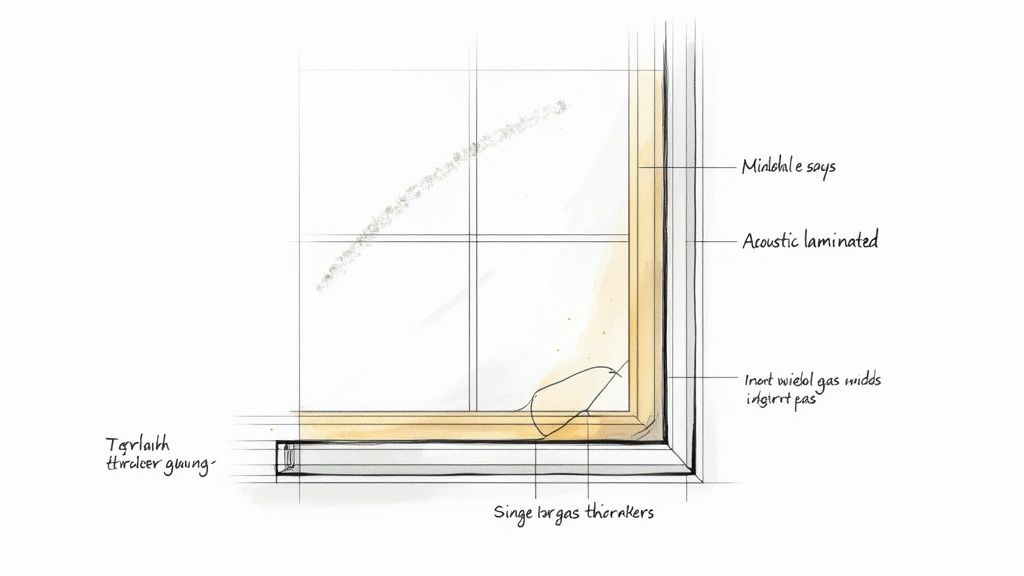
So, you've sealed the gaps and hung the thickest curtains you can find, but the noise is still getting through. When the simpler fixes have reached their limit, turning your attention to the glass itself is where you’ll see the most dramatic and lasting results.
If your home still has single glazing or even older, less effective double glazing from decades ago, upgrading is genuinely the single most powerful move you can make to reclaim your peace and quiet.
The science behind modern glazing is all about disrupting and absorbing sound waves before they ever have a chance to enter your living space. It’s a game-changer, especially for homes in busy urban areas or near noisy roads.
To really reduce noise from windows, it helps to know what makes modern glazing so clever. It’s not just about slapping another pane of glass in the frame; it's a carefully engineered system where every component plays a crucial part.
Upgrading your windows is one of the most effective and measurable ways for UK households to cut down on external noise. Well-specified double or acoustic glazing can achieve typical noise reductions of 20–40% when replacing old single-pane windows. In some conditions, this can even reach up to 50%.
When you chat with a professional installer, you can discuss these elements to find the perfect specification for your home.
For instance, if you live right next to a busy A-road, a combination of different glass thicknesses and a laminated pane will be your best defence against the constant drone. If your problem is higher-frequency noise, like chatter from a nearby pub garden, a standard modern double-glazed unit can work wonders on its own.
Investing in new glazing is a significant decision, but the impact it has on your daily life can be profound. It’s the ultimate solution for creating a quieter, more comfortable home. And it doesn't just block noise—it dramatically improves thermal efficiency, adding value to your property in more ways than one.
For homeowners looking for the definitive answer to noise pollution, a professional glass replacement is the way to go.
Ripping out and replacing entire windows isn't always practical, or even possible. For anyone living in a listed building, a conservation area, or simply looking for a less disruptive way to reduce noise from windows, secondary glazing is an incredibly effective alternative.
Far from being a simple add-on, it’s a sophisticated solution in its own right. The process involves fitting an independent, slimline window pane inside your existing window frame. This creates a substantial air cavity—typically between 100mm and 200mm—that acts as a powerful buffer, disrupting and absorbing sound waves far more effectively than the narrow gap found in standard double glazing.
The secret to its success is that large, sealed air gap. When sound waves hit the outer pane of glass, their energy has to travel through this wide pocket of still air before it can reach the inner pane. This journey significantly weakens the vibrations, leading to a much quieter home.
In fact, this method is so effective that it's often the go-to solution for properties that already have double glazing but still suffer from persistent noise. We see it used all the time in urban renewal projects, from bustling Leeds city centres to homes near the busy A-roads around Newcastle. The additional barrier tackles the low-frequency noise from traffic that even modern double glazing can struggle with.
Secondary glazing isn't a one-size-fits-all product. It comes in various designs to match your existing windows and how you need to use them.
UK installers report that adding secondary glazing to existing windows commonly reduces transmitted noise by 10–30 dB. That's a huge difference, equating to a perceived loudness reduction of 50–90% for certain frequencies. Interestingly, about 30% of these installations are for homes that already have double glazing. Discover more insights about how secondary glazing reduces noise on citysoundglazing.co.uk.
Choosing the right type is key to getting exceptional noise reduction without sacrificing the convenience or character of your home. To find out more about the options available, you can explore our detailed guide on secondary glazing solutions.
When it comes to making a long-term investment to reduce noise from windows, you need an honest look at your options. Once you’ve moved past the quick DIY fixes, the real choice is usually between secondary glazing and a full window replacement with high-performance acoustic glass.
Each route has its own clear advantages, and the best one for you will hinge on your property, your budget, and the specific kind of noise that’s driving you mad.
It often boils down to a few key questions. Are you in a listed building? How severe is the noise? What’s a realistic budget? Answering these will quickly point you towards the most practical and effective solution for your home.
To make sense of it all, let’s put the most common solutions side-by-side. The table below breaks down the key differences in cost, effectiveness, and where each one truly shines, helping you see which path aligns with your goals.
| Solution | Typical Cost Range (£) | Average Noise Reduction (dB) | Best For |
|---|---|---|---|
| Acoustic Curtains | £50 - £200+ | 3 - 5 dB | Renters or those on a tight budget needing a minor reduction in high-frequency noise. |
| Secondary Glazing | £300 - £700 per window | 10 - 30 dB | Listed buildings, conservation areas, or homes with decent existing windows needing a major acoustic boost. |
| Acoustic Glass Replacement | £500 - £1,200+ per window | 15 - 35+ dB | Properties needing the absolute maximum noise reduction, especially for low-frequency traffic rumble. |
As you can see, while curtains might take the edge off, the real battle for peace and quiet is fought between secondary glazing and a full replacement. Your choice will almost always depend on your home’s specific circumstances.
Let’s bring this to life with a couple of examples we see all the time.
Picture a family living in a modern home right next to a busy A-road in Yorkshire. Their main problem is the constant, low-frequency rumble from lorries. For specialists in Glass Balustrades Yorkshire, this scenario is common. A full window replacement using acoustic laminated glass would be the clear winner. Its specialised interlayer is engineered to specifically target and dampen those exact low-frequency vibrations that other solutions struggle with.
Now, contrast that with a homeowner in a beautiful Grade II listed flat in a historic Newcastle conservation area. Their original timber sash windows are a core part of the building's character and are protected, but they do very little to block out the city centre noise. For them, secondary glazing is the perfect solution. For services covering Glass Balustrades Newcastle, this is a frequent challenge. It delivers a massive reduction in noise without altering the building’s external appearance, respecting planning restrictions while bringing modern acoustic comfort indoors.
This decision tree gives a good visual of how factors like your building's status can guide your choice.
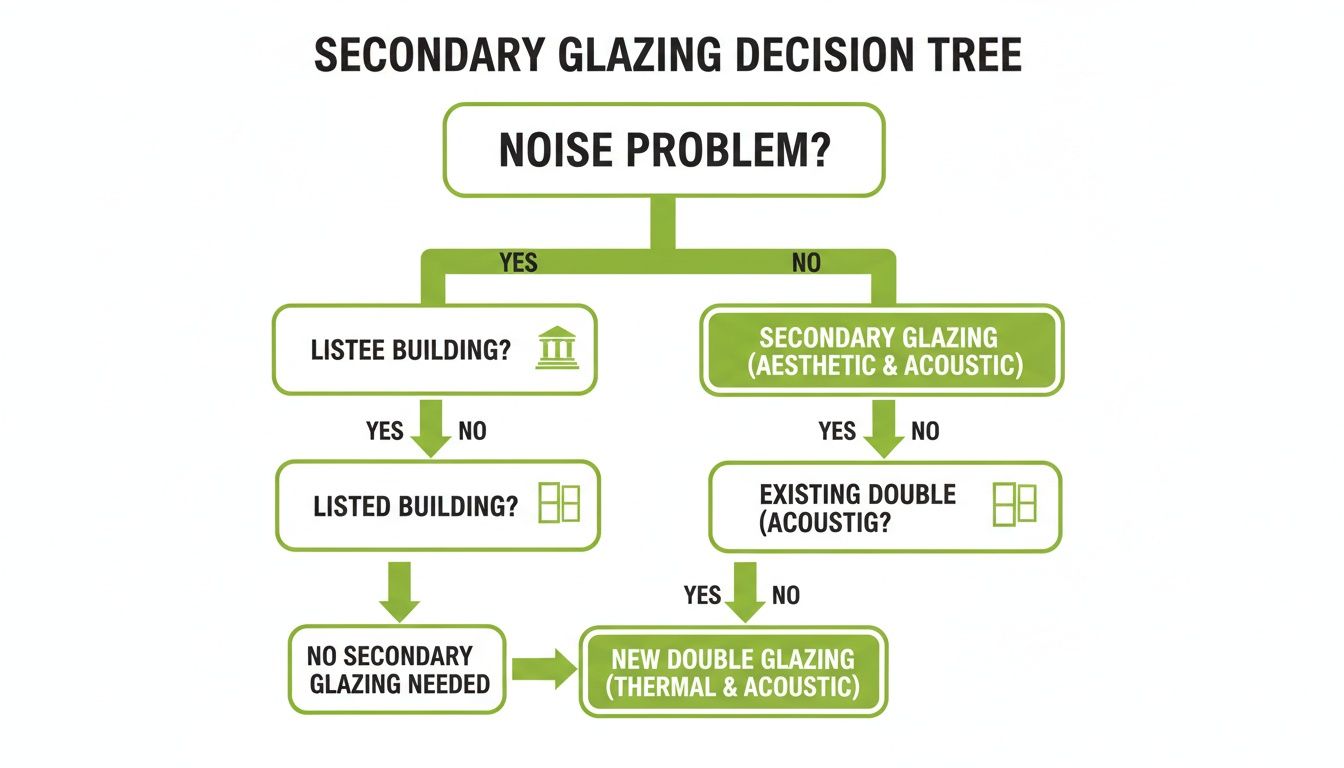
The key takeaway here is that secondary glazing is often the go-to, high-performance option for properties where the original windows simply cannot be changed.
Ultimately, the best investment is the one that solves your specific noise problem effectively and suits your property's character. Whether you are considering a complete upgrade or a sensitive addition, it’s worth exploring the full range of high-quality windows and composite doors available to find the perfect fit.
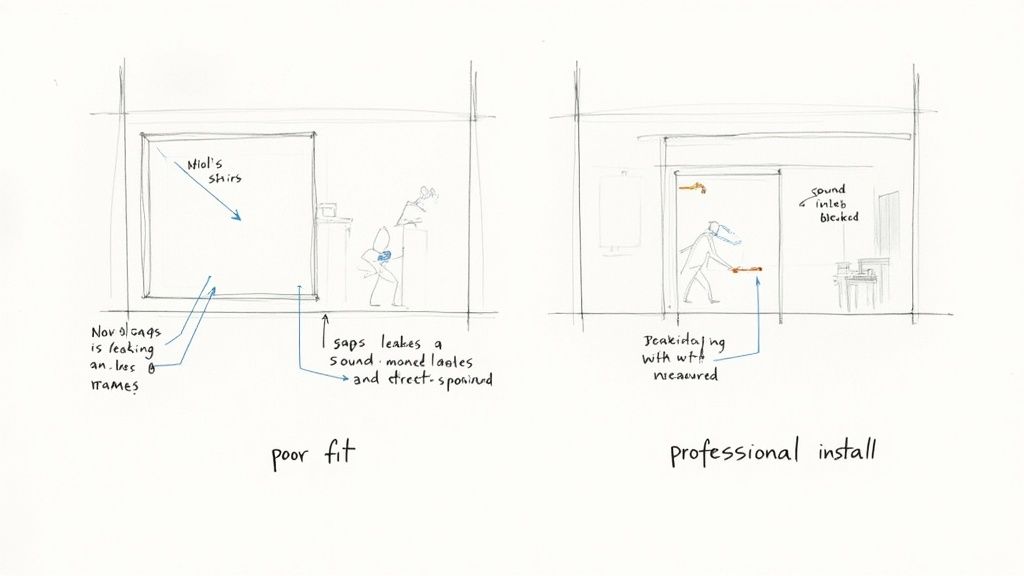
You can spend a small fortune on the most advanced acoustic glass on the market, but if it’s installed poorly, you’ve essentially thrown your money away. The performance of any specialist glazing is completely at the mercy of the installation quality; even a tiny gap or an imperfect seal creates a weak point that undermines the entire system.
Sound behaves a lot like water—it will always find the path of least resistance. A crack no wider than a millimetre between the window frame and the wall can let a surprising amount of noise leak straight through, making your high-spec glass almost redundant. This is why the installer's expertise is every bit as crucial as the product itself.
When you invest in advanced glazing or secondary windows, the difference between a peaceful home and a frustratingly half-finished job often comes down to this final step. For homeowners in noisy areas of Yorkshire or Newcastle, getting the installation right is everything. For complete peace of mind, it’s always worth consulting with professional window solution installation services.
A professional fitting isn’t just about getting the window level and square. It’s a meticulous process focused on creating a completely airtight seal around the entire unit.
We’ve seen some common—and costly—mistakes over the years:
These seemingly small errors can completely cancel out the benefits of your new glazing. They create what’s known as ‘flanking transmission’—where sound simply bypasses the glass and travels through the surrounding structure instead.
Fortunately, the big push for greater energy efficiency in UK homes has had a positive knock-on effect on acoustic performance. National policy and ever-stricter building standards are driving the adoption of higher-performance windows across the board.
Energy retrofit schemes and regulations have made double and triple glazing the norm, which naturally improves sound insulation. You can see how these standards have evolved by exploring UK building policy shifts on greenmatch.co.uk.
A-rated windows, prized for their thermal efficiency, must be flawlessly sealed to prevent heat loss. This same meticulous, airtight installation is exactly what’s needed to effectively reduce noise from windows.
When you’re vetting installers, be sure to ask about their experience with high-performance windows and what methods they use to guarantee a perfect acoustic seal. A reputable company understands that real noise reduction is a combination of a superior product and expert craftsmanship. They aren’t just fitting a window; they’re installing a complete soundproofing system.
When you start looking into how to reduce noise from your windows, a lot of questions can pop up. It’s a bit of a technical subject, after all. To give you some clarity and help you feel confident about the next steps, we’ve answered some of the most common queries we hear from homeowners across Yorkshire and the North.
This is probably the biggest misconception we come across, and the short answer is: not necessarily. While triple glazing is an absolute champion for thermal insulation, keeping your home warm and cosy, specialised acoustic double glazing often wins hands-down for pure sound reduction.
So, why is that? It’s all in the engineering.
Acoustic glass is designed with a special laminated interlayer (a thin sheet of PVB plastic) sandwiched between the glass panes. This interlayer is the key – it’s specifically designed to absorb and dampen sound vibrations before they can travel through the window. It’s far more effective at this than just adding a third pane of glass.
The best results for blocking sound come from using panes of varied thickness and leaving a decent air gap between them. A well-designed acoustic double-glazed unit can be far superior at blocking out that low-rumble traffic noise than a standard triple-glazed one. The only way to know for sure is to check the product's Sound Reduction Index (Rw) rating.
The frame plays a really important supporting role. Traditionally, materials like uPVC and timber have been the go-to choices for sound insulation simply because their natural density and composition are better at deadening vibrations compared to standard aluminium.
However, don't write off aluminium just yet. Modern aluminium frames have come on leaps and bounds, now often featuring a 'thermal break'. This is a polyamide barrier that sits between the inner and outer parts of the frame, and it makes a huge difference to both heat loss and noise transfer.
Ultimately, regardless of the material you choose, the most crucial factor is an airtight, professionally installed frame. If there are any gaps, however tiny, sound will find a way through.
Key Takeaway: While the frame material certainly matters, it's the quality of the window's construction and, most importantly, the perfection of the installation that truly make or break the acoustic success of the project.
Yes, absolutely. If a full-on replacement isn't on the cards right now—perhaps due to budget, or because you live in a listed building—secondary glazing is a fantastic and highly effective alternative.
This involves fitting a second, slimline window on the inside of your existing one. What this does is create a very large air gap, typically between 100-200mm, which acts as a formidable barrier against sound waves. It’s the perfect solution for properties in conservation areas where the original windows have to be kept.
Of course, there are other things you can do too. Applying acoustic sealant around the frames and even just hanging thick, heavy curtains can provide a noticeable improvement for a much smaller investment.
At Glass Tech, our 20 years of experience means we've seen it all. We can give you expert, honest advice tailored to your home and your noise problem, whether that’s secondary glazing or a full replacement. If you're looking for professional glazing services across Yorkshire and the North, we're here to help you get the peace and quiet you deserve. Find out more at https://www.hgwsolutions.co.uk.

A professional team of experts providing glass and glazing solutions covering the whole of Yorkshire & more...
Whether it's Leeds, York, North Yorkshire, Birmingham, Hull, Liverpool, Machester, Newcastle or Nottingham, get in touch to find out how we can help you with your bespoke glass project.