
Seeing your windows fogged up is a common sight, especially on a chilly morning, but what does it actually mean? It’s usually just condensation – the result of warm, moist air inside your house meeting the cold surface of the glass. Think of it like the mist that forms on a cold drink on a summer's day.
The key to fixing it is knowing where the fog is. Is it inside, outside, or stubbornly stuck between the panes?
Before you can tackle the problem, you need to diagnose it properly. Condensation on windows isn't a one-size-fits-all issue; where the moisture gathers tells you everything you need to know about what's causing it and, more importantly, how to sort it out.
This simple chart is a great starting point for figuring out what's going on with your windows.
As you can see, the location of the fog points you directly to the root cause, helping you decide whether you just need to crack a window or if it's time to call in a professional.
To make it even clearer, here’s a quick table to help you diagnose the issue at a glance.
| Location of Condensation | Likely Cause | First Action to Take |
|---|---|---|
| Inside the room (you can wipe it away) | High indoor humidity | Improve ventilation and reduce moisture sources |
| Between the glass panes (you can't wipe it) | Failed double-glazing seal | Contact a professional glazier for a repair or replacement |
| Outside the window (wipes away from outside) | High outdoor humidity and well-insulated windows | Do nothing – it's a sign your windows are working well |
This table serves as a handy reference, but let's dive into what each type of condensation really means for your home.
If you can wipe the condensation away from inside your room, the culprit is almost always high humidity within your home. Everyday life – cooking a Sunday roast, having a shower, drying clothes on a radiator, even just breathing – releases moisture into the air.
When this warm, damp air hits a cold windowpane, it cools down and turns back into water droplets. This is especially common in homes across the north of the UK during the colder, damper months.
This is the one you can’t wipe away, no matter how hard you try. If you're seeing fog, streaks, or droplets trapped between the two layers of glass, it's a clear sign the seal on your double-glazing unit has failed.
When that hermetic seal breaks, the insulating argon gas escapes, and moist air from outside gets sucked in. This not only clouds up your view permanently but also means your window is no longer providing effective insulation. If you're facing this, exploring modern, high-performance windows and composite doors is often the best long-term solution.
Ever woken up to find the outside of your windows covered in dew? It might look like a problem, but it’s actually a good sign. This means your double glazing is doing its job brilliantly.
It's keeping the warmth inside your home and preventing it from reaching the outer pane of glass. The outer pane stays cold, and when the humid morning air hits it, dew forms – just like on grass.
Condensation is the most common form of dampness in UK homes. It’s not just an aesthetic issue; it’s a significant indicator of your home's health, directly linked to ventilation and the quality of your glazing.
This problem is more widespread than you might think. The official government housing quality report found serious condensation in 3% of English homes. However, some industry estimates suggest condensation-related damp affects as many as 20% of UK properties.
The survey also drives home the link between windows and damp, showing that homes with less than 100% double glazing are about twice as likely to have damp problems.
Improving your home’s ventilation is the single most effective way to stop windows from fogging up, and it all starts with a few simple daily habits. It’s not about just cracking a window open at random; creating a consistent routine makes a huge difference in managing indoor moisture levels. It’s about being proactive, not reactive.
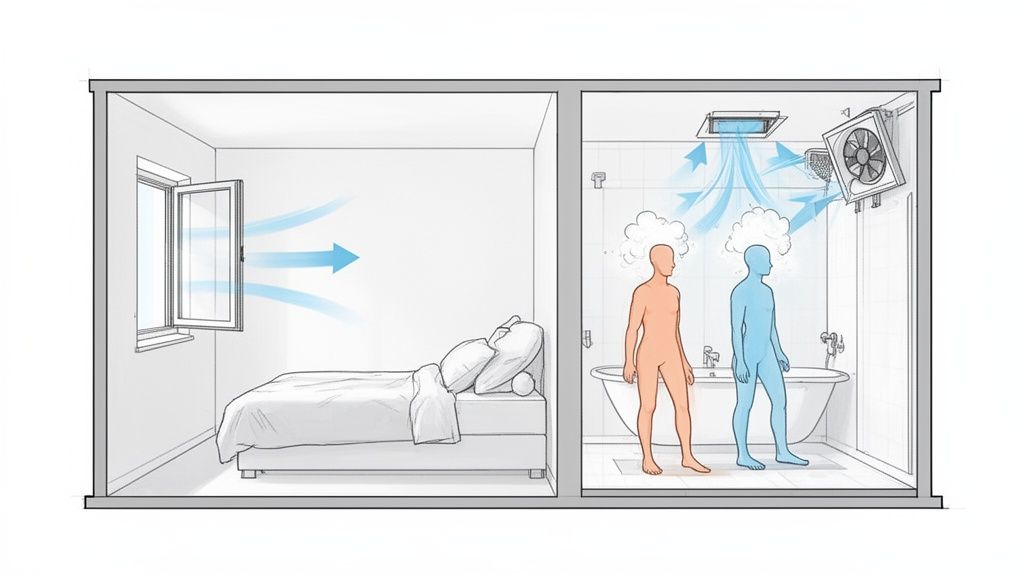
One of the best habits to get into is ‘purging’ your home of stale, damp air first thing in the morning. Just open your windows wide for 10-15 minutes. This is especially important in bedrooms, where moisture from our breath builds up overnight as we sleep.
This quick blast of fresh air swaps out the humid indoor air for drier outdoor air, instantly reducing the chance of condensation forming as the day warms up.
It’s amazing how many homeowners completely forget about the small trickle vents at the top of their modern window frames. These are specifically designed to provide constant, gentle airflow without you having to throw the window wide open. Keeping them open is an easy, zero-effort way to maintain background ventilation all day long.
If you’re not sure how they work, have a closer look. Most have a simple switch you can flick open or closed. It's a tiny change that genuinely contributes to a much healthier, less humid home.
Extractor fans in your kitchen and bathroom are your frontline defence against the biggest culprits of moisture. Their whole job is to pull steam and humid air directly out of the room before it has a chance to drift around and settle on cooler surfaces like your windows.
Make it a non-negotiable rule: switch the fan on every single time you cook, boil the kettle, or take a shower or bath. You can literally see them working as steam is drawn away, preventing that familiar foggy mirror and, more importantly, protecting your windows.
For many of us, particularly in the North of England where damp weather is part of life, consistent ventilation isn't just a tip—it's an essential part of looking after your home. These simple, targeted habits are proven to cut down on condensation.
It's not just anecdotal, either. UK practical guidance and industry reports confirm that even brief, daily ventilation periods are highly effective. Evidence from the English Housing Survey backs this up, showing that homes with poor ventilation were overwhelmingly more likely to report damp problems. You can explore the data showing how simple habits combat damp in UK homes. This just reinforces that even minor tweaks to your daily routine can have a major impact. Whether you're in the market for modern Glass Balustrades in Newcastle or have traditional sashes, airflow is always the key.
While getting the air moving is a huge part of the battle against condensation, tackling the problem at its source is an equally powerful move. Think about it: many of our daily activities pump a surprising amount of water vapour into the air, quietly pushing up the humidity inside and giving you those frustrating foggy windows.
By spotting these hidden moisture sources, you can make a few small but surprisingly effective changes.
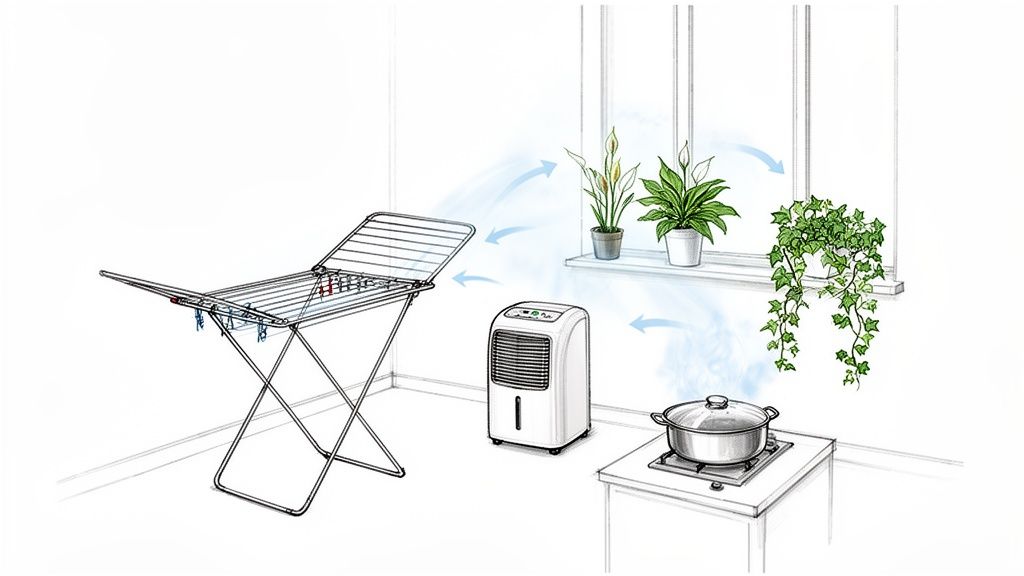
Drying laundry indoors is probably the biggest offender. A single load of washing can release up to two litres of water into the air – creating the absolute perfect conditions for condensation to form.
Of course, drying outside isn't always an option, especially during a damp northern winter. The next best thing is to contain the moisture. Pop your clothes airer in a smaller room, shut the door, and if you have one, run a dehumidifier to capture that excess water directly from the air.
The kitchen is another major hub for moisture. Boiling pasta or simmering a stew can quickly steam up the whole room, and that steam will inevitably make a beeline for your cold window panes.
A simple yet brilliant habit to get into is always cooking with lids on your pots and pans. This tiny action traps most of the steam right where it belongs, drastically cutting down the amount of moisture that escapes into your home.
Even your choice of houseplants can play a part. While all plants release a bit of moisture, some are fantastic at absorbing humidity from the air around them.
Adding a few of these around the house can subtly contribute to a drier indoor climate, backing up your other efforts.
Tackling the root cause of window fogging means actively reducing moisture. Discover more about effective strategies to reduce humidity in your home to create a healthier, drier living space.
Finally, have a quick think about where your large furniture is placed. Pushing a sofa or wardrobe right up against an external wall is a classic mistake. It traps air, creating a cold spot that becomes a magnet for condensation.
Simply pulling furniture just a few inches away from the wall allows air to circulate freely, keeping that surface warmer and much drier. This is a particularly useful tip for homeowners across the north of the UK, where older properties with solid walls can be more prone to developing these cold spots. By making these mindful adjustments, you can systematically cut down the hidden moisture in your home and take another big step towards getting rid of foggy windows for good.
So, you’ve done everything right. You’ve aired out the rooms, tackled the sources of moisture, and really made an effort to improve ventilation, but the windows are still foggy. This is a classic sign that the problem isn't about humidity in your home anymore—it’s the window unit itself.
While the condensation you can wipe away is manageable, there’s one type of fog that no amount of ventilation or dehumidifying will ever touch.
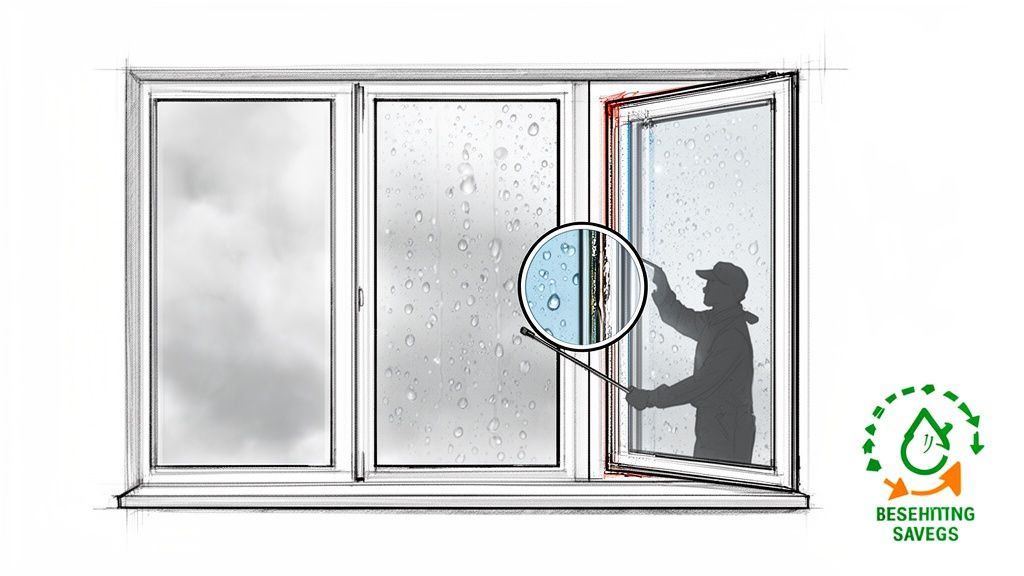
The dead giveaway? Condensation trapped between the two panes of glass. You’ll see it as a misty, sometimes streaky haze that you simply can't clear, no matter how much you clean the inside or outside surfaces. In the trade, we call this a ‘blown’ or ‘failed’ double-glazing unit.
A double-glazed window works its magic because of the perfectly airtight, hermetic seal running around the edge of the two panes. This seal traps a layer of inert gas (usually argon) in the gap, and it's this gas that provides the insulation. When that seal gives way—whether through age, accidental damage, or even a flaw from when it was made—the entire system breaks down.
The argon gas escapes, and ordinary, moisture-filled air gets sucked into the cavity. As the temperature outside drops, this trapped moisture condenses on the cold inner surfaces of the glass, creating that permanent fog you can't get rid of.
A blown seal isn't just an eyesore. It’s a clear signal that your window has lost its thermal performance. It's no longer insulating properly, meaning you’re losing heat straight through the glass and paying more to keep your home warm.
This is an incredibly common issue for homeowners right across the UK. Once that seal has failed, the only real, long-term solution is to sort out the glass unit.
Here’s the good news. You almost never need to rip out and replace the entire window frame. This is a huge misconception that often leads people to spend far more than they need to. If your uPVC, timber, or aluminium frames are in good nick, there’s a much smarter, more efficient option.
A professional glazier can simply replace the sealed glass unit itself. It's a neat and tidy process:
This approach is miles more cost-effective and a whole lot quicker than a full window replacement. For homeowners across the north dealing with this, it’s a straightforward and common fix. If you're seeing that frustrating fog between the panes and want to get your clear views and energy efficiency back, professional glass replacement services are designed for this exact problem, saving you the cost and hassle of installing entirely new frames. It’s the best way to get things back on track.
If you’re fed up with constantly wiping down your windows and want a permanent end to the problem, it’s time to look beyond temporary fixes. Upgrading your glazing is the single most effective long-term solution. While managing humidity and ventilation helps day-to-day, a proper investment in your windows tackles the root cause head-on: the cold surface of the glass.
Modern double, or even triple, glazed units are a world away from older designs. They are engineered to an incredibly high standard, reflected in their low U-values—a measure of how well they prevent heat from escaping. The lower the U-value, the better the insulation, which means the inner pane of glass stays much warmer.
It’s actually a very simple principle. When the inside surface of the glass doesn't get cold, the moisture in your home’s air has nowhere to condense. Problem solved.
When you're looking at new windows, keep an eye out for units that feature warm-edge spacer bars. These are the strips that sit between the panes of glass. Unlike old-school aluminium spacers that act like a thermal bridge, conducting cold right to the edge of the glass, these are made from an insulating composite material. They dramatically reduce heat loss and stop those frustrating damp patches from ever forming around the perimeter.
This isn’t just about solving condensation. It’s an investment that boosts your home’s overall energy efficiency, leading to lower heating bills and a noticeably more comfortable home all year round. It’s a solution that genuinely pays for itself over time.
But what if a full window replacement isn't on the cards? This is a really common issue, especially for homeowners in listed buildings or designated conservation areas where strict rules are in place to protect the property's original character.
In these situations, secondary glazing is a brilliant and highly effective alternative.
This involves fitting a discreet, slimline window pane to the inside of your existing window. Doing this creates that crucial insulating air gap—just like double glazing—which keeps the original glass pane warmer and provides a powerful barrier against condensation. It's well worth exploring the benefits of secondary glazing for your property, as it also delivers exceptional thermal and acoustic insulation without altering your home's exterior at all.
While it's a larger initial investment, upgrading your windows or installing secondary glazing is the most permanent way to stop windows from fogging up. It’s a proactive measure that enhances your home’s value, comfort, and energy performance for years to come.
These kinds of solutions are particularly valuable for homes right across the North of the UK, from Harrogate to Newcastle, where our damp and cold winters make condensation a relentless battle. For those really troublesome spots with stubbornly high humidity, like basements or utility rooms, investing in a dehumidifier can provide that extra bit of backup.
When you’re staring at misty, damp windows day after day, it’s natural to have a few questions. As specialists, we hear the same queries from homeowners all the time, so let's clear the air on some of the most common ones.
Yes, absolutely. A dehumidifier is one of the most effective tools you can have in your corner when fighting condensation. It literally pulls moisture out of the air, which means there’s less water vapour floating around looking for a cold surface—like your window—to condense on. They work wonders in rooms that always feel a bit clammy or where you regularly dry clothes indoors.
Just think of it as part of a team effort. A dehumidifier is a powerhouse, but it works best alongside good old-fashioned ventilation. Keep cracking a window open daily and always use your extractor fans when cooking or showering. This one-two punch is a brilliant way how to stop windows from fogging up.
Not only is it normal, but it's also a fantastic sign! If you wake up on a cool morning and see dew on the outside of your double glazing, it means your windows are performing brilliantly.
This happens because the outer pane of glass is so well insulated from the warmth inside your home that it gets cold enough for moisture from the outside air to condense on it. It’s clear proof your windows are highly energy-efficient and doing their job of keeping your precious heat locked in. Don’t worry about it—the fog will burn off on its own as the sun comes up.
We see these DIY repair kits advertised, and our professional advice is to steer well clear. While they claim to offer a quick fix by drilling a hole to let the moisture out, they can’t solve the fundamental problem. The airtight seal is broken, and the insulating argon gas has already escaped.
Without that factory seal, moisture will inevitably get back in, and the window's thermal performance is gone for good. The only proper, long-term solution is to replace the sealed glass unit itself. It’s a job for a professional glazier, and our teams—who fit everything from windows to Glass Balustrades in Yorkshire—can swap out the failed unit quickly, restoring your window's clarity and efficiency.
It all comes down to a perfect storm of cold surfaces and trapped moisture. During winter, the temperature difference between your cosy home and the freezing outdoors is at its greatest, making your window panes the coldest surfaces in the room.
At the same time, we seal our homes up tight to keep the heat in. This means all the moisture we create from breathing, cooking, and showering has nowhere to go. This warm, humid indoor air hits the cold glass and—voilà—you get condensation. It’s far less of a problem in summer because the glass is warmer and we’re more likely to have windows and doors open.
At Glass Tech, we’re here to provide expert advice and professional services for any window issue, from a simple repair to a full replacement. For a lasting solution that enhances your home, visit our website to explore your options.

A professional team of experts providing glass and glazing solutions covering the whole of Yorkshire & more...
Whether it's Leeds, York, North Yorkshire, Birmingham, Hull, Liverpool, Machester, Newcastle or Nottingham, get in touch to find out how we can help you with your bespoke glass project.