
When it comes to sorting out draughty windows and blocking out street noise, the conversation nearly always lands on two options: secondary glazing or double glazing. It’s a common dilemma for homeowners all over Yorkshire, whether you're in a stone-built terrace in Harrogate or a semi-detached in Sheffield.
Both will make your home warmer and quieter, but they get there in completely different ways. You're either adding to what you have, or you're ripping out and starting fresh.
So, what’s the actual difference?
Secondary glazing is all about working with your existing windows. We install a slim, separate pane of glass on the inside of your current window frame. This creates a pocket of air between the old and new panes, which acts as an excellent insulator for both heat and sound. Think of it as an internal storm window—it gives you a massive performance boost with minimal fuss and leaves the outside of your house completely untouched.
Double glazing, on the other hand, is a full replacement. We take out the entire old window—the glass, the frame, everything. In its place, we fit a brand new, factory-sealed unit made of two panes of glass with a pocket of air or inert gas (like argon) sealed between them. It’s a more involved job, but it’s a total upgrade of the entire window system.
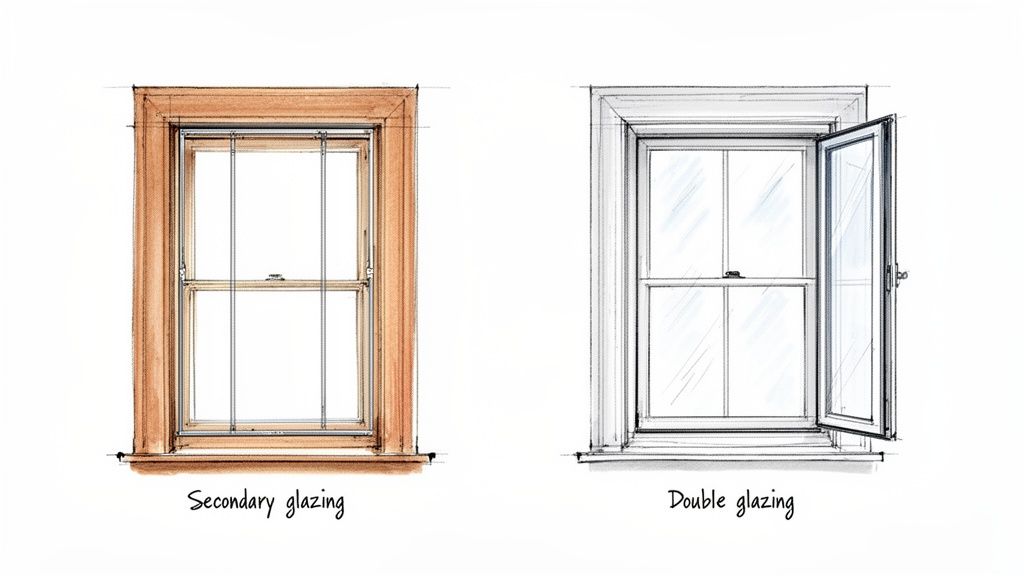
To put it simply, here’s how the two stack up at first glance:
| Feature | Secondary Glazing | Double Glazing |
|---|---|---|
| Installation | An additional pane is fitted inside your existing windows. | The entire window unit is removed and replaced. |
| Property Type | The go-to solution for listed buildings & conservation areas. | A great fit for most properties and modern renovations. |
| Disruption | Very little. It's clean, quick, and often done in a day. | A bigger job involving removal, fitting, and finishing. |
| Aesthetics | Preserves the original character and look of your home. | The entire window appearance changes to a modern unit. |
Getting your head around these core differences is the first step. The right choice really comes down to your property’s age, your budget, and what you’re hoping to achieve.
While double glazing has become standard for new builds, many homeowners looking for a top-to-bottom upgrade explore the latest high-performance windows and composite doors for a complete and cohesive solution. In this guide, we'll dive deeper into the nitty-gritty of each option to help you make the best call for your home.
When you’re weighing up secondary glazing versus double glazing, it helps to start with the big picture. Both will get you to a similar destination—a warmer, quieter home—but they take completely different roads to get there. Understanding this fundamental difference is the key to making the right choice for your property.
Think of secondary glazing as a sensitive, additive upgrade. We fit a slim, second window pane inside your existing window. This creates a pocket of air between the old glass and the new, forming a seriously effective barrier against heat loss and unwelcome noise. It works with what you already have.
Double glazing, on the other hand, is a complete replacement. Your entire original window, frame and all, is taken out. In its place goes a brand-new, factory-sealed unit with two panes of glass separated by a vacuum or an insulating gas like argon. It’s a total overhaul.
Ultimately, the decision often boils down to preservation versus modernisation. If you own a beautiful period property in Harrogate with original sash windows, the last thing you want to do is rip them out. Secondary glazing offers a way to get modern performance without touching the building's historic character.
Contrast that with a full renovation project on a more modern home in Leeds. Here, replacing tired, old frames with a fresh, low-maintenance, and highly efficient double-glazed system is the most logical step.
The key takeaway is this: secondary glazing enhances your existing windows, while double glazing replaces them entirely. This single difference influences everything from cost and installation disruption to planning permission and aesthetics.
To make that initial decision a bit clearer, here’s a straightforward breakdown of how the two options stack up. For homeowners in Yorkshire and the North East, where keeping the heat in is a real priority, this table can help you see at a glance which route might be best.
| Feature | Secondary Glazing | Double Glazing |
|---|---|---|
| Installation Method | A second pane of glass is fitted internally to the existing window frame. | The entire existing window unit (frame and glass) is removed and replaced. |
| Property Suitability | Excellent for listed buildings, conservation areas, and period properties. | Suitable for most modern properties and extensive renovations. |
| Aesthetic Impact | Preserves the original external appearance of your home's windows. | Changes the window's entire look, offering a modern, clean aesthetic. |
| Installation Disruption | Minimal and fast; often completed in less than a day with little mess. | More disruptive; involves removing old frames, fitting new ones, and re-finishing. |
| Material Flexibility | Can be fitted to almost any existing window material (wood, uPVC, metal). | Requires a complete new frame, typically in uPVC, aluminium, or timber. |
This summary really highlights the fundamental trade-offs. Secondary glazing is all about preservation and causing minimal fuss, while double glazing is a comprehensive, modern replacement. With these basics covered, we can now get into the nitty-gritty of how each performs on thermal efficiency and noise reduction.
When you’re weighing up secondary glazing against double glazing, the main driver is almost always the same: a warmer home and lower energy bills. Both are fantastic at creating a thermal barrier, but they get there in slightly different ways. For anyone from Manchester to Hull wanting to trap precious heat, understanding the difference is key.
The magic number here is the U-value.
In simple terms, a U-value tells you how easily heat passes through a material. The lower the U-value, the better the insulator. Your typical single-pane window might have a U-value of around 5.0 W/m²K—which is precisely why rooms with them feel so arctic in winter.
Modern double glazing is a massive improvement, typically landing with a U-value between 1.4 and 2.0 W/m²K. This is achieved by sealing two panes of glass together, usually with an inert gas like argon trapped in the gap, which dramatically slows down heat transfer.
Secondary glazing, on the other hand, achieves a similarly impressive U-value of around 1.8 W/m²K. How? By fitting a second pane of glass inside your existing window, you create a large, sealed air gap. This gap is the secret sauce; it acts as a powerful insulating layer that stops warmth from making a swift exit.
Both options offer a huge leap in performance over single glazing. In fact, double glazing has transformed UK homes since it became mandatory for new builds after 2002, with over 93% of households now equipped. This shift has slashed heating bills, with some studies showing double-glazed windows can cut heat loss by up to 75% compared to single glazing.
That's a game-changer for Yorkshire homeowners facing rising energy costs. But for period properties in Leeds, York, and Harrogate, secondary glazing presents a compelling alternative. It can achieve similar thermal performance while crucially preserving the original, often beautiful, window frames.
The numbers are one thing, but what does this actually mean for you day-to-day? It means you can turn the thermostat down. Both secondary and double glazing can cut heat loss through your windows by more than half, leading to real, noticeable savings on your annual energy bills.
This visual breakdown shows the core differences in how they're installed and what they're made of.
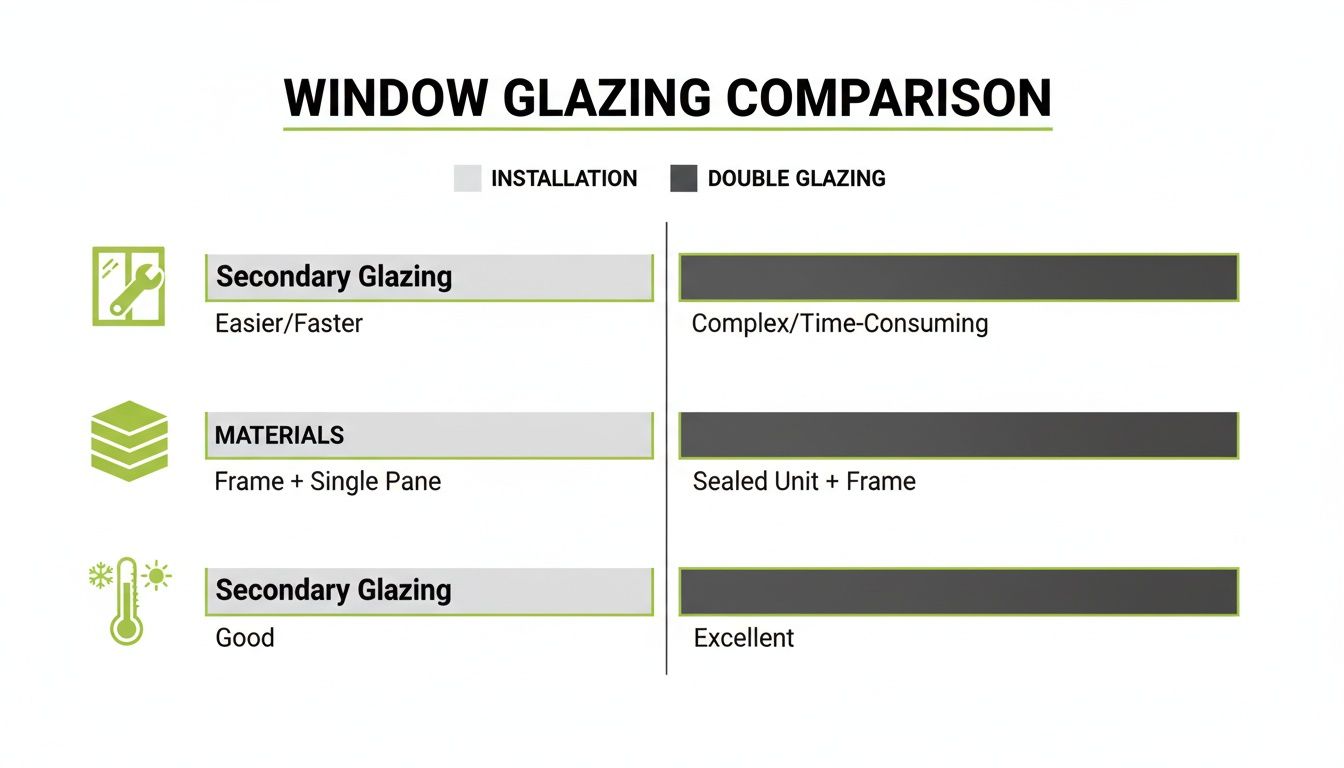
As you can see, double glazing is a full replacement job. Secondary glazing is a clever, additive solution that enhances what you already have to achieve excellent insulation.
For homeowners in Newcastle battling those biting coastal winds, or those in older Sheffield properties, this improvement is about more than just money. It’s about comfort. It means a home free from cold spots and those persistent draughts that snake in around your windows. You can learn more about our tailored secondary glazing solutions and see how they fit your property.
Another classic British problem, especially in winter, is condensation. That frustrating film of moisture on your windows is caused by warm, damp air inside hitting the cold surface of the glass.
Both glazing options tackle this issue head-on. By creating an inner pane of glass that stays much closer to room temperature, they stop the conditions that allow condensation to form in the first place.
The result? Drier, healthier windows that are far less prone to dampness and the potential for mould. This protects not just your window frames but the surrounding walls and décor too.
Of course, glazing is just one part of the puzzle. Complementary solutions like Insulated and Thermal Curtains can give your home's energy efficiency another significant boost. Combining great glazing with other thermal measures is the best way to create a truly cosy home and keep those bills down.
For anyone living in a bustling city centre like Newcastle or Leeds, or near one of the busy roads that criss-cross Yorkshire, noise pollution isn't just a minor irritation—it's a constant intrusion. When you're trying to create a peaceful home, the acoustic performance of your windows is every bit as important as their thermal efficiency. In the secondary glazing vs double glazing debate, this is one area where a clear winner often emerges.
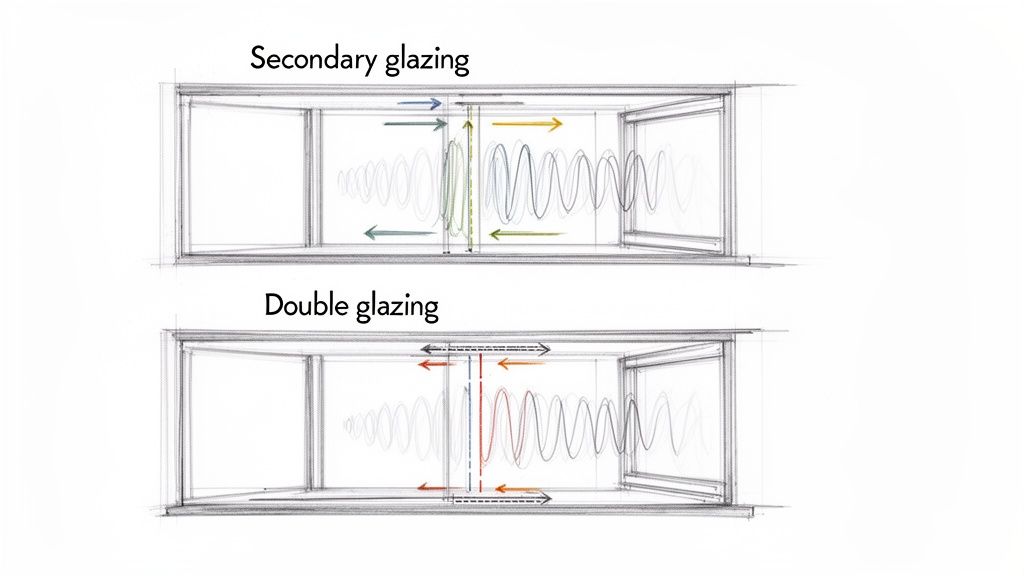
The science behind sound reduction is all about disrupting sound waves. As noise travels from outside, it has to pass through multiple layers of glass and the air trapped between them. Each layer acts as a barrier, dampening the vibrations and cutting the volume that finally reaches your ears.
While both types of glazing are a massive improvement on single panes, secondary glazing almost always provides superior noise reduction. This comes down to one critical factor: the size of the air gap.
A standard double-glazed unit has a fairly narrow, sealed gap between its two panes, typically around 16-20mm. While this is great for trapping heat, it’s less effective at stopping low-frequency sounds like the persistent rumble of traffic.
Secondary glazing, on the other hand, creates a much larger cavity—often between 100mm and 200mm—between the original window and the new internal pane. This wide gap is incredibly effective at disrupting and absorbing a far broader spectrum of sound frequencies. The further the sound waves have to travel between dissimilar panes, the more energy they lose along the way.
Because the two panes of glass in a secondary glazing setup are separated by a wide, non-rigid air gap, they vibrate at different frequencies. This irregularity is highly effective at cancelling out noise—something a sealed double-glazed unit simply can't replicate as well.
The difference in performance is significant and easily measured in decibels (dB). A good quality double-glazed window might reduce external noise by around 30-35 dB, which translates to roughly a 50% reduction in how loud the noise feels. It's a noticeable improvement that can make a real difference.
But a well-installed secondary glazing system can achieve a noise reduction of up to 45 dB or even more. This can cut the perceived external noise by as much as 75-80%. For homes on a main road in Newcastle or near a railway line, this level of soundproofing is often the only way to find genuine peace and quiet.
To put these numbers into a real-world context:
Busy Road Traffic (70 dB):
Nearby Construction (85 dB):
For many homeowners in the north, especially those in listed buildings or conservation areas where replacing original windows just isn't an option, secondary glazing becomes the definitive solution for noise pollution. It allows you to keep the character of your period property without having to suffer the acoustic consequences of its original, thin glass.
While double glazing offers a great all-round balance of thermal and acoustic benefits, if your primary goal is to silence the outside world, secondary glazing holds a distinct and measurable advantage. The wider, customisable air gap it creates provides a level of sound insulation that is incredibly difficult for a standard sealed unit to match, making it the superior choice for achieving a truly tranquil home.
When you're weighing up secondary glazing against double glazing, let's be honest—the cost is usually the first thing on your mind. It's crucial to look beyond the initial quote and understand the whole picture: the installation hassle, the long-term savings, and the real value you're adding to your home. The price tag for each option is wildly different, and that's because the jobs themselves are poles apart.
As a rule of thumb, secondary glazing is 40-60% cheaper to supply and fit than a full double glazing replacement. That's a massive saving, and it comes down to simplicity. We're adding a discreet second pane of glass inside your existing window. There's no ripping out old frames, no need to re-plaster or redecorate afterwards. It's clean, quick, and far less disruptive.
Double glazing, on the other hand, is a much bigger job. It involves completely removing your old windows—frame and all—and fitting brand-new units. This takes more time, more materials, and specialist fitters to get that perfect, airtight seal. Naturally, all of that is reflected in the higher cost.
Let’s put some real numbers on it. Secondary glazing offers incredible bang for your buck, often coming in at around £200-£400 per window. Compare that to a new double-glazed unit, which typically starts from £500+ per window and can climb much higher.
For a classic terraced house in Yorkshire with about ten windows, you could be looking at the difference between a £3,000 project and one costing over £6,000. For many homeowners in places like Newcastle or Nottingham wanting to feel warmer and save on bills without a huge financial commitment, that makes secondary glazing a very smart, accessible choice.
While the initial outlay is important, the real test of a home improvement is its long-term value. Both options will cut your energy bills, but how quickly you see a return on that investment differs significantly.
Because it costs so much less to install, secondary glazing pays for itself much faster. The money you save on your heating bills will cover the initial cost in a shorter time, making it a very efficient financial move. Double glazing, with its bigger price tag, will take longer to break even on energy savings alone.
However, there’s a big caveat. If your existing window frames are draughty, rotting, or failing, then simply adding a secondary pane might just be a sticking plaster. In that situation, the cost of repairing those old frames needs to be considered, and a full replacement could well be the more sensible long-term investment. If you suspect your frames are past their best, getting a professional opinion on glass replacement services is the right place to start.
The decision isn't just about the cheapest option today, but the smartest financial move for your property's future. Secondary glazing offers a rapid return on investment, while double glazing is a capital improvement that adds modern value.
Both glazing solutions will improve your home's Energy Performance Certificate (EPC) rating and make it more appealing to buyers. But for period properties, especially those in conservation areas like York or Harrogate, the impact on value is far more nuanced.
In these historic areas, preserving the original character of the building is everything. Ripping out beautiful, authentic timber sash windows and replacing them with standard uPVC units can actually damage your property's value and charm.
This is where secondary glazing truly shines:
By maintaining that architectural integrity, you not only preserve the premium value of your historic home but can actually increase it. As you weigh up your options, it's also worth looking into other methods, including some cheap, cheaper, or free ways to insulate your windows. Taking a balanced view helps you make a decision that perfectly suits your home and your budget.
If you own a listed building or live in a conservation area, the secondary glazing vs. double glazing debate is often settled for you before it even begins. Getting to grips with planning regulations is serious business, particularly in historic cities like York and Harrogate where preserving architectural character is non-negotiable. It’s here that secondary glazing isn’t just a good choice; it's often the only choice.
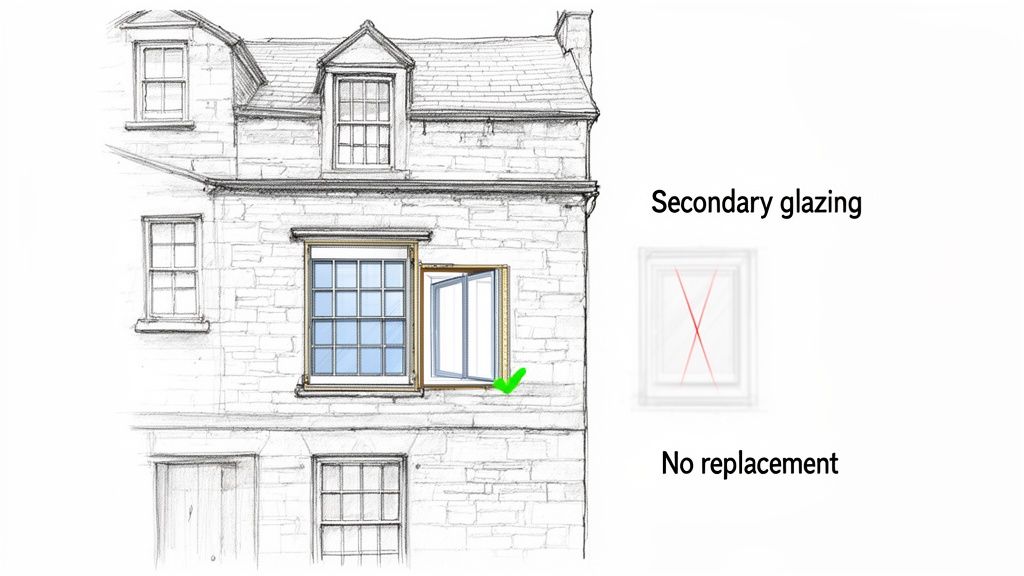
The core reason boils down to one simple but critical concept: reversibility. Secondary glazing is classified as a reversible alteration. Because it’s fitted discreetly on the inside, it doesn’t touch the original fabric of the building. Your historic timber sashes or beautiful leaded lights remain completely intact. If ever needed, the secondary unit can be removed without a trace, leaving the original window exactly as it was.
On the other hand, fitting modern double glazing is a permanent and irreversible change. It means ripping out the original windows entirely and replacing them. For any listed property, that's almost always a complete non-starter. Conservation officers are tasked with protecting the unique historic character of these buildings, and the original windows are a massive part of that identity.
Trying to get planning permission to replace original windows with modern uPVC or even new timber double-glazed units is an uphill battle, and one that’s rarely won. The aesthetic difference is simply too great, fundamentally changing the way the building looks and feels.
For heritage properties, the primary goal of any upgrade must be to enhance comfort and efficiency without compromising character. Secondary glazing achieves this balance perfectly, making it the go-to solution for conservation officers across the UK.
This distinction is vital for homeowners right across the North. Whether you’re in a Georgian townhouse in Newcastle or a Victorian terrace in York, secondary glazing lets you enjoy modern standards of comfort while respecting your home’s past. It’s a solution that works with your home, not against it.
In the bigger picture, improving energy efficiency is a huge driver in the UK, with retrofitting older homes now accounting for 70% of the glazing market's revenue. And while over 93% of UK homes have double glazing, secondary glazing is seeing a huge surge for period properties precisely because of its non-invasive nature.
It can lift a property's EPC rating from D to C in around 68% of cases, deliver a 60-70% reduction in outside noise, and cut condensation by up to 80%—all without altering the building’s precious historic fabric. You can find out more about the UK glazing industry's focus on retrofitting homes.
This makes it the ideal, practical upgrade for the thousands of older properties that give our northern towns and cities their unique charm. It’s all about achieving modern warmth and quiet, without erasing history.
It’s the final question, and the answer isn't about which is better, but which is the right fit for your property, your priorities, and your budget. We've been through the technical details, so let's move from features to practical, real-world advice to help you make the right choice for your home here in Yorkshire.
The whole thing really boils down to a few key questions. Are you trying to preserve the historic soul of your home, or are you in the middle of a full-scale modern renovation? Is eliminating traffic noise your absolute number one goal, or are you just after a simple, all-in-one upgrade that you can fit and forget?
Your answers will point you in the right direction.
Secondary glazing is the perfect solution in a few very clear scenarios. It truly shines where you need to balance modern performance with preserving character, making it an incredibly smart investment for many homeowners.
You should choose secondary glazing if:
On the other hand, double glazing is the definitive choice when you’re planning a complete overhaul and want long-term, low-maintenance performance. Think of it as a total window system upgrade.
You should opt for double glazing if:
Ultimately, this isn’t about secondary glazing vs double glazing in a general sense. It’s about what’s right for you. By matching your specific needs—whether you’re in bustling Newcastle or historic York—to the strengths of each system, you can make a decision you'll be happy with for years to come.
If you're ready to create a warmer, quieter, and more valuable home, the team at Glass Tech is here to help. With over 20 years of experience serving Yorkshire and beyond, we provide expert advice and flawless installations for both secondary and double glazing.
Contact us today for a no-obligation survey and quote by visiting https://www.hgwsolutions.co.uk.

A professional team of experts providing glass and glazing solutions covering the whole of Yorkshire & more...
Whether it's Leeds, York, North Yorkshire, Birmingham, Hull, Liverpool, Machester, Newcastle or Nottingham, get in touch to find out how we can help you with your bespoke glass project.