
Staring at a foggy window or feeling a persistent draught that just won't quit? These aren't just little quirks of an older house; they're clear signals that your windows are crying out for help. Getting your window glass replaced in good time is one of the smartest investments you can make in your home's energy efficiency, security, and general comfort, stopping small problems before they spiral into big ones.
Your windows are on the frontline every single day, protecting you from the elements while bathing your rooms in natural light. But just like any hard-working part of your home, the glass eventually starts to show its age. Brushing these signs off can lead to much bigger headaches, from eye-watering energy bills during a chilly Leeds winter to feeling less secure in a busy Manchester suburb.
The first step is knowing what to look for. Many people just assume these issues are part of owning an older property, but more often than not, they’re dead giveaways that the sealed glass units have failed. The good news is, spotting the problems is pretty straightforward once you know the signs.
Catching these issues early will save you a world of hassle and money down the line. Keep an eye out for these classic tell-tale signs that your window glass isn't pulling its weight anymore:
A study by the Energy Saving Trust found that installing A-rated double glazing in a typical gas-heated semi-detached home could save up to £110 per year on heating bills. It’s a perfect example of how new glass directly translates into real, long-term savings.
Sometimes the signs are a bit more subtle, but they're just as important. For instance, if you live near a busy road in Newcastle and you've noticed the traffic noise getting louder indoors, it could be a sign your window seals are degrading. In the same way, faded furniture or flooring near a window can mean the glass is no longer providing the UV protection it once did.
Keeping on top of your property's health is just smart homeownership. For a proactive approach to spotting issues early, it's always a good idea to follow a comprehensive home maintenance checklist. Regular checks can help you catch window problems before they become costly emergencies. By tackling these key signs promptly, you can ensure your home stays the secure, warm, and comfortable haven it's meant to be.
Choosing the right glass for your windows can feel a bit technical, but it really just boils down to matching the right solution to your home’s needs. Whether you’re in a new build or a listed property in York, understanding the basics will help you make a smart decision that pays dividends in comfort and energy savings.
Think of a standard double-glazed unit like a decent winter coat; it does a good job of keeping the cold out. A modern Low-E (low-emissivity) glass unit, on the other hand, is more like a high-performance thermal jacket. It has an invisible, microscopic coating that actively reflects heat back into your room, keeping your home warmer without you even knowing it’s there.
Beyond the special Low-E coating, a few other key components work together to create a seriously effective barrier against heat loss. For anyone living in cooler spots like Newcastle or across the wider Yorkshire region, these details make a massive difference.
But how do you know if your current glass is even a problem? This simple visual breaks down the tell-tale signs.
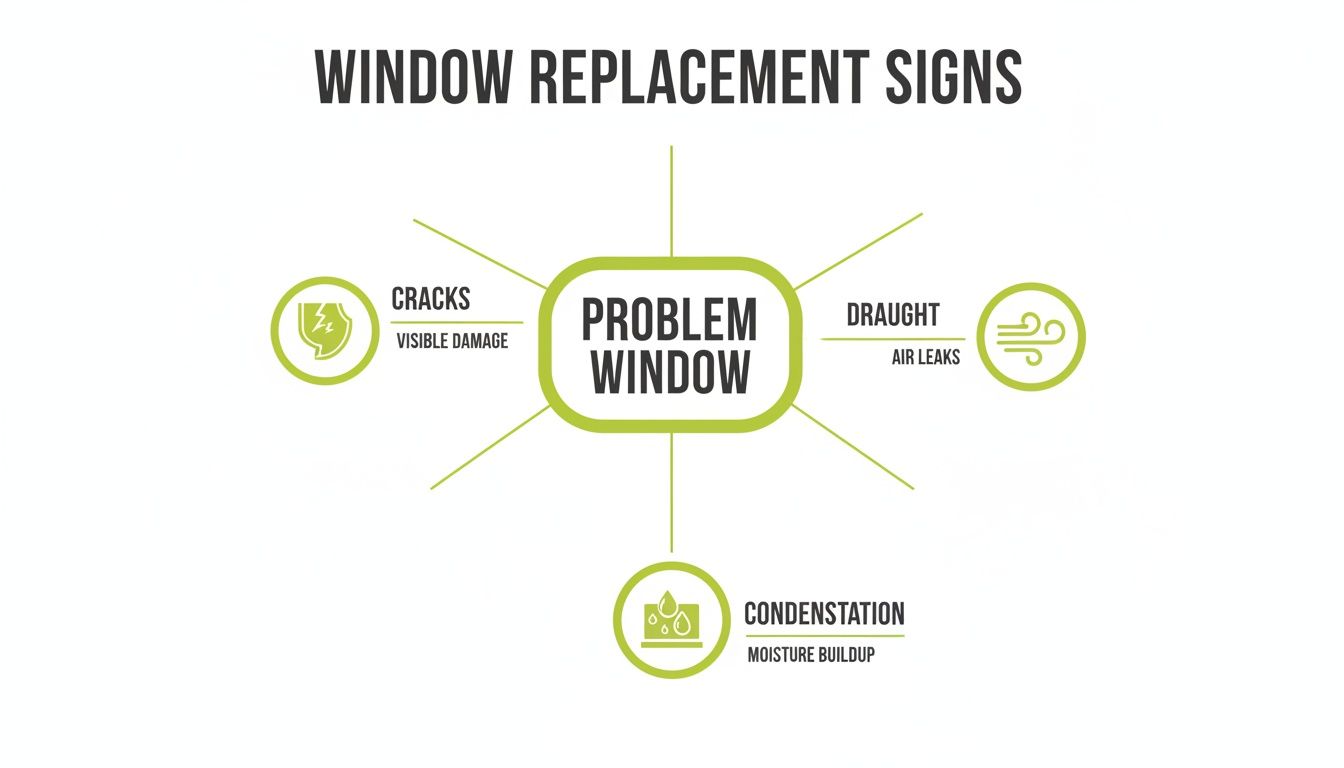
As you can see, problems like draughts, cracks, or condensation between the panes are clear signals that your window's seal has failed or the glass is simply not performing as it should be. This leads directly to wasted energy and a less comfortable home.
Sometimes, you need more than just good insulation. Thankfully, modern glass can be engineered to solve all sorts of specific problems, from boosting security to preserving the unique character of a period home.
To give you a quick idea, here’s a look at the main options you’ll come across.
| Glass Type | Best For | Key Benefit |
|---|---|---|
| Low-E Glass | Improving energy efficiency & lowering heating bills. | Reflects heat back into the room, preventing loss. |
| Toughened Glass | Doors, low-level windows, and high-traffic areas. | Up to 5x stronger and shatters into safe, blunt cubes. |
| Laminated Glass | Ground-floor windows, security, and noise reduction. | Holds together when broken, acting as a security barrier. |
| Secondary Glazing | Listed buildings & conservation area properties. | Adds insulation without altering original, historic frames. |
As the table shows, there's a solution for pretty much any scenario. Toughened glass, for instance, is heat-treated to make it incredibly strong. If it does break, it crumbles into small, blunt cubes instead of dangerous sharp shards, which is why it’s a legal requirement for places like doors and low-level windows.
Laminated glass is a different beast altogether. It’s made of two panes of glass sandwiching a tough plastic interlayer. If the glass breaks, that interlayer holds everything together, making it a fantastic choice for security and for blocking out traffic noise.
For homes in conservation areas or listed buildings where you can't touch the original frames, secondary glazing offers a discreet upgrade. It delivers modern thermal and acoustic performance without changing the look of the property at all.
At the end of the day, the right choice comes down to what you want to achieve. Whether it's improving your home's EPC rating, making your property more secure, or simply creating a warmer and quieter place to live, there's a glass replacement option that fits the bill perfectly.
Deciding to replace your window glass is one thing, but what actually happens next? It’s easy to imagine days of disruption, dust, and general chaos. The reality, when you work with a professional glazier, is a surprisingly smooth and efficient journey. It's a precise, multi-stage process designed to cause minimal fuss while delivering maximum results.
From the first phone call to the final polish, every single step is carefully managed to ensure your new glass fits perfectly and performs flawlessly for years to come. Whether you’re in a bustling part of Manchester or a quieter village in Yorkshire, this is how we get it done right.
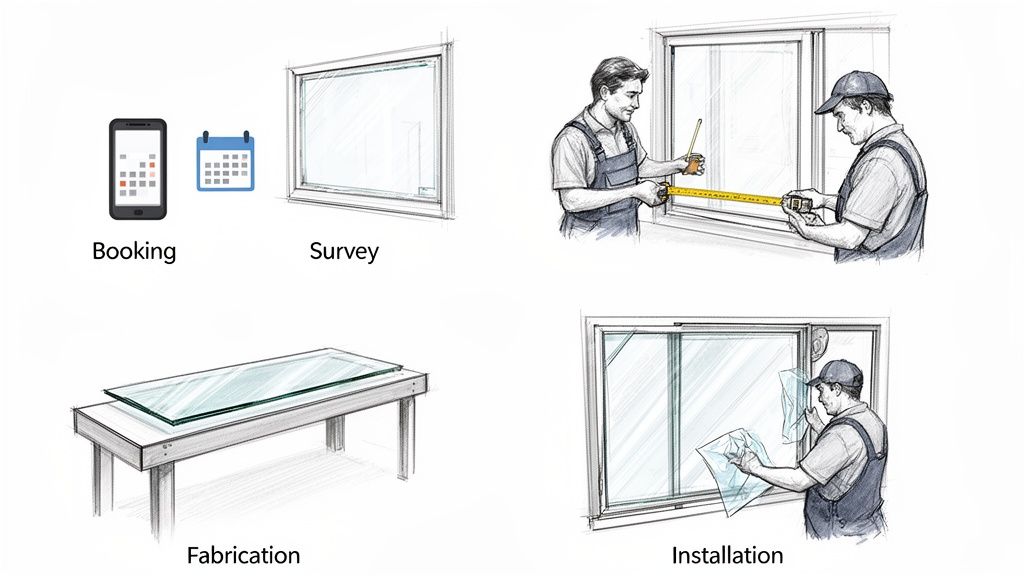
It all starts with a conversation. When you get in touch, you can tell us exactly what’s wrong—whether it’s a single misted-up pane that’s driving you mad or several cracked windows that need sorting. We’ll listen, ask a few straightforward questions about your property, and give you some clear, preliminary advice on the best solutions and what to expect cost-wise.
This is your chance to find out what's possible. There’s no hard sell, just a helpful chat to figure out what you need and get the ball rolling.
This is where the real magic happens. A skilled technician will visit your home to carry out a detailed survey. This isn't just a quick glance; we're talking meticulous, down-to-the-millimetre measurements of your window frames. It's a critical step that guarantees a perfect fit.
During this visit, our technician will also:
This painstaking measurement is the secret to a perfect, airtight seal. A unit that's even a few millimetres out won't just look wrong; it will fail to insulate properly, leading to draughts and wasted energy.
Once you give us the green light, your order heads straight to the workshop. Every single double-glazed unit is custom-made to the exact dimensions taken during the survey. This isn’t an off-the-shelf product. We cut two panes of glass to size, apply any special coatings like Low-E, and bond them to a spacer bar to create a hermetically sealed unit.
This unit is then filled with an inert gas like argon to give its insulating properties a serious boost. This bespoke approach ensures your new glass is a perfect match for your existing frames, a service vital for properties across the North, from Newcastle to Sheffield. If you're interested in seeing this in action, you can explore our previous projects in our case studies.
When installation day arrives, our fitting team will turn up ready to go. Their priority is to work cleanly and respectfully in your home, laying down dust sheets to protect your floors and furniture before they start.
The installation itself is a well-oiled machine:
Before they leave, the team cleans the new glass and the surrounding area, leaving your room exactly as they found it—only now with a crystal-clear, high-performance window. It’s a process that guarantees peace of mind and a perfect result, every single time.
When it comes to replacing window glass, one of the first questions on anyone’s mind is, understandably, “how much will it cost?” But looking at it purely as an expense misses the bigger picture. Upgrading your glass is a direct investment in your home’s comfort, security, and long-term value.
There's no simple price list for this kind of work. The final quote for any job depends on a unique combination of factors, because every window, every home, and every homeowner’s needs are different. A straightforward pane replacement in Leeds will naturally have a different cost to a full-house upgrade in a Newcastle terrace.
Getting to grips with these variables will give you a much clearer idea of what to expect and help you see why a quality installation is worth every penny. It’s all about transparency and making sure you get genuine, lasting value for your home.
The total cost is really a sum of its parts, and each one contributes to the final figure. Here’s a straightforward breakdown of what glaziers like us consider when putting together your quote.
While a bespoke quote is always essential, it helps to have a general idea of the market. The average cost to replace windows in a typical UK home can be around £4,000, but homeowners can start with a single uPVC casement window from just £500, excluding installation.
For more premium options like aluminium frames, which now make up 18% of new installs, prices start from around £1,050 for a small unit. With over 93% of UK homes now double-glazed, the focus has shifted to replacing failed units, especially when you consider a staggering 35% of a home's heat escapes through poor windows. You can learn more about these window industry statistics and future projections.
Investing in high-performance glass is one of the most effective ways to boost your home’s Energy Performance Certificate (EPC) rating. This not only makes your property more attractive to future buyers but also directly increases its market value.
It’s so important to shift your perspective from seeing this as a simple expense to what it really is: a valuable investment that pays you back over time. The upfront cost of a window glass replacement delivers returns in several significant ways.
First and foremost are the energy savings. Modern double glazing with Low-E coatings and argon gas fills can drastically reduce heat loss. That means your heating system doesn't have to work nearly as hard to keep your home warm and comfortable, leading to noticeably lower energy bills, month after month.
On top of that, new windows enhance your property’s kerb appeal and overall value. Clear, efficient windows make a home look well-maintained and feel more comfortable—major selling points for any potential buyer. This investment doesn’t just improve your daily life; it also ensures a much stronger return if you decide to sell your home down the line.

Finding the right installer for your window glass replacement is every bit as important as picking the perfect glass. The quality of the installation is what ultimately determines the performance, lifespan, and look of your windows for years to come.
A flawless fit by a skilled professional keeps your home secure, warm, and energy-efficient. On the other hand, a poor job can quickly lead to draughts, leaks, and a whole host of other problems you simply don’t need.
With so many companies out there, especially across Yorkshire and the North, how can you be sure you’re choosing a genuine expert? It’s all about looking for clear signs of quality, professionalism, and accountability. This means going beyond a simple price check and digging a little deeper into a company's real-world credentials and reputation.
In the UK glazing industry, certain accreditations are the gold standard. They're your assurance that a company is competent, fully compliant with Building Regulations, and can be trusted to work on your home. When you’re vetting installers, keep a sharp eye out for these two key certifications.
Choosing an accredited installer means you don't have to worry about registering the work with your local authority yourself—the company handles everything. It saves you a ton of time, paperwork, and potential legal headaches when you decide to sell your property.
Making an informed choice is more crucial than ever. The UK glazing market is projected to reach £2.35 billion by 2026, yet the industry faces a significant skills shortage, needing 15,000 more installers by 2030. This highlights the importance of selecting an established, experienced firm from the 2,855 currently operating. Learn more about recent glazing industry statistics.
Before you commit to any company, it’s wise to arm yourself with a few essential questions. The way they answer will tell you a lot about their professionalism and the service you can expect. A trustworthy glazier will have no problem giving you clear, confident answers.
By focusing on these key areas—accreditations, genuine reviews, and clear communication—you can confidently select a company that puts quality and customer satisfaction first. It ensures your investment is not only secure but also delivers the flawless, long-lasting results your home deserves.
If you are considering further enhancements beyond just glass replacement, explore our range of high-performance windows and composite doors.
Deciding to replace your window glass is a big step towards a warmer, safer, and more efficient home. But naturally, you’ll have a few practical questions before you commit. To help you feel completely confident, we’ve put together answers to the queries we hear most often from homeowners across Yorkshire and the North.
We believe in being upfront and clear. Understanding these details from the start means no surprises down the line—just a smooth process and the results you expect.
Yes, you absolutely can. This is one of the most important questions we get, and the answer is often a relief for homeowners. If your existing frames—whether they’re timber, uPVC, or aluminium—are in good, solid condition without any rot, warping, or serious damage, you can simply replace the sealed glass unit inside.
This is what we call a glass-only replacement, and it’s far more cost-effective than tearing out the entire window. It’s the perfect fix for common issues like condensation trapped between the panes or a single cracked pane. A quick assessment from a professional glazier will confirm if your frames are up to the job, potentially saving you a significant amount of money.
You'll be pleasantly surprised at how quick and efficient the on-site installation is. After your custom glass unit is made, which typically takes about 7 to 14 days, the actual fitting is a very tidy affair.
A skilled glazier can usually have a standard-sized glass unit replaced in less than an hour. The job involves carefully taking out the old pane, giving the frame rebate a thorough clean, and then fitting the new sealed unit to create a perfect, weather-tight seal. It’s a clean and methodical process designed to cause as little disruption to your day as possible, whether you’re in a busy city like Manchester or a quiet Yorkshire town.
The most crucial part of the whole job is the initial survey. Getting the measurements spot-on is the key to a swift, successful installation. An accurately made unit slides into place perfectly, which is vital for achieving the best thermal insulation and preventing future problems like draughts.
Yes, and the impact can be substantial. Older, inefficient windows can be a real weak spot in a home's insulation, accounting for up to 35% of your total heat loss. When you upgrade from tired old double glazing or single panes to modern, energy-efficient glass, you're putting a much stronger thermal barrier in place.
Modern units with features like Low-E coatings and argon gas fills are designed to reflect heat back into your room. This means your heating system doesn't have to work as hard or for as long to keep your home comfortable. Over time, this directly translates into lower energy consumption and cheaper bills, making it an investment that pays you back year after year.
That foggy, misty look that you can't wipe away is condensation, and it’s trapped between the two panes of glass. It’s the number one sign that the airtight seal around your double-glazed unit has failed—a problem we call a 'blown seal'.
When the seal breaks, it allows moist air to creep into the cavity between the panes. As the temperature outside changes, this moisture condenses on the inner surfaces of the glass, creating that frustrating cloudy effect.
Unfortunately, a blown seal can't be repaired. The only real solution is to replace the sealed glass unit. Doing so will restore both your crystal-clear view and, more importantly, your window's vital insulating properties. For more answers to common queries, you can also look through a list of frequently asked questions about glass replacement for some extra insight. An informed decision is always the best first step.
Ready to restore clarity, warmth, and efficiency to your home? The team at Glass Tech has over 20 years of experience providing professional window glass replacement across Yorkshire and the North. Contact us today for a free, no-obligation survey and quote. https://www.hgwsolutions.co.uk

A professional team of experts providing glass and glazing solutions covering the whole of Yorkshire & more...
Whether it's Leeds, York, North Yorkshire, Birmingham, Hull, Liverpool, Machester, Newcastle or Nottingham, get in touch to find out how we can help you with your bespoke glass project.