
Ever seen those little slatted vents at the top of a window frame and wondered what on earth they’re for? Put simply, a trickle vent is a small, controllable slot in your window or door frame. It’s designed to provide gentle, continuous background ventilation, even when your window is shut tight and locked.
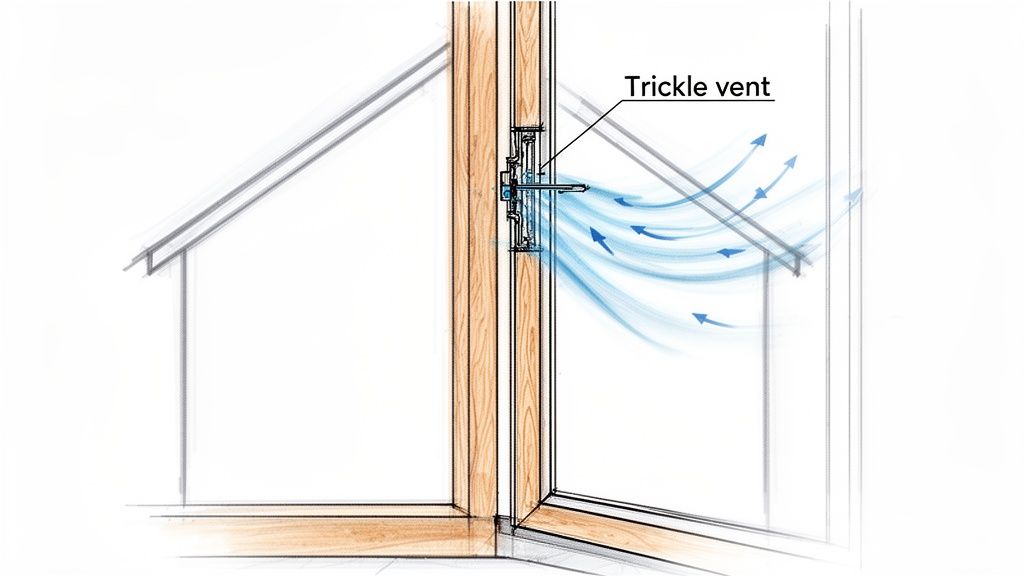
Think of trickle vents as your home’s built-in breathing system. They work away quietly in the background, improving your home’s air quality without you ever having to crack open a window – a real bonus during the colder months or overnight.
In practice, a trickle vent is just a small, controllable opening fitted into the frame of a window or door. It provides a constant, low-level supply of fresh air. They're usually located at the very top of the window frame and are often colour-matched to be as discreet as possible. You can manually open or close them with a simple flick of a switch. Discover more about how these vents are integrated into modern windows.
This simple but incredibly effective feature performs several vital functions for your home's health and your comfort.
The primary job of a trickle vent is to fight back against condensation and stop damp and mould from taking hold. As we make our homes more and more airtight to improve energy efficiency, we inadvertently trap moisture from everyday life – things like cooking, showering, and even just breathing.
A trickle vent provides a passive, consistent escape route for this stale, humid air while letting fresh air circulate. This constant air exchange is crucial for a few key reasons:
For homeowners installing new windows or undertaking major glazing projects, understanding the role of trickle vents is essential. As professional glaziers, we now ensure they are fitted as standard to meet modern ventilation requirements, making your home safer and more comfortable.
You might be wondering why these small, unassuming vents are suddenly such a big deal. The shift from a helpful extra to a legal necessity is all down to our drive for more energy-efficient homes. As we’ve got better at insulating our properties and fitting high-performance windows to keep the heat in, we’ve also made them incredibly airtight.
While this is fantastic for energy bills, it creates a new problem: it traps stale, damp air inside. Without an escape route, you get a perfect recipe for condensation, mould, and poor indoor air quality. Trickle vents are the simple but effective answer, providing a steady, controlled flow of fresh air without cancelling out the energy-saving benefits of your new glazing.
This is precisely why the rules had to change. Here in England, trickle vents went from being a ‘nice-to-have’ to a legal requirement for most new and replacement windows from 15 June 2022. This change was brought in under the updated Approved Document F of the Building Regulations, a key part of the UK’s plan to improve ventilation and hit its net-zero target by 2050.
For homeowners, this means you can't simply opt out of having trickle vents if your installation requires them. If you do, the work won't comply with Building Regulations and could fail inspection. You can read the full details on trickle vent regulations to see the official guidance for yourself.
This isn't just about ticking a box. It means that professional installers across the country are now legally obliged to fit compliant vents, protecting you from future problems with damp and ensuring your home is a healthy place to live.
A non-compliant window installation can create significant problems, not only for your home's health but also when you come to sell your property. Ensuring your new windows are fitted with the correct trickle vents by a reputable company is a crucial investment in your home's future value and safety.
Beyond just meeting the legal standard, the main benefit here is maintaining good indoor air quality. Stale air is often loaded with pollutants and higher levels of CO2, which can impact everything from your comfort to your health. For a practical guide on this topic, it's worth reading more about improving home air quality. At the end of the day, these regulations are in place to make sure every new window installation helps create a healthier, safer, and more comfortable home for you and your family.
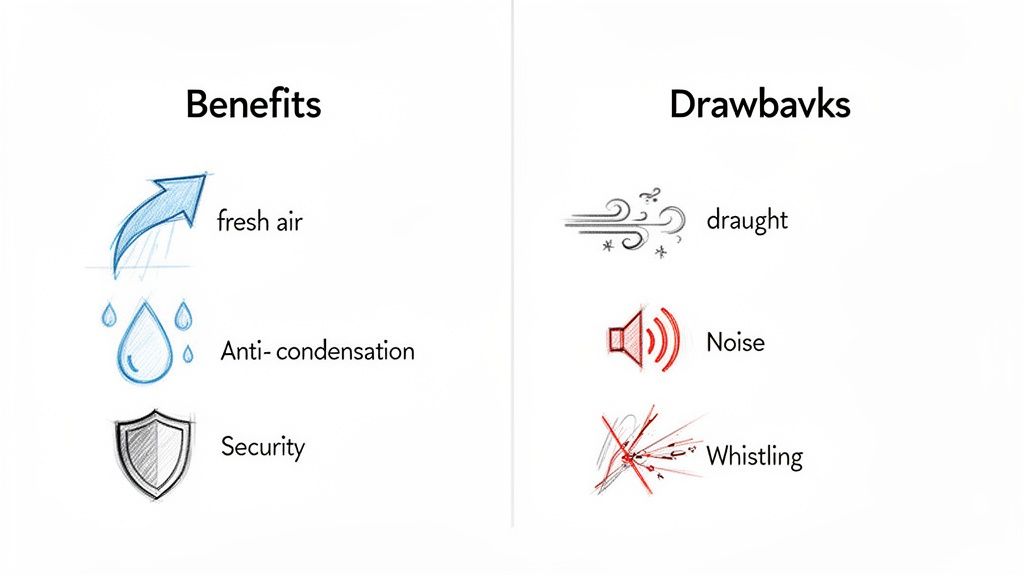
So, are trickle vents a good thing or a bad thing? The honest answer is that they’re essential, but like anything, they come with a few potential trade-offs. Understanding both sides of the coin is the key to making them work for you, not against you.
Their primary job, and the reason they’re a legal requirement, is to keep your home healthy. By allowing a gentle, constant stream of air to circulate, they work tirelessly in the background to combat condensation. Less condensation means less risk of damp and mould, which is better for both your family’s health and the fabric of your building. All this happens without you having to leave windows wide open, keeping your home secure.
On the flip side, some homeowners do have reservations. The most common concern is the potential for a slight draught, especially on a chilly winter’s night. Others, particularly those living near busy roads in places like Newcastle or Manchester, worry about a bit more noise finding its way inside. On very blustery days, you might even hear a faint whistle from older or less sophisticated models.
Thankfully, these potential issues are rarely a major problem and can be easily managed. Modern, high-quality trickle vents are engineered to minimise these downsides, often including features like acoustic baffles that significantly cut down on noise.
It's also important to remember that you’re in control. Nearly all trickle vents can be closed manually. If a storm is raging outside or the traffic seems particularly loud, you can simply close them for a short while, reopening them once things have calmed down.
To help you weigh it all up, here’s a straightforward comparison.
| Benefit | Potential Drawback |
|---|---|
| Prevents Condensation | Can sometimes cause a slight draught in cold weather. |
| Reduces Damp & Mould | May allow a small amount of external noise to enter. |
| Improves Air Quality | Can occasionally whistle in very high winds. |
| Maintains Security | Can be perceived as a small aesthetic interruption on the frame. |
It's clear that the benefits for your home's health are significant, and the drawbacks are generally minor and manageable with the right product and usage.
While trickle vents tackle background ventilation, they are just one part of a complete window system. Other elements can further boost your home’s comfort. For instance, our guide to secondary glazing explains how an additional internal window can drastically improve thermal and acoustic insulation. Likewise, external products like sun block window screens can be a fantastic way to manage heat from the sun in summer. The best approach is always a holistic one, where every component works together.
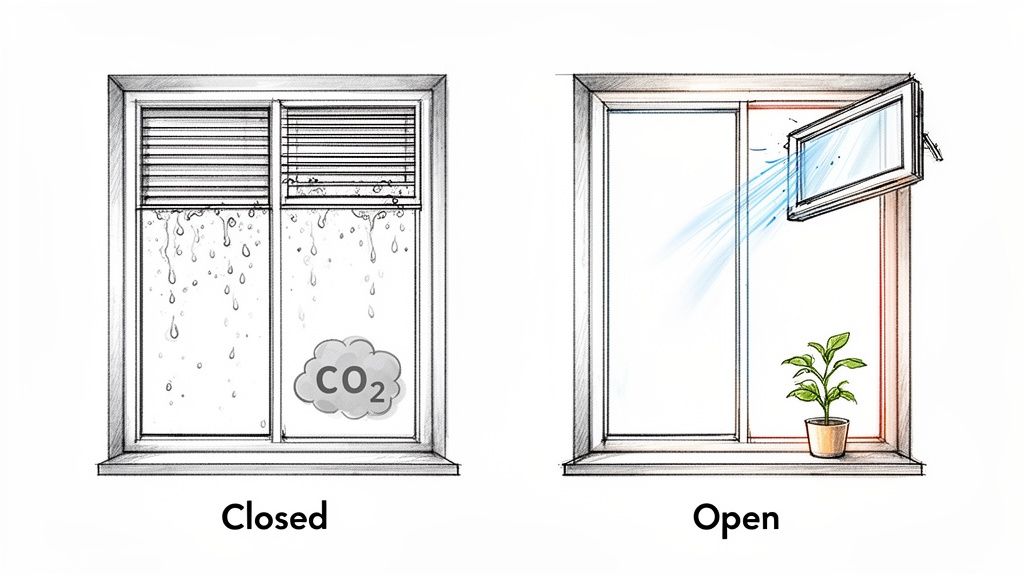
It’s a common temptation, especially when the wind is howling outside, to slide your trickle vents shut and forget about them. We've all done it. It seems like a sensible way to stop a draught, but keeping them permanently closed is a mistake that completely defeats their purpose.
Trickle vents are engineered for continuous, background ventilation. When you close them, you effectively seal your room off, trapping all the moisture and airborne pollutants that everyday life generates inside. This can quickly lead to higher CO2 levels and, ironically, the very condensation problems on your windows the vents were installed to prevent.
Here in the colder northern regions, from homes across Yorkshire to flats in Newcastle, this is even more critical. Our homes are built to be tightly sealed against the weather, which makes this slow, steady exchange of air absolutely essential for a healthy indoor environment.
This urge to close vents is a widespread issue. In fact, a lot of people simply misunderstand what they’re for. Research has found that bedroom trickle vents were kept permanently closed in a staggering 63% of homes, with homeowners often shutting them due to perceived draughts or noise. You can read the full research into ventilation habits in UK homes here.
The key takeaway is simple: a trickle vent isn't just for airing a room out when it feels stuffy. It's a vital, always-on part of your home’s ventilation strategy, designed to be left open almost all the time to maintain good air quality.
Think of it this way: you wouldn't block your home's drains, so you shouldn't block its airways either. Keeping your trickle vents open is a small, simple action that pays huge dividends for the health of your property and your family.
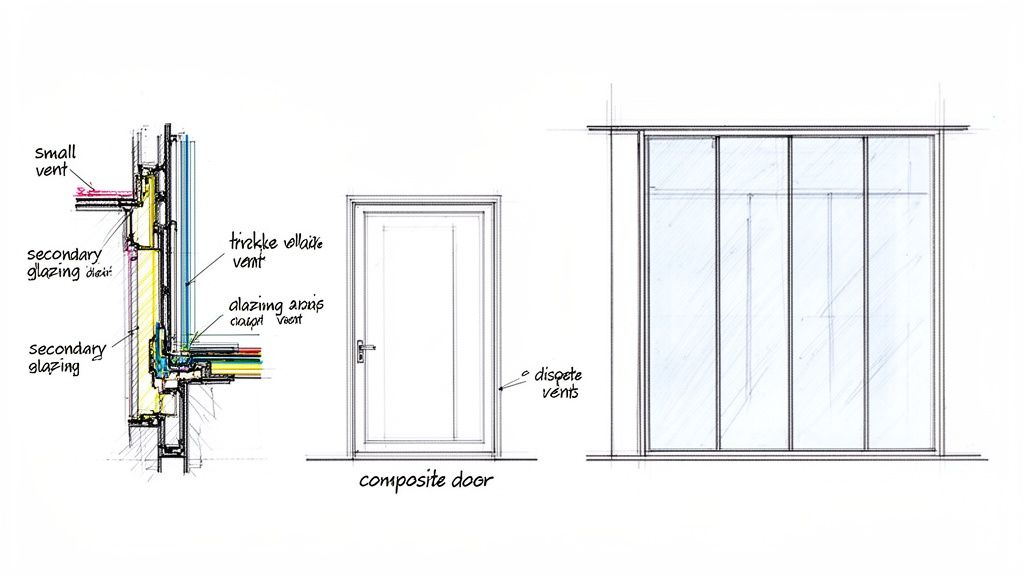
It’s one thing to understand what a trickle vent is, but it’s another to see why they’re so critical when you’re planning an ambitious home renovation. These small but mighty components aren't just for standard windows anymore. Across the North of England, from Leeds to Manchester, they are a vital part of any specialist glazing project, playing a huge role in the performance and longevity of the final installation.
Take secondary glazing, for instance. A trickle vent is absolutely essential to stop moisture from getting trapped between the original window and the new internal pane. Without that airflow, you’re basically creating a sealed, humid terrarium where condensation will run rampant, completely defeating the object of the upgrade.
The same logic applies to new composite doors and large-scale renovations involving glass walls or enclosures. To meet regulations, they have to be designed with adequate background ventilation from the very start.
This really brings home the need for expert planning. A successful project isn't about looking at windows one by one; it’s about a holistic approach that ensures healthy airflow is maintained across the entire property. This is where an experienced glazier proves their worth.
For any complex glazing work, from glass extensions to custom doors, the ventilation strategy must be integrated from the very first design stage. It’s a non-negotiable part of ensuring the final installation is compliant, functional, and enhances the home's environment.
Professional teams serving areas across Yorkshire and Newcastle are skilled at specifying solutions that are both compliant and aesthetically pleasing. They know how to recommend vents that blend seamlessly with high-end aluminium frames or fit discreetly within a bespoke composite door, so you don't have to compromise your vision to meet the rules.
These specialist skills are essential for all kinds of ambitious installations. You can see how all these elements come together by exploring the possibilities of bespoke glass projects. By working with experts, you can be confident that every detail has been considered for a flawless, healthy, and fully compliant result.
Getting to grips with what a trickle vent is and why it matters so much is the first step in protecting your home’s health, ensuring you’re on the right side of the law, and preserving its structural integrity for the long haul. Whether you're planning a simple window replacement or a major renovation, getting the ventilation details right from the very beginning is non-negotiable for a healthy and compliant home.
When you’re about to start any glazing project, partnering with a trusted local expert makes all the difference. For homeowners looking for specialist advice on Glass Balustrades in Yorkshire or Glass Balustrades in Newcastle, our team has the hands-on experience and craftsmanship you need.
We are committed to delivering exceptional quality and service on every single project, from Hull right across to York. Our focus is always on creating compliant, beautiful solutions that will enhance your home for years to come.
As a family-run business, we take huge pride in our meticulous attention to detail. You can find out more about our commitment to quality and service on our site, or get in touch to book a free consultation and discuss your vision with us.
We get it. Trickle vents are one of those things you probably haven't thought much about until you're looking at new windows. It's only natural to have a few questions, so we've put together some straight answers to the queries we hear most often.
For the vast majority of projects, yes. Since June 2022, the UK Building Regulations made trickle vents a mandatory part of most new and replacement window installations in England. Trying to skip them usually means your installation won't be compliant, which can create headaches down the line if you sell your home.
This is a really common concern, but a properly installed trickle vent won't make your home feel draughty or noticeably colder. The airflow they provide is tiny and controlled—it’s just enough to help with background ventilation without impacting your room temperature. It's a world away from the chill you'd get from cracking open a window.
Good news – it’s a quick and easy job that you can fold into your regular cleaning routine.
A quick clean now and then keeps them clear of blockages and working just as they should.
It's technically possible sometimes, but it’s a tricky business. Retrofitting involves a glazier routing a slot directly into your existing window frame. If this isn't done with absolute precision, it can weaken the frame's structure. Honestly, it’s often much safer, more practical, and more effective to have them fully integrated into a brand-new, purpose-built window unit.
For expert advice on compliant glazing solutions, from new windows in Yorkshire to bespoke glass projects in Newcastle, speak to the team at Glass Tech. Book your free, no-obligation consultation with us today.

A professional team of experts providing glass and glazing solutions covering the whole of Yorkshire & more...
Whether it's Leeds, York, North Yorkshire, Birmingham, Hull, Liverpool, Machester, Newcastle or Nottingham, get in touch to find out how we can help you with your bespoke glass project.