
That persistent chill you feel isn’t just in your head; it’s a sign that your home's precious warmth is leaking out, quite literally costing you money. The first step to a cosier home is to play detective and find exactly where the cold air is getting in. Once you've pinpointed the culprits, the solutions are often surprisingly simple.
Before you can fix a draught, you have to know its source. That vague cold spot near the window could be coming from several places, and slapping on the wrong fix is just a waste of time and money. Carrying out a simple ‘draught audit’ is the essential starting point for a warmer, more efficient home, whether you're in a modern Leeds flat or a period property in York.
The financial incentive for this is huge. In the UK, stopping draughts is about more than just comfort. The Energy Saving Trust estimates that UK households lose around 15–20% of their heat through gaps around windows and doors.
For older, single-glazed sash windows, this figure can jump to a staggering 40% of total heat loss. Sealing these gaps can cut heating costs by up to £125 per year in a typical gas-heated home. You can find more details about these potential savings and how to draught-proof your home.
You don't need any specialist kit to find where the cold air is sneaking in. A few common household items and your own senses are usually all it takes.
To make it easy, here's a quick rundown of the most effective, no-fuss methods for hunting down those pesky draughts.
| Method | How It Works | Best For Identifying |
|---|---|---|
| The Hand Test | Run the back of your hand slowly around the window frame. This skin is more sensitive to temperature changes and will easily feel any cold airflow. | Obvious, larger draughts and checking the general seal of the window. |
| The Smoke Test | Safely light an incense stick or a candle and hold it near the frame. If the smoke wavers or blows horizontally, you’ve found your draught. | Pinpointing small, less obvious gaps with precision. |
| The Paper Test | Close a piece of paper in the window. If you can pull it out easily without any resistance, the seal is weak in that spot. | Testing the compression and effectiveness of weather seals. |
These simple tests take minutes but can save you hours of guesswork. The smoke test, in particular, is brilliant for finding those sneaky little gaps that you wouldn't otherwise notice.
Once you start looking, you’ll find draughts often come from a few usual suspects. These are the areas to check first:
The most common sources of draughts are the gaps between the opening window (the sash) and the fixed frame, especially where seals have worn down, and the joint where the entire window unit meets the wall.
Also, pay close attention to locking mechanisms and handles. Worn components can prevent the window from closing tightly enough to create a proper seal. For more complex issues or if the window itself has failed, exploring your options for new or replacement windows and doors might be the most sensible long-term solution.
Right, so you’ve hunted down the source of that pesky draught. The good news is you don’t need to be a seasoned pro to make a huge difference. A quick trip to the local hardware shop and an afternoon’s work can instantly make your home feel warmer and more comfortable. Think of these simple fixes as your frontline defence against the cold.
This is one of the smartest home improvements you can make, especially if you live in chillier parts of the UK like Yorkshire and the North. The cost-to-benefit ratio is fantastic. In fact, simple DIY draught-proofing can deliver annual savings that often pay for the materials in just one heating season. Those foam or rubber strip kits, costing just a few pounds per window, can seal up dozens of tiny gaps that, when added together, let out a staggering amount of heat.
This decision tree helps visualise those first crucial steps to pinpointing the problem and choosing your weapon.

As the chart shows, whether you use a smoke pen or just the back of your hand, the goal is always the same: find the exact gap before you start sticking things down. It saves time and materials.
For any window that opens outwards or inwards, like a typical casement window, self-adhesive draught-proofing strips are an absolute godsend. They’re designed to compress when the window is latched shut, creating an airtight seal.
A word of warning: make sure you get the right thickness. If the strip is too chunky, you won’t be able to close your window properly. Too thin, and you’ll still have a draught.
Choosing the right material can feel like a minefield, but it's pretty straightforward when you break it down. Here’s a quick comparison of the most common DIY options you'll find in the shops.
| Solution | Typical Cost | Best For | Durability |
|---|---|---|---|
| Foam Strips | £3-£7 per roll | Casement windows, internal doors. Quick, cheap fixes. | Low (1-3 years) |
| Rubber E/P Strips | £5-£10 per roll | High-traffic casement windows, uPVC frames. | Medium (5+ years) |
| Brush Strips | £8-£15 per roll | Sliding sash windows, patio doors. | High (5-10 years) |
| Frame Sealant | £4-£8 per tube | Gaps between the window frame and the wall. | Very High (10+ years) |
Ultimately, the best choice is the one that fits your window type and your budget. For most common draughts, a simple roll of rubber stripping will do the job brilliantly.
Those beautiful, traditional sliding sash windows, common in older properties from Newcastle to Hull, need a special touch. The sliding action will chew up and spit out standard foam strips in no time.
For sash windows, you absolutely need to use brush strips. These have thousands of tiny, flexible bristles that block the airflow but don't get in the way of the window's smooth sliding movement. You fit them into the channels and where the top and bottom sashes meet.
Sometimes, the draught isn’t coming from the moving parts at all. It’s sneaking in through a crack where the whole window unit meets the surrounding wall. Over the years, plaster shifts and shrinks, creating a direct path for cold air.
The best weapon here is a flexible frame sealant. You’ll need a sealant gun to apply it properly, forcing it deep into the gap. Smooth it off with a wet finger or a smoothing tool for a clean, professional finish, and you’ve created a permanent, airtight barrier.
While we're focused on windows, remember that these principles apply to any opening in your house. For instance, you might find that adjusting patio doors for a tighter seal can make a huge difference to your home's overall warmth.
DIY fixes are fantastic for tackling common draughts, but sometimes you’re just putting a plaster on a much bigger problem. Knowing when to put the sealant gun down and pick up the phone to a professional is key to a truly warm and energy-efficient home.
Some issues go far beyond simple gaps. They point to underlying structural or component failures that no amount of foam strip will ever properly fix. Recognising these warning signs saves you time, frustration, and money in the long run. A quick fix might seem to work for a bit, but if the root cause isn't addressed, that draught will inevitably return—often worse than before.
Certain problems are clear indicators that a professional eye is needed. These are the kinds of issues where DIY solutions will likely fail or, even worse, mask a serious problem that needs proper attention.
Look out for these classic signs:
For homeowners with character properties, preserving the original windows is often a top priority. This is where professional sash window refurbishment truly shines. A specialist can carefully overhaul your existing windows, routing in high-performance, virtually invisible draught seals that maintain the window’s period aesthetic while delivering modern performance.
A professional glazier can assess not just the draught, but the overall health of your window. They can diagnose failed seals, alignment problems, and frame degradation that a DIY approach would miss, ensuring a comprehensive and lasting solution.
What's more, seeking professional solutions helps align your home with rising energy standards. UK policy increasingly treats window draught control as a core energy-efficiency measure. For homeowners in regions such as Yorkshire or Newcastle, installing high-performance solutions can help bring older homes up to modern expectations for airtightness. You can find out more about the government's Future Homes Standard consultation.
When condensation between the panes is the culprit, the only real fix is to address the sealed unit itself. In these cases, a specialist can often keep the original frame intact and simply replace the glass. This is a highly effective and surprisingly cost-efficient solution. If you're facing this specific issue, learning more about professional glass replacement services is the logical next step.
If you're fed up with temporary fixes and want to put a proper stop to those cold spots and high energy bills, it’s time to look at more robust solutions. For anyone serious about stopping draughts from windows for good, investing in a significant upgrade like secondary glazing or a full window replacement is the way to go.
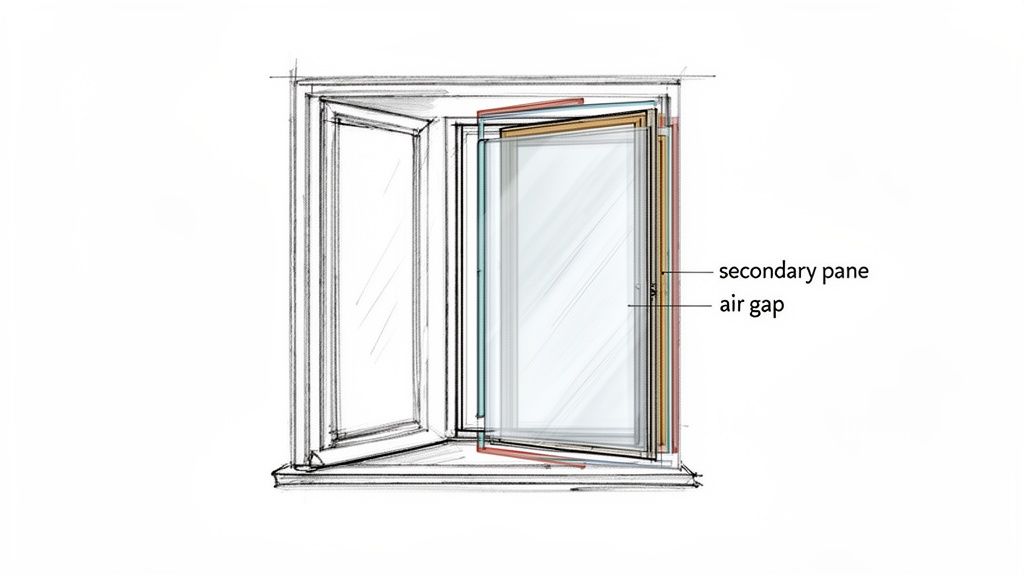
These are obviously a bigger investment than a roll of draught tape, but the payoff in comfort, energy savings, and even property value is massive. They don’t just block draughts; they create a powerful thermal barrier that completely changes how your home feels.
Secondary glazing is an incredibly clever and effective way to kill draughts without changing how your house looks from the outside. It involves fitting a discreet second pane of glass inside your existing window, creating a large, insulating air gap. It’s this gap that does all the hard work, acting as a buffer that massively cuts down on heat loss and, as a bonus, noise from outside.
It’s a hugely popular choice for listed buildings or homes in conservation areas, where the original windows are protected. You get all the performance of a modern window while keeping the building’s character intact. If that sounds right for you, it’s well worth looking into the different types of secondary glazing available to find the best fit.
The benefits are real and you'll feel them straight away:
Sometimes, you just have to bite the bullet and replace the whole window. This is often the case if your current windows are simply beyond repair, the seals on your double glazing have failed, or you’re doing a major renovation anyway. For projects we see across Yorkshire, a full replacement is the chance to maximise your home's thermal performance from the ground up.
Modern, energy-efficient windows come packed with features that just didn't exist a couple of decades ago. These units are factory-sealed and professionally fitted to guarantee an airtight seal, permanently solving any draught issues you had with the old frames.
Choosing a full replacement is about more than just stopping a draught; it's an opportunity to upgrade your home’s security, aesthetic, and energy performance certificate (EPC) rating in one go. It’s a complete overhaul for ultimate peace of mind.
While it’s the biggest investment, it delivers the most comprehensive results, making sure your home stays warm, secure, and cheaper to heat for years. To really double down on cosiness, you could also look at adding high-quality thermal blackout roller blinds to seal off any lingering chill. This kind of layered approach creates an exceptionally warm and inviting space.
Right, so you’ve successfully banished the draughts from your windows. The house feels warmer, quieter, and a whole lot more comfortable. But the job isn't quite over. Like any part of your home, your newly sealed windows need a bit of routine care to keep them performing at their best year after year.
This isn’t about a major annual overhaul. A few minutes of proactive maintenance each season is all it takes to protect the airtight seal you’ve worked so hard to create. It's the best way to ensure those chilly British winds stay firmly outside where they belong.
The changing seasons, especially the harsh winters we get up here in the North of England, really put your seals and windows under stress. A quick seasonal inspection is the best way to spot small problems before they grow back into major draughts.
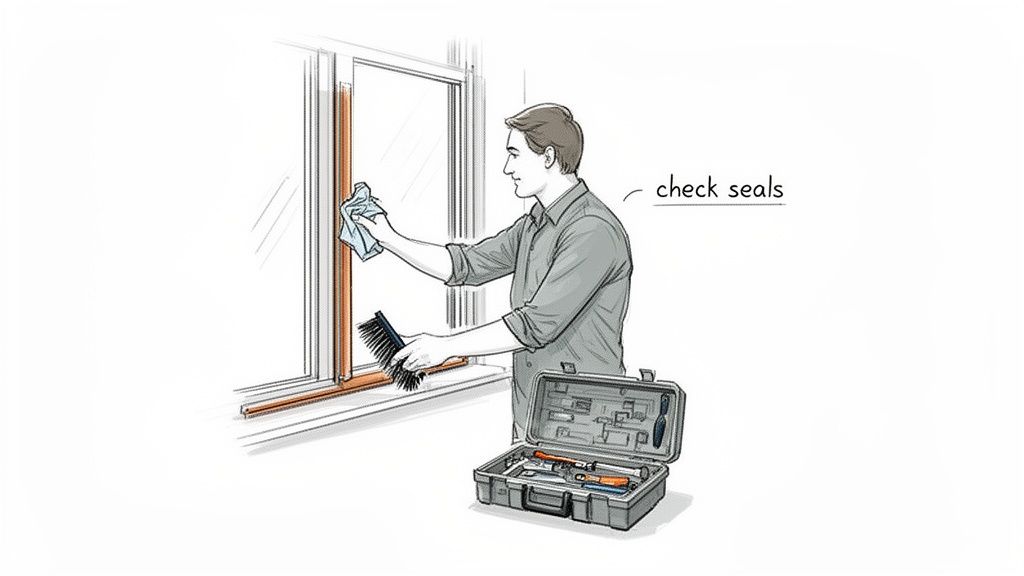
Start with a simple visual check. Have a look for any self-adhesive strips that are beginning to peel away at the corners or any rubber seals that look brittle or cracked. If you've used a sealant, check for any new cracks or spots where it has pulled away from the frame or the wall.
After a long winter, it's always a good idea to bring back the 'paper test'. Just close a piece of paper in the window and try to pull it out. If it slides out with zero resistance, the seal has weakened in that spot and probably needs replacing.
Different materials need slightly different care to get the most out of them. Keeping them clean and in good nick is the secret to stopping draughts from your windows for good.
Here's a simple but often overlooked tip: lubricate the moving parts. A quick spray of a silicone-based lubricant on hinges and locking mechanisms helps them close tightly and securely every time, which is essential for maintaining that perfect seal.
This little bit of upkeep makes sure all your hard work continues to pay off, protecting your home from the elements and keeping those energy bills down.
Even when you've got a plan of attack, it's normal to have a few questions rattling around. Tackling draughty windows can feel like a big job, but with a bit of expert insight, you can move forward with confidence. We’ve pulled together some of the most common queries we hear from homeowners to give you clear, straight-up answers.
These questions usually get into the nitty-gritty: the side effects of draught-proofing, what the savings actually look like, and how different options really stack up. Getting this right means you’ll pick the perfect fix for your home and your budget.
This is a big one. There's a common fear that sealing up every gap will trap moisture and suddenly you'll have weeping windows every morning. While it’s true that homes need to breathe, proper draught-proofing isn't the villain here.
In reality, by stopping freezing cold air from hitting your warm interior glass, you can often reduce the amount of condensation forming on the surface. It’s all about balance. A well-sealed home still needs controlled ventilation—think trickle vents or just cracking a window open—especially in high-moisture spots like kitchens and bathrooms.
Remember, a draught is uncontrolled ventilation; it lets cold air rush in at random. Good ventilation is controlled; it’s about swapping stale, humid air for fresh air without creating cold spots. The goal is to get rid of the first while keeping the second.
The numbers are what often push people to finally take action. And for good reason—the savings are very real and add up significantly over time.
According to the Energy Saving Trust, a thorough draught-proofing job across all your windows and doors could save a typical household around £125 a year on heating bills. For those of us in Yorkshire with older period properties and single-glazed sash windows, the savings can be even more substantial. It’s still one of the most cost-effective energy-saving upgrades you can make.
In many situations, yes—and sometimes it’s even better. High-quality, professionally fitted secondary glazing creates a substantial, insulating pocket of still air between your original window and the new internal pane.
This air gap is often much wider than you'd find in a standard sealed double-glazing unit, which makes it fantastic for both thermal insulation and noise reduction. It's the go-to solution for listed buildings or homes in conservation areas where the original windows are protected. It's also less disruptive and often more affordable than a full replacement, making it a popular choice for projects from Leeds right up to Newcastle.
You can definitely have a go and make a noticeable difference. Simple DIY methods, like adding brush strips where the sashes meet and slide, will cut down on airflow. It’s a good first step.
However, the intricate mechanism of a sash window makes getting a perfect, long-lasting seal incredibly tricky for a DIYer. For a truly draught-free result that’s practically invisible and still lets the window glide open smoothly, you can't beat a professional service. They can route discreet, high-performance seals directly into the timber frame for a permanent fix.
At HGW Solutions, we have over 20 years of experience helping homeowners in Yorkshire and beyond create warmer, more comfortable homes. From advanced secondary glazing to high-performance window replacements, our expert team provides lasting solutions to stop draughts for good. Discover how we can transform your home at https://www.hgwsolutions.co.uk.

A professional team of experts providing glass and glazing solutions covering the whole of Yorkshire & more...
Whether it's Leeds, York, North Yorkshire, Birmingham, Hull, Liverpool, Machester, Newcastle or Nottingham, get in touch to find out how we can help you with your bespoke glass project.