
Let’s be honest, the fastest way to clean a glass shower screen is to stop it from getting dirty in the first place. A quick squeegee after every single shower prevents those milky water spots from ever forming. Follow that up with a weekly spritz of a white vinegar and water mix, and you've already won over 80% of the battle against limescale and soap scum.
Are you fighting a losing battle against a cloudy, streaky shower screen? You’re definitely not alone. For homeowners right across the north of the UK, from Newcastle to Manchester, our notoriously hard water is the real culprit. It leaves behind stubborn limescale and soap scum that instantly dulls your bathroom's sparkle.
This guide isn't about generic advice you've already heard. We’re sharing the professional techniques and trade secrets we've perfected over two decades in the business, installing everything from shower screens to Glass Balustrades in Newcastle.
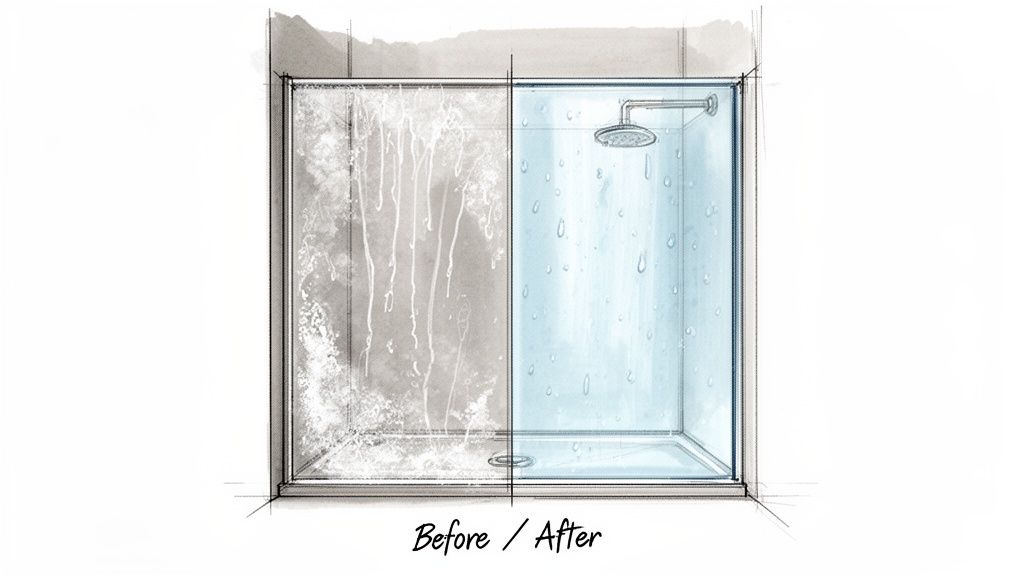
We'll show you exactly how to tackle the problem at its source, starting with simple daily habits before moving on to powerful deep-cleaning methods using ingredients you probably already have. Forget wasting money on expensive, harsh chemicals that often disappoint. This is a practical, straightforward approach to getting that flawless, streak-free finish.
Keeping your shower glass pristine is about so much more than just making it look nice. Consistent cleaning has a huge impact on your bathroom's environment and the lifespan of the installation itself. For our clients with stunning glass balustrades in Yorkshire properties, a gleaming shower screen is part of maintaining that cohesive, high-end feel throughout the home.
Here’s what’s really at stake:
A clean, well-maintained shower screen not only enhances the visual appeal of your bathroom but also safeguards the glass from long-term damage caused by mineral deposits, preserving its value and clarity.
This guide is designed for everyone, whether you're tackling the infamously hard water in Leeds or just need some simple maintenance tips in York. We'll give you the knowledge to fight back against the daily build-up, ensuring your shower remains a pristine centrepiece in your home. Once you understand the root cause, a simple and consistent routine is all it takes to achieve that showroom shine.
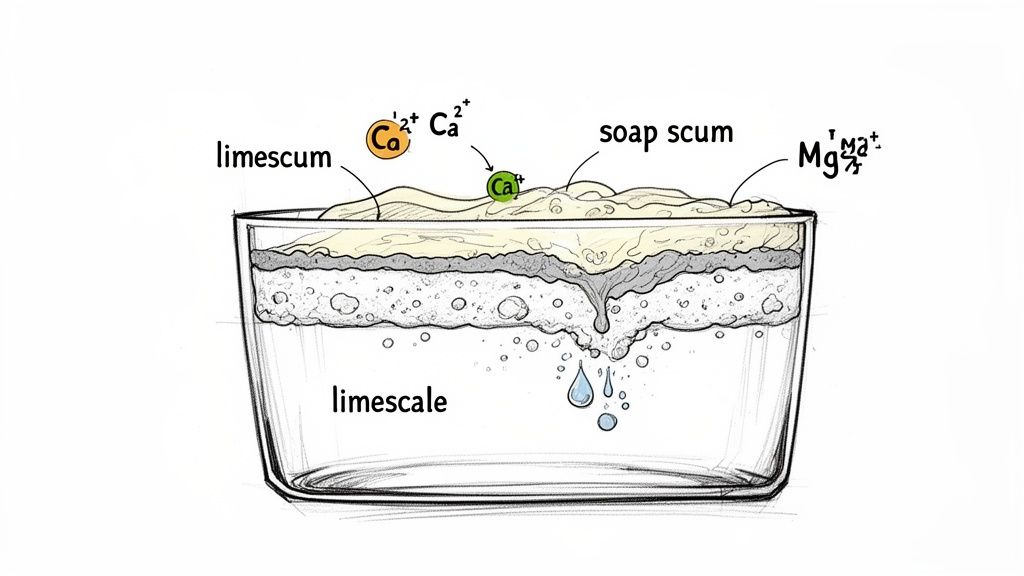
Before you can really learn how to clean glass shower screens effectively, you need to know exactly what you’re up against. That frustrating, cloudy film that builds up isn’t just one thing; it's a stubborn combination of two very different culprits, and each needs a unique approach to be defeated.
This distinction is especially important for those of us living in hard water areas. In the UK, that's over 60% of households, particularly in regions like Yorkshire and Newcastle. If it’s left unchecked, this relentless limescale build-up can reduce your screen's lifespan by up to 30%. According to Water UK, cities like Leeds and York are battling water with hardness levels over 200 mg/l of calcium carbonate, making this an everyday fight.
Let's start with limescale. It’s that white, chalky residue that appears when hard water evaporates. Our water is full of dissolved minerals, mainly calcium and magnesium. When the water droplets dry on your shower screen, these minerals are left behind, crystallising and clinging tightly to the glass.
Because these mineral deposits are alkaline in nature, you need something acidic to break them down. This is precisely why simple household staples like white vinegar or lemon juice work so well. The acid creates a chemical reaction that dissolves the deposits, allowing you to simply wipe them away without a fight.
Soap scum, on the other hand, is a completely different beast. It’s formed when the fats and oils in your soap, shampoo, and conditioners react with the minerals in hard water. This reaction creates a greasy, waxy film that’s often greyish and sticks tenaciously to glass.
Not only is this build-up unsightly, but it also creates the perfect feeding ground for mould and mildew, which can lead to hygiene issues. While we're focused on the glass here, it's worth noting that if you’re seeing dark spots in the corners, learning how to get rid of black mold in a shower is a crucial next step for a healthy bathroom.
The key takeaway is simple but essential: Limescale is a mineral problem requiring an acidic cleaner, while soap scum is a greasy problem requiring a degreasing agent. Many times, you’re fighting both at once.
Getting your head around this dual nature is the secret to winning the war against a cloudy shower screen. When you use the right products for each type of build-up, you can finally stop the endless scrubbing and protect the glass from permanent etching, keeping it crystal clear for years to come.
The real secret to a permanently sparkling shower screen isn’t about spending hours on intense scrubbing. It's about smart, consistent prevention. Honestly, the single most effective tool you can add to your bathroom arsenal is a simple squeegee. Getting into the habit of wiping down the glass after every single shower is a total game-changer.
This quick action takes less than 30 seconds, but it physically removes water droplets before they can evaporate and leave their mineral content behind. Over time, this tiny effort prevents over 80% of water spots and limescale from ever forming, which dramatically reduces how often you'll need to do a deep clean.
Equally important, especially in our damp UK climate, is managing humidity. UK bathroom ventilation standards now mandate extractor fans in 85% of new builds, but it’s a fact that over 50% of older Yorkshire homes lack proper airflow. This can make limescale issues on shower screens worse by up to 35%.
Trapped humidity creates the perfect breeding ground for mineral deposits and mould. While a fan helps, that daily squeegee habit alone can slash watermarks by 80%. A 30-second habit that prevents the need for around 70% of deep cleans each month? That's a win.
If you don't have a modern extractor fan, don't worry. You can still make a huge difference by simply leaving the bathroom door and a window open for 15-20 minutes after you shower. This simple act lets all that moist air escape, slowing down both limescale and mildew growth.
To make this completely effortless, here's a quick rundown of the daily actions that will keep your shower glass looking its best. Trust me, commit to these for a week and they'll become second nature. For larger or more complex installations, like frameless glass doors and walls, this preventative care is even more crucial for maintaining that pristine, architectural look.
Here's a quick reference table to keep these simple habits top-of-mind.
| Action | Time Required | Impact On Build-up |
|---|---|---|
| Squeegee the glass after every shower | Under 30 seconds | High: Prevents over 80% of water spots and mineral deposit formation. |
| Ventilate the room (open window/door) | 15-20 minutes | High: Reduces humidity, slowing the growth of both limescale and mildew. |
| Wipe down edges and seals with a microfibre cloth | 10 seconds | Medium: Stops water pooling in corners, preventing localised limescale crust. |
Turning these small actions into a daily routine means you’re actively stopping the chemical reactions that cause limescale and soap scum in the first place.
This preventative approach is far easier and much more effective than tackling weeks of stubborn, caked-on build-up later on. It’s about working smarter, not harder.
Let's be honest, even with the best intentions, life gets in the way. That daily squeegee might get missed, and before you know it, weeks of build-up have left your shower screen looking cloudy and dull. If you're dealing with stubborn limescale and that all-too-common soap scum—a reality for most of us, especially here in Yorkshire—it's time for a proper deep clean.
The good news? You don't need a cupboard full of harsh, expensive chemicals. In my experience, the most effective solutions are usually the simplest, and they’re probably already in your kitchen.
The real star of the show is nothing more than simple distilled white vinegar. Its natural acidity is absolutely brilliant at dissolving the alkaline mineral deposits that form limescale.
To get started, you'll want to mix a simple but powerful cleaning spray. Just combine equal parts distilled white vinegar and water in a spray bottle.
Pro Tip: If you live in an area with notoriously hard water, like many parts of the north of England, give your solution an extra kick. Up the ratio to two parts vinegar to one part water. It’s a small tweak that makes a world of difference.
Once you’ve got your solution mixed, how you apply it is just as important.
It’s this simple waiting game that does all the heavy lifting for you.
Of course, prevention is always better than cure. The daily habits outlined below are what will make these deep cleans a much less frequent chore.
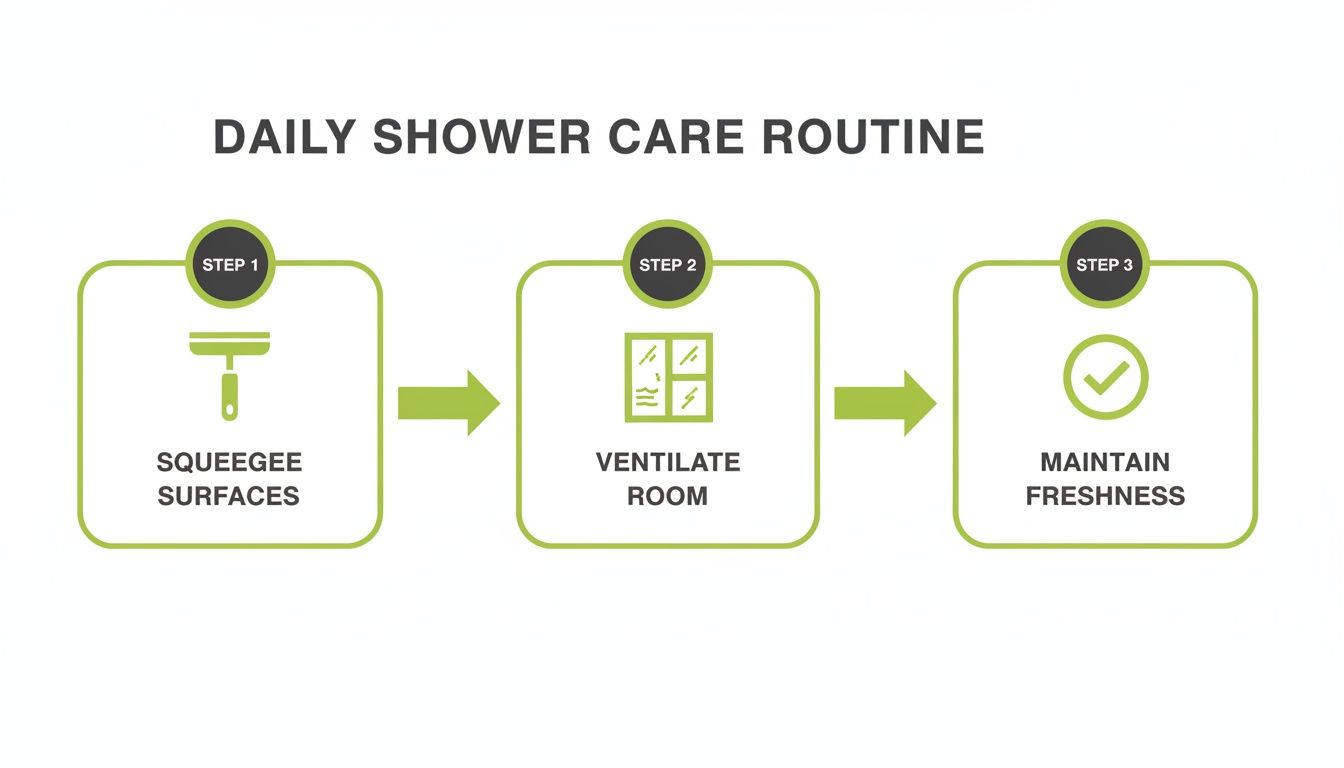
As you can see, a quick 30-second squeegee and good ventilation are your best line of defence against limescale taking hold in the first place.
Sometimes, you’ll come across extra-stubborn patches of limescale or that greasy, built-up soap scum that just won’t budge. Not to worry, the solution is still likely in your kitchen. Fresh lemon juice is a fantastic alternative; its citric acid works just like vinegar but leaves behind a much more pleasant smell.
For really tough, greasy soap scum, my go-to is a bicarbonate of soda paste. It’s incredibly effective.
Whether you're using vinegar, lemon, or a bicarb paste, the secret is always patience. Letting the product sit and work its magic for a few minutes will always give you better results than trying to scrub it off immediately with brute force.
Once you've let your solution work and have gently scrubbed away the grime, the final steps are what will give you that coveted, streak-free sparkle.
Rinse the glass thoroughly with warm water—using your shower head makes this quick and easy for the inside of the screen.
Then, the most important bit: dry the glass completely with a clean, dry microfibre cloth. This buffs the surface and removes every last water droplet, leaving you with nothing but crystal-clear, gleaming glass.
Once you've got the basics of cleaning your shower screen down, you can start focusing on the finer details that deliver a truly professional, long-lasting finish. These are the little tricks of the trade that separate a decent clean from a showroom-quality shine, helping you protect your investment for years.
A fantastic long-term strategy is to apply a hydrophobic coating. These treatments create an invisible barrier on the glass that actively repels water and soap, meaning droplets simply bead up and roll away instead of drying and leaving limescale behind. It does require an initial effort to apply, but it can dramatically reduce your cleaning time for months.
Even with the best intentions, it's easy to make mistakes that cause more harm than good. Honestly, understanding what not to do is just as important as knowing the right techniques.
The most common error we see is people reaching for the wrong tools. Never, ever use abrasive scourers, steel wool, or gritty powders on your glass screen. These will inevitably cause tiny, permanent scratches. Not only do they look awful, but they also give limescale and soap scum more texture to cling to, making every future clean that much harder.
One of the most frequent mistakes is cleaning a warm shower screen right after someone's had a shower. This causes your cleaning solution to evaporate far too quickly, often before it has a chance to work, leading to frustrating streaks and residue.
Similarly, steer clear of harsh chemicals like bleach or ammonia-based cleaners. These aggressive substances can damage the silicone seals around your screen, causing them to degrade and fail over time. They can also tarnish metal fittings and frames, ruining the whole look of your bathroom. The same principle applies to other glass features in your home; for instance, the vibrant finish on glass splashbacks requires gentle care to maintain its colour and integrity.
For anyone living in a region with particularly hard water, one simple change can make a world of difference.
Always use distilled water in your homemade cleaning spray.
Your tap water is full of the very minerals you're trying to remove. By using distilled water, you ensure your cleaning solution is completely pure, leaving absolutely no mineral deposits behind as it dries. This small, inexpensive change is one of the best ways to achieve a perfectly clear, streak-free finish every single time. It's the key to getting that crystal-clear result you’re after.
While the DIY methods we’ve covered are fantastic for day-to-day cleaning and tackling most grime, there are times when even the most determined scrubbing won't cut it. Knowing how to clean your shower screen is one thing, but recognising when the glass is beyond saving is another skill entirely.
If you’re faced with a stubborn, cloudy haze that simply won’t shift no matter how much vinegar you throw at it, you're likely dealing with permanent etching.
This isn't dirt; it's physical damage. It happens over years as limescale from hard water—a common problem from Yorkshire right up to Newcastle—literally corrodes the surface of the glass. Once that happens, no cleaning product in the world can bring back its original sparkle.
Beyond permanent cloudiness, you need to keep a sharp eye out for physical damage that affects both the look and safety of your shower.
When you spot these issues, it’s time to step back and call in a professional. While DIY is great for maintenance, some deeply ingrained stains or damage really do benefit from expert care. For tough cases, exploring specialised professional glass cleaning services can sometimes offer results you can't get at home.
A professional can quickly assess the situation and tell you whether restoration is possible or if a full replacement is the smarter, safer long-term investment. Ignoring serious damage isn't just an aesthetic problem; it’s a genuine safety risk.
For homes across the North, replacing a tired, damaged screen with a new, professionally installed one can completely transform your bathroom. If you're fighting a losing battle with cloudiness or damage, taking a look at your options for glass replacement is the best next step.
Over the years, we’ve heard just about every question there is when it comes to keeping glass shower screens looking their best. Here are some of the most common queries we get from homeowners across Yorkshire and the North.
This really comes down to your water quality and daily habits. For those of us in very hard water areas – and that’s a lot of Yorkshire and cities like Newcastle – we’d recommend giving it a proper deep clean with a vinegar solution once a week.
If you're diligent about using a squeegee every single day without fail, you can probably push that out to every two weeks. The key takeaway is that consistency is always your best defence against stubborn limescale.
While there are plenty of commercial products that do the job, you have to be a bit careful. Some contain surprisingly harsh abrasives or chemicals that can cause micro-scratches on the glass or, worse, damage the silicone seals and metal fittings over time.
Our advice is always to start with a gentler, natural solution first. If you do need something stronger, double-check the label to ensure it’s specifically approved for glass and always test it on a small, inconspicuous spot first.
Ever cleaned your shower screen, only for it to still look cloudy? It usually points to one of two culprits: either a very stubborn layer of soap scum that needs a different tactic (like a bicarbonate of soda paste), or it's permanent etching from years of hard water exposure.
If that frustrating cloudiness just won't budge no matter how much you scrub, you may be looking at permanent etching. This isn't a stain; it's physical damage to the surface of the glass itself, and unfortunately, no amount of cleaning will restore its original clarity.
At this point, your best bet is to get some professional advice on whether restoration is possible or if it's time to consider a replacement for your glass shower screen.
For expert advice on all things glass, from stunning bespoke shower screens to beautiful Glass Balustrades Yorkshire, get in touch with Glass Tech. We offer a free, no-obligation survey to help you find the perfect solution for your home. Find out more by visiting us at https://www.hgwsolutions.co.uk.

A professional team of experts providing glass and glazing solutions covering the whole of Yorkshire & more...
Whether it's Leeds, York, North Yorkshire, Birmingham, Hull, Liverpool, Machester, Newcastle or Nottingham, get in touch to find out how we can help you with your bespoke glass project.