
Seeing water streaming down your windows isn't just a winter annoyance; it's a clear signal that your home is holding onto too much moisture. The key to reducing condensation is a simple three-pronged attack: improve your ventilation, maintain a consistent indoor temperature, and cut back on moisture-producing activities. It's a straightforward approach that tackles the problem at its source before it spirals into something much worse.
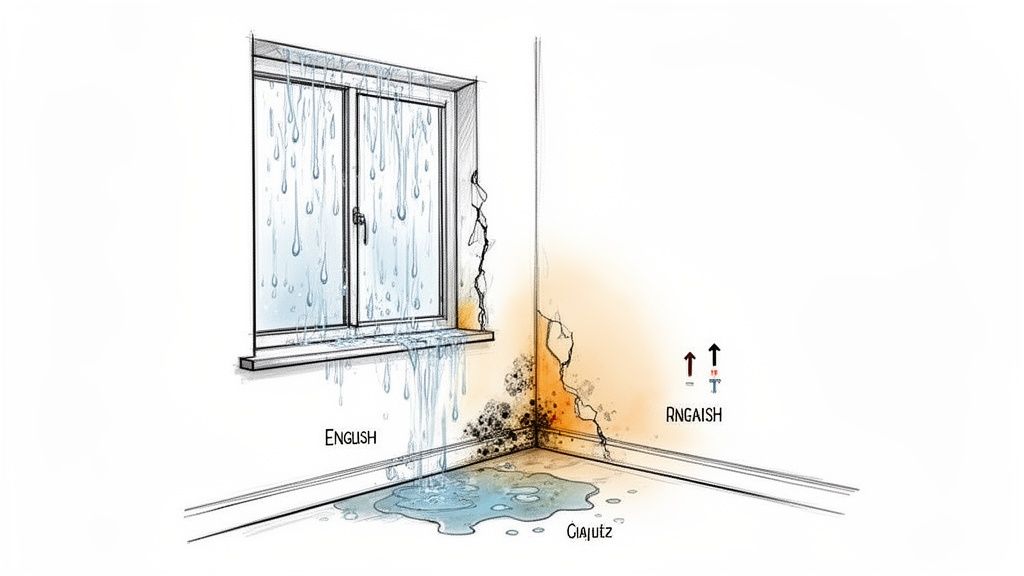
If you've spotted damp patches creeping into corners, wallpaper starting to peel, or a persistent musty smell you just can't shift, your home is trying to tell you something. These aren't minor irritations. They are the classic signs of condensation, an incredibly common headache in UK properties, from older terraced houses in York to modern flats in Leeds.
At its heart, condensation is just basic physics. It happens when warm, humid air bumps into a surface that's colder than its "dew point" temperature. At that moment, the air can't hold all its moisture, so it releases it as tiny water droplets onto the cold surface—which, more often than not, is your window panes.
Homes in the UK are particularly prone to condensation for a couple of key reasons. Our climate is often cool and damp, creating a big temperature difference between our cosy homes and the chilly air outside, especially during autumn and winter.
On top of that, our efforts to make homes more energy-efficient have resulted in properties that are incredibly airtight. While this is great for keeping heating bills down, it also traps moisture-heavy air inside with nowhere to escape. Everyday life then adds even more moisture to the mix:
The real danger of condensation isn't the water itself, but what it invites in. Persistent damp creates the perfect breeding ground for black mould, which can pose serious health risks, particularly for people with respiratory conditions like asthma. In fact, some studies show that as many as 21% of asthma cases could be linked to dampness and mould exposure.
Recognising these early signs is your first step towards fixing the problem. That water on your windows is a visible symptom of an invisible issue—too much moisture floating in your home's air. It’s a problem we see all across the North of England. Homeowners with stunning Glass Balustrades Yorkshire or sleek Glass Balustrades Newcastle might be focused on the aesthetics of their home but can easily overlook the health of the property's internal environment.
By understanding what's causing the condensation and where it's coming from, you can start taking practical steps to get it under control. Tackling it now prevents it from escalating into musty smells, damaged décor, and harmful mould, ensuring your home stays the dry, healthy, and comfortable space it should be.
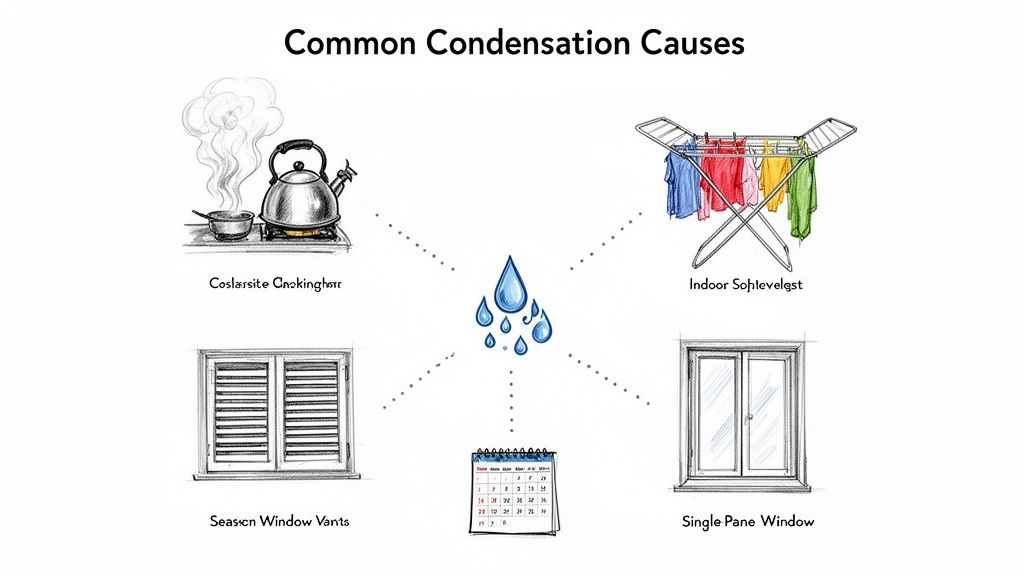
Before you can tackle condensation, you need to play detective. Those water droplets on your windows are just a symptom; the real culprit is a specific source of excess moisture in your home. By finding it, you can stop guessing and start using targeted, effective solutions.
The sources almost always fall into three camps: everyday living, issues with the building itself, or simply the time of year. Think of a family in a Hull semi-detached battling constant steam from the kitchen, or a Newcastle homeowner noticing damp only around their old, cold window frames. Each situation points to a different root cause.
Your first job is to find your home’s unique moisture hotspots. A quick self-assessment is all it takes to figure out the most effective fixes for you.
More often than not, the biggest source of moisture is us. An average family of four can produce an astonishing 11 litres of water vapour in just one day, simply by going about their normal lives.
Everyday activities that pump moisture into the air include:
Take a moment to think about your daily habits. Do you always use the extractor fan when you cook? Is laundry constantly draped over radiators? Answering these simple questions is the first step to diagnosing your condensation problem.
Sometimes, the problem isn’t just what you’re doing, but the fabric of your home. Older properties, in particular, can have inherent issues that make them magnets for moisture. For a homeowner looking to install modern Glass Balustrades Yorkshire, it's vital to ensure the rest of the property is just as efficient.
Common structural culprits include:
This is a huge issue across the UK. In 2023, damp problems—mostly driven by condensation—affected 5% of English homes, which is around 1.3 million properties. The figure is rising, especially in cities like Manchester and Hull with a lot of older housing stock prone to these issues. You can learn more about the findings on UK housing and damp problems.
Finally, the time of year plays a massive role. You've probably noticed that condensation is always worse during the colder months, from autumn right through to spring. This is simply because the temperature difference between your warm home and the chilly outside is at its greatest.
When the temperature drops outside, the surfaces of your windows and external walls become much colder. The warm, moisture-laden air inside your home comes into contact with these cold surfaces, cools down rapidly, and is forced to release its moisture as water droplets. This is exactly why knowing how to reduce condensation in home becomes a top priority for so many of us as winter draws in.
Getting on top of condensation doesn't always mean spending a lot of money. In fact, some of the most effective weapons in your arsenal are small, daily habits that cost nothing at all. Think of these simple changes as your first line of defence—practical, immediate actions that put you back in control of your home's environment.
This is about more than just following a list; it’s about understanding why these small adjustments have such a big impact. By weaving these routines into your day, you actively cut down the amount of moisture being pumped into the air, stopping condensation before it gets a chance to form on your windows and walls.
Your kitchen and bathroom are ground zero for moisture production. Every boiling pan, simmering stew, or hot shower releases a huge cloud of steam. If that humid air has nowhere to go, it will simply drift through your home and settle on the first cold surface it finds—usually your windows.
This is where your extractor fans earn their keep. Get into the habit of switching them on every single time you cook or shower. It's non-negotiable. Don't be tempted to switch it off the moment you're done, either; let it run for an extra 10-15 minutes to pull any last bits of lingering moisture out of the room.
No extractor fan? No problem. Cracking a window open while you cook or before you step into the shower does a similar job. The goal is simple: give that damp air a direct escape route outside before it becomes an indoor problem. Another easy win is to pop lids on your pans when boiling water, which traps a surprising amount of steam.
We’ve all done it, but drying clothes inside is a major culprit behind condensation, especially during the colder, wetter months. You might be surprised to learn that a single load of washing can release over two litres of water into your home's atmosphere as it dries. That’s a perfect recipe for damp and mould.
Of course, drying laundry outside isn't always an option in the UK. When you have to dry clothes inside, stick to these golden rules:
Adopting good moisture absorption methods in these high-humidity spots is crucial for managing the excess water vapour before it causes damage.
Stale, stagnant air is condensation’s best friend. When air can’t move freely, cold spots develop in corners, behind big pieces of furniture, and inside wardrobes. These spots become magnets for moisture. Thankfully, you can massively improve airflow with a few simple tweaks to your home’s layout.
Try to leave a small gap—just a couple of inches is enough—between furniture like sofas and bookcases and the external walls. This little gap allows air to circulate behind them, keeping the wall surface warmer and preventing those troublesome cold spots. The same principle applies to wardrobes and cupboards; avoid stuffing them to the brim so air can move around and stop clothes from getting that musty smell.
One of the easiest and most effective habits you can adopt is to "purge" your home for 15 minutes every morning. Simply open windows on opposite sides of the house to create a cross-breeze. This quickly flushes out all the stale, damp air that has built up overnight and replaces it with fresher, drier air from outside.
This daily ritual is especially important in modern homes with high-performance glazing. While the fantastic seals on new windows and composite doors are brilliant for keeping heat in, they also mean you need to ventilate manually. This small habit can make a huge difference in your fight to reduce condensation.
When you’ve tried all the daily habits and quick fixes but the condensation just keeps coming back, it’s a sign that the problem runs deeper. It’s time to think about long-term investments in your home.
Structural upgrades are the only way to truly tackle persistent condensation at its source, creating a permanently drier, healthier living space. These solutions aren’t just about managing moisture; they’re about fundamentally preventing it from forming in the first place. If you’re doing everything right but still finding damp patches, it's often because the building itself—poor insulation, old windows—is creating the perfect conditions for condensation. Upgrading these weak spots is a total game-changer.
The biggest battleground in the fight against condensation is almost always your windows. Old single-paned glass or tired, failed double glazing gets incredibly cold in winter, acting like a magnet for all the warm, moist air inside your home. Modern glazing is engineered to put a stop to this.
High-performance double or triple glazing creates a powerful thermal barrier between your cosy home and the freezing temperatures outside. The gap between the panes is filled with an inert gas like argon, which dramatically slows down heat loss. This keeps the inner pane of glass much warmer, preventing its surface from dropping to the 'dew point'—that critical temperature where water vapour turns back into liquid. No cold surface, no condensation. Simple as that.
For period properties or homes in conservation areas where replacing original windows isn't an option, secondary glazing is a brilliant, and often more affordable, alternative. This involves installing a slim, discreet second window on the inside of your existing one. As our glazing specialists across Yorkshire and Newcastle can tell you, it provides many of the same thermal benefits as new double glazing without altering the building’s character. You can learn more about the benefits of secondary glazing and how it works.
Modern homes are built to be airtight, which is great for energy efficiency but can be terrible for air quality. Without a path to escape, stale, damp air gets trapped inside. The trick is to introduce controlled ventilation that lets moisture out without making your home draughty and cold.
Installing trickle vents is a simple but highly effective upgrade. These are small, controllable vents fitted into the window frame that provide a constant, gentle flow of fresh air. They help purge damp air without you having to leave windows wide open, making them a perfect solution for improving background ventilation day and night.
For a more comprehensive fix, a Mechanical Ventilation with Heat Recovery (MVHR) system is the gold standard. These clever systems actively extract warm, damp air from rooms like kitchens and bathrooms. But before venting it outside, the system uses a heat exchanger to transfer the warmth to fresh, filtered air that is then supplied to your living areas. The result? Your home is constantly ventilated with fresh, pre-warmed air, slashing humidity levels and condensation risk while also cutting your heating bills.
Condensation is a major problem right across the UK. The latest English Housing Survey for 2023-2024 found that serious condensation now affects 3% of homes in England, making it more common than rising or penetrating damp. It's a particular headache in regions like Yorkshire, where older properties in cities like Leeds and York often trap moisture due to poor ventilation.
Your walls are another major surface where condensation can form, especially if your home is uninsulated. Cold external walls are a prime target. When you place furniture against them, you create a pocket of stagnant, cool air where moisture loves to condense, often leading to hidden damp and mould growth behind your sofa or wardrobe.
Improving your home's insulation is a crucial step. To stop moisture from seeping into the structure and causing problems, it’s worth looking into specialist materials like vapor barrier insulation. This not only keeps your home warmer and reduces energy bills but, critically, it also raises the surface temperature of your internal walls. Warmer walls mean fewer cold spots for condensation to cling to, protecting your property and your décor.
This is especially important for homes with solid walls, which are common in older properties right across the north of the UK. Whether you opt for internal or external wall insulation, the investment pays for itself over time by creating a warmer, drier, and far more comfortable home.
Deciding on the right upgrade can feel overwhelming. To help you weigh up the options, this table breaks down the effectiveness and typical costs of the most common solutions.
| Solution | Effectiveness | Estimated Cost | Best For |
|---|---|---|---|
| DIY Secondary Glazing Film | Low (Minor improvement) | £20 - £50 | Renters or those on a very tight budget needing a temporary fix. |
| Dehumidifier | Moderate to High (Treats the symptom) | £150 - £400 (plus running costs) | Localised problem areas or as a stop-gap before a permanent solution. |
| Trickle Vents | Moderate (Improves background ventilation) | £30 - £60 per window | Homes with newer windows that just need a bit more airflow. |
| Secondary Glazing | High (Excellent thermal barrier) | £400 - £800 per window | Listed buildings, conservation areas, or where replacing windows isn't an option. |
| Upgrade to Double/Triple Glazing | Very High (Stops condensation at the source) | £700 - £1,500 per window | Homes with old, inefficient windows needing a full, long-term solution. |
| Wall Insulation | High (Raises wall surface temperature) | £5,000 - £15,000+ | Older properties with solid walls or uninsulated cavity walls. |
| MVHR System | Very High (Whole-house ventilation & heat recovery) | £3,000 - £7,000+ | New builds, major renovations, or homes with severe, widespread condensation. |
Ultimately, the best solution depends on the scale of your problem and your budget. While a dehumidifier can offer immediate relief, investing in permanent upgrades like better glazing or insulation is the only way to solve the issue for good.
While many condensation headaches can be solved with a few habit changes and simple DIY fixes, there are times when it’s a clear signal of a deeper issue with your windows or property. Knowing when to stop battling the symptoms and bring in a professional is crucial for protecting your home from long-term damage.
Ignoring these warning signs can lead to much bigger problems like structural damp, rotting window frames, and persistent mould that can be a real health risk. A glazing specialist has the experience and diagnostic tools to look beyond the surface moisture, find the true root cause, and offer a permanent solution.
If you spot any of the following, it’s time to put down the squeegee and pick up the phone. These aren't minor annoyances; they are clear signs that your home's glazing or ventilation is failing and needs an expert eye.
When you're fighting a losing battle with condensation, guesswork isn't the answer. An experienced glazing specialist, like our teams serving communities from Harrogate to Manchester, will carry out a comprehensive survey to accurately diagnose the issue. We don’t just look at the window; we assess the entire room to understand why the condensation is forming in the first place.
This expert assessment will identify the weak points in your home's thermal envelope and pinpoint exactly where and why moisture is becoming a problem. Following the survey, we can recommend the most effective and lasting solution for your specific property.
The decision tree below can help you visualise when a simple fix might do the trick, versus when a more significant home upgrade is needed.
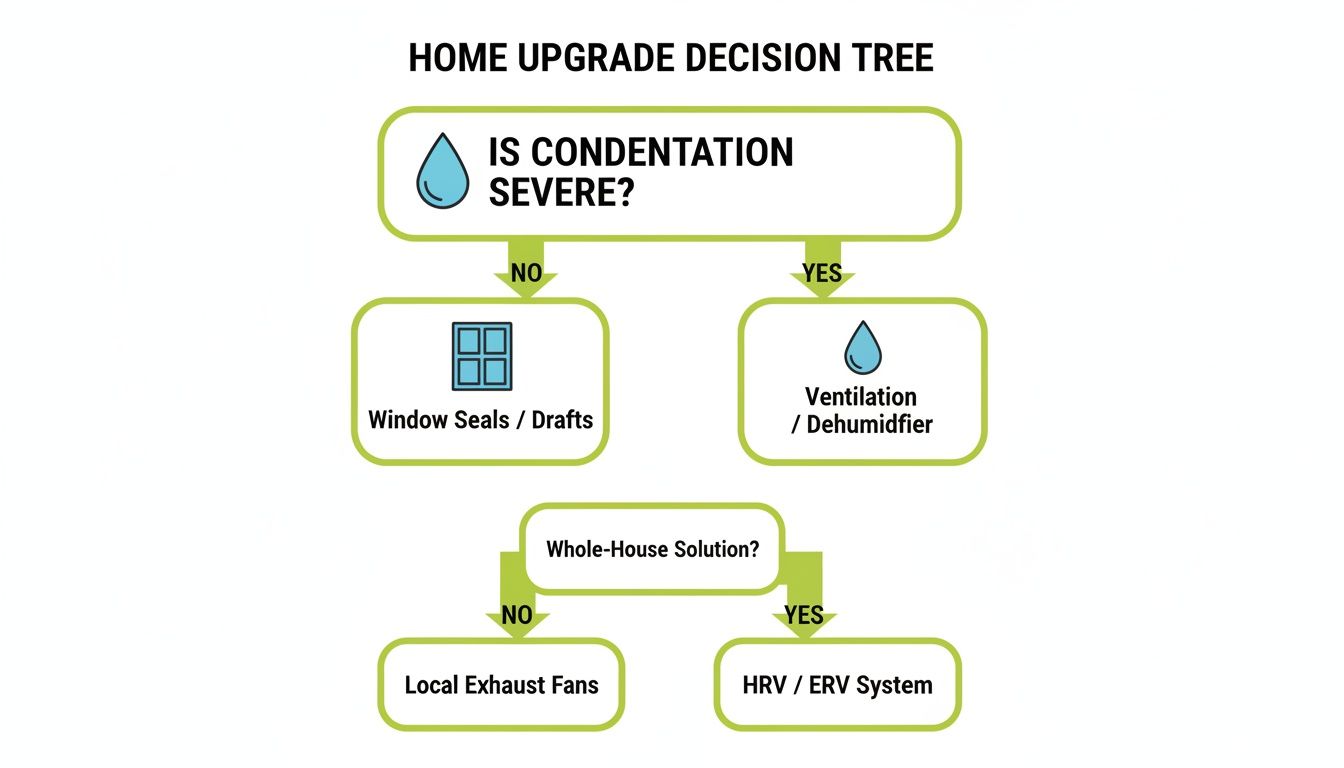
As the guide shows, while you can manage minor issues yourself, severe or recurring problems almost always point towards the need for professional help and home upgrades.
A true professional will offer a range of solutions, not just a single product. Depending on the diagnosis, the best course of action might be replacing failed sealed units, installing new windows with trickle vents, or fitting secondary glazing. Often, it's not about a full, costly replacement but a targeted, cost-effective repair.
In many cases where only the glass unit has failed, you can save a significant amount of money with a professional glass replacement service rather than changing the entire frame. This targeted approach ensures you get the best possible result for your investment, creating a drier, healthier, and much more comfortable home.
Even with the best game plan, specific questions always seem to crop up when you’re tackling condensation at home. We get asked these all the time, so here are some quick-fire answers to the most common queries.
A dehumidifier is a brilliant tool, but think of it as a powerful sticking plaster, not a permanent cure. It gets to work immediately, pulling moisture straight out of the air, which is fantastic for providing quick relief in problem spots like a bedroom or a utility room full of damp laundry.
But here's the thing: it only treats the symptom (the soggy air) and not the root cause, which is usually a combination of poor ventilation and cold surfaces. For a real, long-term fix, you have to address those underlying issues. Use a dehumidifier as your secret weapon, but don't let it distract you from the main event.
Yes, you really don't want to mess with it. A tiny spot might not look like much, but any black mould is a red flag, signalling a persistent damp problem that’s given it the perfect place to call home.
Inhaling mould spores can set off allergic reactions and cause respiratory problems, especially for children, the elderly, or anyone with asthma. In fact, studies have shown a clear link between mouldy homes and worsening asthma symptoms. Wiping it away is satisfying, but stopping the condensation that feeds it is the real win.
For the most part, yes. Condensation is fundamentally a cold-weather issue, happening because of the big temperature difference between your cosy, warm home and the chilly air outside.
In summer, the air outside is warmer, so your windows and walls simply don't get cold enough to trigger condensation. If you’re still seeing wet windows in the middle of July, it might be a sign of a more serious damp issue, like a hidden leak, that needs a proper look.
It's a common myth that condensation is just a sign of an old, draughty house. We often find the opposite is true. Modern, well-sealed homes are incredibly good at trapping all that moisture-laden air inside with no easy way out, which makes being proactive with ventilation absolutely essential.
This is the classic condensation hotspot, and the culprit is simple: you. Overnight, the average person breathes out about half a litre of water vapour. If there are two of you in a closed room, that’s a full litre of moisture being pumped into the air.
As that warm, damp air moves around, it naturally finds the coldest surface in the room – your window panes – and condenses. This is precisely why the simple habit of cracking a window open for 15 minutes every morning is so effective. It just flushes all that stale, damp air out.
It’s extremely unlikely. The glass we use for features like internal Glass Balustrades Yorkshire or outdoor Glass Balustrades Newcastle is usually in areas with plenty of airflow. It isn't acting as a barrier between a warm inside and a cold outside like a window is.
Because of this, the glass surface rarely gets cold enough for water vapour to condense on it. Your windows are the primary thermal weak point in any room, so focusing your efforts there will solve 99% of your condensation headaches.
Ready to find a permanent solution to your home’s condensation problems? The experts at Glass Tech have over 20 years of experience helping homeowners across Yorkshire and beyond. From high-performance secondary glazing to full window replacements, we provide tailored advice and quality installations. Visit us online to book your free survey today.

A professional team of experts providing glass and glazing solutions covering the whole of Yorkshire & more...
Whether it's Leeds, York, North Yorkshire, Birmingham, Hull, Liverpool, Machester, Newcastle or Nottingham, get in touch to find out how we can help you with your bespoke glass project.