
Imagine a home that’s warm and cosy in winter, but never feels stuffy or damp. It’s a common problem. Modern double glazing is fantastic at sealing heat in, but that very airtightness can trap moisture. This is where double glazed windows with ventilation come in, offering a complete solution for a healthier, more comfortable, and genuinely energy-efficient home.
It helps to think of your home as a living, breathing system. Older, draughty windows certainly let the house ‘breathe’, but they were terrible at their main job, letting huge amounts of expensive heat escape. Today's double glazed windows are engineered to be airtight, which is brilliant for insulation but can create unintended problems like condensation, stale air, and even mould if that moisture has nowhere to go.
This is where integrated ventilation—usually in the form of trickle vents—acts as your home’s lungs.
These small, discreet additions to the window frame create a controlled, consistent background airflow. The system works by continuously swapping damp, stale indoor air with fresh air from outside, but without creating noticeable draughts or undoing all the good work of the insulation. For homeowners, the benefits are clear:
In areas like Yorkshire and Newcastle, where we have our fair share of older stone properties and a climate that can be decidedly damp, managing indoor humidity is a constant battle. In the UK, fitting double glazed windows with proper integrated ventilation has become a cornerstone of modern home improvement for this very reason.
Official figures show that around 23% of UK housing stock still has double glazing that was installed before 2002. Those older units are 50% less energy efficient than the windows we fit today. Upgrading provides a powerful two-in-one solution, tackling the damp-related issues so common in our region's homes while dramatically improving comfort and style.
Ultimately, this approach gives you the best of both worlds: a warm, brilliantly insulated home that also has a constant, managed supply of fresh air. And while integrated vents are key, exploring broader DIY window insulation techniques can help you fine-tune your home's overall performance. By pairing high-quality glazing with smart ventilation, you create a perfectly balanced and healthy living environment.
To see how these elements come together in stylish, modern designs, take a look at our full range of windows and composite doors.
Modern double-glazed windows are brilliant at sealing your home, creating a cosy, quiet sanctuary. But this raises a crucial question: how do you get fresh air in without throwing a window wide open and watching your heating bill climb? The answer is background ventilation – a smart, controlled system that lets your home breathe without the drama.
Think of your house as a tightly sealed box. Everyday life – cooking a Sunday roast, taking a hot shower, even just breathing – pumps moisture into the air. With modern airtight windows, that moisture has nowhere to go. It settles on the coldest surface it can find, which is usually your window panes, leading to condensation, stale air, and eventually, the dreaded black spots of damp and mould. It's a classic problem we see in homes all over Yorkshire, from the back-to-backs in Leeds to the new estates in Sheffield.
A ventilation system, usually in the form of a trickle vent, is like a small, managed release valve for that box. It’s a discreet slot, typically fitted into the top of the window frame, that allows for a slow, constant exchange of air. It gently ushers damp, stale air out while drawing fresh, drier air in, tackling moisture build-up at the source. This quiet, continuous airflow is the secret to a healthy home, and it does it all without creating any noticeable draughts.
This flowchart maps out how all these pieces fit together to improve your home.
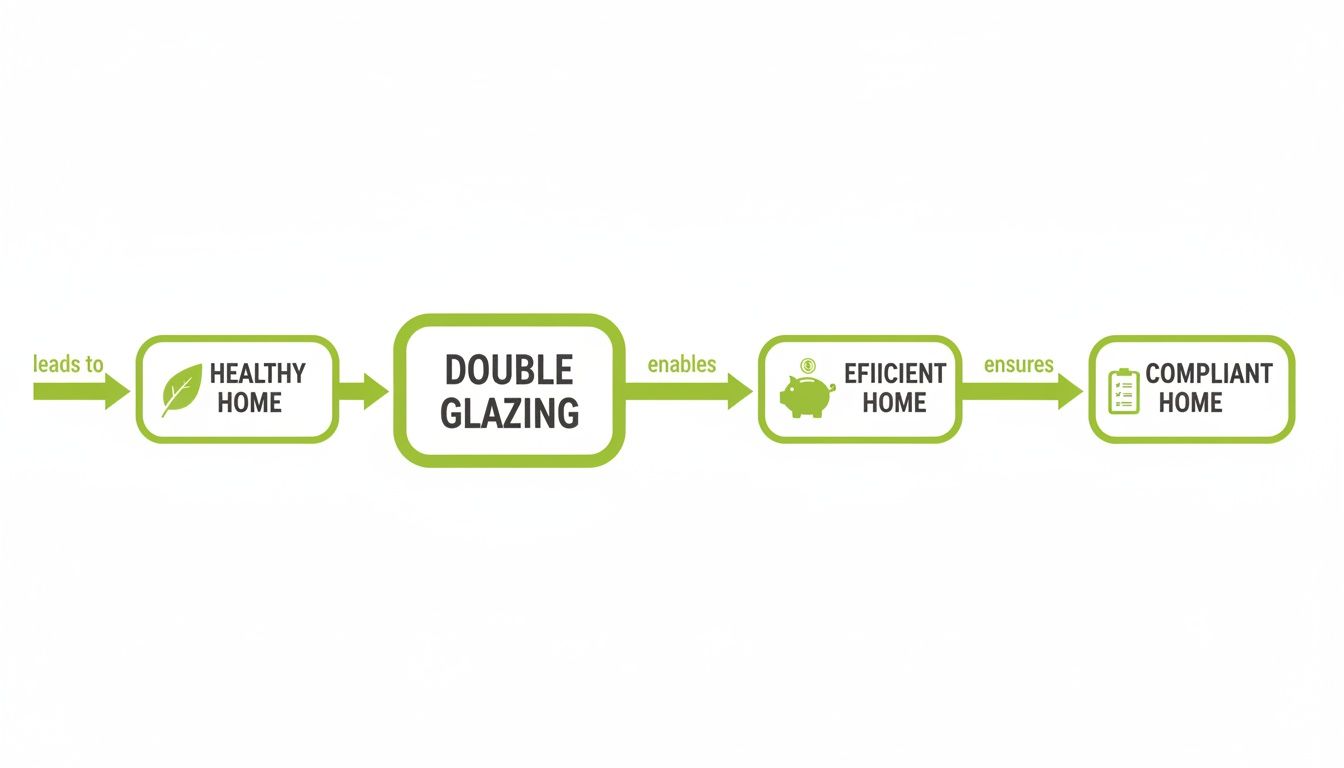
As you can see, it all connects. A healthy, damp-free home is naturally a more efficient and compliant one.
At its heart, a trickle vent is a wonderfully simple bit of engineering. It's made up of a slottable vent on the inside of your window and a protective canopy on the outside. You can open and close the internal vent yourself, giving you full control over the airflow. This is perfect for adjusting to the seasons or when you’ve got extra moisture in the air, like when drying laundry inside.
The external canopy is cleverly designed to stop rain and bugs from getting in while letting the air move freely. The whole thing is built right into the window frame, so it doesn't get in the way of the window's look or its security.
Key Takeaway: Trickle vents give you what’s called ‘passive ventilation’. They don't need any power to work. Instead, they cleverly use the natural differences in air pressure between inside and outside your home. This makes them a completely free-to-run solution for better air quality.
While the standard manual trickle vent is the most common sight, the technology has moved on. Knowing the options helps you pick the right fit for your home, whether you're in the middle of York or out in a quiet village in the Dales.
Beyond trickle vents, there's another brilliant design that offers a different way to ventilate: the tilt and turn window. This ingenious German invention from the 1950s has a single handle that works in three different ways.
This dual action makes tilt and turn windows a fantastic all-in-one choice for double glazed windows with ventilation, blending security, easy maintenance, and controlled airflow in one sleek package.
In our push to create well-sealed, energy-efficient homes, we’ve accidentally created a new set of problems: condensation, poor air quality, and the fear of losing precious heat. It’s a classic catch-22. The very features that keep us warm can also trap moisture and stale air, creating a cycle of damp that can damage your property and affect your family's health.
The good news? Modern double glazed windows with ventilation are engineered to solve all three issues at once, giving you a comfortable, healthy, and efficient home.
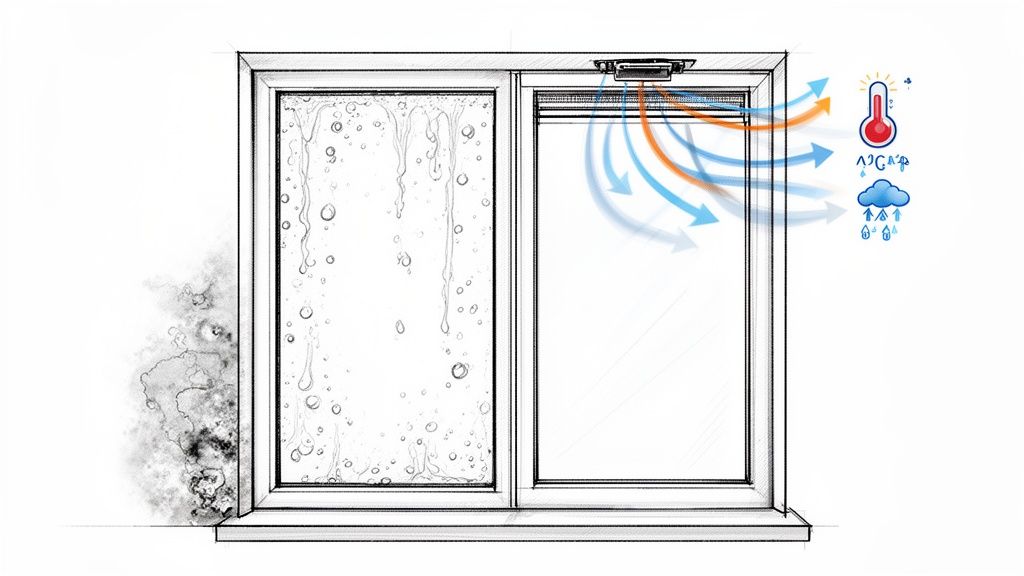
Let's break down exactly how this smart technology tackles these common household headaches.
Ever woken up to find your windows crying? That stream of water droplets running down the inside of the glass is condensation, and it's a sure sign your home is struggling to breathe. It happens when the warm, moist air inside—from cooking, showering, even just breathing—hits the cold surface of the window pane and releases its moisture.
A bit of mist might seem harmless, but persistent condensation is a major red flag. Left unchecked, it can lead to serious issues:
This is where trickle vents prove their worth. By providing a constant, gentle airflow, they whisk away humid, stale air before it ever gets a chance to condense on your windows. It’s a simple but incredibly effective way to stop condensation at its source, protecting your home and creating a healthier living space. For older properties needing an extra layer of defence, secondary glazing can also significantly reduce condensation.
One of the first questions we hear from homeowners across Yorkshire is, "Won't a vent in my brand-new window just let all the heat out?" It’s a perfectly logical question, but it stems from a common misunderstanding of how modern ventilation actually works.
Key Insight: Modern trickle vents aren't just holes in the frame. They are engineered for controlled micro-ventilation, allowing moisture to escape without creating draughts or significantly harming the window's thermal performance.
Think of it like this: leaving a window cracked open is like trying to fill a leaky bucket—you're constantly losing large amounts of heat. A trickle vent, on the other hand, is more like a specialised valve. It lets out a tiny, measured amount of air, just enough to manage humidity, while the high-performance double glazing continues to do its main job of keeping your expensive heat locked inside.
Ultimately, the energy saved by preventing damp-related damage and avoiding the need for power-hungry dehumidifiers far outweighs the minimal thermal impact of a vent. Your home stays warm and efficient.
The table below shows the clear difference that properly ventilated double glazing can make.
| Issue | Before Upgrade (Older Windows Without Vents) | After Upgrade (New Double Glazing With Trickle Vents) |
|---|---|---|
| Condensation | Frequent water droplets on glass, especially in mornings. | Drastically reduced or eliminated. |
| Mould Risk | High. Black mould often grows on sills and walls. | Very low. Surfaces stay dry, preventing mould growth. |
| Air Quality | Stale, stuffy air. Lingering smells. | Fresh, circulating air. Pollutants and odours are removed. |
| Draughts | Often draughty due to old, poorly sealed frames. | No draughts. Controlled airflow without the cold spots. |
| Energy Bills | Higher, as damp air is harder to heat. | Lower, as dry air heats more efficiently. |
As you can see, the upgrade isn't just about new windows; it's about creating a fundamentally healthier and more comfortable home environment.
Beyond tackling condensation, ventilated glazing is crucial for improving your home's overall indoor air quality. Today’s homes are so well sealed that indoor pollutants can become trapped, leading to air quality that is often far worse than the air outside.
Common indoor pollutants include:
A constant, subtle supply of fresh air from trickle vents helps to dilute and flush out these contaminants, creating a healthier home for your family. This is especially vital in busy Yorkshire towns and cities, where you might want to keep windows closed to block out traffic noise. Ventilated windows give you the best of both worlds: a quiet home with a constant supply of clean air.
In fact, research shows that modern double glazing with proper ventilation can provide noise reduction of up to 30-40 dB and is thermally superior to single panes by a factor of 3-4 times. Making the switch can even lead to 10-15% lower heating demands, helping you save money while doing your bit for the environment.
Let’s be honest, navigating building regulations can feel a bit like wading through treacle. But when you’re replacing windows, getting to grips with the rules is absolutely essential. It’s not just about ticking boxes; it's about making sure your home is safe, healthy, and legally compliant.
The key piece of legislation here is Part F of the UK Building Regulations, which is all about ventilation. These rules aren’t just red tape. As we’ve sealed our homes up tight with better insulation and double glazing, we’ve accidentally trapped stale, moist air inside. Part F is the solution, ensuring every home has a way to bring in fresh air to prevent damp, mould, and the build-up of indoor pollutants.
For anyone planning a window replacement, particularly in areas like Yorkshire where older housing stock is common, this has a direct impact. A professional job isn’t just about fitting a new frame perfectly; it’s about bringing your home up to modern standards for a healthy living environment.
The most recent update to Part F, which came into force in June 2022, made the guidance much clearer. The core principle is refreshingly simple: when you replace a window, the new installation must not make the building's overall ventilation worse.
This one rule has some big implications for your project. In practice, it usually means one of two things:
The Main Idea: The regulations are designed to guarantee a minimum level of 'background ventilation'. Think of it as a small, continuous breath of fresh air for your home, keeping things fresh without creating noticeable draughts. Trickle vents are the most common and accepted way to do this.
Ignoring Part F can lead to some serious headaches. Your local authority could issue an enforcement notice, forcing you to fix the work at your own expense—which might mean costly alterations or even replacing the non-compliant windows.
Later on, when you decide to sell your home, the lack of a FENSA certificate or building control sign-off for your new windows can cause major delays and put off potential buyers. It’s a problem that’s much easier to avoid than to fix.
As UK homeowners look for more sustainable solutions, installing double glazed windows with ventilation is fast becoming the standard for renovations. This shift is backed by data showing the market for energy-efficient windows is expected to grow by 8.1% annually through 2035. Fitting trickle vents ensures you meet the Part F rules, which is vital for preventing mould in the often-damp Yorkshire climate while still keeping the heat in. The health benefits are just as important, with controlled airflow rates of 0.3-1.5 l/s per vent helping to improve indoor air quality and reduce respiratory issues. If you want to dive deeper into the market trends, you can explore the full report on residential energy-efficient windows.
The rules are applied slightly differently depending on the project. For new-build homes, a whole-house ventilation strategy is baked into the design from day one, and windows with trickle vents are specified to meet precise calculations.
For existing homes, that "don't make it worse" principle is your guiding star. This applies to every kind of property, from a modern semi in Leeds to a historic stone cottage in the Yorkshire Dales. Any reputable installer will assess your home’s specific situation and advise on the right solution, taking the guesswork out of compliance and ensuring your project is done right.
Picking the right double glazed windows with ventilation is a big decision. It’s one of those choices that has a real impact on your home's comfort, its kerb appeal, and even your energy bills. It's all about striking that perfect balance between looks, performance, and day-to-day practicalities.
This guide will walk you through the key decisions, from the frame material that best fits your lifestyle to the type of vent that makes sense for your surroundings. Getting this right means your new windows won't just look the part—they'll perform brilliantly for years to come. For homeowners across Yorkshire and the North, considering local conditions and property styles is a crucial part of the process.
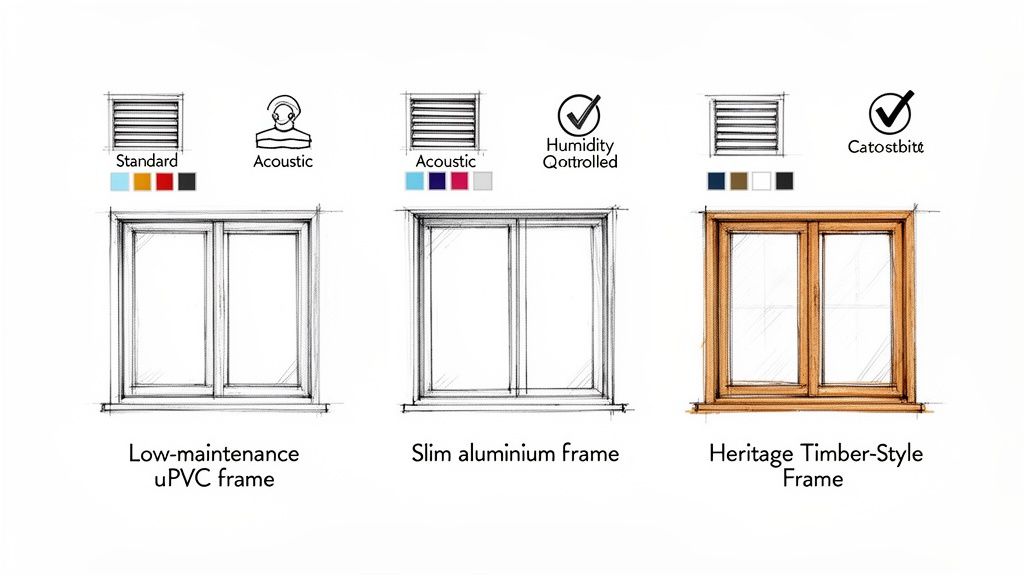
The window frame is the backbone of the whole unit, defining both its appearance and how well it performs. Each material brings something different to the table, so it’s vital to choose one that aligns with what you value most—whether that’s a low-maintenance solution for a busy family or a specific look for a period property.
To help you weigh up the options, we've put together a quick comparison of the most common frame materials used in homes across Yorkshire and the North East.
| Material | Key Advantages | Best Suited For | Maintenance Level |
|---|---|---|---|
| uPVC | Cost-effective, excellent insulation, virtually no maintenance. | Most property types, from modern builds to traditional homes. | Very Low |
| Aluminium | Slim, strong frames; modern look; durable and secure. | Contemporary homes, extensions, and architectural designs. | Low |
| Timber | Classic aesthetic, natural insulator, environmentally friendly. | Period properties, listed buildings, and conservation areas. | High |
Choosing between these often comes down to balancing your budget, the style of your home, and how much time you're willing to spend on upkeep.
Once you've landed on a frame, the next decision is the ventilation system itself. Standard trickle vents are a great all-rounder for most homes, but some situations demand a more specialised solution.
A crucial consideration for homeowners in busy urban centres like Leeds or Newcastle is noise pollution. Standard vents can sometimes allow traffic sounds to travel into your home, but there's an effective solution.
This is where acoustic trickle vents come in. They are specifically engineered to solve this problem, containing a sound-dampening foam that allows fresh air to flow through while blocking a significant amount of external noise. They’re the perfect choice for properties on main roads or in noisy neighbourhoods, ensuring you get that vital fresh air without the constant disturbance.
For a deeper dive into the specific designs and options we offer, feel free to explore our comprehensive product brochure.
A common worry is whether adding a vent might compromise the window's security or just look plain ugly. Thankfully, modern window design has tackled both of these concerns head-on.
From a security standpoint, trickle vents are integrated securely into the frame and are far too small to be used as a point of entry. They have no impact on the window's locking mechanisms or overall structural integrity.
Aesthetically, they've come a long way from the clunky plastic add-ons of the past. Today’s vents are slimline and discreet, designed to blend in seamlessly. They can even be colour-matched to your chosen frames, making them almost invisible from both inside and out. This means you don’t have to compromise—you can have a secure, stylish window and a healthy, well-ventilated home.
Deciding on new windows always brings up a few questions. It’s a big investment, after all. To help you feel confident in your choice, we’ve put together some straightforward answers to the queries we hear most often from homeowners right across Yorkshire and the North.
This is probably the number one worry we come across, but thankfully, it’s a myth. Modern double glazed windows with ventilation are designed for controlled, subtle airflow – a world away from the draught you’d get from leaving a window ajar. A trickle vent lets in a tiny, consistent amount of fresh air, just enough to circulate without you ever feeling a chill.
Think of it this way: the energy you save by preventing damp, avoiding mould, and heating dry air (which warms up much faster than damp air) easily outweighs the minuscule thermal effect of the vent. High-quality windows with integrated vents still achieve outstanding energy ratings, keeping your home warm and cosy.
In most situations, yes, they are. The current Part F of the UK Building Regulations is pretty clear: when you replace windows, the new installation must not make the building's overall ventilation worse than it was before.
What does that mean in practice? If your old windows had vents, your new ones absolutely must have them. If they didn't, you’ll almost certainly need to add them to meet today's standards for healthy air quality. A professional installer, like our team at Glass Tech, will assess your property – whether it’s in Yorkshire, Newcastle, or anywhere in between – and advise exactly what’s needed to make sure your installation is fully compliant.
It’s more than just a rule. Proper ventilation is crucial for preventing the build-up of moisture and indoor pollutants, protecting not just your home's structure but your family's health too.
Not in the slightest. Trickle vents are designed from the ground up with security and comfort in mind. They are small, securely built into the frame, and have no impact on the window's multipoint locks or its overall strength. They are far too small to be used as a point of entry.
As for noise, we have a great solution for that. If you live on a busy road in Leeds or Manchester, for example, acoustic trickle vents are the perfect answer. These specialist vents are fitted with sound-dampening materials that massively reduce the amount of traffic noise getting through, while still delivering that essential fresh air. You really do get the best of both worlds – a quiet room and healthy ventilation.
Keeping your vents working perfectly is refreshingly simple. It’s a quick job you can just add to your normal window cleaning routine.
Here’s all you need to do:
Doing this once or twice a year is all it takes to keep them in top condition, ensuring fresh air can circulate properly for years to come.
Ready to create a healthier, more comfortable, and energy-efficient home? The expert team at Glass Tech is here to help. We offer professional advice and flawless installation of high-performance double glazed windows with ventilation across Yorkshire and the North of England. Contact us today for a free, no-obligation quote.

A professional team of experts providing glass and glazing solutions covering the whole of Yorkshire & more...
Whether it's Leeds, York, North Yorkshire, Birmingham, Hull, Liverpool, Machester, Newcastle or Nottingham, get in touch to find out how we can help you with your bespoke glass project.