
Secondary glazing is one of those brilliantly simple ideas that makes a huge difference. In essence, it’s about improving your window's performance by adding a second, separate pane of glass to the inside of the one you already have. This simple addition creates an insulating air gap that dramatically boosts thermal efficiency and cuts down noise, all without touching your original windows.
Think of it as giving your window a high-performance partner.
Imagine putting on a second coat on a chilly day—secondary glazing works on the very same principle for your home. We fit a slim, discreet, and separate pane of glass, complete with its own frame, to the room-side of your existing windows. Your original windows, whether they're beautiful old timber sashes or more modern casements, are left completely untouched.
This process creates a sealed pocket of air between the old and new panes. This gap is the secret weapon; it acts as a powerful insulating barrier, stopping precious heat from escaping and preventing the cold from seeping in. It’s this trapped layer of air that does all the heavy lifting, instantly making your home warmer and more energy-efficient. For anyone with single-glazed windows, it's a genuine game-changer.
For many properties, especially in conservation areas or the beautiful listed buildings we see across Yorkshire, replacing original windows just isn't an option. Planners and conservation officers are rightly protective of anything that might alter the external character of a historic building. This is exactly where secondary glazing shines.
Because it’s installed internally, it preserves the building's exterior aesthetic completely. You get all the benefits of modern glazing—a warmer, quieter home—without compromising the architectural integrity that makes your property special. From a terraced house in Newcastle battling a busy road to a listed cottage in a quiet Yorkshire village, it provides a powerful upgrade that’s hidden in plain sight.
At its core, secondary glazing is about adding performance, not replacing character. It’s an intelligent, non-invasive upgrade that works with your existing windows to make your home more comfortable and efficient.
The benefits are immediate. It’s a practical and effective way to fight back against rising energy costs and create a more peaceful living space by directly tackling the common problems of draughts, high heating bills, and intrusive noise.
To give you a quick snapshot of the key advantages, we've put together a simple summary of how secondary glazing can help your home.
| Benefit | How It Helps Your Home | Ideal For |
|---|---|---|
| Thermal Insulation | Significantly reduces heat loss (by up to 65%), leading to lower energy bills and a warmer, cosier home. | Older properties, single-glazed windows, and anyone looking to improve energy efficiency. |
| Noise Reduction | Cuts external noise by up to 80%, creating a much quieter and more peaceful indoor environment. | Homes near busy roads, airports, train lines, or in bustling city centres like Leeds or Manchester. |
| Preservation | Keeps original windows intact, making it perfect for listed buildings and conservation area properties. | Heritage homes, period properties, and buildings with unique or protected architectural features. |
| Cost-Effective | Typically costs around 50% less than a full double glazing replacement, offering a great return on investment. | Budget-conscious homeowners seeking high-impact improvements without the cost of window replacement. |
As you can see, the benefits are clear, targeted, and offer a fantastic solution for a wide range of common household issues.
The real magic of secondary glazing lies in the immediate, noticeable difference it makes to your home's atmosphere. At its core, it tackles two of the most common complaints we hear from homeowners: the persistent chill from old windows and the constant drone of outside noise. The solution is beautifully simple, relying on a basic principle of physics to deliver a warmer, quieter home.
When we install a second pane of glass inside your existing window, we’re creating a sealed air gap. This pocket of still air is a terrible conductor of heat, which makes it a fantastic insulating barrier. In winter, it keeps your precious warmth from escaping, and in summer, it helps block the oppressive heat from getting in.
This one addition can completely transform how your home feels, turning those previously draughty spots near windows into comfortable, usable parts of the room again.
Single-glazed windows, especially in the beautiful period properties found across Yorkshire, are a primary source of heat loss. This escaping warmth doesn't just make rooms feel cold; it forces your heating system to work overtime, which you'll definitely see on your energy bills.
Secondary glazing confronts this problem head-on. By trapping that insulating layer of air, it massively slows down the rate at which heat escapes through the glass. For homeowners in Leeds, Manchester, and other northern areas who know all about long, cold winters, this is a genuine game-changer. You’ll feel the difference almost straight away—rooms hold their heat for much longer, and that need to have the thermostat cranked up all the time starts to fade. For anyone searching for "Glass Balustrades Yorkshire" or nearby, upgrading your home's thermal efficiency is just as crucial.
It’s a smart, effective way to boost your home’s energy efficiency without the cost and disruption of a full window replacement. This is particularly vital for listed properties in conservation areas around Leeds, York, and Harrogate, where preserving the original character is non-negotiable. It’s not just us saying it; industry bodies confirm that secondary glazing can slash heat loss by an incredible 60%. The impact on noise is just as impressive, with reductions of up to 54dB—far outperforming the typical 31dB reduction from standard double glazing. You can find out more about how it transforms period properties on the Federation of Master Builders (FMB) website.
This infographic neatly summarises the core benefits secondary glazing brings to your home.
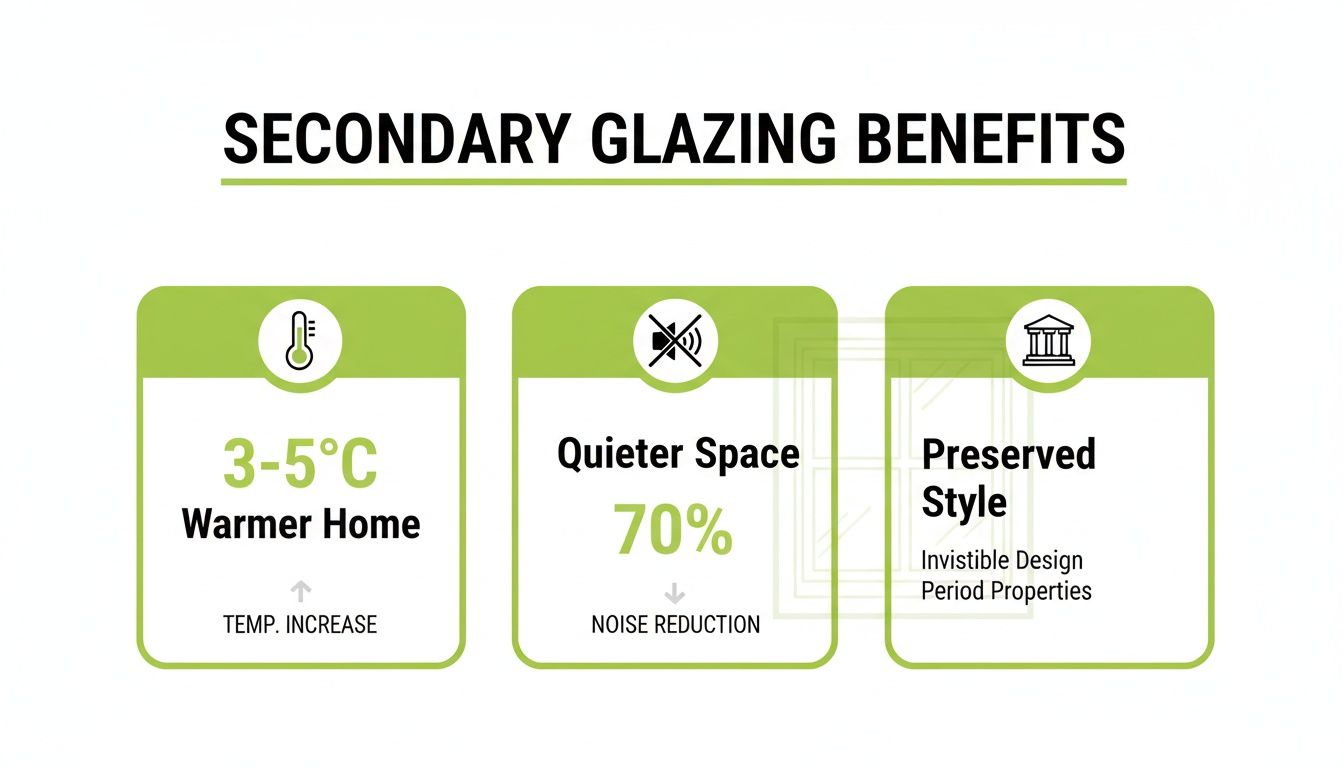
As you can see, the benefits are clear: a warmer space, a quieter environment, and the original style of your home perfectly preserved.
Beyond just warmth, secondary glazing is one of the single most effective ways to soundproof your home. That same air gap that provides thermal insulation also works wonders at dampening external noise. Sound travels in waves, and when those waves hit the first pane of glass, their energy is significantly deadened as they try to cross the air gap to the second pane.
The effect can be profound. In fact, a properly installed system can reduce incoming noise by as much as 80%. To give that some context, the difference between a busy road and a quiet library is about 40 decibels (dB). Our secondary glazing can achieve a reduction of 50dB or more, effectively silencing the world outside.
The larger the gap between the original window and the new internal pane, the better the sound insulation. This allows us to tailor the installation to combat specific noise problems, from general traffic to louder, low-frequency sounds.
This makes it the perfect solution for all sorts of everyday situations. Just imagine:
By tackling both heat loss and noise pollution in one go, secondary glazing delivers a comprehensive upgrade to your home’s comfort, making it a far more enjoyable and efficient place to live.
Just as every home has its own unique character, every window serves a different purpose. Your secondary glazing should complement this perfectly, not get in the way. The real key to a successful installation is picking a system that matches how you actually use your windows. This ensures you get all the benefits of warmth and quiet without sacrificing convenience.
The choice is less about looks—all our options are designed to be incredibly discreet—and more about pure practicality. Do you need to open the window frequently for a bit of fresh air? Or is it a high-up window you rarely touch? Answering these simple questions will point you straight to the perfect solution, whether you're in a modern flat in Newcastle or a period home in Harrogate.
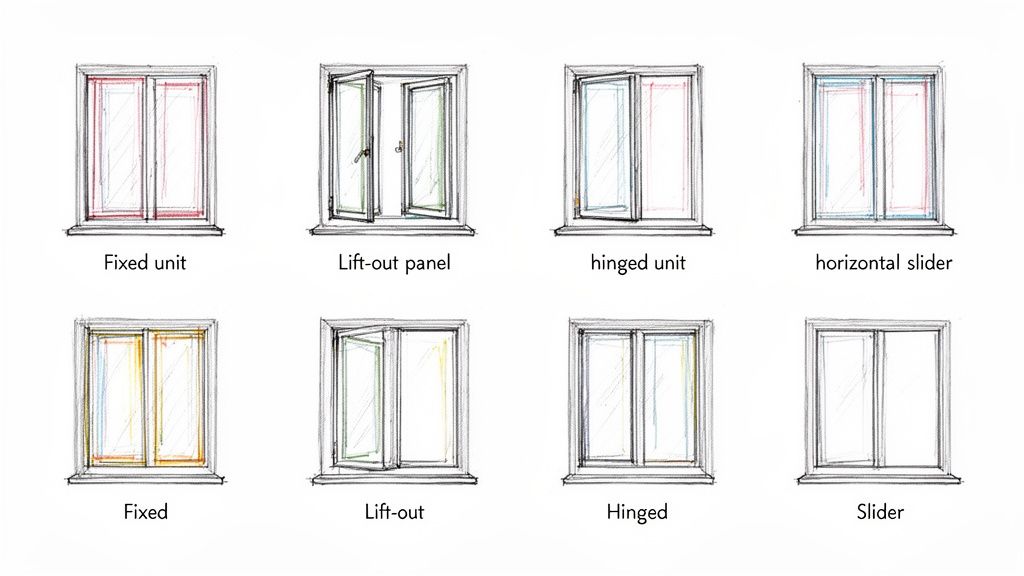
We treat every installation as a bespoke project, guaranteeing a seamless fit that enhances both the performance and the day-to-day usability of your original windows.
To help you visualise the options and how they fit different needs, we've put together a simple comparison. Think of this as a quick guide to matching the right system to your specific windows.
| System Type | How It Works | Best Suited For | Pros | Cons |
|---|---|---|---|---|
| Fixed | A single, non-opening pane is permanently installed to create a complete seal. | Picture windows or high, hard-to-reach glazing where access is not needed. | Highest level of insulation; most cost-effective; no moving parts to maintain. | No ventilation or access for cleaning without full removal. |
| Lift-Out | The secondary pane sits in a fixed frame but can be manually lifted out of its channels. | Windows that only need occasional access for cleaning or seasonal ventilation. | Excellent insulation; simple design; more affordable than opening systems. | Can be cumbersome to remove, especially larger panes. Not for daily access. |
| Hinged | Opens inwards like a traditional window, on side, top, or bottom hinges. | Casement windows that are opened regularly for fresh air. | Easy, regular access; excellent seal when closed; very user-friendly. | Requires clear space inside the room for the unit to open into. |
| Sliding (Horizontal & Vertical) | Panels slide smoothly on tracks, either side-to-side or up-and-down. | Traditional sash windows (vertical) and modern sliding windows (horizontal). | Mimics the function of the original window; easy to operate; maintains character. | The overlapping frames can be slightly more visible than a single fixed pane. |
Each system has its place, and the best choice is always the one that makes your life easier while delivering the performance you need.
For windows you simply don’t need to open, a fixed unit is the most straightforward and budget-friendly option. It’s a single, non-opening pane of glass that provides a permanent, airtight seal. This is the perfect choice for picture windows or those high, awkward-to-reach spots where your main goal is maximum insulation from noise and cold, without any need for ventilation.
A touch more flexible are the lift-out units. These panels are designed to be removed when you need to, perhaps for a spring clean or to let the air in during summer. They sit securely in a fixed outer frame but can be lifted out of their channels when required.
These systems are brilliantly simple, focusing entirely on delivering the core benefits of secondary glazing with maximum efficiency.
If you open your windows regularly for fresh air, then a hinged unit is almost always the best way to go. These systems operate just like a second window, opening inwards into the room on high-quality, durable hinges. They are incredibly versatile and can be made to open from the side, top, or bottom to perfectly mirror how your existing casement windows work.
The slimline frames are designed to be as unobtrusive as possible, ensuring they don’t spoil the view. When shut, they provide a superb seal against draughts and noise, but they open in seconds for ventilation. This has made them a hugely popular choice for homeowners across Yorkshire who want modern performance without losing traditional functionality.
Hinged units offer the perfect balance of high performance and everyday practicality. They allow you to enjoy a warmer, quieter home while retaining full, easy access to your original windows whenever you need it.
This style is particularly well-suited to the standard casement windows found in countless homes. It’s a practical upgrade that feels completely natural to use. If you're also thinking about updating your primary windows, we offer a wide variety of modern windows and composite doors that pair perfectly with our glazing solutions.
For traditional sash windows—a defining feature of so many beautiful period properties in cities like York and Durham—sliding systems are the ideal match. These units are specifically designed to replicate the movement of the original window, so you don't lose any of that classic functionality.
Both systems are mounted on smooth-running tracks, making them effortless to open for ventilation and cleaning. They provide an elegant solution that respects the heritage of your property while delivering the outstanding thermal and acoustic insulation that makes secondary glazing such a worthwhile investment.
It’s a question we get all the time: should I go for secondary glazing, or replace my windows entirely with new double glazed units? While both will make your home warmer and quieter, they are fundamentally different solutions designed for very different situations.
Often, the best choice has less to do with performance and more to do with the unique character and rules governing your property.
Secondary glazing truly comes into its own when keeping your original windows is the top priority. For many homeowners, this isn't just a matter of taste—it's a legal requirement. In these cases, secondary glazing isn't a compromise; it's the perfect, and often only, approved solution.
A full replacement, on the other hand, means tearing out the old windows completely. It’s a bigger, messier, and more expensive job, but it can be the right move for modern homes where architectural preservation isn't a concern.
If you live in a listed building or a conservation area—especially in historic cities like York, Durham, and Harrogate—the decision is usually made for you. Planning regulations are rightly strict about protecting the architectural integrity of these properties, and original windows are a massive part of that heritage.
This non-invasive approach is a huge relief for anyone who owns a period property. You get all the modern comforts without having to sacrifice the very character that makes your home special.
When you stack the two options against each other, it's vital to look beyond the initial price tag. You might be surprised to learn that secondary glazing often delivers better performance in key areas—especially noise reduction—for a fraction of the cost.
While standard double glazing is good, secondary glazing can cut down outside noise by up to 80%. For comparison, double glazing typically manages around 50%. This is all down to the much wider air gap between the panes, which is brilliant at deadening sound waves. For anyone on a busy road in Newcastle or central Manchester, that difference is life-changing.
Secondary glazing typically costs around 50% less than a full double glazing replacement. The process is quicker, requires less labour, and avoids the additional costs of making good around new frames.
This cost-effectiveness makes it a sensible upgrade for a wider range of budgets, delivering a fantastic return on your investment through lower energy bills and a much more comfortable home.
The fitting process is another area where the two options are worlds apart. Ripping out old windows is a major job. It involves removing frames, which almost always causes damage to the surrounding plaster and decor, creating a lot of dust and disruption.
Installing secondary glazing, however, is a much cleaner and faster affair.
This hassle-free installation is a huge plus for any busy household. If you're weighing up different options, our guide on when a full glass replacement service is the right call offers more insight. It can also be helpful to understand the pros and cons of Double Pane Versus Triple Pane Windows to get a fuller picture of all the glazing solutions available. This broader knowledge helps ensure you choose the absolute best fit for your home.
Knowing what to expect on installation day can make all the difference. We’ve refined our process to be clear, straightforward, and as undisruptive as possible, so you feel completely at ease from our first chat to the final handover. It’s all designed to be seamless, respectful of your home, and focused on a flawless result.
It all starts not with a salesperson, but with an expert consultation. A senior member of our team will visit your home at a time that works for you. Whether you’re in Leeds, Newcastle, or anywhere across the North, this first meeting is about understanding what you really need – are you trying to silence traffic noise, stop those pesky draughts, or both?
We’ll take a proper look at your existing windows, talk you through the best types of systems for your property, and answer every single question you have. There's absolutely no hard sell, just practical, honest advice from people who know their stuff.
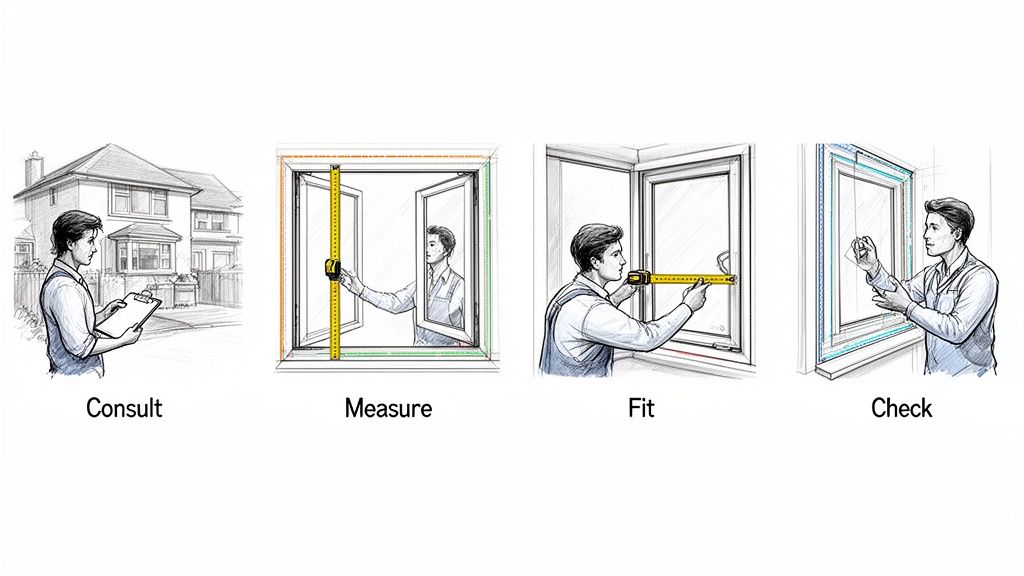
After the consultation, the next vital step is taking precise measurements. Unlike off-the-shelf products you might find elsewhere, our secondary glazing is entirely bespoke. Every window is measured with meticulous care to guarantee an absolutely perfect, airtight seal.
This made-to-measure approach is the secret to the system's performance. An exact fit means there are no gaps for draughts to sneak through or sound to bleed in, ensuring you get the maximum thermal and acoustic benefits. It’s a detailed, careful process that forms the foundation of a quality installation.
Our team uses specialist tools to capture the exact dimensions, making sure to account for any quirks or imperfections in older window frames—something we see all the time in the beautiful period properties across Yorkshire.
One of the biggest plus points of choosing secondary glazing is just how little disruption it causes. Ripping out and replacing windows can be a messy, drawn-out affair, but our process is clean, quick, and happens entirely inside your home.
Here’s a quick rundown of what you can expect on the day:
The process is so streamlined that you can start enjoying a warmer, quieter home almost immediately, without the headache and mess that comes with a major renovation project.
Our job isn’t done when the last panel is fitted. Before we pack up, our lead installer will walk you through the work we’ve done, showing you how to operate any opening units and making sure every last detail meets our own high standards.
The final stage is our clean-up and quality check. We leave your home exactly as tidy as we found it, with nothing left behind but beautifully installed, high-performance secondary glazing. Your complete satisfaction is what we aim for.
We take huge pride in our craftsmanship and our service. From that first survey in your Yorkshire home to the final handover, our entire process is built to give you total peace of mind and a result that will enhance your home for decades.
So, what does secondary glazing actually cost? It’s one of the first questions we’re asked, and the honest answer is: it depends. Unlike grabbing something off the shelf, our systems are completely bespoke. The final figure on a quote is shaped by a handful of key factors, all tied to your specific windows and what you want to achieve.
Think of it less as a standard product and more as a tailored solution. We look at every detail to make sure what we install is a perfect fit for your windows, your home's character, and your budget.
When we put together a quote, a few things come into play. Knowing what they are helps you understand exactly where the value is.
Because secondary glazing is a custom job, it can be helpful to see how it stacks up against other made-to-measure window products. For a bit of context, looking into comparing costs for custom window treatments can highlight the difference between a one-size-fits-all approach and a truly bespoke solution.
It’s easy to focus on the initial outlay, but it's much better to see secondary glazing as a long-term investment in your property. The money you spend now is quickly balanced out by real, noticeable savings on your energy bills, year after year.
Let’s put it into perspective. Take a typical terraced house in Manchester with draughty old single-glazed windows. The owner might invest around £3,000 - £5,000 to have secondary glazing fitted to the main windows. But by cutting heat loss by up to 65%, they could easily see their annual heating bills drop by £200 - £350.
When you run the numbers, the payback period is often surprisingly short. But more importantly, you feel the difference from day one – the house is instantly warmer, quieter, and more comfortable.
This isn't just about saving money; it's about improving your home life and making your property a much better prospect for future buyers. For a full rundown of all the options and finishes we offer, you can find everything in the Glass Tech brochure. Whether your home is in Yorkshire or up in Newcastle, the benefits quickly add up, making it one of the smartest upgrades you can make.
It's completely normal to have a few questions buzzing around, even after getting to grips with the basics. Deciding on the right solution for your home is a big deal, and we want you to feel totally confident. To help, we've put together answers to the most common queries we hear from homeowners across Yorkshire and the North.
Let's clear up some of the myths and give you the straightforward answers you need.
This is a really common worry – that adding another pane of glass will trap moisture and make a damp problem worse. In reality, a professionally installed system does the exact opposite. Condensation happens when the warm, moist air inside your home hits a freezing cold, single-glazed window.
Our secondary glazing creates a robust, airtight seal. This simple barrier keeps the inner pane of glass much closer to room temperature, dramatically reducing the point where condensation can form. The result is a drier, healthier home and protected window frames.
Absolutely. There would be no point in solving one problem just to create another. We would never install a system that stops you from letting in a fresh breeze.
Functionality is at the heart of our designs, and we have a solution for every window type:
When we visit your home in Leeds or Newcastle for a survey, we’ll take the time to understand how you use each window, ensuring we recommend the most practical and user-friendly option.
One of its biggest advantages, particularly for period properties, is just how discreet it is. From the outside of your house, there’s no change at all. It’s completely invisible, which is precisely why it’s so often approved for listed buildings and homes in conservation areas.
Inside, the slimline aluminium frames are designed to be as unobtrusive as possible, blending into your existing window reveals. We can even powder-coat them to match your decor. Our goal is to give you a solution you can feel, but barely see.
The real beauty of modern secondary glazing lies in its subtlety. It preserves the character you love while delivering powerful, hidden performance against noise and heat loss.
This isn't a temporary fix; it's a durable, long-term investment in your home. We use high-quality, robust aluminium for our frames, which is engineered to perform for decades without deteriorating.
Unlike timber, aluminium doesn’t warp, rot, or need repainting every few years. When you pair that with tough, high-performance glass, you get a system you can rely on for many, many years to come. It's a truly cost-effective way to improve your home's comfort, security, and value.
Ready to discover how secondary glazing could transform your home? The team at Glass Tech is here to provide expert advice and a bespoke quote tailored to your property.
Get in touch today to arrange your free, no-obligation survey.

A professional team of experts providing glass and glazing solutions covering the whole of Yorkshire & more...
Whether it's Leeds, York, North Yorkshire, Birmingham, Hull, Liverpool, Machester, Newcastle or Nottingham, get in touch to find out how we can help you with your bespoke glass project.