
If your home feels stubbornly chilly even with the heating cranked up, your windows are the most likely culprit. It’s a common frustration. You’re paying for warmth that’s literally going out the window, driving up your energy bills, especially during those long, harsh UK winters.
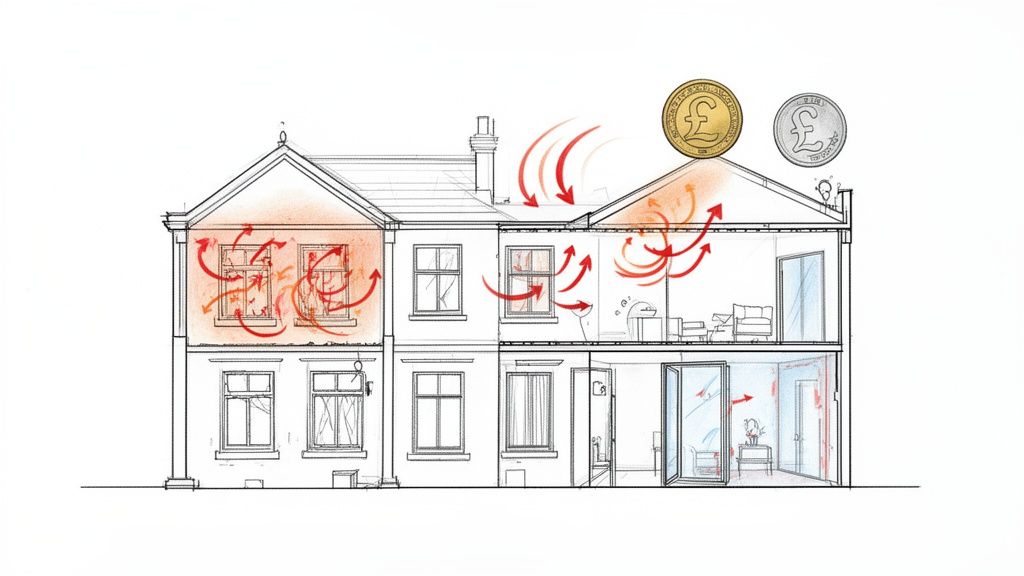
Many homeowners don't realise just how much heat their windows are losing, especially if they’re dealing with older glazing. The problem goes beyond obvious draughts; it's about the fundamental performance of the glass and frames themselves. Over the years, seals degrade, insulating gas escapes, and technology simply moves on, leaving older windows thermally inefficient.
This isn’t a small issue. In fact, the UK's housing stock is notorious for heat loss, performing worse than any other country in Western Europe. Our homes are, on average, three times less energy-efficient than those in Germany, and outdated windows are a huge part of the problem.
A landmark 2023 report from the Glass and Glazing Federation (GGF) and British Glass, titled 'A Window of Opportunity', laid the facts bare. It revealed that around 80 million home windows need replacing for the UK to have a chance of meeting its net zero targets.
Here’s the really shocking part: double glazing installed before 2002, which is still found in about 23% of UK homes, is 50% less efficient than modern windows. Upgrading these units could slash a well-insulated home's heat loss from 44% down to just 22%. That's a potential saving of up to £395 per year on your energy bills.
For homeowners in areas like Yorkshire and Newcastle, understanding the age of your windows is the first real step towards a warmer, more efficient home. If your double glazing went in before 2002, it almost certainly lacks the features that are now considered standard.
These older units are typically missing crucial technology:
Without these advancements, your windows act more like thermal holes than effective barriers, constantly leaking precious warmth. As a family-run team of experts at Glass Tech in Harrogate, this is an issue we see and fix every single week for customers seeking Glass Balustrades Yorkshire and beyond.
Realising your windows might be the source of your chilly rooms and high bills is the first step. By learning about our modern, efficient windows and composite doors, you can start to see just what a significant difference an upgrade can make.
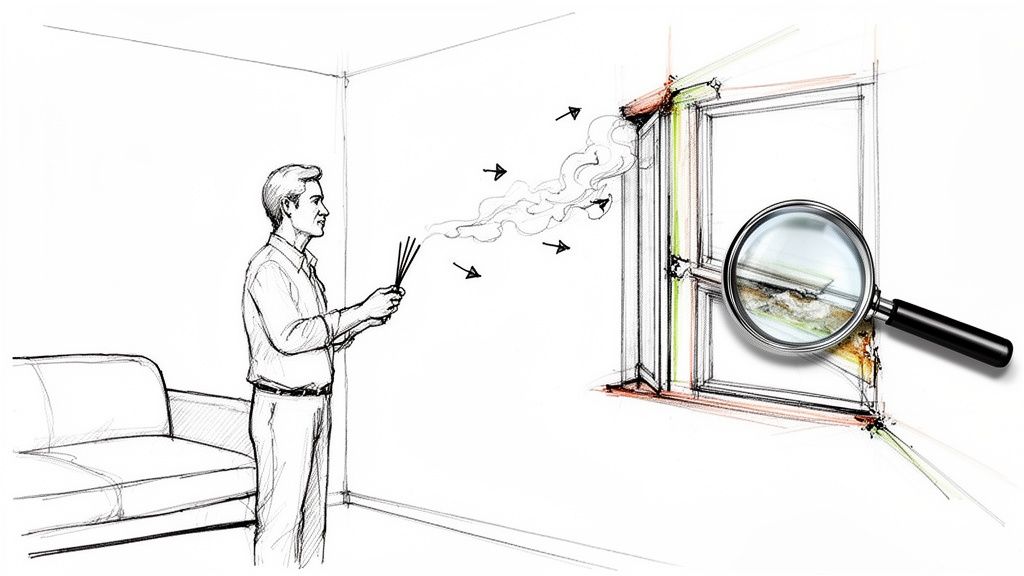
Before you can stop heat from pouring out of your windows, you need to play detective. The goal is to pinpoint exactly where your precious warmth is making its escape.
That persistent cold spot by the sofa in your Leeds townhouse or the frustrating condensation on a bedroom window in York are obvious clues. But a more hands-on approach will reveal the true scale of the problem. Thankfully, you don't need any specialist kit to get started.
A simple physical inspection is the best place to begin. Run your hands along the edges of the window frames and where they meet the wall. On a cold, windy day, you’ll often feel a definite temperature drop or even a slight breeze. This simple "hand test" is surprisingly effective.
Pay close attention to the seals around opening sashes and check for any visible gaps or cracks. Old, brittle, or peeling gaskets are a dead giveaway that your window's defences have failed.
To get a more precise idea of where air is leaking, you can use a couple of things you probably already have at home. These simple tests help you see the airflow, turning an invisible problem into something you can tackle directly.
Remember, a draught isn't just about feeling a bit chilly; it's a constant flow of energy and money out of your home. Sealing these leaks is one of the quickest wins for lowering your heating bills.
Another huge visual clue is condensation or haziness between the panes of glass. These foggy windows are a sign that the seal on the double-glazing unit has failed. When this happens, the insulating gas inside escapes, and the window becomes far less effective at keeping the heat in.
Beyond physical draughts, a massive amount of heat is lost straight through the glass and frame. The performance of a window in resisting this type of heat transfer is measured by its U-value.
Think of a U-value as a grade for your window's insulation—the lower the number, the better it performs. It measures how much heat passes through a square metre of the window for every degree of temperature difference between the inside and outside.
Here’s a rough guide to what those numbers actually mean:
If you don’t know the U-value of your windows, their age is a strong indicator. For any homeowner in Newcastle or Yorkshire with windows over 20 years old, it’s almost certain they have high U-values and are a major source of heat loss. By identifying these underperformers, you can start to prioritise which windows need the most urgent attention.
Now that you've pinpointed the weak spots in your windows, you don't need a huge budget to start feeling a real difference. Many of the best ways to stop heat from escaping through your windows are surprisingly cheap and easy to tackle over a weekend.
These are the quick wins. The jobs that deliver an almost immediate payoff, making your rooms feel cosier straight away. Think of it as prepping your Manchester home for a sudden cold snap — you want maximum impact for minimum outlay. This is where simple, practical solutions shine, turning a draughty space into a comfortable retreat without breaking the bank.
Fundamentally, these fixes are all about creating better barriers. You're either stopping cold air from getting in or preventing warm air from getting out — and often, you're doing both at once.
The single most effective and affordable thing you can do is seal up any gaps letting cold air whistle through. For older window frames in particular, draught-proofing is an absolute game-changer.
You can pick these materials up at any DIY store, and they will dramatically reduce air infiltration, which is one of the biggest culprits of heat loss.
Never, ever underestimate your window dressings. The right curtains or blinds act as a powerful layer of insulation by trapping a pocket of air between the fabric and the cold glass. This simple air gap significantly slows down heat transfer.
For the best results, look for proper thermal curtains. They have a special lining designed specifically to stop heat from escaping. To make them truly effective, make sure they’re thick, hang from above the window frame right down to the floor, and are wide enough to cover the entire window area with plenty of overlap. The simple habit of closing them as soon as dusk falls makes a huge difference.
A study by Historic England on traditional timber sash windows, found in historic properties from Leeds to York, revealed that simple measures have a huge impact. While draught-proofing cut air leakage by over 60%, just closing curtains or plain blinds can reduce heat loss through conduction and radiation by 40-50%. You can dive into the full findings from Historic England to learn more.
If you want to mimic the effect of double glazing for a fraction of the cost, give window insulation film a go. This clear plastic film is applied to the inside of your window frame with double-sided tape and then shrunk taut with a hairdryer.
It works by creating a sealed pocket of still air between the film and the glass, which is a brilliant insulator. It’s a temporary, seasonal solution and won’t last forever, but it’s highly effective at cutting down both condensation and heat loss through the glass itself.
Pros and Cons of Window Film
| Pros | Cons |
|---|---|
| Very low cost | Not a permanent solution |
| Easy for anyone to install | Can be easily torn or punctured |
| Visibly reduces condensation | May slightly distort the view outside |
| Must be removed and replaced each year |
This method is perfect for single-glazed windows or old, inefficient double-glazing units where a full replacement isn't an option right now. For a homeowner in Newcastle looking to get through a tough winter, this tiny investment can yield a much warmer living space. Combine these DIY fixes, and you’ll create a multi-layered defence against the cold.
While DIY fixes can offer some immediate relief, they’re really just temporary measures. For a permanent solution that delivers serious long-term savings and comfort, it’s time to think about a professional upgrade.
Investing in high-performance glazing is about more than just stopping a few draughts; it’s a fundamental improvement to your home's thermal efficiency. It boosts your property’s value and creates a genuine sanctuary from the cold. This is the point where you stop patching problems and start installing a lasting solution. Whether your home is a modern new-build in Hull or a period property in Harrogate, choosing the right glazing technology is one of the most important decisions you'll make.
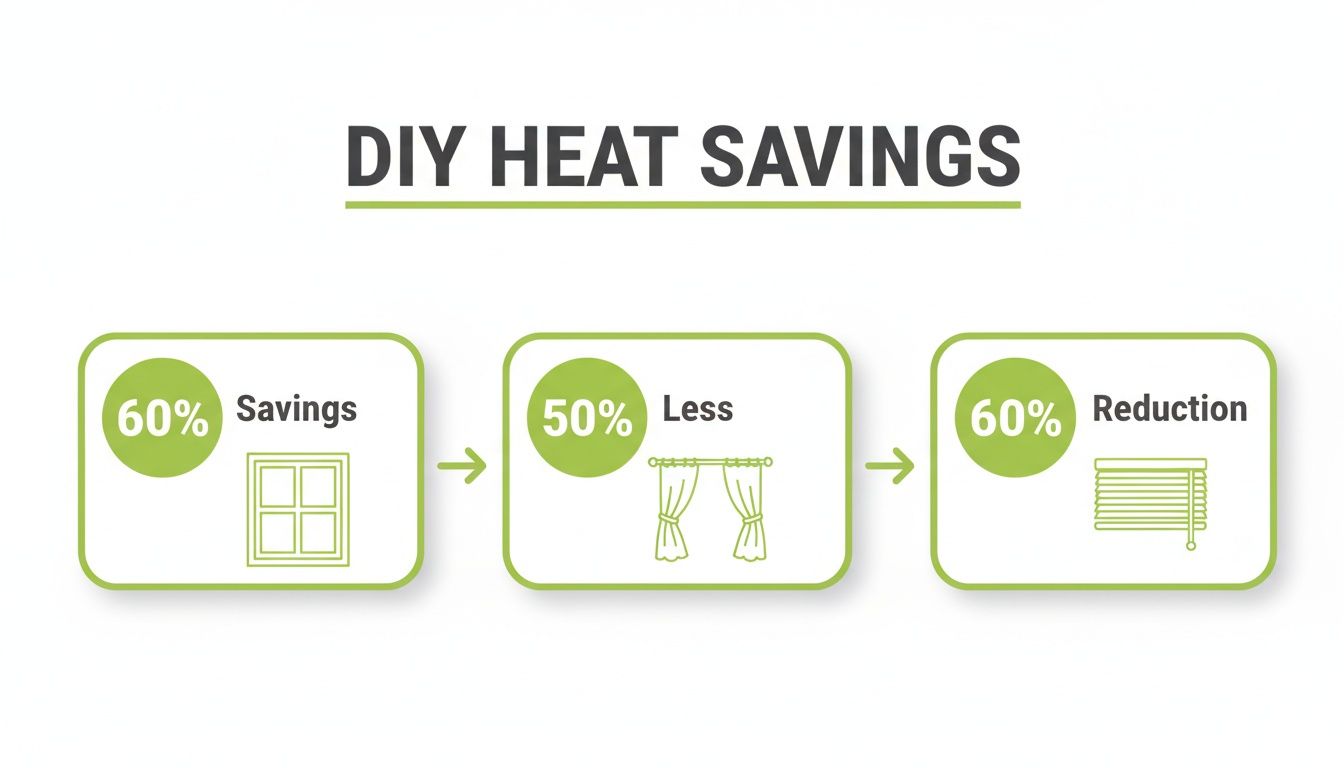
As you can see, even simple, effective additions like quality curtains and blinds can make a huge difference in keeping your home warm and cutting down your energy bills. But for the biggest impact, a professional upgrade is the way to go.
When you're ready to upgrade, the main contenders are double glazing, triple glazing, and secondary glazing. Each has its own set of benefits, making them suitable for different properties and budgets.
Today’s double-glazed units are a world away from the ones installed before 2002. They now feature advanced Low-E coatings and inert gas fills like argon, allowing them to achieve excellent U-values, typically around 1.2 W/m²K. This is the modern standard for most UK homes, providing a fantastic balance of thermal performance, noise reduction, and value for money.
If you’re looking for the absolute best in thermal and acoustic insulation, triple glazing is the answer. By adding a third pane of glass and an extra insulating gas-filled cavity, U-values can plummet to an impressive 0.8 W/m²K or even lower. This makes a massive difference in homes exposed to harsh weather—something we see a lot of in the colder parts of Yorkshire—or for properties on noisy main roads.
Sometimes, a full window replacement just isn't an option. For listed buildings or character properties where you need to preserve the original frames, secondary glazing is a brilliant alternative. It involves fitting a slim, discreet second window on the inside of your existing one. This creates a substantial insulating air gap that cuts down on both heat loss and outside noise, all without altering your home's exterior.
You can learn more about how this works for different window styles in our dedicated guide to secondary glazing solutions.
To help you weigh up the options, here’s a quick comparison of what each professional solution offers.
| Glazing Type | Typical U-Value (W/m²K) | Estimated Cost | Best For | Key Benefit |
|---|---|---|---|---|
| Modern Double Glazing | 1.2 - 1.6 | Moderate | Most standard UK homes, new builds, and renovations. | Excellent all-round balance of cost and performance. |
| Triple Glazing | 0.8 - 1.0 | Higher | Homes in very cold/exposed areas or near loud noise sources. | Ultimate thermal efficiency and soundproofing. |
| Secondary Glazing | 1.8 - 2.0 | Lower-Moderate | Listed buildings, conservation areas, and period properties. | Improves performance without altering the original windows. |
This table should give you a clear starting point. Choosing the right glazing is about matching the product's strengths to your home's specific challenges and your budget.
One of the most important developments in modern glazing is the Low-E (low-emissivity) coating. It's a microscopically thin, transparent layer of metal oxide applied to one of the glass surfaces inside the sealed unit. You can't even see it, but its impact is huge.
This invisible coating is a game-changer. It works by reflecting the heat from your radiators and other indoor sources back into the room, stopping it from escaping. At the same time, it lets the sun's short-wave heat pass through, giving you a bit of free passive heating.
A Low-E coating on its own can save the average UK home around £70 a year on heating bills. It's a non-negotiable feature for any serious window upgrade and is key to achieving the low U-values that define energy-efficient glazing today.
Let's be clear: investing in new windows is a significant financial decision. But it’s one that delivers tangible returns.
Analysis consistently shows that upgrading from old single glazing can cut heat loss by 50-70% with double glazing. Modern triple glazing can then improve on that performance by another 40%. With the UK's Future Homes Standard set to mandate triple glazing for new builds from 2025, it’s obvious where the industry is heading.
While costs vary, the result is always a massive improvement in comfort and lower energy bills for years to come. If your home is one of the 23% in the UK still using old, inefficient double glazing, upgrading is one of the most powerful things you can do to stop wasting energy and money.
For anyone looking to make a substantial improvement, exploring advanced options is a wise long-term investment. An excellent external resource with more detail is this guide on Finding the Best Triple Pane Windows.
Ultimately, choosing the right solution means balancing performance, cost, and the unique needs of your home. Whether you're in Leeds or Newcastle, getting professional guidance will ensure your investment is a smart one, leading to a warmer, quieter, and more valuable home.
DIY fixes are fantastic. They offer immediate relief for draughty windows and can make a real difference on a tight budget. But there comes a point where temporary solutions just aren't cutting it anymore.
Sometimes, the problem isn't just a simple draught but a sign that the window unit itself is failing. Trying to patch up these fundamental issues is a bit like putting a plaster on a broken bone – it might cover the problem, but it won’t fix the underlying cause. Knowing when to step back and call in an expert will save you time, money, and a whole lot of frustration down the line.
This is especially true if you’re serious about maximising your energy savings and making a lasting improvement to your home. Major window upgrades demand precision, a solid understanding of building regulations, and the right materials to ensure they perform for years to come.
Certain symptoms are clear giveaways that it's time to put down the DIY tools and pick up the phone. Ignoring these signs can lead to much bigger headaches, including moisture damage, mould growth, and even worse energy efficiency.
You should call a professional glazier if you spot any of these:
A failed sealed unit doesn't just look awful with all that internal fogging; its thermal performance can drop to a level that's not much better than single glazing. Dealing with this is crucial for anyone serious about reducing heat loss. If you're seeing this, exploring professional glass replacement services is the most effective way forward.
Upgrading your windows is a significant investment, and the quality of the installation is every bit as important as the quality of the window itself. A high-performance window that's poorly fitted will simply never deliver the energy savings you paid for.
A professional installation ensures the unit is perfectly square, level, and completely sealed, eliminating any chance of draughts sneaking in around the frame. It’s a job that requires real precision and experience. For our clients seeking Glass Balustrades Newcastle or Glass Balustrades Yorkshire, bringing in a trusted, family-run business provides that peace of mind. With over two decades in the business, we’ve seen it all and understand the unique challenges of properties in our region.
What’s more, a professional glazier guarantees the work complies with all current UK Building Regulations, which have strict requirements for thermal performance and safety. Getting expert advice from the very beginning helps you choose the right solution for your home, whether you’re preserving the character of a period property in York or aiming for maximum thermal efficiency in a modern build in Manchester. The right advice from a seasoned expert ensures your investment pays off, delivering a warmer, quieter, and more energy-efficient home.
Even after you've decided to tackle your home's heat loss, it's completely normal to have a few questions buzzing around. Making the right choice is a big investment in your home's future comfort and running costs, so let's get into some of the most common queries we hear from homeowners across Yorkshire.
This is always the first question, and rightly so. The answer really hinges on what you're upgrading from. The leap from leaky, single-glazed windows to modern double glazing is massive, while the jump from older double glazing is more of a fine-tuning exercise.
For a typical three-bedroom semi, swapping out old single glazing for new A-rated double glazing can slash your energy bills by around £155 a year. If you’re just upgrading from pre-2002 double glazing, you’re still looking at a very respectable saving, often in the region of £70-£100 annually.
But the savings on your bills are only part of the story. New windows give your home’s Energy Performance Certificate (EPC) rating a serious boost, which can genuinely increase its value. And you can’t put a price on the immediate comfort of a warmer, quieter home without those chilly draughts.
Triple glazing is the absolute best you can get for thermal performance, but does that make it the right choice for every UK home? Honestly, it depends.
For the vast majority of properties, high-quality modern double glazing hits the sweet spot between cost and performance. That said, there are definitely situations where triple glazing isn't just an upgrade, it's a game-changer.
You should seriously consider triple glazing if your home:
Absolutely. If a full window replacement isn't on the cards right now, don't despair. You can still make a massive difference with a couple of highly effective professional interventions.
Secondary Glazing: This is, without a doubt, the best non-replacement solution out there. It’s particularly brilliant for listed buildings or period homes where the original frames are part of the character. We fit a discreet second window pane on the inside, which creates a large, insulating air gap. This simple addition can cut heat loss through a single-glazed window by up to 75% – that's performance right up there with modern double glazing.
Professional Draught-Proofing: While the DIY foam strips from the hardware shop are a good first step, a professional service is on another level. An expert can install high-performance, durable seals that are routed directly into the window frame for a perfect, long-lasting fit. It stops the draughts completely without affecting how the window opens and closes.
For many people, combining these two approaches is the perfect, cost-effective way to get a much warmer home while you plan for a full upgrade down the line.
If you're ready to find the best long-term solution for your home, whether that's high-performance replacement windows or an expert secondary glazing installation, the team at Glass Tech is here to help. With over 20 years of experience serving Yorkshire and the North, we give you the honest advice and quality craftsmanship you need. Visit our website to get a quote and start your journey to a warmer home.

A professional team of experts providing glass and glazing solutions covering the whole of Yorkshire & more...
Whether it's Leeds, York, North Yorkshire, Birmingham, Hull, Liverpool, Machester, Newcastle or Nottingham, get in touch to find out how we can help you with your bespoke glass project.