
Proper double glazed window ventilation is a bit of a balancing act. It's about getting all the energy-saving benefits of modern windows without creating a stuffy, unhealthy home. While your new windows are brilliant at keeping the heat in, their airtight seal can also trap moisture and stale air, leading to problems like condensation if it isn't managed properly.
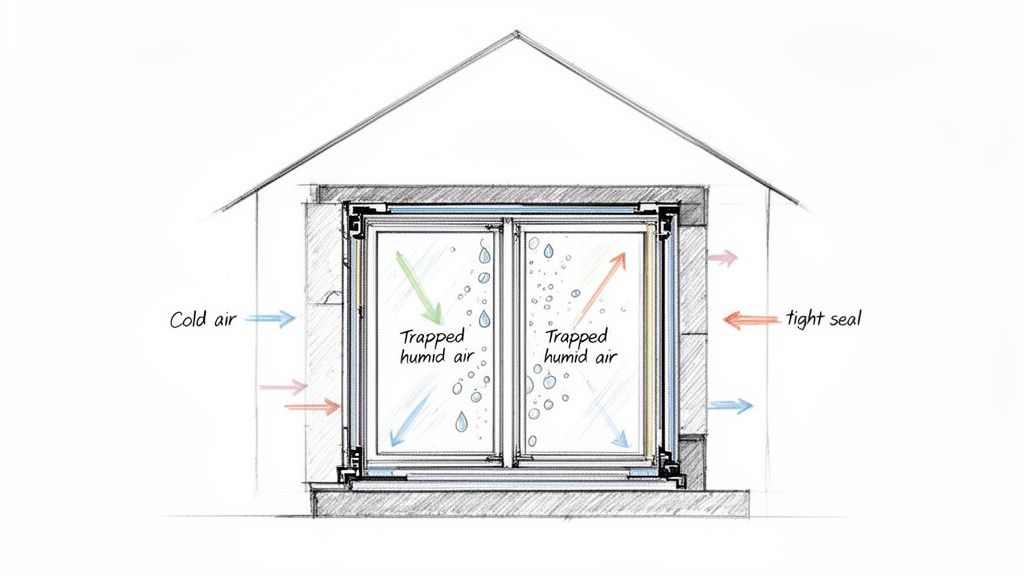
You've made a smart investment in high-quality double glazing to keep your home warm and your energy bills down. These windows are fantastic insulators, creating an impressive barrier against the unpredictable British weather. But this brilliant thermal performance comes with a side effect: it makes your home almost completely airtight.
Think of it like putting a lid on a saucepan. Without a way for steam to escape, it builds up inside. This is the central challenge of modern, energy-efficient homes.
Everyday life generates a surprising amount of moisture. Cooking a Sunday roast, taking a hot shower, drying clothes on a radiator, and even just breathing—it all releases water vapour into the air. In older, draughtier houses, this humid air would just find its way out through gaps around windows and doors.
Modern double glazing puts a firm stop to those accidental leaks. This is fantastic for stopping heat from escaping—in fact, double glazing can cut heat loss by up to 50-70% compared to single panes—but it also means all that moisture has nowhere to go. This trapped moisture is the real culprit behind many common household headaches.
Your home needs to breathe, just like you do. Effective double glazed window ventilation provides the controlled airflow necessary to exhale damp, stale air and inhale fresh, clean air, preventing the build-up of condensation and pollutants.
When this warm, moisture-heavy air hits the cooler surface of your window panes, it condenses back into water droplets. This is the classic sign of "crying windows," and it’s much more than a minor irritation.
This persistent dampness creates the perfect breeding ground for mould and mildew. Not only can this damage your window frames and rot plaster, but it also has a serious impact on your indoor air quality.
For homeowners everywhere, from the busy city centres of Leeds and Newcastle to the quieter towns across Yorkshire, getting this balance right is key. The aim isn't to make your home draughty again; it's to introduce smart, controlled ventilation. This approach gives you the best of both worlds:
Understanding this balance is the first step towards a home that is as healthy as it is comfortable. By recognising why ventilation matters, you can make the right choices to protect both your property and your family's well-being.
It’s all too easy to ignore the first hints of poor ventilation, writing them off as just part of living in the damp UK climate. But those little signals are your home’s way of telling you it can't breathe. Learning to spot these red flags is the first step to creating a healthier, more comfortable space.
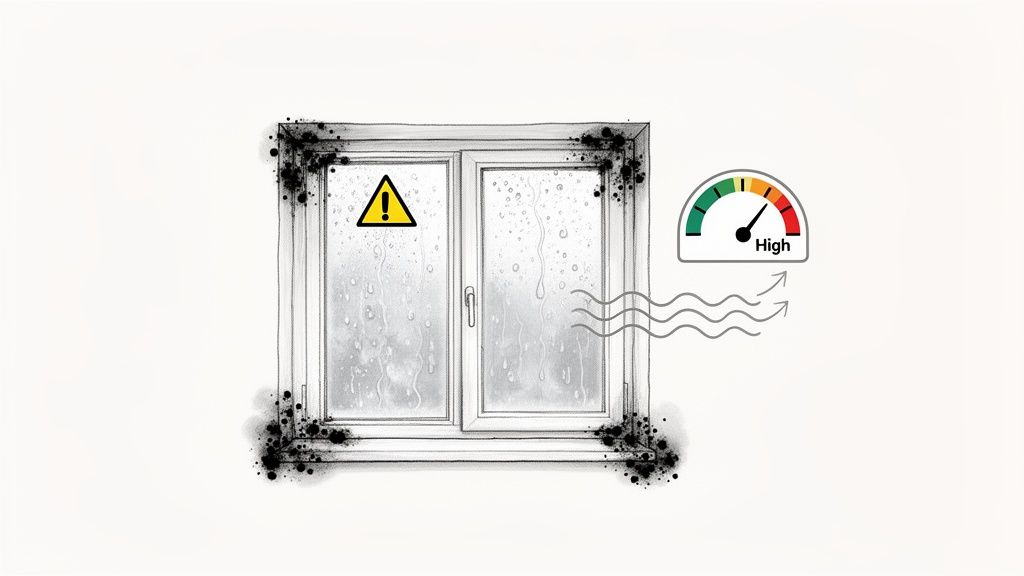
The symptoms of inadequate double glazed window ventilation often start small but can snowball into bigger problems if you let them. For homeowners across the north of England, from Manchester to Newcastle, these issues are especially common thanks to our cooler, wetter weather. Think of your home as a sealed box – these signs are the pressure gauge warning you that something needs to change.
The most obvious and widespread sign of poor airflow is persistent condensation on your windows. A bit of mist on a frosty morning is one thing, but if you're constantly wiping away streams of water from the inside of your glass, it's a dead giveaway that you have excess humidity.
This happens because our everyday lives produce a shocking amount of water vapour.
Without a proper escape route, this moisture-heavy air has nowhere to go. When it hits the cooler surface of your double glazing, it condenses back into liquid, creating those familiar "crying windows."
Leave that condensation unchecked, and it quickly escalates. The constant dampness creates the perfect breeding ground for black mould, and that's far more than just an ugly stain.
You might first spot tiny black specks on your window sealant or tucked into the corners of the frames. Before you know it, these spots can creep onto the surrounding walls and plaster, often hiding behind curtains or furniture. This isn’t just a cleaning problem; mould releases spores into the air that can trigger allergies, asthma, and other respiratory conditions, putting your family’s health at risk.
A persistent musty smell is another classic sign of a hidden damp issue. Even if you can't see mould, that distinctive earthy odour is a strong signal that it's growing somewhere out of sight, fuelled by trapped moisture.
Beyond what you can see, poor ventilation has a real impact on how your home feels. Does a room feel close or stuffy, even when it isn’t particularly warm? Do the smells from last night’s curry still linger in the air the next morning?
That feeling of stale, heavy air is a direct result of poor air exchange. Fresh outdoor air isn't getting in to push out the pollutants, odours, and excess CO2 that build up inside. Over time, this poor air quality can lead to headaches, fatigue, and a general feeling of being unwell.
Recognising these warning signs is the crucial first move. They aren’t separate issues but interconnected symptoms of one root cause: your airtight, energy-efficient home is desperate for a controlled way to breathe. Getting your double glazed window ventilation strategy right is the key to protecting both your property and your family.
So, you can now spot the tell-tale signs of poor airflow. The next logical step is getting to grips with the practical solutions available. Choosing the right double glazed window ventilation isn’t about picking the most complex option; it’s about matching the right tech to your home, your lifestyle, and the specific issues you're facing.
The good news is there are several brilliant options out there. They range from simple, cleverly integrated vents that do their job quietly to more powerful, whole-house systems. Let’s break down the most common and effective choices for homeowners, whether you're in Hull, Nottingham, or anywhere across the North of England.
By far the most common feature you'll find on modern double glazed windows is the trickle vent. These are the small, discreet slots you see at the top of the window frame, which you can usually open or close with a simple flick. Their purpose is straightforward but absolutely vital: to provide a constant, low-level 'background ventilation'.
Think of trickle vents as your home's quiet, steady breathing mechanism. They allow a small, continuous stream of fresh air to come in while letting damp, stale air escape. This gentle, round-the-clock air exchange is precisely what’s needed to stop humidity from building up in the first place, tackling the root cause of condensation and mould before it becomes a problem. Modern designs are incredibly unobtrusive and come as a standard, essential feature on most new window installations to meet UK Building Regulations.
A trickle vent is the ultimate "set and forget" solution. Once it's open, it provides a baseline of healthy airflow that works tirelessly behind the scenes, protecting your home from the damp-related headaches so common in our UK climate.
Another clever feature built into many modern windows is the night vent position, sometimes called a ventilation lock. This function allows you to lock the window handle when the window is cracked open just a tiny bit. It provides a much greater volume of airflow than a trickle vent, but the window remains securely fastened.
This is absolutely perfect for those warmer nights when you desperately want a breeze but don't want to compromise on security. It's also ideal for quickly airing out a stuffy bedroom in the morning. It’s a secure way to ventilate a room more rapidly, making it a fantastic partner to the constant background work done by trickle vents. Many of our clients choosing new windows and composite doors really appreciate this added flexibility for managing their home's atmosphere.
For a more powerful and controlled approach, some homes really benefit from mechanical systems. These use fans to actively pull air in and push air out, offering a robust solution for properties with stubborn damp issues or for anyone wanting the highest level of air quality management.
Extractor Fans: You’ll find these in almost every modern kitchen and bathroom, and for good reason. They are designed for rapid 'purge ventilation'—getting rid of large amounts of moisture and odours right at the source. Think steam from a hot shower or fumes from cooking; the fan whips it all outside before it has a chance to wander through your home.
Mechanical Ventilation with Heat Recovery (MVHR): This is the gold standard for whole-house ventilation. If you're looking for a comprehensive solution beyond just windows, you might consider advanced systems like a Heat Recovery Ventilator (HRV). An MVHR system extracts stale, humid air from rooms like kitchens and bathrooms and uses a heat exchanger to warm up the fresh, incoming air. This means you get a constant supply of fresh, pre-warmed air with minimal energy loss, keeping your home healthy and your heating bills down.
To help you weigh up what's best, here's a straightforward look at the most popular choices. Understanding the pros and cons is key to finding the right fit for your home, whether you're in a modern flat in Manchester or a traditional terrace in Newcastle.
| Ventilation Type | How It Works | Best For | Pros | Cons |
|---|---|---|---|---|
| Trickle Vents | A small, adjustable slot in the window frame allowing constant, low-level airflow. | Providing essential background ventilation to prevent everyday condensation and mould. | Always on, energy-efficient, discreet, and meets building regulations. | Limited airflow for rapid ventilation. |
| Night Vents | The window locks in a slightly open but secure position. | Secure ventilation overnight or for airing rooms more quickly than trickle vents. | More airflow than a trickle vent, secure, and simple to use. | Not a constant solution; requires manual operation. |
| Extractor Fans | A mechanical fan that expels air directly outside. | Rapidly removing high concentrations of moisture and odours from specific rooms. | Very effective for 'purge ventilation' in kitchens and bathrooms. | Only treats one room at a time; can be noisy. |
| MVHR Systems | A whole-house system that exchanges stale air for fresh air, recovering heat in the process. | Ultimate control over indoor air quality and maximising energy efficiency in airtight homes. | Highest quality air, extremely energy efficient, and quiet operation. | Higher initial investment; requires professional installation. |
Ultimately, the best double glazed window ventilation strategy often involves a smart combination of these methods. Trickle vents provide that essential baseline of fresh air, while night vents and extractor fans give you a boost when you need it most. For those who prioritise peak efficiency and health, an MVHR system is a superb long-term investment in your property.
One of the biggest worries we hear from homeowners is that adding vents will somehow sabotage the brilliant energy-saving work of their double glazing. It’s a common and understandable concern: why invest in an airtight window just to cut a hole in it?
The reality, however, is that modern ventilation is engineered to work with high-performance windows, not against them. This isn't about reintroducing the draughts you paid good money to eliminate. It's about swapping those uncontrolled, heat-sapping air leaks for a controlled, minimal, and healthy air exchange. An old, single-glazed window haemorrhages heat constantly; a modern trickle vent allows only a tiny, managed airflow.
Think of it like this: leaving a window wide open is like trying to heat your garden—wasteful and expensive. In contrast, using a trickle vent is like a gentle whisper of fresh air, just enough to shift stale, humid air without you ever feeling a chill. This is the crucial balance modern homes need.
The goal is to maintain excellent thermal performance while preventing the build-up of indoor pollutants and moisture. This controlled approach is a non-negotiable part of creating a home that is both truly energy-efficient and healthy for your family. For older properties where modern windows aren't an option, exploring solutions like secondary glazing can offer a similar boost in thermal comfort, but you'll still need a solid ventilation strategy.
The decision tree below gives you a simple process for figuring out if your window ventilation needs a rethink.
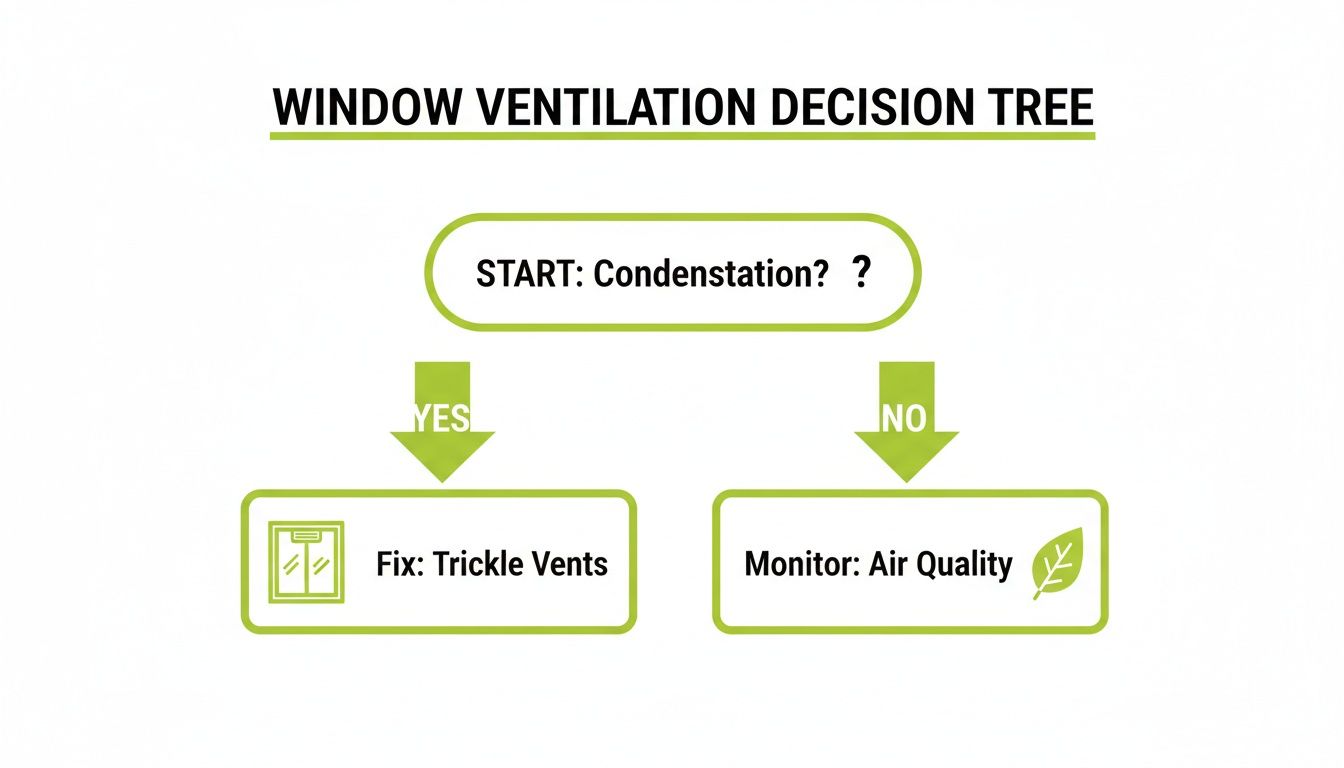
As the flowchart shows, condensation is a clear sign to act, with trickle vents being the go-to solution. If there's no condensation, it's still wise to keep an eye on your home's air quality.
Across the UK, double glazing has become the cornerstone of home energy efficiency. By 2022, a whopping 88% of homes in England had full double glazing—a huge jump from just 79% in 2012. While high-quality windows can slash heat loss by up to 50-70% compared to single glazing, sealing a home too tightly can trap moisture and stale air, creating a perfect recipe for condensation and mould.
For families in the semi-detached or terraced houses common in Manchester and Hull, installing A-rated double glazing can save £100-£300 annually on heating bills. But integrating trickle vents is absolutely essential to stop the air inside from becoming unhealthy.
Smart ventilation isn't a trade-off; it's a partnership. It ensures the money you save on heating isn't spent later on fixing damp-related damage or dealing with poor indoor air quality. It’s the final piece of the energy-efficiency puzzle.
Achieving a truly efficient home means looking at the bigger picture. Controlled double glazed window ventilation is a key part of the strategy, but it works best when combined with other vital improvements.
Key areas to consider for maximum benefit:
By seeing double-glazed window ventilation as one crucial element of your home's ecosystem, you can explore other significant energy efficient home upgrades for even greater savings. This integrated approach ensures your property, whether in Yorkshire or Newcastle, is not just warm, but also healthy, breathable, and cost-effective to run all year round.
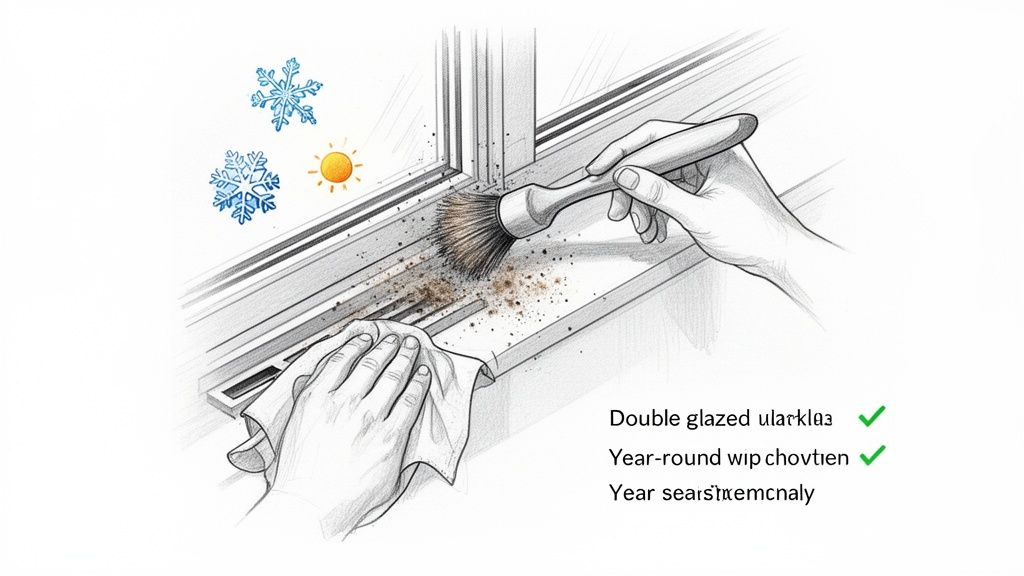
Your double-glazed window ventilation system works tirelessly behind the scenes, protecting your home from condensation and stale air. But just like any hard-working part of your property, it performs best with a little bit of care. The good news is that regular maintenance is simple, quick, and ensures your investment continues to safeguard your home and family’s health for years to come.
Think of it as a seasonal MOT for your windows. A few minutes of attention can stop small issues like dust build-up from getting in the way of proper airflow, making sure your trickle vents and other mechanisms operate smoothly and effectively. This proactive approach is easily the best way to maintain peak performance.
Keeping your vents in top condition doesn't require specialist tools or a lot of your time. By following a simple routine just a few times a year, you can make sure fresh air continues to flow freely.
Here’s a practical checklist to guide you:
Clean Your Trickle Vents: Grab the nozzle attachment on your vacuum cleaner and gently hoover out any loose dust, cobwebs, or debris from the vent slots, both inside and out. For any stubborn grime, a soft brush and a damp cloth are all you need to wipe the surfaces clean.
Inspect Seals and Gaskets: Take a moment to visually check the rubber seals around your window frames. You're looking for any signs of cracking, shrinking, or peeling. Healthy seals are vital for preventing unwanted draughts and water getting in, which works hand-in-hand with the controlled airflow of your vents.
Check All Hardware: Open and close your windows, testing the handles, locks, and hinges. Make sure everything moves smoothly without sticking or grinding. This includes the mechanism for any night vent positions, which should lock securely into place.
Maintaining your ventilation system is one of the easiest ways to protect your property's value and ensure a healthy living environment. Just 10-15 minutes of cleaning per window, a couple of times a year, can prevent the build-up that leads to poor airflow and condensation.
Your ventilation needs can change with the seasons, and using your vents strategically helps you maintain comfort and efficiency all year round.
For homes across Yorkshire and Newcastle, where the weather can often be damp, keeping trickle vents open during autumn and winter is vital. It’s the best way to manage the extra indoor humidity that comes from having the heating on and drying clothes indoors. In summer, you can use them alongside open windows to create a refreshing cross-breeze.
Of course, if you ever spot damage to the window itself, like a crack or a failed seal, it's important to seek professional glass replacement to keep your home secure and efficient.
Even when the benefits are clear, it’s only natural to have a few questions about how double glazed window ventilation actually works day-to-day. Getting solid, straightforward answers is the best way to feel confident you’re making the right choice for your home.
We get asked about this stuff all the time, so we’ve put together answers to the most common queries we hear from our customers.
Yes, they generally are. Under the UK Building Regulations (specifically Approved Document F), trickle vents are required for most new window installations and many replacements. The rules are there for a very good reason: to make sure modern, well-sealed homes still get the background ventilation they need for healthy air quality.
If you're replacing windows in your Yorkshire home, any professional installer worth their salt will make sure your new windows are fully compliant with the latest standards. It’s not something you should have to worry about.
This is a really common concern, but thankfully, modern trickle vents are designed with noise in mind. High-quality vents are engineered to dampen outside sounds, not welcome them in.
For homes in particularly busy spots, like near a main road in Leeds or Newcastle, you can even get specialised acoustic trickle vents. These are fantastic because they provide all the fresh air you need while offering a much higher degree of sound insulation. You get the ventilation without the disruption.
The whole point of modern ventilation is comfort. It’s designed to introduce fresh air so subtly you don’t even notice it's happening—no chilly draughts, no annoying sounds, just a healthier home.
In many cases, yes, it's possible. Retrofitting trickle vents into existing double glazed windows can be done, but it’s absolutely a job for a professional glazing company. It involves carefully routing a precise slot in the window frame.
If it’s not done correctly, you risk damaging the window’s seals, affecting its security, or ruining its thermal performance. An expert can pop out, assess whether your windows are suitable, and do the job properly without compromising the window unit.
Not quite! Trickle vents provide what’s known as ‘background ventilation’ – a constant, gentle airflow that handles everyday moisture and keeps the air fresh. But you’ll still need to open your windows for ‘purge ventilation’.
That’s for moments when you need to clear the air in a room quickly, like after you’ve burnt the toast or used strong cleaning sprays. Think of trickle vents as your home’s quiet, 24/7 breathing system, while opening the windows is the occasional deep breath of fresh air.
A healthy home uses both:
Using this combination is the best way to keep your home feeling fresh, dry, and comfortable all year round. For homeowners anywhere in the North of England, from Manchester to York, having a reliable system for both is the secret to beating condensation for good.
Getting the right balance of warmth and fresh air is the secret to a healthy, comfortable home. As we've seen, good double glazed window ventilation isn't just an optional extra—it's a crucial partner to your energy-efficient windows. It works quietly in the background to stop condensation, prevent mould, and keep the air you breathe fresh and clean. For homeowners across the North of England, tackling these all-too-common issues starts with having the right strategy.
From the bustling streets of Leeds to the historic charm of York, our climate means we have to be smart about how we look after our homes. Simply ignoring the warning signs of poor airflow can lead to frustrating property damage and even health concerns down the line. The answer lies in modern, controlled ventilation that lets your house breathe without throwing away the warmth you’ve paid good money to keep in.
At Glass Tech, we offer practical advice and professional installation right across Yorkshire and beyond. We have extensive experience helping homeowners in key areas, including providing Glass Balustrades Newcastle and Glass Balustrades Yorkshire, where we regularly help homeowners strike that perfect balance between saving on energy bills and maintaining a healthy living space. With decades of hands-on experience, we know the unique challenges that properties in our region face.
Our goal is to make sure every installation doesn't just look the part, but actively contributes to a brighter, healthier, and more comfortable home for you and your family. We’re committed to providing solutions that work in the real world and meet all the latest building regulations.
Double glazed windows are a cornerstone of any modern, eco-conscious home, and they do a fantastic job of cutting carbon emissions. In fact, they can slash heat loss by up to 60% compared to single glazing, which saves around 405kg of CO2 for every household, every year. It’s no surprise that 86% of surveyors consider them the UK's top energy-saving measure. But to get the full benefit, you need proper ventilation to clear out stale, humid air that can get trapped in well-sealed homes. You can find more details on these energy-saving figures over at GreenMatch.co.uk.
Choosing the right ventilation is more than just a technical tick-box exercise; it’s an investment in the long-term health of your home and your family's well-being. A home that can breathe is a home that's protected.
With deep roots in the region, we pride ourselves on delivering the highest standards of workmanship and customer care. We truly believe every homeowner deserves a space that is both beautiful and built to last.
Ready to create a healthier, more comfortable home? The team at Glass Tech is here to help. Get in touch today for a friendly, no-obligation chat about your ventilation needs and find the perfect solution for your property.

A professional team of experts providing glass and glazing solutions covering the whole of Yorkshire & more...
Whether it's Leeds, York, North Yorkshire, Birmingham, Hull, Liverpool, Machester, Newcastle or Nottingham, get in touch to find out how we can help you with your bespoke glass project.