
That frustrating mist you can’t wipe away from the inside of your windows is the classic tell-tale sign of a problem. It’s the most common signal that the airtight seal on your double glazing has ‘blown’, causing condensation between the window panes.
When that crucial seal breaks, the game is up. Ordinary, damp air from outside gets sucked into the gap between the glass, and as temperatures shift, it condenses into a fog. It’s an incredibly frequent issue we see, especially for homes across Yorkshire and Newcastle where the classic British weather can really put window seals to the test over the years.
If you've started noticing a cloudy, misty film trapped inside your double-glazed windows, you're certainly not alone. It's one of the most common call-outs we get, but it’s a clear warning that your window isn't doing its job anymore. The fog you see is the symptom of a failed sealed unit, which means the thermal barrier designed to keep your home warm and efficient has been breached.
A healthy double-glazed unit works a bit like a high-quality thermos flask. The real magic isn't just in having two panes of glass, but in the perfectly sealed, insulated space between them. This gap is typically filled with an inert gas, like argon, which is far denser than normal air and a terrible conductor of heat. This setup creates a powerful insulating barrier, keeping your precious warmth inside during winter and the heat out during summer.
But when the hermetic seal around the edge of the unit fails, that insulating gas escapes and is replaced by regular, moisture-laden air.
Once damp air has found its way into the gap, simple temperature changes do the rest of the work. As the outer pane of glass gets cold, the moisture trapped inside the unit condenses into thousands of tiny water droplets. The result? That familiar foggy, milky appearance.
You can wipe all you want, but it won't budge because it’s not on the surface you can touch—it's sealed inside. This isn't just a cosmetic annoyance that ruins your view; it’s a red flag that your window has lost almost all of its energy-saving properties.
This is a widespread problem across the UK, where our constantly fluctuating temperatures and damp climate put window seals under relentless stress. In fact, while over 93% of UK homes now benefit from double glazing, a huge number of older installations are beginning to show their age. Industry data suggests that up to 25% of units installed back in the 1990s and early 2000s are now suffering from internal condensation due to degraded seals.
A failed seal doesn't just obstruct your view; it actively works against your home's thermal efficiency. The trapped moisture can even conduct heat faster than the gas it replaced, potentially making your window less effective than a single pane of glass.
To get to the bottom of why condensation between your window panes is such a bad sign, it helps to understand the clever bit of engineering going on inside a modern double-glazed unit. The real magic isn’t just in the two sheets of glass; it’s all about the perfectly sealed space created between them. This isn't just an empty gap; it’s a high-performance thermal shield for your home.
This space is sealed up to be completely airtight and then filled with an inert gas, usually argon. Argon is much denser than regular air, making it a terrible conductor of heat. That property is exactly what you want—it creates a powerful thermal break that stops warmth from pouring out of your home in winter and keeps the blistering heat out in the summer.
A modern glazed unit is a precision-built system. A spacer bar runs around the edge between the two panes to keep the gap consistent. This bar isn't just a hollow bit of metal, either. It’s filled with a desiccant, which is a special moisture-absorbing material that soaks up any tiny trace of water vapour that might have been trapped inside when the unit was made.
A tough dual-seal system then locks everything together. The inner seal holds the panes to the spacer bar, while the outer seal makes sure the argon gas stays in and, most importantly, keeps moisture out. When any part of this system gives way, the window’s performance nosedives.
A failed seal is like getting a puncture in a thermos flask. The moment that insulating vacuum is broken, it can no longer keep your coffee hot. It's the same story with your windows; once the seal is breached, the argon gas escapes, damp air seeps in, and all those energy-saving benefits vanish.
This little flowchart breaks down exactly how a failed seal leads to that frustrating fog you can see.

As you can see, the root of the problem is always a breach in the window's seal, which lets outside moisture get trapped where it doesn't belong.
Once you understand how it all works, it becomes obvious why you can't just "clean" the condensation away. The moisture is physically trapped inside a sealed unit that has been permanently broken. You can scrub all you like, but you’ll never reach it.
This is why tackling the problem properly is so important. For homeowners facing this, looking into modern, efficient replacement windows and composite doors provides a permanent fix that brings back your clear view and your home’s energy efficiency. The only real remedy is to replace the failed sealed unit, restoring the thermal barrier and protecting your home from further heat loss.
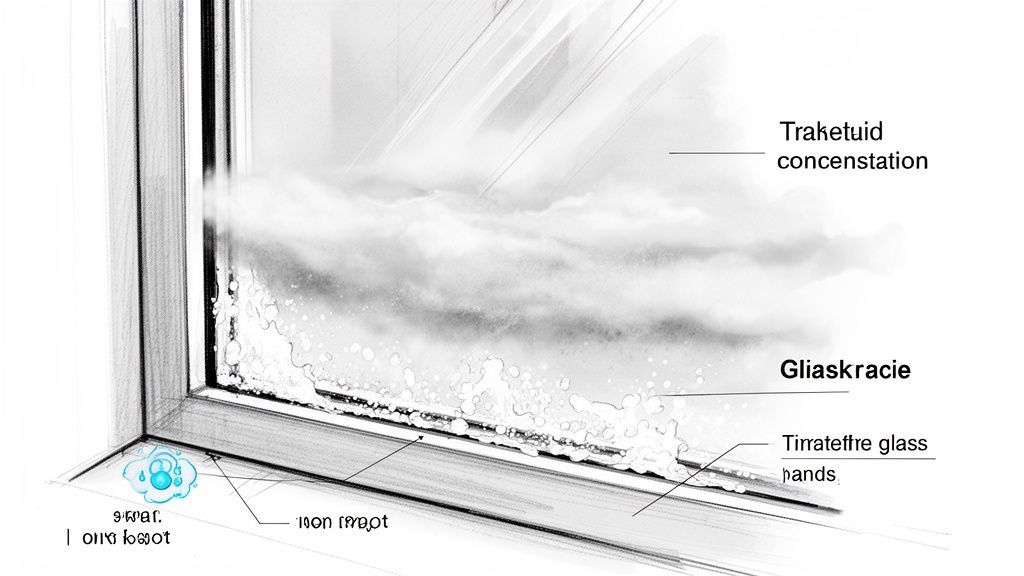
So, how can you be certain your sealed unit has failed? The good news is, once you know the signs, it’s actually quite easy to spot.
The most obvious giveaway, of course, is that frustrating cloudy mist you simply can't wipe away from either side. But there are a few other tell-tale clues that will confirm your suspicions and help you feel confident in diagnosing the problem yourself, whether you're in Leeds, York, or anywhere across the North.
Beyond the initial fog, take a closer look at the glass, especially down towards the bottom edge. You might spot faint, dirty-looking lines or even a white, chalky residue. We call these 'tide marks'. They’re mineral deposits left behind as trapped water has repeatedly pooled and evaporated inside the unit—a dead giveaway that the seal has been breached for some time.
Here's another trick: check the reflections in the glass. A healthy, gas-filled unit has two perfectly flat panes of glass. When a seal fails, pressure changes can cause the panes to bow slightly, making reflections look wavy or distorted.
The trouble with a failed unit goes far beyond looks. Once the insulating gas escapes, your window loses its thermal superpowers, and you’ll start to feel the difference.
Pay attention to the atmosphere in the room right next to the window. Do any of these sound familiar?
These physical signs are proof that your window is no longer doing its job. It's not insulating your home properly. For anyone in the process of buying a new property, this is a crucial check. A thorough final inspection before settlement should always include looking for signs of failed double glazing to avoid nasty, unexpected costs down the line.
A failed glazing unit is more than an obstructed view; it's a hole in your home's thermal envelope. The visual signs of mist and tide marks are direct proof that your window is losing heat, costing you money and reducing your comfort, a problem many homeowners across Newcastle are tackling.
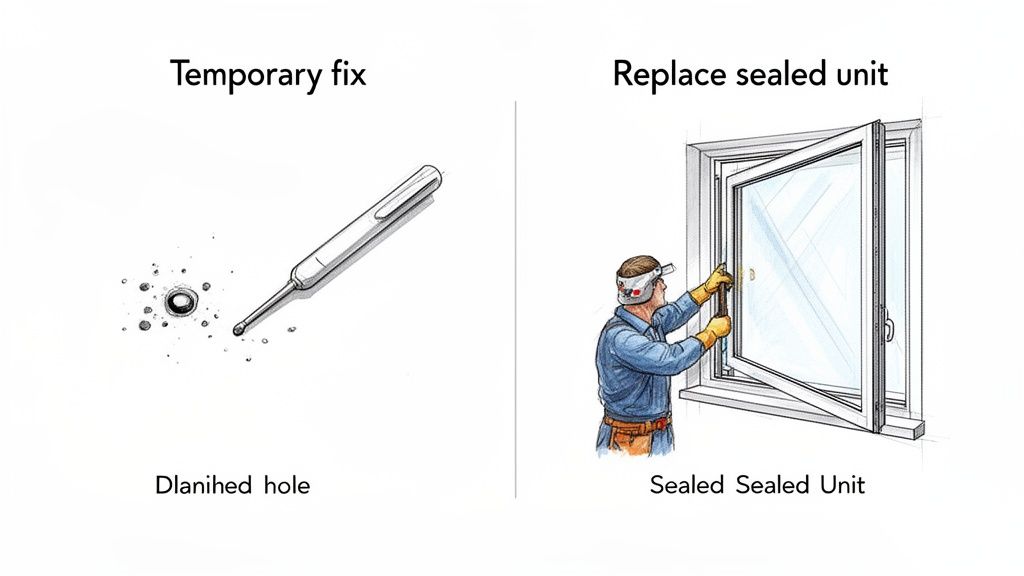
So, you’ve discovered that dreaded misting between your window panes. You’re now at a crossroads, faced with a few choices. But let’s be clear: only one of them is a genuine, long-term fix that actually gets your window working properly again.
You might come across services offering a tempting quick fix. The method usually involves drilling a small hole into the glass, spraying in some kind of cleaning fluid to get rid of the moisture, and then plugging the hole. It sounds simple enough.
While this might clear your view for a little while, it’s a purely cosmetic patch-up that causes far more problems than it solves. This process permanently wrecks the integrity of the sealed unit. More importantly, it does nothing to replace the argon gas that has escaped, meaning your window’s insulating power is gone for good. That new plug can easily fail too, letting moisture creep back in and putting you right back where you started.
The proper, professional way to deal with condensation between the panes is to replace the failed sealed glass unit – not the whole window frame. This is a standard and highly effective procedure we carry out for homeowners from Yorkshire to Newcastle, especially when the surrounding uPVC, timber, or aluminium frames are still in perfectly good shape.
It’s a straightforward process. An expert glazier visits your home to take exact measurements of the problem window. A brand-new sealed unit, sometimes called a glass ‘cassette’, is then made to those precise specifications. This new unit is a complete, factory-sealed system with two or three panes of glass, a new spacer bar filled with fresh desiccant beads, and a fresh fill of insulating argon gas.
The real beauty of this approach lies in its efficiency. Replacing just the glass unit is far less disruptive, much more affordable, and quicker than a full window replacement, yet it completely restores your window’s energy efficiency and clarity.
This targeted fix has some clear advantages over bodged repairs or unnecessary full replacements:
To help you weigh up the options, here’s a quick comparison of the common approaches.
When a sealed unit fails, it's tempting to look for the cheapest fix. However, understanding the true cost and long-term value is key to making a smart decision for your home. This table breaks down the common approaches.
| Solution | Typical Cost per Unit | Effectiveness | Longevity |
|---|---|---|---|
| Drill, Clean & Plug | £40 - £80 | Low. Purely cosmetic. Doesn't restore insulation. | Poor. Moisture often returns within months. |
| Replace Sealed Unit | £80 - £250+ | High. Fully restores insulation and clarity. | Excellent. New units come with a 10+ year guarantee. |
| Full Window Replacement | £400 - £1,200+ | High. Replaces everything, but often unnecessary. | Excellent. A brand-new window with a new guarantee. |
As you can see, while the 'drill and plug' method is cheap initially, its lack of effectiveness and short lifespan make it poor value. Replacing the sealed unit offers the perfect balance of cost, performance, and longevity, making it the recommended solution for most homeowners.
Think of a failed sealed unit not just as a problem, but as a chance to improve your home. You’re not locked into replacing it with the exact same type of glass. This is the perfect moment to upgrade to modern, high-performance glazing for even better comfort and efficiency.
You could choose glass with a lower U-value for superior thermal insulation or even opt for acoustic glass to cut down on traffic noise. To get a better idea of what’s possible, take a look at our guide on professional glass replacement services. By choosing the right replacement unit, you can solve the misting issue for good and make a real, lasting improvement to your home at the same time.
While a failed window seal often feels like an inevitable result of age, you're not powerless against it. There are absolutely things you can do to protect your windows and create a healthier home in the process. The secret weapon? Managing the humidity inside your house. When you reduce moisture in the air, you reduce the constant pressure on your sealed units, helping them last longer.
It’s the small, everyday habits that often make the biggest impact. Flicking on the extractor fan when you’re cooking or showering whisks all that steam outside before it can settle on your windows. Likewise, making sure your tumble dryer is properly vented to the outdoors stops it from pumping gallons of moisture back into your living space. These little adjustments really do add up.
One of the simplest yet most powerful strategies is good old-fashioned ventilation. Just opening your windows for 15-20 minutes each day is enough to swap out damp, stale air for fresh, dry air. Think of it as a daily reset for your home’s atmosphere.
It also pays to be mindful of habits that create a mini-rainforest in your living room. Drying wet laundry over radiators, for instance, is a major culprit. It releases a surprising amount of water vapour straight into the air, creating the perfect damp conditions that put your window seals under strain.
For homes that are naturally a bit damp—something we see a lot in older properties here in Yorkshire—a dehumidifier can be a game-changer. These clever machines actively pull moisture from the air, keeping humidity at an ideal level. This doesn't just protect your windows; it guards your entire home against the risks of damp and mould.
Beyond controlling the air inside, a little hands-on maintenance goes a long way. Take a look at your uPVC window frames. See those little slots or holes at the bottom? Those are drainage channels, or "weep holes," designed to let rainwater escape. The problem is, they get clogged with dirt and debris all too easily.
When a drainage channel gets blocked, rainwater has nowhere to go. It pools up and sits directly against the bottom edge of your sealed glass unit. This constant contact with standing water is one of the fastest ways to degrade the seal, leading to that frustrating mist and condensation between the panes.
Regular upkeep is just part of looking after your home. While you’d call a glazier for a repair, it’s also smart to protect your property investment and prevent long-term damage by having a professional clean your windows regularly; they can often spot these kinds of blockages or early signs of trouble.
If you find that condensation is a relentless battle in your property, it might be worth exploring other solutions. For instance, secondary glazing adds an extra layer of thermal insulation inside your existing windows. It’s a fantastic option for listed buildings or homes in conservation areas where replacing the original windows simply isn't allowed. By taking these preventative steps, you can give your windows a much better chance of performing well for many years to come.
While spotting condensation between the panes is usually straightforward, the job of actually replacing the sealed glass unit is a different beast altogether. It’s a task that demands real precision and expertise.
It can be tempting to see this as a DIY project to save a bit of money, but this is one of those jobs where a small mistake can lead to a much bigger, more expensive problem. A common pitfall is getting the measurements wrong by just a few millimetres, which results in a brand-new unit that simply won’t fit.
Even worse, you can easily damage the surrounding window frame during removal or fail to create that perfectly airtight seal on installation. If that happens, the new unit could fail within a matter of months, and you're right back where you started.
Hiring a professional glazier takes all of that risk off the table and guarantees the job is done right the first time. For homeowners looking for glaziers in Yorkshire, or those needing glass replacement in Newcastle, trusting an experienced local company is the key to a successful, stress-free outcome.
Here’s what you can always expect from a professional service:
Opting for a professional glazier isn’t just about getting your clear view back; it’s about protecting your home's value and thermal efficiency. It’s the difference between a temporary patch-up and a lasting solution.
Ultimately, calling in a professional ensures a clean, efficient installation that fixes the problem for good. It gives you complete peace of mind and fully restores your window's performance.
Here are some quick, straightforward answers to the most common questions we hear from homeowners about condensation between their window panes.
Usually not, and that’s the good news. In most situations, especially with modern uPVC or aluminium frames that are still in good shape, the problem is confined to the sealed glass unit itself. A professional glazier can simply replace the glass ‘cassette’, which is far more cost-effective and less disruptive than ripping out the entire window frame.
This targeted approach gets your window performing like new again without the unnecessary expense.
A high-quality, professionally installed sealed unit should give you 15 to 25 years of clear views and solid performance. Its ultimate lifespan comes down to a few key things: the quality of the manufacturing, the precision of the installation, and the local climate it has to put up with.
Reputable glaziers across Yorkshire and the North will always back their work with a guarantee, typically for 5 to 10 years, giving you proper confidence in your investment.
The single biggest factor in how long a unit lasts is the quality of the seal and the fitting. A poorly fitted unit can fail in just a couple of years, which is why a professional installation is absolutely critical for homeowners in places like Newcastle with such variable weather.
Yes, absolutely. In fact, it’s the perfect opportunity to improve your home’s performance. When you’re already replacing a failed unit, you can easily upgrade to modern glass with far better thermal efficiency (look for a lower U-value), which will genuinely help to reduce your energy bills.
You could also consider other options like acoustic glass to cut down on traffic noise, or even solar-control glass if the window is in a south-facing room that gets too hot in summer.
The trapped condensation itself isn't directly harmful. The real issue is what it represents: a failed seal means your window is no longer insulating your home properly. This creates cold spots on the interior surface of the glass, which then attract normal, everyday condensation from inside your room.
If this is left unmanaged, it can lead to dampness and mould growth around the window frame and on your sills, and that can certainly pose health risks.
If you're seeing the tell-tale signs of a failed sealed unit, don't wait for the problem to get worse. The expert team at Glass Tech offers a fast, professional glass replacement service across Yorkshire and the North. Contact us today for a free, no-obligation quote and let's restore your clear view and your home's efficiency.

A professional team of experts providing glass and glazing solutions covering the whole of Yorkshire & more...
Whether it's Leeds, York, North Yorkshire, Birmingham, Hull, Liverpool, Machester, Newcastle or Nottingham, get in touch to find out how we can help you with your bespoke glass project.