
That cloudy haze you see trapped between the panes of your double-glazing isn't just a nuisance – it's a dead giveaway that the unit's airtight seal has failed. This isn't the normal condensation you can just wipe away from the inside of your window on a cold morning; this is an internal problem. Once that seal is broken, damp air gets inside, and the window simply can't do its job of insulating your home anymore.
When you’ve got that milky, misty film on the inside of your double-glazed windows, the bit you can’t actually touch, you’re looking at window condensation between panes. I often tell my customers to think of it like a sealed bag of coffee. As long as that seal is intact, the coffee stays fresh. The moment you puncture it, air gets in and the quality is compromised. Your double-glazing works on the very same principle.
This internal fogging is an incredibly common issue for homeowners, something we see all the time in older properties right across the north of the UK. From the grand Victorian terraces in Yorkshire to the windswept coastal homes in Newcastle, years of temperature changes and general wear and tear eventually take their toll on window seals. The trick is knowing how to spot this problem versus other, less worrying types of condensation.
To get to the bottom of why your windows have this trapped fog, it helps to understand what causes condensation in general, whether it’s on your windows or even condensation on ceilings. Both are caused by the same thing: moist air hitting a cold surface. But where that moisture appears tells you everything you need to know about what's really going on.
Not all window condensation spells trouble. In fact, seeing a bit of moisture on your windows can sometimes be a sign they are working really well at keeping the cold out. Here’s a quick way to tell what you’re dealing with:
A failed sealed unit is more than just a cosmetic issue. It means the insulating gas that was once trapped between the panes has escaped, significantly reducing your window's ability to keep your home warm.
Once this happens, the window loses a huge chunk of its thermal performance, which you'll soon notice in your energy bills. The good news? This is a completely solvable problem, and the fix often doesn't mean ripping out the entire window frame.
To really get to the bottom of why that frustrating fog is trapped inside your window, it helps to understand that a modern double-glazed unit is much more than just two sheets of glass. It's a precisely engineered, sealed system designed to keep your home comfortable and energy-efficient.
Think of it as a tiny, self-contained environment, perfectly balanced to provide thermal insulation. The whole system is built around a component called a spacer bar, which keeps the two panes of glass the exact distance apart. Hidden inside this bar is a crucial substance called a desiccant — a powerful drying agent, a bit like the little silica gel packets you find in new shoes, whose only job is to soak up any tiny traces of moisture sealed inside when the unit was made.
This diagram shows the critical difference between a healthy, working window and one where the seal has failed.
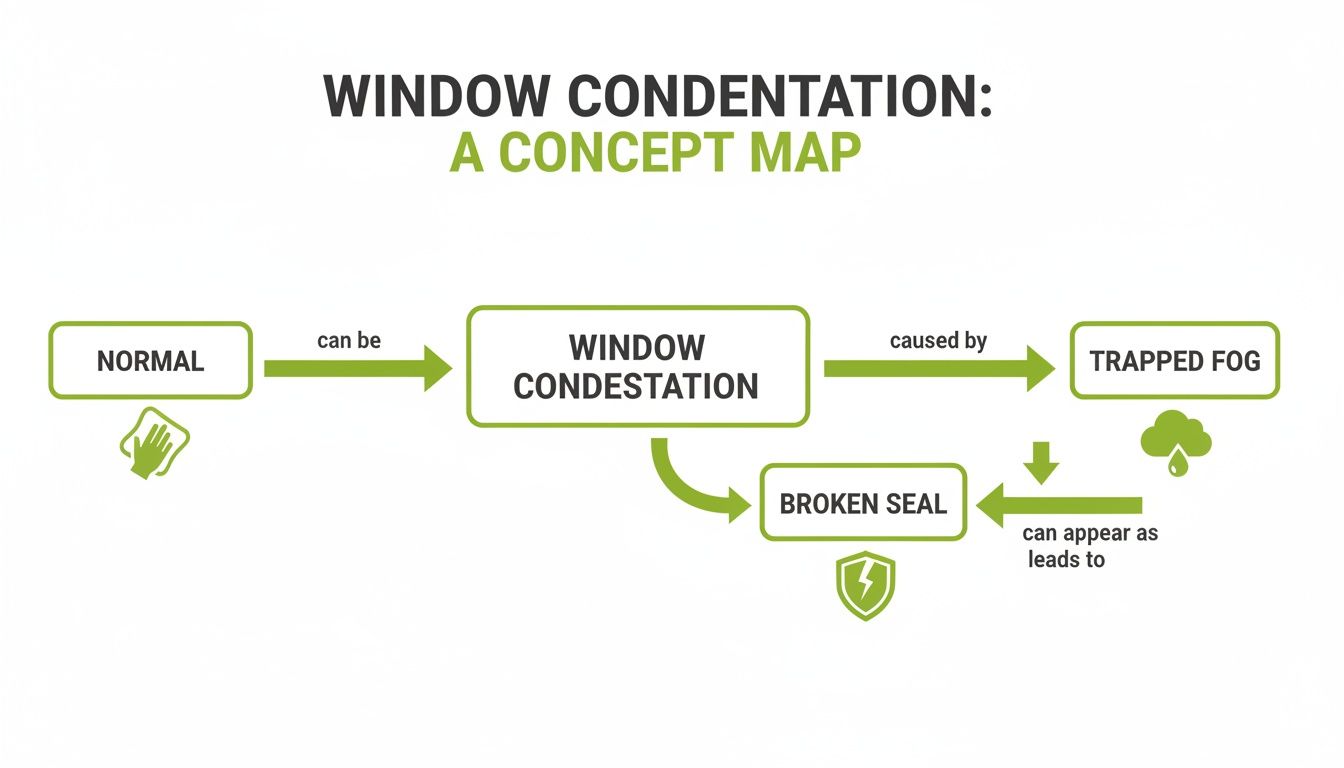
As you can see, the problem shifts from being a simple external issue you can wipe away to an internal, structural failure once that seal is compromised.
To give it a real performance boost, the gap between the panes is filled with an inert, invisible gas — usually Argon. Argon is denser than normal air and a much worse conductor of heat. This gas acts like a thermal blanket, dramatically slowing down how quickly heat can escape your home in winter or creep in during summer. The airtight seals around the unit's edge are what keep this vital gas in and, just as importantly, keep atmospheric air and moisture out.
So, when we talk about window condensation between the panes, we're describing what happens when this carefully built system breaks down. It's a clear sign of structural failure, not something a bit of cleaning can fix.
The seal is the window unit’s weakest link, and it’s in a constant battle with the elements. Over the years, a few things can cause it to degrade and eventually give up the ghost:
Once that seal is breached, the insulating Argon gas escapes, and damp air from outside starts to find its way in. This is a massive issue across the UK. In fact, statistics show that condensation is the number one cause of damp, affecting around 1 in 5 households. The English Housing Survey recently found that serious condensation problems impact roughly 720,000 homes nationwide, which really highlights the scale of the problem. You can find out more by taking a look at the latest UK condensation statistics.
The desiccant inside the spacer bar puts up a good fight, trying to absorb this new wave of moisture, but it quickly gets saturated and completely overwhelmed.
With the desiccant maxed out, the trapped moisture has nowhere to go. When the outer pane of glass gets cold, this moisture condenses on the cold surface, forming the familiar misty, foggy, or droplet-covered view.
At this stage, the window has fundamentally failed. It's lost its insulating gas, its internal drying agent is spent, and its ability to stop heat loss is severely compromised. This is the moment your efficient double-glazed window becomes little more than two panes of glass with damp air trapped between them.
That stubborn fog trapped between your window panes is more than just an irritating eyesore. It’s a bright, flashing warning sign that something has gone wrong—a failure that’s actively costing you money and affecting the comfort of your home. Ignoring a misted-up window is a bit like putting off fixing a slow puncture; you can get away with it for a while, but eventually, it’ll cause a much bigger headache.
The most immediate hit is to your energy efficiency. A healthy double-glazed unit works because of the sealed, insulating layer of gas between the panes. It’s a thermal barrier. But when that seal fails, the gas escapes and is replaced by regular, damp air. And damp air is a terrible insulator.
This forces your heating system to work much harder just to keep your home at a comfortable temperature. Especially here in the north of England, where the winters demand a lot from our central heating, that wasted energy shows up very clearly on your monthly energy bills.
Beyond the direct financial drain, the moisture trapped inside the unit is a perfect breeding ground for other problems. The constant dampness can quickly lead to mould and mildew growing on the inside of the glass and around the spacer bars.
This isn't just ugly; it can genuinely impact your home's indoor air quality. For any household, but particularly those in built-up areas like Manchester or Newcastle, keeping the air inside healthy is vital. Mould spores are a well-known trigger for allergies and can aggravate respiratory conditions.
A misted window is no longer doing its job. It's an underperforming part of your home that’s actively working against you, making it harder to stay warm, dry, and healthy.
If left for too long, the problem gets worse. The constant cycle of moisture condensing and then evaporating leaves behind mineral deposits and grime on the glass. Over time, these can permanently etch the surface, creating stubborn stains and streaks that no amount of cleaning will ever shift.
For any homeowner, the condition of your property is key to its value. Misted, foggy windows are an instant red flag to potential buyers and surveyors. They shout "poor maintenance" and hint at hidden problems with energy efficiency.
Here’s exactly how a failed window unit can damage your home’s appeal and value:
In short, a window with condensation between the panes has become a liability. It's draining your bank account through higher bills, risking your home's air quality, and chipping away at its market value. It’s a problem that really needs a permanent fix.
When you’re faced with that frustrating misting between your window panes, it’s easy to feel a bit stuck. But the good news is, you have clear options. The first step is understanding the critical difference between a quick fix and a proper, permanent solution that gets your windows working as they should again.
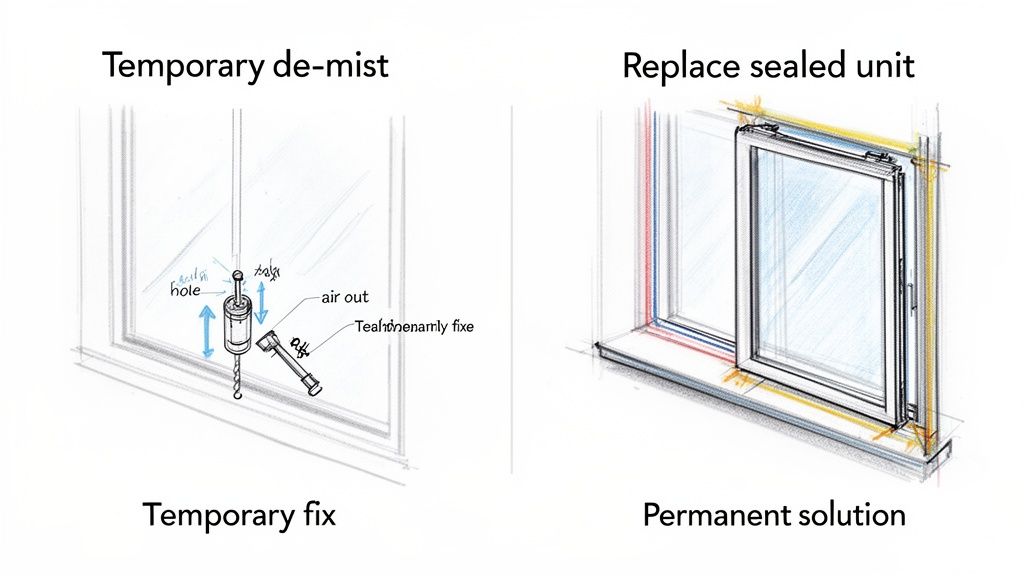
You might come across companies offering a ‘de-misting’ service. This involves drilling a tiny, discreet hole into the glass, clearing out the moisture inside, and then popping a small plug into the hole. It sounds tempting, I know. But it’s purely a cosmetic fix.
Think of it like patching a flat tyre without fixing the puncture. The root causes—the broken seal and the escaped insulating gas—are completely ignored. Your window’s thermal performance isn’t restored, and it’s almost guaranteed that moisture will creep back in, bringing the fog with it.
The industry-standard, and frankly the only real long-term solution, is to replace the failed sealed glass unit itself. This is often a much simpler and more affordable job than homeowners imagine. In the vast majority of cases, your existing window frames are perfectly sound and don’t need replacing at all.
A glazing specialist simply removes the old, misted glass unit and fits a brand-new, perfectly sealed one in its place. It’s a straightforward swap that delivers some major benefits:
This problem is incredibly common across the UK, especially in places with our damp, cool climate. Research shows that around 8.5% of homes have been affected by condensation issues. While that specific data is from Scotland, it mirrors what we see right here in Yorkshire and across northern England, where we estimate 15-20% of homes suffer from failed seals. In towns like Harrogate and Hull, that mix of cold snaps and daily indoor humidity is the perfect recipe for seal failure, which can slash a window’s efficiency by up to 25%.
For some properties, particularly those in conservation areas or the beautiful listed buildings you see in historic cities like York, replacing the external glazing isn't always an option. Planners often insist that the original windows are preserved to maintain the building's character. In these situations, secondary glazing is a brilliant alternative.
Secondary glazing involves installing a discreet, slimline second window pane on the inside of your existing window. This creates a large, insulating air gap that dramatically improves thermal performance and virtually eliminates condensation, all without altering the building’s exterior.
This method is a highly effective way to get all the benefits of double glazing while respecting a property's heritage. It cuts heat loss significantly and offers superb noise insulation—a massive bonus for homes on busy streets. To learn more, take a look at our detailed guide on the benefits of secondary glazing for your home.
To make the right choice for your home, it helps to see the options side-by-side.
| Feature | De-Misting (Drill & Plug) | Glass Unit Replacement |
|---|---|---|
| Problem Solved | Cosmetic only (removes visible water) | Structural (replaces the entire failed unit) |
| Permanence | Temporary (condensation will likely return) | Permanent (a long-term solution) |
| Insulation | Not restored (gas has already escaped) | Fully restored (new unit with Argon gas) |
| Best For | A very short-term visual improvement | A lasting fix that restores performance |
Ultimately, while de-misting might clear your view for a little while, replacing the failed sealed unit is the only way to properly fix the underlying issue. It’s a sound investment in your home’s comfort, efficiency, and value, ensuring you won't be staring at that same foggy problem again next winter.
Deciding to replace a failed sealed unit is more than just a quick fix; it’s a golden opportunity to upgrade your home's performance. When you spot that tell-tale condensation between the panes, it’s a clear sign that your old glazing technology has given up the ghost. Modern glass units offer huge leaps forward in making your home warmer, quieter, and more energy-efficient, turning a simple repair into a smart investment for the long haul.
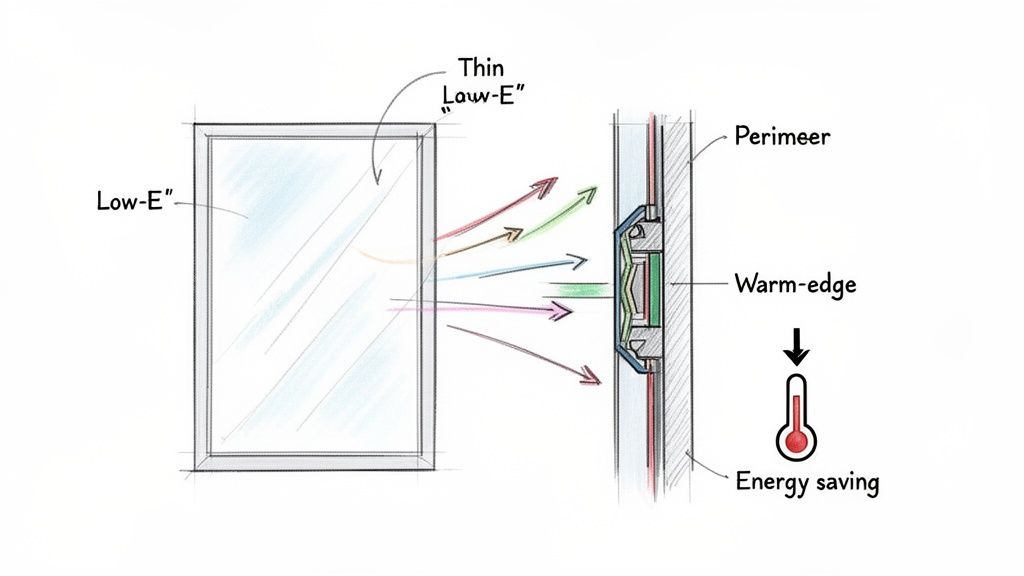
Getting to grips with a couple of key features will help you have a much better conversation with glazing specialists, whether you’re in Newcastle, Yorkshire, or anywhere in between. Armed with this knowledge, you can be sure you're getting the best possible solution for your property.
One of the biggest and best upgrades you can make is choosing glass with a low-emissivity (Low-E) coating. Think of it as an invisible, heat-reflecting shield applied to one of the inner glass surfaces. It’s microscopically thin, so it won’t change your view one bit, but the difference it makes to your home's comfort is massive.
During winter, this coating bounces heat from your radiators right back into the room instead of letting it escape outside. It’s a simple but brilliant bit of science that means your heating works less, your energy bills go down, and your living space feels much cosier. For homeowners across the north of England, where the winters can drag on, this is a real game-changer.
The other crucial component to get right is the warm-edge spacer bar. This is the strip that runs around the edge of the unit, keeping the two panes of glass apart. In older double-glazing, these bars were almost always made of aluminium—a great conductor of heat, which meant it acted like a tiny motorway for warmth to escape your home.
A warm-edge spacer bar acts as a thermal break, significantly reducing heat loss around the edge of the glass. This simple upgrade not only improves energy efficiency but also keeps the inner pane of glass warmer, making it much less likely to attract room-side condensation.
Modern units use advanced composite or foam materials that are far less conductive. By insisting on a unit with warm-edge technology, you stop this "thermal bridging" in its tracks, keeping the warmth inside where you want it. This technology is now standard in any high-performance window and is an absolute must-have for any replacement.
When you're discussing your options with a professional, be sure to ask about these high-performance features. They all work together to give you a far superior sealed unit that solves your immediate problem and sets your windows up for the future.
Combining these elements means your new glass unit won't just get rid of that frustrating fog but will also help create a more comfortable and cost-effective home. To find out more about what’s possible, take a look at our professional glass replacement services for a solution built around you.
While DIY fixes for foggy windows might seem like a quick, tempting solution, they never get to the heart of the problem. Choosing to work with a professional for your glass replacement is the only way to guarantee a lasting, high-performance fix for condensation between the panes.
An experienced glazier ensures the job is done right from the very start, giving you complete peace of mind that your investment is protected by genuine craftsmanship.
The whole process is surprisingly straightforward and designed to cause as little disruption to your day as possible. It all starts with an initial chat and a thorough on-site survey, where a specialist will take precise measurements of the windows giving you trouble. This step is absolutely critical to make sure the new sealed unit is a perfect fit for your existing frames.
Once the measurements are double-checked and confirmed, your bespoke glass unit is carefully fabricated using top-quality materials. This is also the point where you can choose to upgrade. Fancy boosting your home's energy efficiency? We can talk you through options like Low-E coatings or warm-edge spacers.
As a local company, we understand the unique demands of homes across the north of England. From dealing with the harsh coastal weather in Northumberland to preserving the unique character of period properties in Yorkshire, we know what works.
The final stage is the installation itself. Our professional team works cleanly and efficiently, removing the old, failed unit and fitting the new one with meticulous care. We ensure the new seal is absolutely flawless to maximise the performance and lifespan of your new window.
Choosing a reputable, local specialist is about more than just getting new glass. It’s about ensuring the installation is flawless, the materials are top-quality, and the solution will last for many years to come, protecting your home against the unpredictable British weather.
This professional approach is vital, especially when you consider the direct link between your glazing's performance and your home's energy efficiency. While national statistics show 71% of UK properties have cavity wall insulation, issues like condensation persist in homes with older, unaddressed glazing problems.
Here in the Yorkshire and Humber region, we see it all the time: older homes that have been retrofitted in other ways but still suffer from persistent moisture issues because the windows were overlooked. Proactively replacing a failed unit can save you from future repair bills that regional glaziers estimate could range from £500-£2000 per window, all while giving you a drier, brighter home.
For a deeper dive into industry insights, you can explore their blog. To discuss your specific needs with a glazing specialist right here in Yorkshire or the North East, please get in touch with our expert team for a no-obligation quote.
We get asked these questions all the time by homeowners across Yorkshire and the North. Here are some straightforward answers to help you understand what’s really going on with your windows and what to do next.
You'll see DIY de-misting kits sold online, and it’s tempting to think they offer a quick fix. These kits usually involve drilling a small hole in the glass to try and clean the inside and let the moisture out.
The problem is, this is purely a temporary measure. It doesn’t replace the lost insulating gas, and it certainly doesn't restore the original factory-grade airtight seal. You’re left with a hole that can weaken the glass, and the condensation will almost certainly come back. The only genuine, long-term solution is to have the sealed glass unit professionally replaced.
This is where the good news comes in. Replacing just the glass unit is significantly more affordable than replacing the entire window frame.
The final cost will depend on a few things – the size of the window, the type of glass you need (like toughened, laminated, or energy-efficient Low-E glass), and how easy it is to access. As a local specialist serving areas like Yorkshire and Newcastle, we can give you an exact, no-obligation price after a quick, free visit to your home. It’s an investment that pays for itself pretty quickly in lower energy bills.
A high-quality sealed unit from a reputable installer should last between 10 to 20 years, sometimes even longer. Its lifespan is influenced by the quality of the original installation, the materials used, and local climate conditions.
If your windows are over a decade old and starting to mist up, it's a very strong sign the seals have simply done their job and reached the end of their life. Think of it as normal wear and tear for a building.
This is a crucial distinction to make. Replacing a failed unit will permanently solve condensation between the panes. That problem will be gone for good.
However, condensation on the room-side surface of the glass is a totally different issue. That's caused by excess humidity inside your home – moisture from cooking, showering, or drying clothes on a radiator. While new energy-efficient glass has a warmer internal surface which helps reduce this, the real solution is better ventilation. Using extractor fans or just opening a window for a bit each day is the most effective way to manage it.
Ready to get your clear views back and make your home warmer? The team at Glass Tech offers expert advice and professional glass replacement services across Yorkshire and the North East. Get your free, no-obligation quote today.

A professional team of experts providing glass and glazing solutions covering the whole of Yorkshire & more...
Whether it's Leeds, York, North Yorkshire, Birmingham, Hull, Liverpool, Machester, Newcastle or Nottingham, get in touch to find out how we can help you with your bespoke glass project.