
Think of a sleek glass shower screen. It's not just a functional bit of glass; it’s a design choice that can completely change the personality of your bathroom. It does away with the old, dated shower curtain, instantly making your space feel bigger, brighter, and worlds more modern.
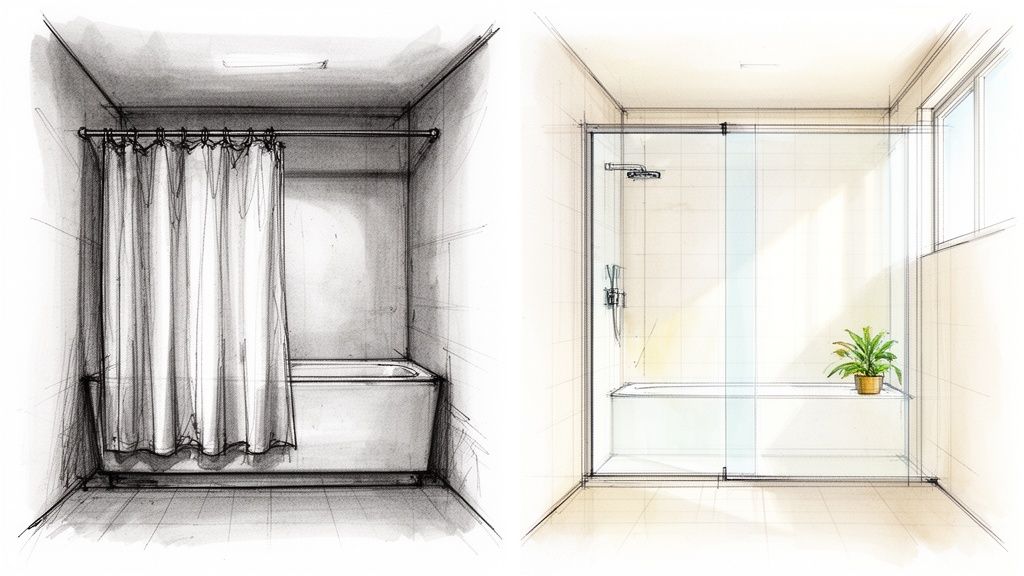
Imagine walking into a bathroom that feels open and spacious, where light streams in, no longer blocked by a heavy, mould-prone curtain. That’s the immediate effect of a good glass shower screen. It’s a simple switch, but the impact is huge, turning a purely practical corner of the house into a stylish centrepiece.
But this isn't just about looks. A properly fitted glass screen is a far better water barrier, keeping your bathroom floor dry and safe. And unlike curtains that need constant washing or replacing, glass is built to last. It’s hygienic and incredibly easy to keep sparkling with just a quick wipe.
Right across the UK, homeowners are catching on and swapping out curtains for glass. You can see it in the numbers; market analysis shows a steady climb in shower screen sales, projected to jump from around 500,000 units in 2014 to over 850,000 by 2026. It's all part of a bigger move towards high-value, modern home improvements.
This shift is especially clear in places with busy housing markets, from the big cities to towns and villages all over the north of the UK. For anyone planning a project like installing glass balustrades in Yorkshire or a full bathroom refit in Newcastle, a glass shower screen has become an almost standard choice.
The real magic is how it plays with light. In a well-designed, modern bathroom, a clear glass screen can cut the need for artificial lighting by up to 30%, making the whole room feel brighter and more welcoming.
We’ve put this guide together to be your go-to resource, walking you through everything you need to know about glass shower screens. The goal is to give you the confidence to pick the perfect option for your home.
We'll be covering:
So, whether you're about to start a massive renovation or just hunting for a simple update with a big payoff, a glass shower screen delivers a blend of style and function that's hard to beat. Let's dive into the options and find the right one for your space.
Right, let's get into one of the biggest decisions you'll make for your new bathroom: the style of your glass shower screen. The choice between frameless, framed, and semi-frameless designs really sets the tone for the entire space.
Getting this right is the key to finding the perfect match for your bathroom, your budget, and your personal taste. We'll break down these options so you can start to picture what will work best in your home, whether you're in a modern flat in Leeds or renovating a period property in York.
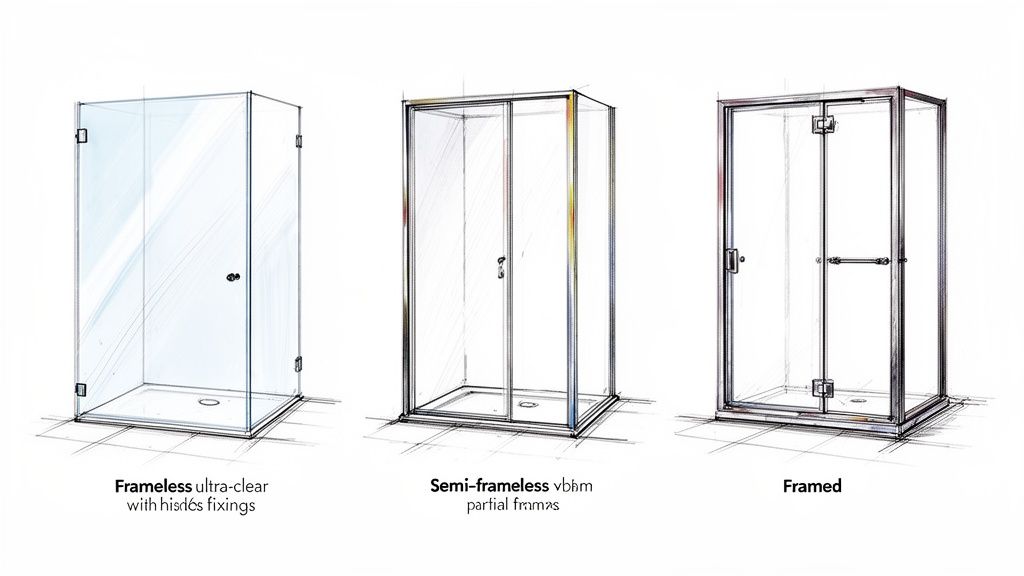
Imagine your shower as a crystal-clear cube of light, with nothing to get in the way of the view. That’s the beauty of a frameless glass shower screen. This is the top-tier choice for a clean, minimalist look.
Instead of a bulky metal frame, these systems use thicker, heavier glass (usually 8mm or 10mm) held in place by discreet metal hinges and clamps. The result is a seamless, sophisticated finish that makes your bathroom feel significantly larger and more open.
A frameless screen essentially disappears, allowing your beautiful tilework and other design features to become the main event. It’s no surprise they are the go-to for high-end, contemporary wet rooms and walk-in shower designs.
At the other end of the scale, you have the framed glass shower screen. This is the traditional workhorse of the bathroom world, and for good reason. It features a sturdy metal frame, typically aluminium, that fully encloses the glass panels and the door.
This design offers maximum structural integrity and excellent water retention. While it might not have the same 'wow' factor as a frameless setup, a framed screen is incredibly dependable and is often the most budget-friendly option.
The complete seal provided by the frame makes it exceptionally good at keeping water exactly where it should be. They come in a whole range of finishes like chrome, satin, and matt black, so you can easily match them to your taps and other fixtures.
For many homeowners, the sweet spot lies right in the middle. A semi-frameless shower screen is a brilliant compromise, blending modern aesthetics with a dose of practical structure.
With this design, you'll typically see a frame along the top and bottom edges and where the glass meets the wall. The door panel itself, however, is left frameless.
This hybrid approach gives you a much cleaner, more contemporary look than a fully framed unit but still offers great stability and water-proofing. It’s an incredibly popular choice that delivers a high-end feel without the full cost of a completely frameless system, making it a stylish and practical upgrade for almost any bathroom layout.
To help you weigh up the options, here’s a quick side-by-side comparison.
This table breaks down the key differences between frameless, semi-frameless, and framed screens to help you decide which is the right fit for your bathroom and budget.
| Feature | Frameless Screen | Semi-Frameless Screen | Framed Screen |
|---|---|---|---|
| Aesthetics | Minimalist, seamless, luxurious | Modern, clean, balanced | Traditional, structured |
| Sense of Space | Makes the room feel significantly larger | Creates a more open feel than framed | Can make the space feel more enclosed |
| Cost | Highest initial investment | Mid-range, good value for a modern look | Most budget-friendly option |
| Glass Thickness | Thicker (8mm - 10mm) for structural strength | Mid-range thickness, often 6mm - 8mm | Thinner glass is possible due to frame support |
| Water Containment | Very good, but relies on precise installation | Excellent, with framing on key edges | Maximum water-tightness due to the full perimeter seal |
| Cleaning | Easiest to clean with minimal hardware | Relatively easy, with some frame tracks | More tracks and corners to clean |
| Best For | High-end wet rooms and contemporary designs | A stylish upgrade on a moderate budget | High-traffic family bathrooms and budget renovations |
Ultimately, your choice comes down to what you prioritise most. Frameless delivers on style, framed offers robust practicality, and semi-frameless gives you a fantastic blend of both. Consider which style best complements your bathroom’s overall design, from walk-in showers in Harrogate to pivot doors in Sheffield.
If you have a unique space or a specific vision that doesn't quite fit these standard types, remember that custom solutions are always an option. You can learn more about what's possible by exploring our guide to bespoke glass projects.
Beyond the look and style, the actual substance of your glass shower screen is what ensures it’s safe and will last for years. This is one area where you simply can’t afford to cut corners. The quality of the glass is non-negotiable, and knowing what makes a panel genuinely safe gives you total peace of mind in your investment.
The key to a safe shower screen lies in one simple but crucial detail: you should always insist on toughened safety glass that meets the strict criteria of British Standard BS EN 12150. This isn't just a recommendation; it's the official benchmark for safety in homes and commercial buildings, covering everything from shower enclosures to glass balustrades.
So, what exactly makes toughened glass so special? The best way to think of it is as standard glass that’s been put through a serious workout. It goes through a controlled process of extreme heating and then very rapid cooling, a treatment known as tempering. This completely changes the glass’s internal structure, locking in stress.
The result is a panel that's four to five times stronger than normal glass of the same thickness. It can handle bumps, knocks, and temperature changes far better than its untreated counterpart, which is absolutely essential in a busy family bathroom.
The most important safety feature, though, is how it behaves if it does break. Instead of shattering into large, jagged daggers of glass, it crumbles into small, dull-edged, pebble-like pieces. This drastically reduces the risk of any serious injury.
This safe and predictable breakage pattern is precisely why BS EN 12150 is so vital for any glass shower screen we install.
Once you know your screen will be made from proper toughened safety glass, the next thing to decide is its thickness. The most common options you'll come across are 6mm, 8mm, and 10mm, and the right one for you really depends on the style of screen you’re going for.
Your choice directly affects the screen’s stability and how it feels to use every day. A thicker panel feels more robust and luxurious, which is why it's a popular specification for bespoke projects, particularly in cities like Newcastle and across Yorkshire where quality home renovations are a priority. You can see examples of different glass specifications by exploring our latest product brochure.
For those after absolute visual perfection, there’s another level of quality to consider: low-iron glass. If you look at the edge of a standard piece of clear glass, you’ll notice a distinct green tint. This is caused by the natural iron oxide content from the manufacturing process.
Low-iron glass, as the name suggests, is made using a formula that massively reduces this iron content. The result is a brilliantly clear, almost crystal-like panel that lets colours pass through without distortion. If you’ve spent a fortune on beautiful feature tiles, low-iron glass ensures their colours look exactly as you intended, with no greenish hue. It’s a premium finish, often requested for high-end bathroom projects in places like Leeds and York, where achieving a flawless look is everything.
A stunning glass shower screen that perfectly contains every drop of water doesn’t happen by accident—it starts with smart planning. While nothing can replace a professional site survey from our experienced team, understanding the basics yourself is incredibly empowering. It means you can have a really productive conversation with your installers and know exactly what to look for.
Think of this as your pre-installation checklist. Taking a few initial measurements helps you visualise the screen in your space and gives you the key details needed for an initial quote. Of course, your installer will take their own hyper-precise measurements later on, but this first step helps set clear expectations from the get-go.
This is about more than just numbers, though. It’s about spotting challenges before they become problems, especially in the beautiful but often quirky older properties we see across Harrogate, Hull, and other historic parts of Yorkshire.
Getting started is simple. All you need is a good quality tape measure and a spirit level. Just work through these steps to gather the preliminary data for your new shower screen.
Measure the Height: First, decide how tall you want your screen. Measure from the top rim of the bath or the base of the shower tray straight up to your desired height. A typical height is somewhere between 1950mm and 2000mm, but this is completely flexible to suit your bathroom and personal preference.
Measure the Width: For a fixed panel, measure the horizontal distance from the wall to where you want the panel to finish. If you’re planning a door, measure the full width of the opening from wall to wall. A crucial tip here: always measure at the top, middle, and bottom of the space. Walls are very rarely perfectly straight!
Check Your Levels: This is absolutely vital. Use your spirit level to check if your walls are perfectly vertical (plumb) and if your shower tray or bath rim is perfectly horizontal (level). Even a tiny slope can compromise the fit and water-tightness of a frameless or semi-frameless screen.
The diagram below shows the essential safety processes every single piece of our glass goes through before it's ready for your home.
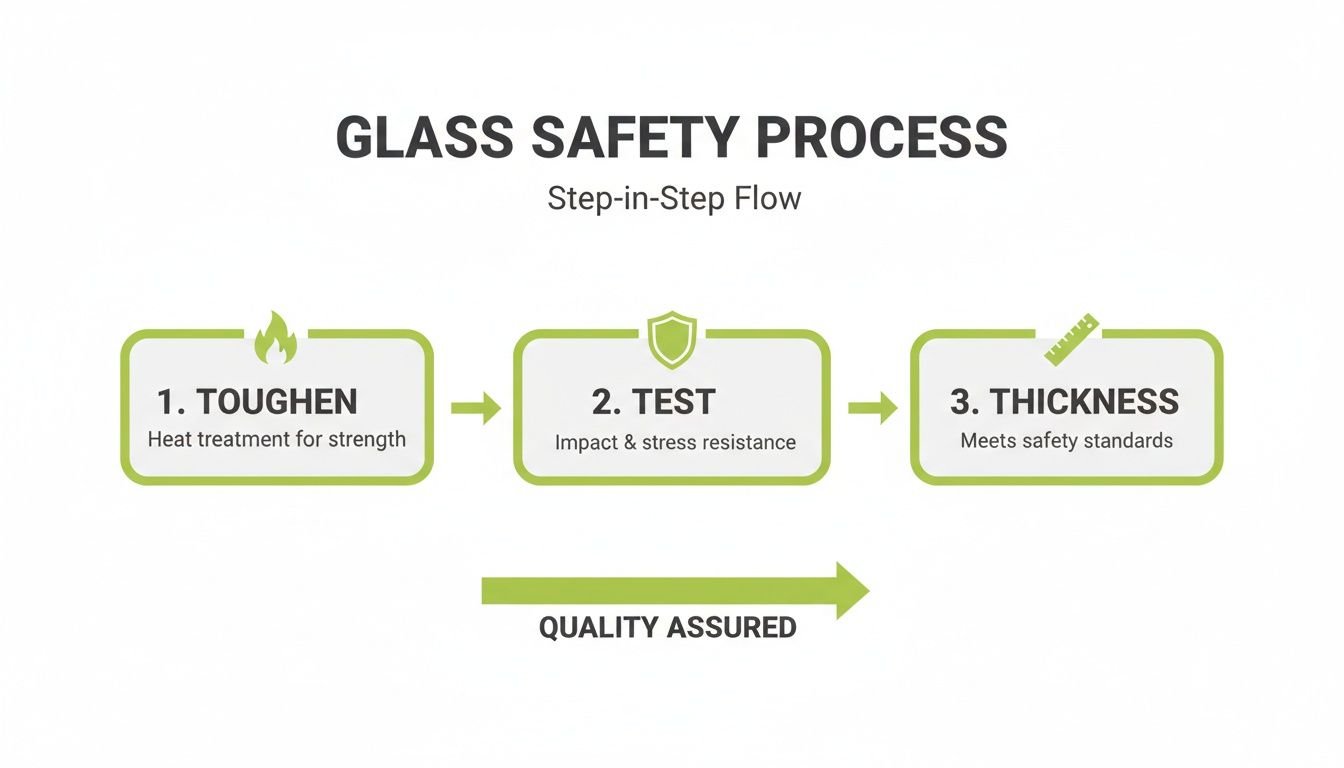
As you can see, real safety isn't just about thickness; it’s a product of rigorous toughening and testing that guarantees strength and reliability you can count on.
Beyond the basic dimensions, a good plan involves a bit of detective work. Scouting for potential issues now can save a lot of headaches and prevent unexpected surprises on installation day.
A successful installation is 90% preparation and 10% execution. Identifying obstacles like out-of-plumb walls or poorly placed pipework early on is the key to a seamless and stress-free fitting day.
Keep a close eye out for these common bathroom features that can complicate things:
Having this information ready gives you the confidence to discuss your project clearly with any installation team. It ensures the final design isn't just beautiful, but perfectly tailored to the unique character of your bathroom, whether you’re in a new build in Sheffield or a renovated terrace in York.
Bringing a bespoke glass shower screen into your home is an exciting milestone, but it’s completely normal to feel a bit apprehensive about the installation day itself. The good news is, a professional process isn’t something to worry about. It’s a clear, well-trodden path designed to be smooth and stress-free from start to finish.
Whether you're in a city-centre flat in Manchester or a family home in Newcastle, the principles of a first-class installation are the same. And it all begins with one crucial step: the site survey.
This is, without a doubt, the most important stage of the entire project. While the rough measurements you take yourself are a great starting point for a quote, our expert site survey is where precision comes in. One of our team will visit your home to take hyper-accurate readings using specialist laser equipment.
We're not just measuring the height and width. We’re meticulously checking if your walls are perfectly vertical (out-of-plumb) or if your shower tray or floor is completely level. Spoiler alert: they rarely are, and that's completely normal, especially in Yorkshire properties with character. We’ll also identify any potential obstacles – a stray pipe, a low window sill, or a sloped floor – ensuring your new glass is fabricated to fit your bathroom’s unique quirks like a glove. This visit is also your perfect chance to ask any lingering questions and lock in final details like your choice of hardware finish.
Once you’ve signed off on the final design, the detailed specifications are sent directly to our workshop. This is where the magic happens. Your glass panel is cut to the exact dimensions from the survey and then undergoes the vital toughening process to turn it into certified safety glass.
So, how long does this take?
We believe in being upfront, so we’ll always give you a clear and realistic timeline right from the beginning.
On the agreed-upon day, our fitting team will arrive with your beautiful new shower screen and all the necessary components. Our installers are craftsmen who take real pride in their work; they are methodical, clean, and respectful of your home.
The process involves carefully positioning the channels or brackets, drilling the required fixings, and then securely setting the glass panel into place. The final, critical step is applying a neat bead of high-grade, anti-mould silicone sealant along all the required edges. This creates a tough, waterproof barrier that’s built to last.
For a standard glass screen, the entire on-site fitting is usually completed within just a few hours. If you're planning a wider bathroom renovation, it's worth looking into the average walk-in shower installation cost to help with your overall budget.
After a final clean-up and inspection, our team will leave you with a sparkling, flawlessly installed shower screen, ready to transform your daily routine.
Your new glass shower screen is in, and it looks absolutely perfect. The question we get asked all the time is, how do you keep that flawless, showroom sparkle for years to come? The secret isn't hours of back-breaking scrubbing, but a few simple, practical habits that make all the difference.
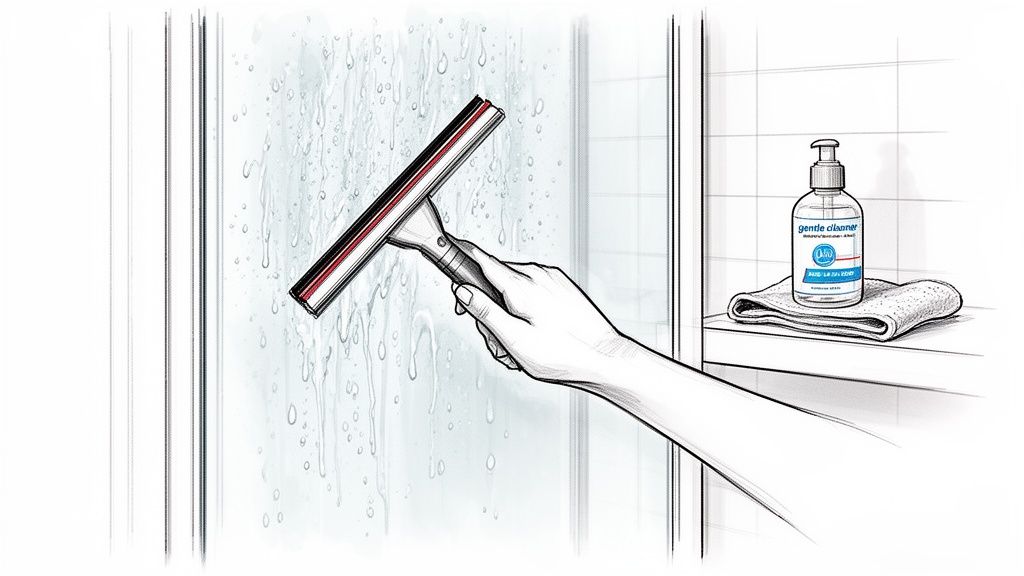
Honestly, the single best tool you can own is a simple squeegee. Wiping down the glass after every shower takes less than 30 seconds, but it's the number one way to stop soap scum and hard water deposits from ever taking hold. This quick daily habit prevents mineral residue from drying onto the glass, which is the main culprit behind cloudy, dull-looking screens.
When it comes to a deeper clean, you can put away the aggressive, abrasive chemicals. In fact, we advise against them as they can damage the silicone seals and hardware finishes over time. A gentle, effective approach is all you need to keep your glass gleaming.
To help you get into a simple rhythm, here's a straightforward checklist for keeping your screen pristine with minimal effort.
| Task | Frequency | Recommended Tools/Products |
|---|---|---|
| Squeegee Dry | Daily (after every shower) | Good quality squeegee |
| General Clean | Weekly | White vinegar & water solution, microfibre cloths |
| Spot Treatment | As needed | Bicarbonate of soda paste, soft brush |
| Hardware Check | Monthly | Your eyes and hands! |
This simple routine is more than enough to keep your shower looking fantastic week in, week out.
A homemade mix of white vinegar and water in a spray bottle works wonders. Just spray it onto the glass, let it sit for a few minutes to dissolve any film, and then wipe it all off with a soft microfibre cloth. For that professional, streak-free finish, buff the glass with a dry cloth afterwards.
Hard water is a common problem across many parts of the UK, especially here in Yorkshire, and it's what causes those stubborn mineral spots. If you're struggling, it's worth learning some professional techniques for cleaning hard water spots from glass.
For really tough spots or limescale build-up along the edges, you can make a paste with bicarbonate of soda and a little water. Apply it with a soft cloth or an old toothbrush, let it work its magic, and then gently scrub and rinse. It’s got all the cleaning power you need without scratching the glass or metal.
To make life even easier, you can opt for an easy-clean coating on your new screen. This is a factory-applied treatment that makes the glass surface hydrophobic—in simple terms, water just beads up and rolls straight off, taking soap and minerals with it. It dramatically cuts down on cleaning and is something we often recommend for bespoke screens.
Beyond cleaning, it’s just good practice to give your screen’s hardware and seals a quick check every few months.
These small habits are what protect your investment, ensuring it stays secure, beautiful, and functional for the long haul. On the rare occasion that a panel gets damaged beyond a simple fix, you can explore our professional glass replacement services.
Even when you've settled on a style and have a good idea of the glass you want, a few practical questions always remain. It's completely normal. This is where we tackle the most common queries we get from homeowners across Yorkshire and the UK.
Think of it as the final bit of know-how you need to move forward with your project, feeling completely confident in your decisions.
This is usually the first question on everyone's mind, and the honest answer is: it really does vary. A custom shower screen isn't an off-the-shelf product, so the final price tag depends entirely on your unique space and choices.
The main factors that influence the cost are the overall size of the screen, the complexity of the design (is it a simple panel or a full multi-panel enclosure?), and the glass thickness you opt for—typically 8mm or 10mm for bespoke projects. Any special finishes, like low-iron glass for ultimate clarity or specific hardware like matt black or brushed brass hinges, will also play a part.
To give you a rough idea:
The only way to get a firm figure is with a detailed, no-obligation quote. This requires a proper site survey by a specialist, which is essential for pricing any bespoke glass project accurately, whether it's for Glass Balustrades Yorkshire or a new shower door in Manchester.
This is an excellent and very common question. While a professionally installed frameless screen does an exceptional job of keeping water where it belongs, it's not hermetically sealed like a chunky, fully-framed unit. Instead, they are engineered to be highly water-resistant.
This is achieved through incredibly precise manufacturing and the use of minimal, high-grade and clear silicone seals only where necessary.
For the vast majority of people, any water escape is completely negligible and simply not an issue during a normal shower. The secret is all in the quality of the installation—a meticulous survey and fit ensures all gaps are tiny and the screen is perfectly tailored to the unique slopes and angles of your shower tray and walls.
An expert fitter makes sure every component works together as an effective barrier, keeping your bathroom floor dry, safe, and slip-free.
A high-quality toughened glass shower screen is a genuine long-term investment for your home. With just a little bit of basic care, the screen is designed to last for decades. The toughened glass panel itself is incredibly robust; it won’t degrade, turn cloudy, or discolour over its lifetime.
More often than not, the functional lifespan of the whole enclosure comes down to the moving parts and seals.
This is precisely why choosing a reputable supplier who insists on using premium hardware is so important. The glass is built to last a lifetime; good quality components ensure the whole system does too.
Yes, in almost all cases a glass screen can be installed, but the type of wall you have is a critical factor. It dictates the fixing method we need to use to guarantee a safe, secure, and permanent fit. This is one of the most important things our team assesses during the site survey.
For solid walls like brick or concrete blockwork, standard fixings provide a powerful and reliable anchor for the screen's weight. If you have internal stud walls (plasterboard), it's absolutely vital that the fixings go directly into the wooden studs behind the board. Just fixing to plasterboard is not enough to safely support the weight of a heavy 10mm frameless panel.
Your installer will identify the construction and use the correct heavy-duty fixings for your specific wall, guaranteeing a robust installation you can trust for years to come.
Ready to transform your bathroom with a stunning, made-to-measure glass feature? The team at Glass Tech brings over 20 years of expertise to projects across Yorkshire and the North. We manage everything from the initial design and survey to the final, flawless installation.
Discover our range of bespoke shower screens and other contemporary glass solutions by visiting us at https://www.hgwsolutions.co.uk.

A professional team of experts providing glass and glazing solutions covering the whole of Yorkshire & more...
Whether it's Leeds, York, North Yorkshire, Birmingham, Hull, Liverpool, Machester, Newcastle or Nottingham, get in touch to find out how we can help you with your bespoke glass project.