
Getting the glass for your greenhouse right isn’t just one item on a long to-do list; it’s the single most important decision you'll make for the future of your garden. The glazing you choose is the gatekeeper between your plants and the outside world, controlling the sunlight and warmth they need to truly thrive.
Making the right choice from day one has a huge impact on everything that follows, from how vigorously your plants grow to how much you end up spending on heating each year.
Think of your greenhouse glass like a pair of prescription glasses for your garden. The right lenses bring the world into sharp, vibrant focus, letting your plants soak up the maximum amount of light and heat. The wrong ones, however, leave everything blurry and inefficient, holding back growth and wasting energy.
Ultimately, your decision comes down to striking the perfect balance between four key factors:
The glass panels for greenhouse structures you select lay the foundation for a productive, year-round growing space. Whether you're nurturing delicate seedlings through a cold snap in Newcastle or trying to get an extra harvest in Yorkshire, the properties of your glass dictate what is realistically possible. It’s what determines how well your structure holds its heat overnight and how it protects your crops from scorching UV rays on a bright summer's day.
This focus on quality glazing isn't just for hobbyists, either. It reflects a major trend across the country. The UK's commercial sector shows a huge demand for better infrastructure, with the glass greenhouse market projected to grow at a compound annual rate of 10.5%. This points to a nationwide investment in high-performance growing environments. You can explore more data on the UK commercial greenhouse market to see these trends for yourself.
Choosing your glass is about more than just putting up a structure; it's about creating a perfectly controlled microclimate. It's the difference between a garden that merely survives and one that truly flourishes.
In the end, your choice of glass has a direct line to your success and enjoyment. Well-chosen panels lead to stronger plants, a longer growing season, and lower running costs. It’s a smart, upfront investment in the health of your garden for years to come, making sure your greenhouse isn’t just an outbuilding, but a hub of vibrant life. This guide will walk you through everything you need to know to make the best choice.
Choosing the right glass panels for your greenhouse can feel like a major decision, and in many ways, it is. The type of glass you select will have a huge impact on everything from how well your plants grow to how much you spend on heating. Think of it less as just buying windows and more as choosing the very climate for your future garden.
Getting this right from the start creates an environment where your plants don't just hang on; they thrive. We'll walk you through the four main options, from the traditional to the high-performance, to help you find the perfect match for your gardening ambitions.
Before diving into the details, it's helpful to see how these options stack up against each other. This table gives you a quick overview of the key differences in safety, efficiency, and cost.
| Glass Type | Key Feature | Safety Level | Thermal Performance | Typical Cost |
|---|---|---|---|---|
| Horticultural Glass | Maximum light transmission, traditional look | Low | Low | £ |
| Toughened Glass | Impact resistance, crumbles safely if broken | High | Low-Medium | ££ |
| Laminated Glass | Holds together when broken, UV protection | Very High | Medium | £££ |
| Low-E Glass | Superior heat retention and reflection | High | Very High | ££££ |
Now, let's explore what these features mean for your greenhouse in more detail.
Horticultural glass is the classic, no-frills option that gardeners have trusted for generations. It’s the most budget-friendly choice and, being perfectly clear, offers brilliant light transmission for your plants. It's usually supplied in a standard 3mm thickness and provides that timeless, crystal-clear look for your green haven.
The major trade-off, however, is its fragility. When it breaks, it shatters into long, dangerous shards of glass. This is a serious safety concern, especially if children or pets play in the garden. While it’s a perfectly fine choice for a simple greenhouse in a very sheltered spot, it just doesn't have the durability of modern alternatives.
This flowchart helps simplify the decision-making process based on what matters most to you—be it light, insulation, or safety.
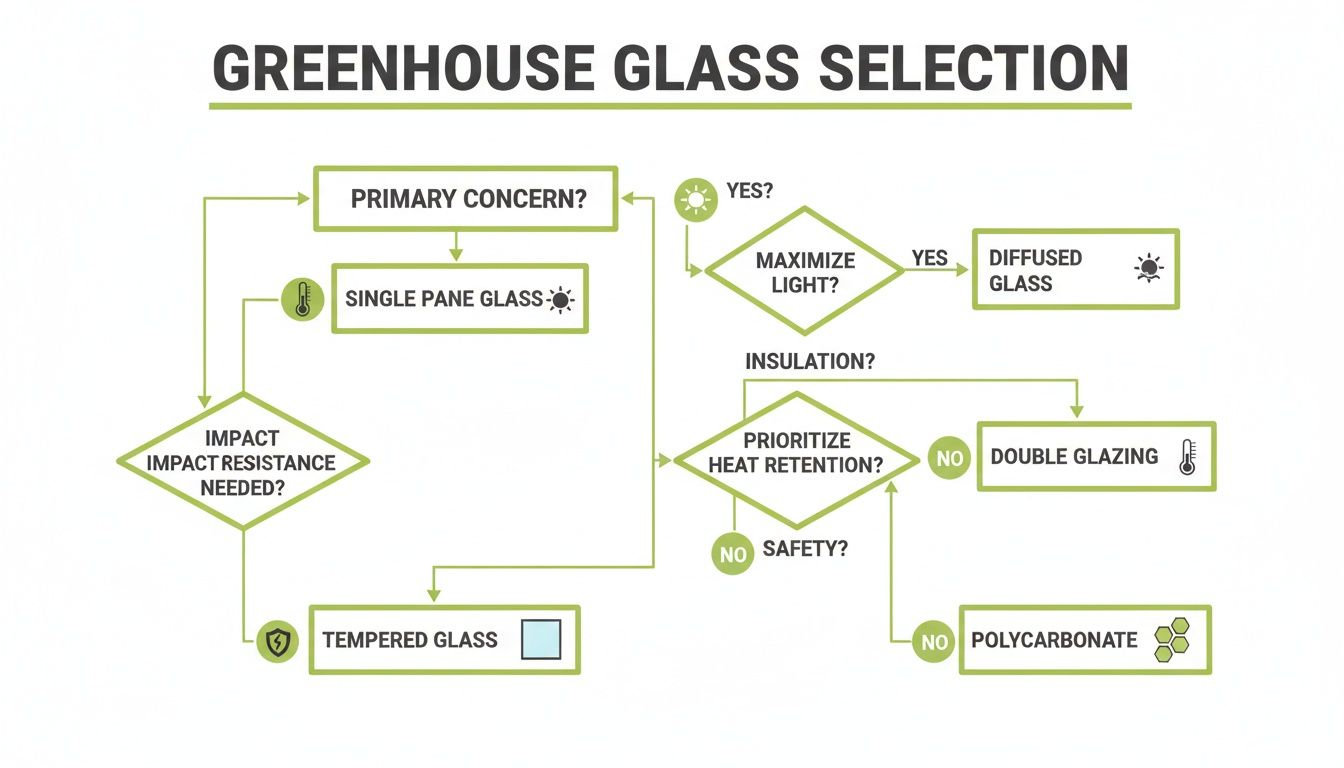
As you can see, once safety and better insulation become priorities, the path naturally leads towards more advanced glass types for reliable, year-round performance.
For most modern gardeners, toughened glass hits the sweet spot between performance, safety, and cost. This glass goes through a specialised heat-treatment process that makes it around four to five times stronger than standard horticultural glass. That added resilience means it can easily shrug off impacts from stray footballs, hailstorms, or gale-force winds.
Its biggest selling point is what happens if it does break. Instead of forming dangerous daggers, it shatters into small, blunt, pebble-like pieces, dramatically lowering the risk of injury. This peace of mind makes it a non-negotiable upgrade for any greenhouse in a family garden, near a public path, or in an exposed location.
Think of laminated glass as the security guard of the glass world. It's constructed just like a car windscreen: two sheets of glass are permanently bonded together with a tough, transparent interlayer. If the glass cracks, this interlayer holds all the fragments firmly in place.
Laminated glass offers two fantastic benefits in one. First, you get exceptional safety. Second, the interlayer blocks up to 99% of harmful UV rays, protecting delicate seedlings from scorch and preventing any furniture or tools inside from fading.
This makes it a superb choice for greenhouses attached to the home or those that double as a garden room or conservatory, where security and a controlled environment are paramount.
If you're serious about year-round growing, Low-E glass is the gold standard for thermal control. It’s engineered with an invisible, transparent metallic coating that works like a thermal blanket for your greenhouse. The results are impressive.
While it comes with a higher upfront cost, the long-term energy savings and superior growing conditions make Low-E glass a wise investment. For any gardener aiming for a productive, four-season space, it’s an unbeatable choice.
It’s one of the first, and biggest, decisions you’ll make for your garden: should you go for traditional glass or modern polycarbonate for your greenhouse? This choice isn't just about looks; it has a huge impact on how your greenhouse performs, how long it lasts, and how much work it'll be to maintain.
Polycarbonate often looks like a great deal at first, thanks to its lower price and impressive impact resistance. But it’s crucial to look beyond the initial cost and consider the trade-offs that appear over time.
For starters, polycarbonate scratches easily. These tiny scratches might not seem like a big deal, but they diffuse the light, reducing its quality before it ever reaches your plants. More importantly, it’s susceptible to UV radiation, which causes it to yellow and become brittle, cutting down light transmission and often meaning you’ll need to replace it far sooner than you’d hope.
This is where glass panels for greenhouse structures really show their worth. They offer a clarity and performance that plastic alternatives just can't compete with, making them a smart long-term investment.
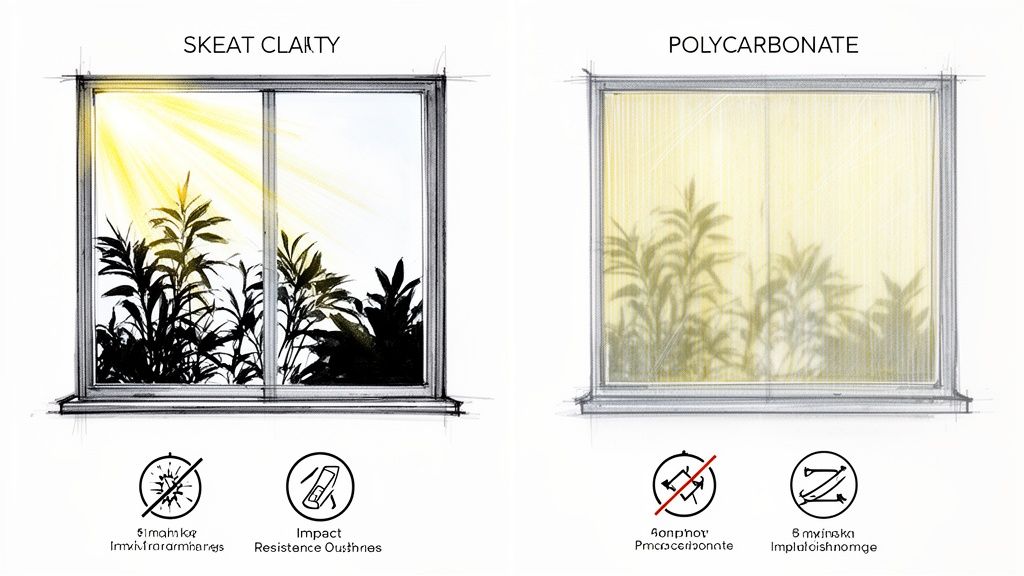
The number one job of any greenhouse glazing is to let in as much sunlight as possible, and this is where glass truly shines. Glass provides exceptional light transmission—around 90%—and critically, that figure never drops. The brilliant clarity you have on day one is the same clarity you'll enjoy 20 years from now, as long as you keep the panes clean.
Polycarbonate starts strong with a light transmission rate of about 88%, but this is where the slow decline begins. Over the years, UV damage and those unavoidable micro-scratches take their toll, gradually starving your plants of the quality and quantity of light they need. While a brand-new polycarbonate greenhouse works well, its performance will noticeably fade over its 10 to 15-year lifespan.
Glass stands the test of time. While polycarbonate panels may need replacing after a decade or so, properly installed toughened glass can easily last for 40 years or more, making it a more permanent and sustainable choice for your garden.
This difference in lifespan is a game-changer. The cost and hassle of reglazing a whole greenhouse with new polycarbonate can easily wipe out any money you saved at the start, really highlighting the long-term value of glass.
Then, of course, there’s how it looks. The difference is night and day. Glass has a timeless, crystal-clear beauty that turns a greenhouse into a stunning garden centrepiece. It gives you crisp, perfect views of your plants and looks fantastic from the outside. Whether your home is a period property in York or a new build in Manchester, a glass greenhouse adds a touch of pure class.
From a structural point of view, glass also brings some real benefits to the table. Its weight and rigidity add considerable sturdiness to the greenhouse frame, making the whole structure far more resilient in the face of high winds. While polycarbonate is lighter and easier to lift during installation, this lightness can also make the finished greenhouse feel less robust and more vulnerable to the British weather.
The growing UK greenhouse market shows that gardeners are weighing up these priorities. While market analysis shows plastic greenhouses lead in sales due to lower upfront costs, the demand for premium glass models remains incredibly strong, especially for serious gardeners who refuse to compromise on light quality and durability.
In the end, while the initial price for glass is higher, its incredible lifespan, undiminished light transmission, and classic good looks make it the more economical and effective choice for anyone wanting a high-quality, permanent greenhouse that will serve them and their garden for decades.
When you're planning a greenhouse, it's easy to get bogged down in the technical details of the glass. But two factors truly matter above all others: thickness and thermal rating. Getting these right is fundamental to building a greenhouse that’s both resilient and effective for year-round growing.
Think of it this way: thickness is all about strength, while the thermal rating is all about warmth. Together, they determine how well your greenhouse stands up to the elements and how efficiently it holds onto precious heat.
The traditional choice has long been 3mm horticultural glass, but it's notoriously fragile. We almost always recommend 4mm toughened safety glass as the modern standard. It offers a huge leap in durability and is far better equipped to handle the unpredictable British weather. This isn't just about preventing breakages; it's about creating a secure and stable environment for your plants.
While 4mm toughened glass is a fantastic all-rounder, there are times when a more substantial approach is needed to guarantee structural integrity and safety.
It really comes down to a few practical points:
While thickness relates to strength, the U-value of your glass is all about retaining heat. A U-value is simply a measure of how easily heat can pass through a material. For greenhouse glass, the rule is easy to remember: the lower the U-value, the better the insulation.
A high U-value means warmth escapes quickly, forcing you to run heaters more often and driving up your energy bills. A low U-value, on the other hand, means the glass is brilliant at trapping heat inside. This creates a far more stable and cost-effective growing environment, which is a game-changer for anyone serious about extending their growing season.
This focus on thermal efficiency is a major trend. The UK commercial greenhouse market is projected to reach USD 414.20 million by 2030, a boom driven by the demand for high-performance facilities with outstanding thermal control. You can learn more about the growth of the UK commercial greenhouse sector and its focus on efficiency.
For the ultimate in thermal performance, nothing comes close to a double-glazed unit. This construction uses two panes of glass separated by a sealed gap, typically filled with an inert gas like argon. That sealed layer of gas acts as a powerful thermal barrier, dramatically slowing the rate of heat transfer.
A double-glazed greenhouse is like wrapping your plants in a thermal blanket. It massively reduces heat loss, leading to lower heating costs and a far more stable internal temperature. Your plants are protected from the shock of sudden overnight temperature drops.
Another huge benefit is the reduction in condensation. Because the inner pane of glass stays warmer, moisture is much less likely to form on its surface. This helps cut down the risk of fungal diseases and keeps your glass clearer for maximum light penetration. It’s the same principle that makes home window upgrades so effective—in fact, you can explore how secondary glazing offers similar benefits by creating that all-important insulating air gap.
Once you've picked out the perfect glass panels for a greenhouse, your attention will naturally turn to the build itself. How you handle the installation, framing, and sealing is every bit as important as the glass you’ve chosen. These practical details will ultimately decide your greenhouse's lifespan, how well it stands up to the weather, and its overall performance.
Your first big decision is whether to tackle the build yourself or bring in a professional. While assembling a kit greenhouse can be a really rewarding project, getting that precise, weatherproof finish needed for top-notch thermal efficiency and safety can be tricky. An experienced fitter makes sure every panel is perfectly aligned and sealed, a detail that makes a world of difference, especially with the demanding weather we see in Yorkshire or Newcastle.
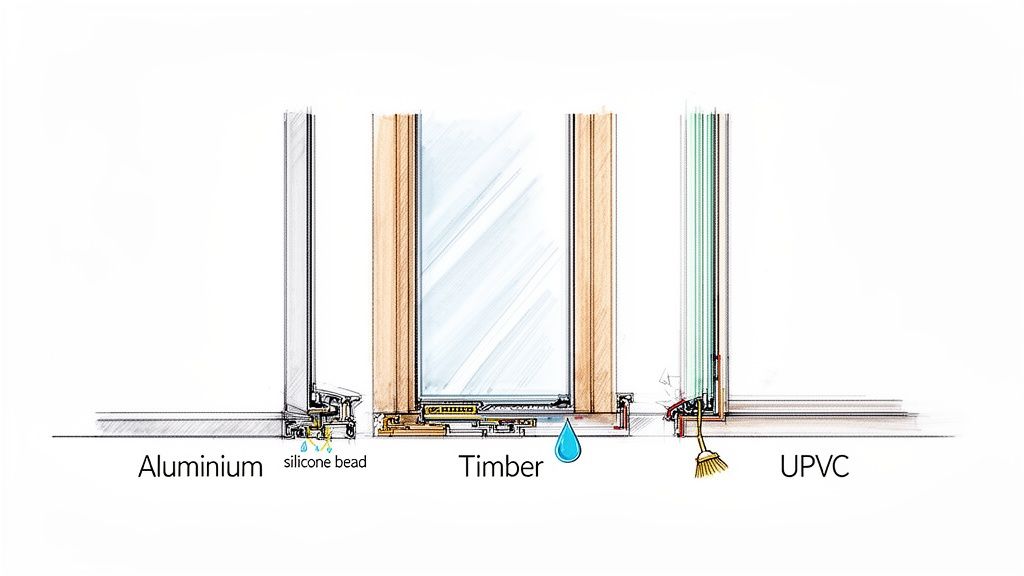
The frame is the skeleton of your greenhouse, giving it strength, support, and character. Each material strikes a different balance between durability, maintenance, and looks.
The best material for you really comes down to your budget, personal style, and how much time you're willing to spend on future maintenance.
A greenhouse is only as good as its seals. Any gaps or draughts will completely undermine the insulating properties of your glass, letting precious heat escape and cold air creep in. This is where paying close attention to detail really pays off.
Think of sealing as making your greenhouse airtight. The goal is to create a single, continuous barrier against the elements, using the right combination of gaskets and silicone to form a watertight, draught-free structure.
Specialised glazing gaskets, usually made of rubber or EPDM, are fitted between the glass and the frame. These create a cushioned, weatherproof seal that also allows for the natural expansion and contraction of the materials. After that, a high-quality, UV-stable silicone sealant is applied to any remaining joints to guarantee a completely watertight finish. This careful sealing is what separates a high-performance greenhouse from a leaky, inefficient one.
Should a pane ever break, it’s vital to ensure a perfect seal is recreated during the repair. If you need help with this, a professional glass replacement service can ensure the job is done right.
Once it's built, looking after your glass greenhouse is surprisingly straightforward. The key is just regular, simple care to make sure it keeps performing at its best for decades to come.
Your main job is keeping the glass clean. Over time, things like algae, dirt, and hard water deposits can build up, which reduces the amount of light getting to your plants. A simple wash-down every few months with warm, soapy water is usually all it takes. For stubborn mineral deposits, especially in hard water areas, it's worth learning how to remove hard water stains from glass to restore that perfect clarity.
Alongside cleaning, get into the habit of inspecting the seals and gaskets once a year, particularly after winter. Look for any signs of cracking, shrinking, or peeling. Catching and fixing a small issue early stops it from becoming a major leak, ensuring your greenhouse remains a perfect, protected environment for your plants year after year.
Right, you’ve waded through the technical details and now you’re ready for the exciting part—turning those greenhouse plans into a reality. This final step is all about getting organised and, if you need it, finding the right people to make sure your structure is built to last.
Think of it as the pre-flight check before launching your perfect growing environment. A solid plan now prevents headaches later and ensures every decision you’ve made comes together perfectly.
A successful project doesn’t start when the first pane of glass goes in; it starts with a clear set of goals. Running through a checklist like this helps you stay on track and simplifies the whole process.
Define Your Ambition: What are you planning to grow? Are you looking to get a jump-start on seedlings, protect tender plants over winter, or go for year-round harvests of exotic fruit? Your gardening goals will determine the greenhouse's size and specifications.
Assess Your Site: Get the tape measure out. Check your available space, but also pay close attention to the sun's path—a south-facing spot is ideal in the UK. Think about wind exposure and how easy it will be to get to for both building and daily use.
Pick Your Glass: Now’s the time to finalise your choice. Will standard horticultural glass do the job, or do you need the extra safety of toughened or laminated glass? For ultimate efficiency, you might even consider high-performance Low-E glass. This all comes down to budget, safety, and your heating plans.
Choose Your Frame: Decide what suits your garden and your lifestyle best. Are you after low-maintenance aluminium, the classic look of timber, or a practical uPVC frame?
Plan the Installation: Is this a project you’re confident tackling yourself, or would you prefer to bring in a professional? Getting an expert to handle the build guarantees that the seals are perfect and the structure is sound from day one.
Once you have your plan nailed down, finding a trusted local team is the key to a flawless finish. For gardeners across the region, from Leeds and Sheffield to the stunning landscapes of Glass Balustrades Yorkshire, a team with proven experience is worth its weight in gold. The same goes for those further north; a company that understands the climate challenges in places like Glass Balustrades Newcastle can be invaluable.
With over 20 years of experience, our team provides specialist advice and professional installation for bespoke glass panels for greenhouse projects. We ensure every pane is fitted flawlessly, creating a structure built to help your garden flourish for decades.
A specialist company does more than just fit the glass. We can offer crucial advice on the right materials for your exact location and ensure the final structure is secure, safe, and thermally efficient. That peace of mind is priceless.
While a lot of our work involves creating stunning architectural features for homes, the precision and skill are directly transferable. You can see the quality of our work by exploring the services offered by our expert glass balustrade installers. We bring that same meticulous attention to detail to every single project.
Even with the best-laid plans, it's completely normal to have a few questions buzzing around before you commit to a greenhouse project. We get asked these all the time, so we've put together some straight answers to the most common queries we hear from homeowners. This should help you finalise your plans with confidence.
The final price tag for greenhouse glass panels can vary quite a bit, as it really depends on what you need. The single biggest factor is the type of glass you go for. Standard 3mm horticultural glass is the most wallet-friendly option, whereas high-performance laminated or Low-E glass will be at the top end of the scale.
The size and thickness of the panes also make a difference. A standard 4mm toughened panel will naturally cost less than a much larger, thicker 6mm one. To give you a rough idea, you could be looking at anything from £25 to over £100 per square metre. The only way to get a firm number is to have a chat with a specialist who can provide a proper quote based on your exact measurements and glass choice.
Absolutely. Swapping out a single broken pane is a very common job for any greenhouse owner. If you're dealing with standard horticultural glass, it's a task you can often handle yourself, just be incredibly careful when clearing away the sharp, broken shards.
It’s even easier if you have toughened glass, as it’s designed to crumble into small, blunt-edged cubes that are safe and simple to sweep up. You'll just need to measure the frame opening very carefully to get the right size for the replacement. That said, to guarantee a perfect fit and a weatherproof seal, many people prefer to call in a professional to make sure it's installed securely.
For the vast majority of projects in the UK, a greenhouse is considered 'permitted development', which is good news as it means you don't need to apply for planning permission. This usually applies as long as the greenhouse is a reasonable size and isn't positioned in front of the main face of your house.
There are, of course, a few exceptions to be aware of. The rules can be different for listed buildings, properties in a conservation area, or if your structure goes over certain height limits (usually 2.5 metres if it’s within 2 metres of your property boundary). It's always a sensible move to have a quick check with your local council before you start building, especially for a larger greenhouse.
If you're a serious, year-round gardener wanting to hold onto as much heat as possible and keep those energy bills down, double-glazed units are the undisputed champion. The sealed, insulating gap between the two panes of glass makes a huge difference in stopping heat from escaping.
For those sticking with single glazing, Low-E (Low-Emissivity) glass is easily the most energy-efficient choice. It has an invisible metallic coating that cleverly reflects heat back into the greenhouse, making it far better than standard glass for keeping the temperature stable through the winter. That's a real game-changer for gardeners here in Yorkshire and across the North.
Ready to bring your greenhouse vision to life with the perfect glass? The team at Glass Tech has over 20 years of experience supplying and installing bespoke glass panels for greenhouses across Yorkshire, Newcastle, and beyond. We provide expert advice and flawless installation to create a structure that helps your garden flourish for decades. Visit us at hgwsolutions.co.uk to discuss your project and get a personalised quote.

A professional team of experts providing glass and glazing solutions covering the whole of Yorkshire & more...
Whether it's Leeds, York, North Yorkshire, Birmingham, Hull, Liverpool, Machester, Newcastle or Nottingham, get in touch to find out how we can help you with your bespoke glass project.