
A quality table glass top is one of the fastest and most elegant ways to upgrade a room, protecting your furniture while transforming its look. Whether it's the main surface of a dining table or a protective cover for a prized antique, a sheet of glass can instantly modernise a space, make it feel brighter, and guard your tables against the rigours of daily life.
Imagine protecting a beautiful wooden heirloom without hiding its intricate grain, or giving your existing dining set a fresh, contemporary feel in an instant. That’s the real power of a good table glass top. It’s so much more than a simple surface; it's a design tool that brings light, style, and practicality into your home. By reflecting both natural and artificial light, a simple sheet of glass can turn a dark corner into a brighter, more welcoming space.
This guide is designed to walk you through everything you need to know. We'll cover all the essentials, from the different types of safety glass to getting the measurements just right for any table shape, helping you give an old favourite a new lease of life or protect a brand-new purchase from day one.
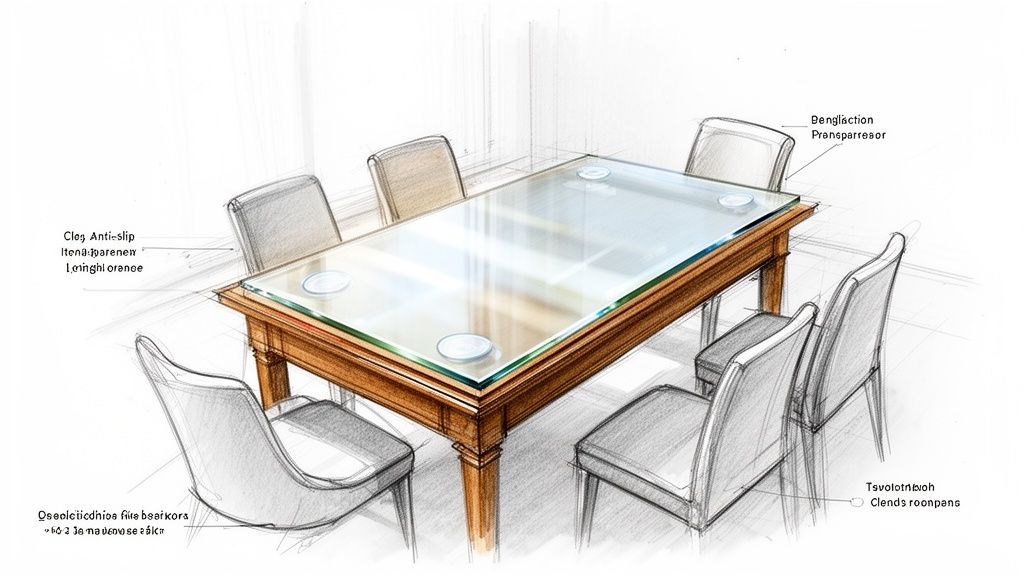
Adding a glass top to your furniture isn't just about looks; it’s a practical decision that solves a lot of common headaches for homeowners.
For anyone living in regions like Yorkshire and Newcastle, where making the most of natural light is a real priority, glass furniture is a particularly clever choice. Its reflective quality helps to brighten interiors during the darker months of the year, creating a more pleasant atmosphere all year round. Of course, the top is just one part of the puzzle; knowing how to choose a coffee table in its entirety ensures the final look is perfectly cohesive.
A well-chosen glass top doesn't just protect your furniture; it elevates it. It’s a simple change that delivers a significant visual return, making your space feel more refined and spacious.
Whether you're looking to safeguard a family heirloom or just want to add a touch of modern sophistication, a bespoke table glass top is a beautiful and functional solution. In the sections that follow, we'll give you the straightforward advice you need to choose with confidence and completely transform your home's aesthetic.
Not all glass is the same, and when you’re choosing a glass table top for your home, knowing the difference is crucial for safety, durability, and style. The type of glass you pick will define how it performs and looks for years to come. Let's walk through the main options to help you find the perfect fit for your table.
Imagine a sheet of standard glass being superheated in a furnace and then rapidly cooled with jets of air. This tempering process creates toughened safety glass, dramatically changing its internal structure and making it four to five times stronger than ordinary glass.
This impressive strength means it can easily handle the knocks and bumps of a busy family home. And if it ever does break under extreme force, it doesn’t create dangerous, sharp shards. Instead, it shatters into thousands of small, blunt, pebble-like pieces, which is why it’s the go-to safety glass for everything from car windows to shower screens.
This focus on safety is reflected across the UK. The tabletop glassware market was valued at USD 606 million in 2024 and is projected to exceed USD 1 billion by 2033. Much of this growth is driven by homeowners wanting both style and peace of mind. For example, a recent survey in Yorkshire showed 68% of homeowners prioritise glass for its ability to brighten kitchens and dining rooms. Toughened glass, fully compliant with UK standards (BS EN 12150), gives them that light-enhancing quality without compromising on safety.
Think of laminated glass as a 'glass sandwich'. It’s made by bonding two or more layers of glass together with a tough, clear plastic interlayer, usually Polyvinyl Butyral (PVB). If the glass happens to crack, the fragments stick firmly to this interlayer instead of scattering.
Laminated glass provides the highest level of structural safety. Even when broken, the panel stays in one piece, preventing injury from falling glass and keeping the barrier intact. It's the same technology used in your car's windscreen for exactly this reason.
This makes it the ideal choice for a glass table top in high-traffic commercial spaces or for very large, unsupported table designs where structural integrity is the top priority. The principles of using durable, safe glass are something we apply across many of our products; for instance, you can learn more about how we apply similar safety standards in our glass balustrade installations.
Ever noticed the subtle green tint on the edge of a standard piece of glass? That’s caused by the natural iron oxide content left over from the manufacturing process. While it's often faint, this greenish hue can slightly alter the true colour of whatever is beneath your table top.
For a completely colourless and transparent finish, ultra-clear low-iron glass is the superior choice. The iron content is significantly reduced during production, resulting in a crystal-clear pane with brilliant clarity and perfect colour fidelity.
If you have an ornate table base, a stunning piece of timber, or a beautifully painted surface you want to show off without any colour distortion, ultra-clear glass is the only way to go. It ensures the beauty of your furniture is the star of the show.
Once you’ve settled on the perfect type of safety glass, the next step is to dial in the details: its thickness and edge style. These aren't minor points; they are fundamental to the look, feel, and structural integrity of your new table glass top. Getting them right is what turns a simple sheet of glass into a beautiful and functional piece of furniture.
Think of glass thickness as its specific job. Is it just a protective cover for an existing tabletop, or is it the main structure of the table itself? A thin piece of glass might look sleek, but it’s simply not safe for a large, freestanding dining table. On the other hand, an overly thick slab can look bulky and out of place on a delicate side table.
This simple flowchart helps visualise that first decision, especially when you have a busy home and safety is your top priority.
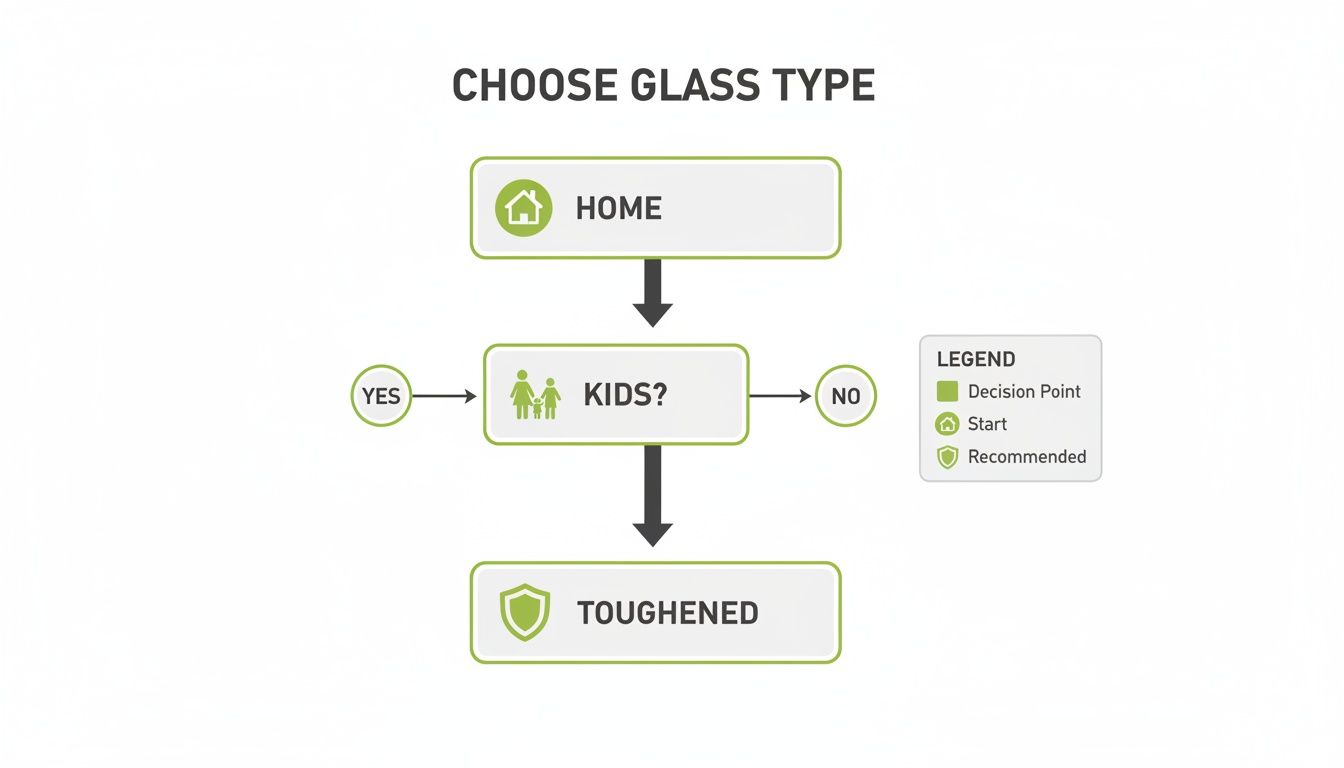
As you can see, for any home—and especially one with children—toughened glass is always the safest starting point. From there, you can narrow down the right thickness based on exactly what the table will be used for.
Let's walk through the most common glass thicknesses and where they work best. This will help you choose the right level of strength, whether it’s for a family kitchen in Leeds or a quiet study in Manchester.
To make this even easier, here’s a quick-reference table to guide your choice.
| Table Use Case | Recommended Glass Thickness | Best For |
|---|---|---|
| Protective Cover | 4mm or 6mm | Placing over an existing solid surface like a desk, dining table, or sideboard. |
| Small Supported Top | 6mm or 8mm | Inset glass on coffee tables, small patio tables, or side tables with full support. |
| Dining or Coffee Table | 8mm or 10mm | Fully supported tops resting on a frame or pedestal base. A great all-rounder. |
| Unsupported Table | 12mm, 15mm or 19mm | Large, freestanding tables where the glass itself is the structure, spanning between legs. |
This table should give you a confident starting point for matching the glass specification to your furniture's design and purpose.
The golden rule is this: the less support the glass gets from its base, the thicker it absolutely must be. If the glass top is doing all the structural work, always err on the side of a thicker, more robust specification.
The edge of your table glass top is far more than a functional necessity—it’s a key design element. How the edge is cut and polished dramatically affects both the visual style and how it feels to the touch. Don’t worry, all our edges are expertly finished to be completely smooth and safe.
Here are the most popular options we provide for homeowners in areas like Newcastle or York:
Polished Edge
A standard polished edge, often called a flat polish, is the most common and versatile finish. The edge is machine-cut at a perfect 90-degree angle to the surface and then polished to a glossy, smooth sheen.
Bevelled Edge
A bevelled edge introduces a new dimension. Here, we cut the perimeter of the glass at an angle, creating a sophisticated, decorative "frame" effect around the edge. This bevel can be cut to different widths, typically from 10mm to 40mm, depending on the glass thickness and your personal preference.
Ordering a custom-made table glass top can feel a bit daunting. You want that perfect, flush fit, but the idea of getting the measurements wrong is enough to make anyone nervous. Do not worry. As specialists who handle this every day, we can show you a foolproof method to get it right the first time, with just a tape measure and a little care.
Before you start, it’s always wise to get into the right mindset. The principles of precision are the same whether you're measuring for a wardrobe or a glass top. Getting a feel for how to measure a room for furniture perfectly is a great starting point, as the core rule is universal: measure twice, cut once.
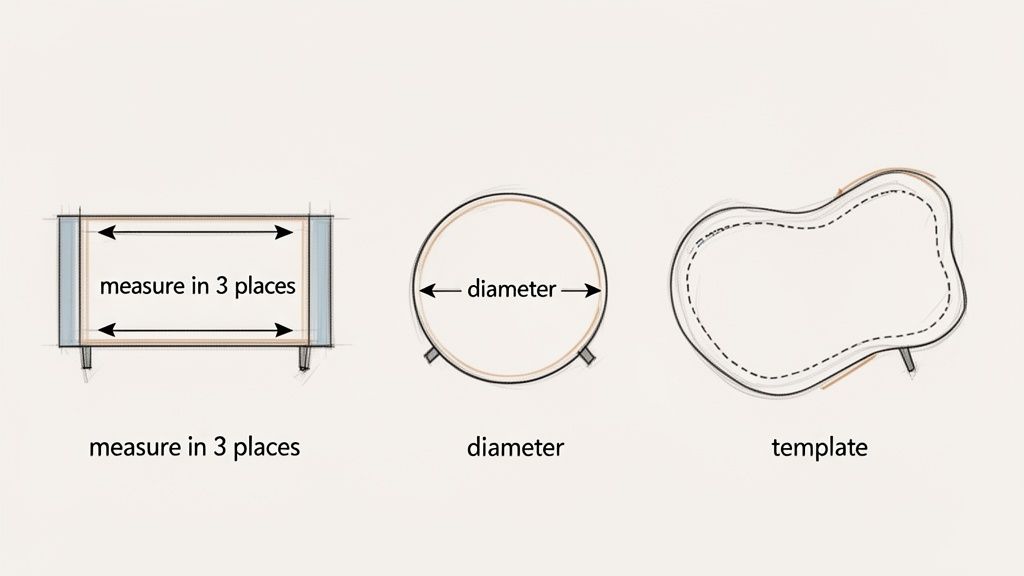
Here’s a trade secret for any four-sided table: measure everything in at least three places. It’s easy to assume a table frame is perfectly square, but wood can warp and metal can have slight imperfections. These tiny variations are what can make a perfectly cut piece of glass wobble or fail to fit.
Thankfully, round tables are much simpler. For a perfect circle, you only need one measurement: the diameter.
This desire for precision reflects a wider trend. The UK glass tableware market hit £325 million in 2023 and is expected to climb to £460 million by 2033. We see this demand firsthand from homeowners in Yorkshire and Newcastle, who are increasingly choosing sleek, frameless glass to protect furniture and elevate their interiors.
But what if your table is a beautiful, unconventional shape? Think kidney-shaped coffee tables, live-edge timber slabs, or other unique, flowing designs. For anything that isn't a standard geometric shape, a physical template is the only way to go.
For complex shapes, a template is non-negotiable. It removes all guesswork and allows us to cut the glass to the exact, unique contours of your furniture.
Creating one is straightforward. Just trace the outline of your tabletop onto a sturdy piece of cardboard or thick paper. Cut it out carefully and place it back on the table to check for a perfect fit, ensuring there are no gaps or overhangs. For particularly valuable or intricate pieces, we can handle this for you as part of our bespoke glass project services.
Your new table glass top has arrived, perfectly cut and finished. Now for the final step: getting it in place and learning how to keep it looking that good for years. Proper installation and simple, regular care are what make all the difference.
If you’re using the glass as a protective cover for a solid table, the job couldn't be easier. All you need are some small, clear anti-slip pads. Just place them discreetly between the glass and the tabletop. They create just enough grip to stop the glass from sliding around, and you’ll barely even notice they are there.
For thicker, heavier glass, like an 8mm or 10mm piece protecting a dining table, you'll want to use slightly larger pads. These offer a more substantial grip, ensuring the heavy glass stays firmly put, even with the knocks and bumps of daily family life.
For most protective tops and smaller pieces of supported glass, placing it yourself is perfectly fine. It's best to have a second person to help you lower it carefully, but it’s a straightforward task. However, in some situations, calling in the professionals is the only sensible choice for safety and a flawless result.
We always recommend a professional installation for:
This focus on quality and safety is reflected in the growing market. The UK glass tableware sector, which includes these innovative table glass tops, is projected to reach USD 422.1 million by 2026 and expand to USD 802.6 million by 2031. We're seeing this demand firsthand, with a 22% rise in Yorkshire home renovation projects since early 2024, where glass table tops have featured in 35% of premium kitchen refits. You can discover more insights about these market analysis trends and their implications.
Once your table top is in place, you’ll be pleased to know that keeping it looking immaculate is surprisingly simple. The main thing to remember is to avoid harsh, ammonia-based cleaners. They often leave a filmy residue and simply aren’t necessary.
The best cleaner for your glass top is probably sitting in your kitchen right now. A bowl of warm water with just a single drop of washing-up liquid is all you need to cut through grease and grime without leaving streaks.
For a quick polish to get rid of fingerprints and dust, a solution of one part white vinegar to one part water in a spray bottle works wonders. Spray it lightly on the surface, then wipe it clean with a soft, lint-free microfibre cloth. This simple routine will leave the glass with a brilliant shine and ensure your table remains a stunning centrepiece in your home.
We've journeyed through the entire world of the table glass top in this guide. From picking the right safety glass and its thickness to getting the measurements spot on, we’ve covered all the details you need to make an informed choice. Now, it’s time to bring that vision to life with a team you can count on.
Finding a local specialist who genuinely understands both the craft and the character of the region is key. For over two decades, our family-run business has been delivering exceptional quality and meticulous installation to homeowners right across the North of England. We’ve built our reputation on being the trusted glass experts for countless projects in Yorkshire and beyond.
When you work with us, you’re not just buying a piece of glass; you’re investing in a complete, professional service from start to finish. We are deeply rooted in the communities we serve, from the vibrant city of Newcastle down to the historic streets of York. This local knowledge means we have a real feel for the architectural styles and design tastes that make Northern homes so unique.
Our passion goes far beyond simply supplying a product. We are specialists in creating bespoke glass solutions that truly elevate a space, whether it’s a simple protective cover for a cherished table or a grand, unsupported dining table that becomes the centrepiece of your home. We believe in giving honest advice and outstanding care from the very first conversation. To get a better sense of who we are, you can learn more about our story and commitment to quality.
Our experienced installation teams cover a wide patch, ensuring homeowners across the North can access high-quality, bespoke glass services. We are regularly working on projects in:
Our promise is simple: deliver exceptional quality, provide clear and honest advice, and ensure a seamless experience from your initial survey to the final, clean installation. We pride ourselves on the meticulous attention to detail that sets our work apart.
If you’re ready to introduce more light, style, and modern elegance into your home with a beautiful table glass top, our friendly team is here to help. Get in touch today for a no-obligation chat and a free survey. Let us show you exactly how we can turn your ideas into a stunning reality.
Deciding on the perfect bespoke glass for your table can throw up a few questions. It’s completely normal. To help, we’ve gathered the most common queries we hear from our customers, with clear, straight-to-the-point answers to give you complete confidence.
Absolutely. Safety is the very reason toughened glass was developed, and it’s what we recommend for any family home. The glass goes through a special thermal tempering process, making it up to five times stronger than normal glass. It’s more than capable of handling the bumps and knocks of a busy household.
In the highly unlikely event that it does break, it’s designed to crumble into small, blunt, pebble-like chunks, not large, dangerous shards. This is precisely why it’s the standard for safety glazing in the UK and fully complies with BS EN 12150, giving you genuine peace of mind.
The final cost comes down to four key things: the type of glass you choose, how thick it is, the overall size, and the style of the edge finish. As a ballpark figure, a small protective top in 6mm toughened glass might start from around £50.
On the other hand, a large, unsupported dining table made from 12mm ultra-clear glass could run into several hundred pounds. The only way to get a precise figure for your unique project, whether you're in York or Hull, is to ask for a tailored quote.
Remember, a bespoke glass top isn’t just a purchase; it’s a long-term investment in your home’s style and the protection of your furniture. Getting an accurate quote ensures there are no surprises and you get the perfect fit for your budget.
While toughened glass is incredibly durable and resistant to day-to-day use, it isn’t completely scratch-proof. The good news is that keeping it looking brilliant for years to come is easy.
A little prevention goes a long way. Using coasters, placemats, and trivets is the simplest way to guard against scratches from crockery and hot pans. It’s also a good idea to avoid dragging heavy or abrasive objects, like unglazed ceramic pots, across the surface. These simple habits are the secret to keeping your glass looking brand new.
Yes, we certainly can. Creating custom-shaped glass to follow unique curves and lines is one of our specialities. Whether your table is an oval, a kidney shape, has rounded corners, or a completely one-of-a-kind design, we can cut the glass for a perfect match.
For really complex or irregular shapes, we’ll often visit to create a physical template directly from your furniture. This method takes away all the guesswork and guarantees a flawless fit, every time. It’s a service we offer across our entire patch, from fitting Glass Balustrades Newcastle projects to homes throughout Manchester.
At HGW Solutions, we specialise in creating beautiful, bespoke glass solutions, made to measure for your home. If you're ready to protect your furniture and elevate your interior design, our friendly team is here to help.

A professional team of experts providing glass and glazing solutions covering the whole of Yorkshire & more...
Whether it's Leeds, York, North Yorkshire, Birmingham, Hull, Liverpool, Machester, Newcastle or Nottingham, get in touch to find out how we can help you with your bespoke glass project.