
When it comes to choosing windows for your home, the casement window is a true British classic. If you were to ask someone to picture a typical window, chances are they’d describe a casement – a simple, elegant design that’s been a staple in UK homes for generations.
At its heart, a casement window is simply a window pane attached to its frame by hinges on one side. It swings outwards, much like a door, operated by a simple handle and locking mechanism. This straightforward design is precisely what makes it so enduringly popular, from traditional stone cottages across the Yorkshire Dales to modern new-builds.
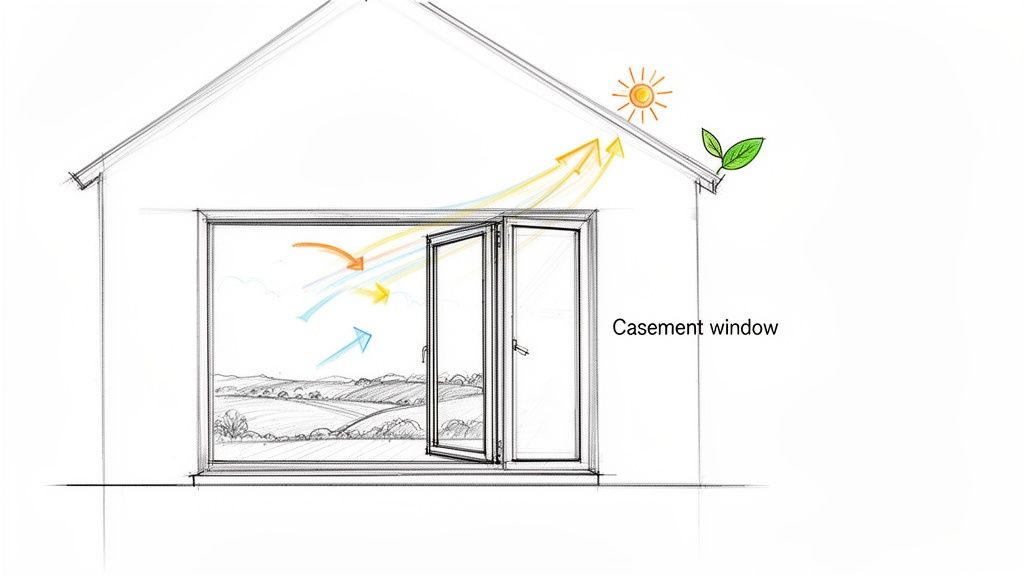
Unlike sash windows that slide up and down, casements swing fully open. This simple action is the key to their biggest benefits: maximum airflow and completely clear, unobstructed views. It’s why you’ll so often find them in rooms that need great ventilation, like kitchens and bathrooms.
There's a clever bit of engineering at play, too. When you close and lock a casement window, the sash (the moving part) is pulled tight against the frame. This creates a powerful compression seal, effectively shutting out draughts. It’s a major reason they are renowned for their energy efficiency, helping to keep your home warm and your heating bills in check.
The popularity of casements goes far beyond just their clean look; it’s all down to their practical, real-world performance. For any homeowner looking to improve their property's comfort, security, and kerb appeal, they offer a seriously compelling package.
Here’s what makes them stand out:
At Glass Tech, we've spent years fitting high-quality windows across Yorkshire. We know what works. Our expertise isn't just in making sure your new windows look fantastic; it's about ensuring they deliver the performance, security, and efficiency your home deserves.
As we explore different window options, you'll quickly see why casements remain a smart, stylish, and practical investment for almost any property. To get an even more detailed look at the style, you can read this complete guide to casement style windows. In this article, we’ll guide you through everything you need to know, from the different casement variants to the best materials for your home.
The casement window is more than just a functional part of a building; it's a piece of British architectural history. Its story charts a course from the dark, enclosed homes of the past to the light-filled, airy spaces we value today. Long before modern glazing and uPVC, these simple, hinged windows fundamentally changed how people lived.
Understanding this journey, from basic iron-framed openings to the high-performance designs we install now, helps explain their timeless appeal. It’s why they remain such a practical and popular choice for homeowners right across the UK, and especially here in Yorkshire.
The evolution of the modern casement really took off in the 18th century, when they started to replace the old, fixed stone mullioned windows. This was a huge leap forward, allowing homeowners to finally open up their homes to fresh air and natural light.
Early designs were forged by local blacksmiths, featuring iron frames hinged at the side to swing outwards like a door. Because large sheets of glass were incredibly expensive and fragile, these first windows were made from many small panes held together by lead strips. You can learn more about the evolution of these classic windows and their journey through the centuries.
A major turning point came around the mid-19th century when oak began to replace iron for the frames. This wasn't just a cosmetic change; timber offered far better insulation.
According to architectural analysis from the period, switching from metal to timber improved the thermal performance of windows by up to 30%. This simple change made homes warmer and also made casements cheaper and quicker to produce.
This development saw their popularity soar. By 1870, historical data shows that in new rural homes across northern English regions, including areas around Leeds and York, the casement window adoption rate had climbed to over 60%.
This rich history is exactly why casement windows feel so right for the diverse architecture across the North of England. Whether it’s the historic streets of York, the proud terraces of Newcastle, or the charming cottages of Harrogate, the casement window simply belongs.
For today’s homeowner, this heritage presents a wonderful opportunity. Carefully restoring original casements or installing authentic, high-performance replicas can dramatically enhance a property’s character and value. Key features to get right include:
At Glass Tech, we’ve spent over two decades helping clients blend this historical charm with contemporary performance. We’ve seen countless families in Yorkshire, from Hull to Harrogate, transform draughty Georgian-era houses into comfortable, energy-efficient homes.
Modern replicas, built with engineered oak, can achieve impressive U-values as low as 1.4 W/m²K. Based on recent building regulation data, this can cut heating bills by 15-20%. It’s this ability to fuse past craftsmanship with present-day engineering that keeps the casement window a timeless, intelligent choice for any home.
The basic idea of a casement window is wonderfully simple: it’s a window sash attached to a frame with hinges. But don't let that simplicity fool you. The sheer variety available today gives you incredible scope for getting the function and style just right for your home, whether you're after a classic country feel or a sharp, contemporary look.
Getting to grips with the different types is the first step to choosing the perfect window. Each one has its own way of opening and its own ideal spot in a house. From the familiar side-hung casement to the wide-open views of a French casement, there’s a design to suit every property, from a terraced house in Manchester to a stone cottage in the Yorkshire Dales.
This is the one most of us picture when we hear "casement window." It’s the classic design, hinged on one side (left or right) and swinging outwards just like a door. It's simple, effective, and incredibly versatile.
Side-hung casements are a brilliant all-rounder, fitting in perfectly in just about any room. Because you can open them wide, they let in a fantastic amount of fresh air, which makes them a popular choice for kitchens and living rooms.
With these designs, the hinges move from the side to either the top or bottom of the frame. This simple change completely alters how they operate and where they work best.
Top-Hung (Awning) Windows: Hinged at the top, these windows push out from the bottom, creating a little 'awning' of glass. This is a fantastic feature for letting in fresh air even when it’s drizzling, as the pane shields the opening from light rain. We often fit these in bathrooms or high up on a wall for light and ventilation without sacrificing privacy.
Bottom-Hung (Hopper) Windows: These are the opposite, hinged at the bottom and tilting inwards from the top. They're less common in UK homes but can be a clever solution for basements or ground-floor rooms where a window opening outwards would get in the way.
If you’re looking for a breathtaking, uninterrupted view, you can’t do much better than a French casement. It’s a double-window design with two sashes hinged on opposite sides that meet in the middle. When you open both, there’s no central post (or mullion) left behind—just a single, wide-open view.
This style floods a room with light and air, creating a gorgeous connection between your home and the garden. They are a truly wonderful addition to living rooms or bedrooms overlooking an outdoor space, delivering the kind of panoramic viewpoint our clients also look for with our Glass Balustrades Yorkshire projects.
Flush casements offer a beautifully clean, minimalist look that’s right at home in both period properties and modern new-builds. The magic is in the name: when the window is closed, the opening part sits perfectly 'flush' with the outer frame. This creates a smooth, flat surface with crisp, clean lines, unlike standard casements where the sash stands proud of the frame.
This design has a rich history in British building. Flush casements were a common sight from the Tudor period onwards, making them a wonderfully authentic choice for older homes. In fact, a 2019 Historic England survey found that 62% of period homes in Hull and Nottingham still have them. Today's versions, however, are a world away in terms of performance. Modern flush casements, like those we expertly install from Manchester to Leeds, combine that heritage look with modern engineering, featuring incredibly slim frames that can boost the glass area by up to 20% compared to other styles, letting in as much natural light as possible. You can read more about the enduring legacy of these window styles and their place in architecture.
You can see how the casement has evolved over the centuries in the timeline below.
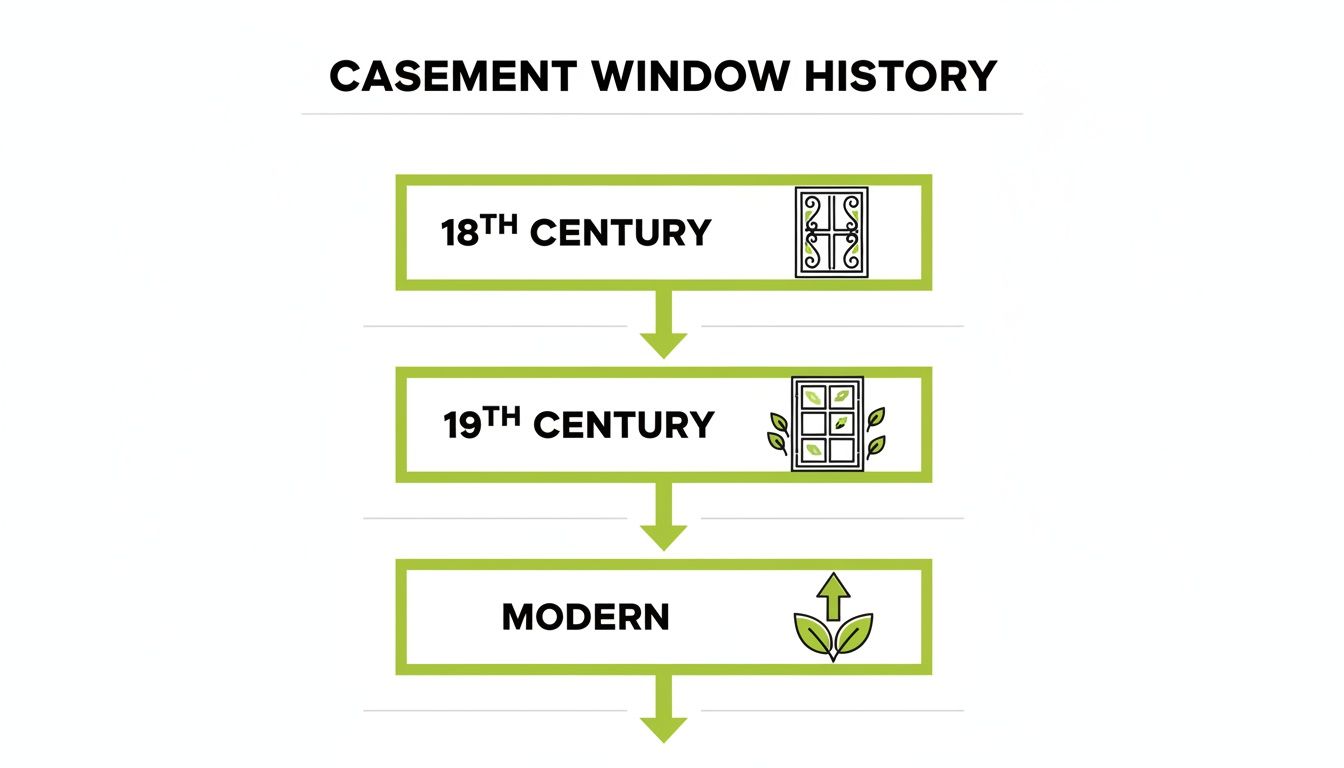
This journey from early iron to today’s advanced, energy-efficient materials shows a constant drive to improve how our windows perform, look, and feel.
Once you've settled on the style of casement window that's right for your home, the next part of the conversation turns to the materials. This is where the real character and performance of your windows are defined.
These decisions are every bit as crucial as the opening mechanism itself, directly influencing everything from kerb appeal and maintenance to your home's warmth and long-term durability.
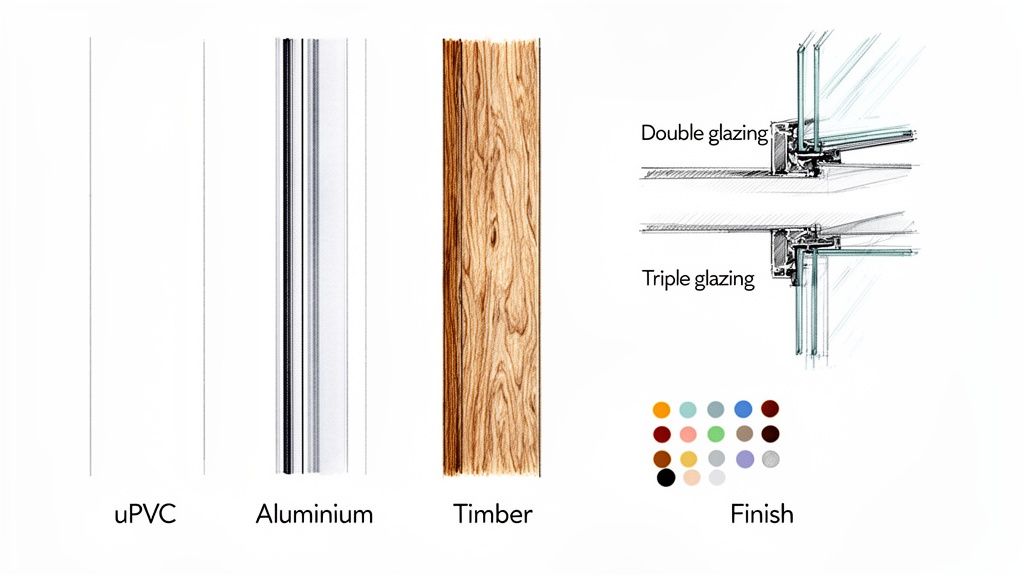
Choosing the frame material is the foundational decision. It sets the tone for your window's personality and its practical performance day in, and day out. Each option we offer brings a unique set of benefits, making it better suited for certain properties and priorities.
The three mainstays for casement window frames across the UK are uPVC, aluminium, and timber. They each bring something different to the table, and what works for a new-build in Leeds might not be the best fit for a stone cottage in the Dales.
Think of the frame as the window's skeleton. A uPVC frame is the practical, cost-effective workhorse; an aluminium frame is strong and slender for maximum views; and a timber frame offers timeless character and natural warmth. The right choice hinges on your priorities: budget, modern style, or classic tradition.
The glass inside your window frames—the glazing—plays a massive part in your home's comfort, security, and energy bills. Most of us are familiar with "double glazing" and "triple glazing," but understanding the real-world performance behind the terms is key.
We measure glazing performance by its U-value, which tells us how effective it is at preventing heat from escaping your home. It’s simple: the lower the U-value, the better the insulation.
Double vs Triple Glazing
| Feature | Double Glazing | Triple Glazing |
|---|---|---|
| Structure | Two panes of glass with a gas-filled gap | Three panes of glass with two gas-filled gaps |
| Thermal Performance | Excellent insulation; a huge leap from old single panes. | The gold standard in thermal efficiency, offering the lowest U-values possible. |
| Sound Insulation | Good sound reduction, perfect for most residential areas. | Superior noise reduction, ideal for homes on busy roads or in noisy environments. |
| Best For | The vast majority of homes, offering a fantastic balance of cost and performance. | Homes in very cold or noisy locations, or for homeowners aiming for maximum energy savings. |
Beyond the number of panes, specialist glass can provide even more benefits. Acoustic glass uses a special interlayer to dampen sound, laminated glass enhances security by holding together if shattered, and obscure glass offers privacy for bathrooms and front doors without blocking light.
For listed buildings or conservation areas where replacing original single-pane windows isn't an option, exploring the benefits of secondary glazing can provide an incredibly effective thermal and acoustic upgrade.
The final touch, and the one that brings the whole look together, is the finish. For uPVC and aluminium, this means selecting from a huge palette of standard and bespoke RAL colours, giving you the creative freedom to match your windows to your doors, roofline, or overall design vision.
Timber frames give you the choice of translucent stains that celebrate the natural beauty of the wood grain or opaque paints for a bold, solid block of colour. It’s this final choice that can completely transform your home's kerb appeal, creating a cohesive and polished look.
Choosing the right window type is only part of the story. For homeowners in Yorkshire, from the bustling streets of Leeds to the windswept coast near Hull, a window's real value lies in its everyday performance. It must keep your home warm, secure, and stylish, standing up to everything the northern climate throws at it.
The good news is that casement windows, when specified correctly, excel in all three areas.
Their exceptional energy efficiency comes down to a simple, clever design. Unlike other window types that slide, a casement window sash presses firmly against the frame when closed. This creates a highly effective compression seal, virtually eliminating draughts and helping to lower your heating bills—a significant advantage during the colder months we experience across the region.
Modern casement windows are engineered for superior thermal retention, making them a smart choice for any homeowner looking to improve their property's Energy Performance Certificate (EPC) rating. This focus on performance ensures your home stays comfortable all year round.
Beyond energy savings, feeling safe in your home is paramount. Casement windows are widely regarded as one of the most secure window types you can install, thanks largely to their robust locking mechanisms.
The security features are built directly into the frame, making them incredibly difficult for an intruder to tamper with from the outside. Key components include:
Of course, a secure window is just one part of home protection. Learning how to secure your windows in general is crucial for any homeowner, providing that extra layer of reassurance and peace of mind.
Yorkshire's architectural landscape is wonderfully diverse, from traditional stone cottages and grand Victorian terraces to sleek, modern new-builds. The versatility of casement windows means there's a style to complement every single property. The key is to select proportions, materials, and details that feel authentic and appropriate.
For period properties, getting the historical details right is vital. Georgian-era homes, for instance, set a standard for elegance with casements that balanced form and function. Records show these windows often featured slender glazing bars dividing the panes into six or eight sections, adhering to classical ratios. Modern replicas can use these principles to great effect. In fact, a 2022 UK Window Association study found that appropriate casement retrofits in Harrogate homes led to an 18% higher resale value and 92% customer satisfaction in energy savings.
For modern homes, the focus shifts to clean lines and maximising glass. Aluminium casements, with their characteristically slim frames, are a perfect match. They offer minimalist aesthetics and stunning panoramic views that connect indoor and outdoor spaces. For those needing Glass Balustrades Newcastle, the same principles of maximising views and light apply. And for homes where existing glass has suffered from damage or deterioration, our expert glass replacement service can restore both beauty and performance.
Whether it's matching the historic character of a home in York or bringing a contemporary vision to life in Sheffield, our team at Glass Tech provides bespoke guidance. We help you choose the windows that not only perform exceptionally but also enhance your home's unique charm.
It’s clear to see why casement windows remain such a popular and enduring choice for homes. Their blend of timeless style, fantastic performance, and sheer versatility is hard to beat.
But turning that vision of light-filled, warm, and secure rooms into a reality depends entirely on the team you choose for the job. For homeowners across Yorkshire and beyond, that trusted partner is Glass Tech.
We are a family-run business, and for over 20 years, we've been dedicated to the glazing industry. This isn't just a job for us; it's a craft. Our deep-rooted experience means we don’t just supply windows—we deliver a complete, dedicated service from our first conversation to the final, flawless installation.
Our entire approach is built on trust and meticulous care. It all starts with a proper, thorough survey where we take the time to listen and offer honest, expert advice that’s right for your home. We'll guide you through the options, helping you select the perfect casement windows for your property's character and your personal style.
Our goal has always been simple: 100% customer satisfaction. We get there by pairing superior materials with precise, tidy workmanship, ensuring your new windows look stunning and perform perfectly for years to come.
Embarking on a home improvement project should be exciting, not stressful. Our reputation, built on projects from York to Leeds and Manchester, is founded on making the entire process smooth, professional, and ultimately rewarding for you.
We invite you to take the next step.
Get in touch with our friendly, Harrogate-based team for a no-obligation chat about your project. Let's discuss how we can enhance your home with beautiful, secure, and high-performance casement windows. To see our full range of solutions, you can learn more about our windows and composite doors on our website.
When you’re weighing up your options for new windows, the practical details matter. We find that once homeowners understand the benefits, a few key questions always come up. Here are our straightforward answers to the queries we hear most often.
The good news is that modern casement windows are engineered for a low-maintenance life. The amount of care they’ll need really comes down to the frame material you choose.
Whichever material you pick, we always recommend a light lubrication of the hinges and locking points once a year. It’s a five-minute job that ensures they keep opening and closing as smoothly as the day they were installed.
This is a common question, and the answer depends on the specifics – the material, glazing, size, and style all play a part. Generally speaking, a standard uPVC casement window is often one of the most cost-effective choices you can make, offering brilliant value.
Timber and aluminium frames naturally sit at a higher price point, which reflects the premium materials and manufacturing involved. For many homeowners, their incredible longevity and distinct aesthetic make them a worthwhile investment. Similarly, a French casement will cost more than a single-sash window due to its more intricate, dual-opening design.
We always advise our clients to think of windows as a long-term investment in their home. The initial cost for premium materials like aluminium or triple glazing might be higher, but the return you get in energy savings, durability, and enhanced property value often makes it the smarter financial choice over time.
Their versatility is a huge selling point, but there are a handful of situations where they might not be the perfect solution. Because casement windows swing outwards, they aren't a practical choice for a ground-floor room that opens directly onto a public pavement, a narrow path, or a tight driveway. An open window here could create an obstruction or even a hazard.
In these specific spots, a sliding sash window or a high-level top-hung casement would be a much better fit. For the vast majority of homes, however, their fantastic ventilation, uninterrupted views, and robust security make them a superb choice for almost any room, in any style of property across Yorkshire.
At Glass Tech, our expertise covers every step, from helping you select the perfect style to guaranteeing a flawless, lasting installation. For a no-obligation chat about your project, get in touch with our team today.

A professional team of experts providing glass and glazing solutions covering the whole of Yorkshire & more...
Whether it's Leeds, York, North Yorkshire, Birmingham, Hull, Liverpool, Machester, Newcastle or Nottingham, get in touch to find out how we can help you with your bespoke glass project.