
That layer of mist on your windows each morning is a familiar sight in countless UK homes. It’s simply the result of warm, moist air inside your house coming into contact with the cold surface of the glass.
Think of it just like a cold drink ‘sweating’ on a warm summer’s day—the science is exactly the same. This moisture is actually a signpost, telling you a story about the air quality and conditions inside your home.
Waking up to find streams of water running down your window panes can be quite alarming, particularly for homeowners in colder regions like Yorkshire and Newcastle where chilly mornings are a given. It immediately begs the question: what causes this condensation? The answer is rooted in a simple scientific concept called the dew point.
Imagine the air in your home is like a giant sponge, capable of holding a certain amount of invisible water vapour. The warmer that air is, the more moisture it can hold. When this warm, moisture-heavy air touches a surface that is cold enough—like your window glass on a frosty morning—the air cools down rapidly.
This sudden cooling forces the air to release its moisture, just as if you were squeezing a water-logged sponge. The exact temperature at which this happens is the dew point. When the surface of your glass drops below the dew point of your indoor air, that vapour turns back into liquid water, forming the droplets you see.
But where does all this moisture come from in the first place? You might be surprised. Everyday life generates a significant amount of airborne moisture.
To help you pinpoint the biggest culprits in your home, here’s a look at how much moisture common daily activities can release.
| Activity (Typical Household) | Moisture Produced (Litres per day) |
|---|---|
| Breathing (family of four) | 2.0 |
| Cooking | 1.5 - 2.0 |
| Showers & Baths | 1.0 - 1.5 |
| Washing & Drying Clothes | 0.5 - 1.0 |
| Houseplants | 0.5 |
As you can see, just by going about your day, a family can easily put several litres of water into the air. Without a way for this humid air to escape, it will find the coldest surfaces to condense on—which are almost always your windows.
A little bit of morning mist on the windows is a perfectly normal part of living in the UK, especially during the colder months. In a way, it shows your home is well-sealed against draughts, keeping the warmth in. However, persistent and heavy condensation can be a red flag for underlying issues.
It's crucial to listen to what the condensation is telling you. It could be a sign of:
For homeowners trying to solve a persistent condensation problem, understanding the performance of your glazing is a critical step. Upgrading to modern, energy-efficient windows and composite doors can make a huge difference by keeping the inner pane of glass much warmer.
While a bit of condensation is a fact of life, knowing when it points to bigger problems with ventilation or failing windows is key to keeping your home healthy, dry, and comfortable.
When you spot water on your windows, it’s natural to feel a pang of worry. But before you jump to conclusions, it’s worth knowing that not all condensation is a red flag. The real key is where the moisture is forming, as this tells you exactly what’s going on inside your home.
Let’s break down the three distinct types of condensation you might see.
This is by far the most common sight in UK homes, whether it’s an older property in York or a new-build flat in Leeds. Seeing droplets form on the interior surface of your glass is a straightforward sign: the air inside your home is very humid.
Essentially, your home is telling you it can't breathe properly. All that moisture from cooking, showering, and even just breathing has to go somewhere, and it’s settling on the coldest surface it can find—your window panes.
Finding your windows covered in dew on the outside, especially on a cool, crisp morning, might seem strange. But this is actually great news. It’s proof that your double or triple glazing is performing brilliantly.
The outer pane of glass is so well insulated from the warmth inside your house that it stays cold, allowing dew from the outside air to form on its surface. It’s the same effect you see on a car windscreen and is a hallmark of truly high-performance, energy-efficient windows.
This is the one to watch out for. If you see mist, fog, or water droplets trapped between the two panes of glass in your double-glazed unit, you have a problem that needs attention. This is a clear sign that the window's seal has failed.
A failed or ‘blown’ window unit means the airtight seal around the glass is broken. This allows moisture-filled air to get inside, and the insulating gas (like Argon) that was once trapped between the panes has escaped. The window has completely lost its energy-efficient properties.
Unlike the other types, this issue can't be fixed with a dehumidifier or by opening a window. The sealed glass unit itself is compromised and is no longer doing its job of insulating your home. It’s a common issue we see in homes across Newcastle and the North of England with older double glazing, often leading to higher energy bills and a permanently obstructed view.
This helpful decision tree simplifies what your window condensation is telling you.
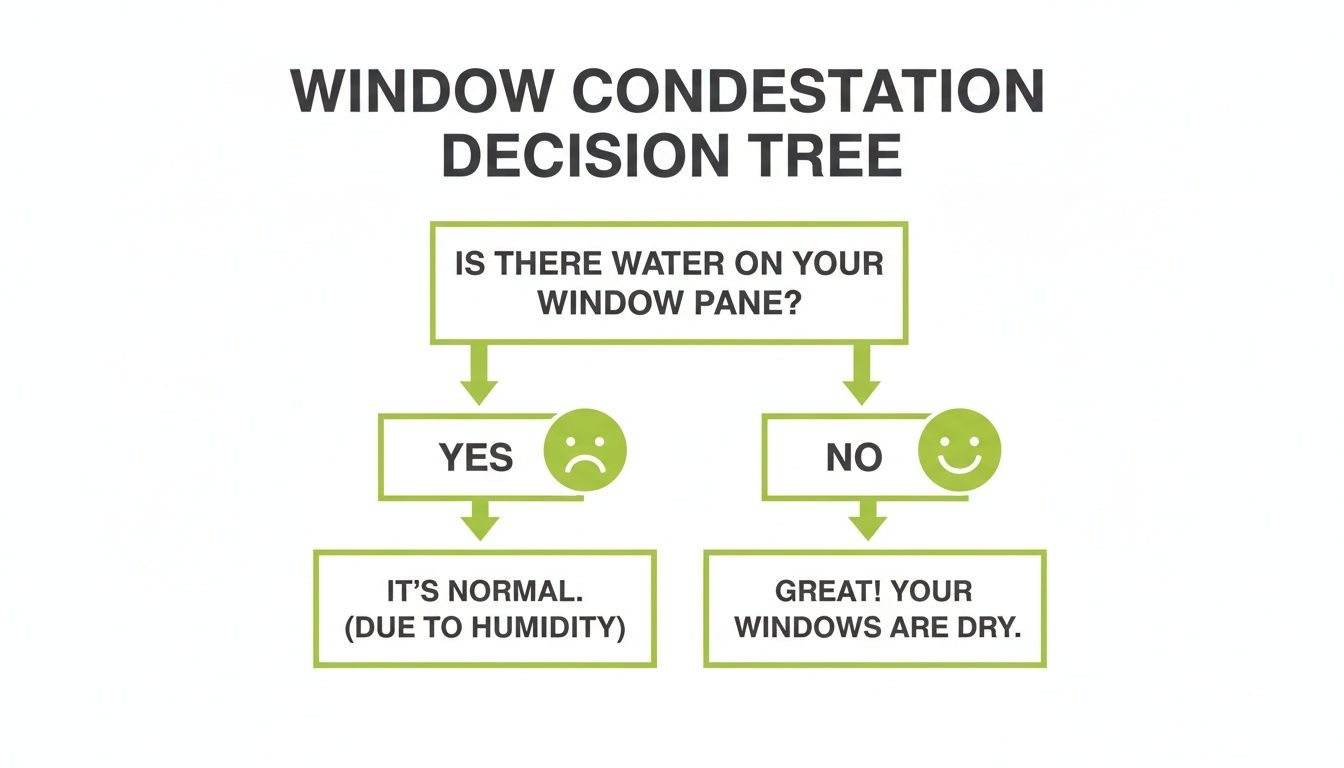
As the flowchart shows, while some condensation is perfectly normal, moisture trapped between the panes is a definite sign of window failure. By correctly identifying where the water is, you can quickly diagnose whether you have a simple humidity issue or a more serious problem with your glazing.
Seeing water streaming down your windows is a sure sign of condensation, but what’s actually causing it inside your home? The problem almost always comes down to two culprits working together: high indoor humidity and poor ventilation. This combination is a familiar battle for anyone living in a well-sealed home, especially in cooler northern cities like Leeds and Manchester.
Believe it or not, the main source of all that moisture is just everyday life. Simple things like breathing, cooking dinner, having a hot shower, or even just boiling the kettle release a surprising amount of water vapour into the air. A typical family can easily put several litres of water into their home’s atmosphere every single day without even thinking about it.
When this moisture-heavy air has no way to escape, it builds up and sends the indoor relative humidity (RH) soaring. This creates the perfect conditions for condensation the moment that damp air comes into contact with a cold surface—and in winter, that’s almost always your window panes.
You might assume that brand-new, energy-efficient homes would be immune to condensation problems, but the opposite is often true. Modern houses are built to be incredibly airtight to stop heat from escaping, which is brilliant for keeping energy bills down. This, however, creates what’s known as the "modern home paradox."
Because they are sealed so tightly, these properties can suffer from very poor air exchange. All the humid air generated from daily activities gets trapped inside, unable to be replaced by fresh, drier air from outdoors. This stagnant, damp environment is precisely what leads to condensation forming on windows.
Poor ventilation in tightly sealed UK homes is a leading cause of window condensation, especially as newer builds aim for energy efficiency under strict Building Regulations. A recent UK Housing Survey revealed that a significant percentage of dwellings have inadequate ventilation, trapping humidity indoors where relative humidity often exceeds the safe winter threshold. In northern regions, from Newcastle to Glass Balustrades Yorkshire, moist air from daily activities stagnates around cold windows, contributing to the problem. You can explore more data on how home ventilation impacts condensation by reading the truth about window condensation from Marvin.com.
It’s not just new-builds that are at risk. Older properties, like those found across historic areas such as York, can face their own unique set of challenges. While you might think of them as being "draughty," they can still have major issues with condensation.
This is usually down to a mix of different factors:
Whether your home is a new-build flat or a grand Victorian terrace in Yorkshire, the fundamental physics are the same. From a modern apartment overlooking the Tyne in Newcastle to a cottage in the countryside, if moist air can't get out, it will end up on your windows. Grasping this simple relationship between humidity and ventilation is the first real step toward a drier, healthier home.
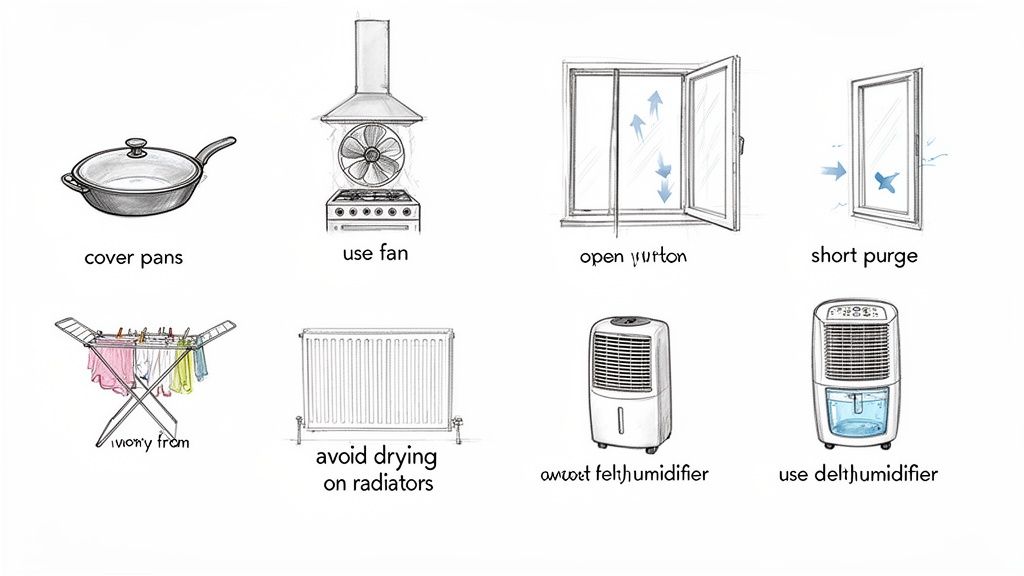
Seeing your windows covered in condensation can be frustrating, but getting on top of it is often simpler than you might think. By making a few small adjustments to your daily routine, you can make a huge difference to the amount of moisture in your home’s air. The approach is straightforward: reduce moisture at its source and improve your home’s ventilation.
These are practical, low-cost habits you can start right away. The best place to begin is in the two rooms that produce the most steam: the kitchen and the bathroom. When you’re cooking, pop the lids on your pans to trap steam and always get the extractor fan running. In the bathroom, do the same—switch the fan on during a shower or bath and leave it running for 15-20 minutes afterwards to draw all that damp air outside.
Beyond just using extractor fans, boosting your home's general ventilation is absolutely key. This doesn't mean you need to leave windows wide open in the depths of winter. Instead, you can simply ‘purge’ the house of humid air by opening windows on opposite sides for just 10-15 minutes each morning. This creates a quick cross-flow, swapping out the damp, stale air for fresh, drier air from outside.
Take a look at your window frames, too. If they have trickle vents—those small, slatted panels usually at the top—make sure they’re open. They are specifically designed to provide constant, subtle background ventilation without you even noticing a draught.
High indoor humidity from daily routines drives most window condensation in UK homes. Data shows that cooking, showering, and laundry can generate 10-15 litres of water vapour daily in a typical 3-bedroom Yorkshire house. In colder months, when outdoor temperatures average 4°C in cities like Nottingham and Hull, this can push indoor humidity above the threshold where condensation forms. You can find more details on how humidity affects commercial properties in this scientific guide from Aerosealcorp.com.
A few other minor changes in habit can have a major impact on keeping your windows clear and preventing dampness.
Getting a handle on the moisture in your home's air is the single most important step. For a deeper dive into managing humidity, you can explore these easy and effective tips on how to reduce humidity in your home. By combining these small but powerful changes, you can take back control of your home’s climate and enjoy clear, dry windows all year round.
While managing humidity in your home is a great first step, some condensation problems simply can't be solved with a dehumidifier or an open window. There's one tell-tale sign that points to a bigger issue, one that requires professional attention: condensation trapped between the panes of your double-glazing.
If you spot mist, fog, or water droplets sealed inside the glass unit, it’s a clear signal that your window has failed. This isn't a problem that will go away on its own; it means the airtight seal has been permanently broken, and the window's insulating power is gone for good.
That frustratingly misty view is more than just a cosmetic annoyance. A ‘blown’ or failed window unit triggers a domino effect that impacts your home’s comfort, efficiency, and ultimately, your wallet.
When a window seal is compromised, the insulating gas inside (usually Argon) escapes and is replaced by ordinary, moisture-laden air. This leads to several problems:
Here in the UK, especially with chilly winters where temperatures can easily drop below 0°C, condensation is a familiar battle. This is particularly true in older Yorkshire homes. A surprising number of properties still have single-glazed windows, which offer very poor insulation and are magnets for condensation. In northern cities like Leeds and Harrogate, a huge percentage of pre-1980s homes struggle with this every winter. Learn more about what's normal and what's not with window condensation from rbamilwaukee.com.

Now for the good news. A blown unit doesn't automatically mean you need to brace yourself for the cost and disruption of replacing the entire window frame and all. The solution is often much simpler and far more affordable. The problem is almost always with the sealed glass unit, not the uPVC, timber, or aluminium frame it sits in.
A professional glazier can simply replace the failed glass unit itself. It’s a quick, clean process that is significantly cheaper than a full window replacement, instantly restoring your window's energy efficiency and giving you back that crystal-clear view.
This approach is the perfect fix for homes where the window frames are still in good condition. For properties across Newcastle, Manchester, and the wider north, having a failed unit upgraded is a straightforward and practical step. If a blown seal is the cause of your condensation woes, a professional glass replacement service is the most direct path to a permanent solution. Swapping old, inefficient glass for a modern, high-performance unit will solve the problem for good.
Even when you understand the science, seeing condensation on your own windows can still leave you with questions. As glazing specialists, we get asked about this all the time. Here are some straightforward answers to the most common queries we hear, helping you tackle the issue with confidence.
Yes, it absolutely can be – but it all hinges on where the condensation is forming.
On the outside of the glass: This is actually a great sign! It means your double glazing is working brilliantly, keeping your expensive heat locked inside your home where it belongs. The outer pane is so well insulated from the indoor heat that it gets cold enough for morning dew to form on it.
On the inside of the glass: This isn't a fault with your windows. Instead, it’s a clear signal that there's too much moisture in your home's air. The warm, humid air is hitting the cooler surface of the glass and condensing. This points to a need for better ventilation.
Between the two panes of glass: This is never normal. If you see mist, fog, or droplets trapped inside the unit, it means the seal has failed. The unit has lost its insulating gas (like argon) and is no longer effective. It will need to be replaced.
Without a doubt. Persistent condensation creates the ideal damp environment for black mould to thrive on window frames, sills, and the surrounding walls. This isn't just an eyesore; it's a genuine health concern.
According to the NHS, exposure to mould spores can trigger or worsen a host of health issues. This includes respiratory problems, allergies, and asthma. The very young, the elderly, and anyone with a pre-existing condition are especially vulnerable. Getting on top of condensation is crucial for protecting your property and your family's health.
For homeowners in areas like Yorkshire, where older properties can be more susceptible to damp, managing condensation is a fundamental part of maintaining a healthy home.
A dehumidifier is an excellent tool for fighting condensation. It gets straight to the point by physically pulling moisture out of the air, lowering the overall humidity. This makes it much harder for water to form on your cold windows, offering immediate relief.
Think of it as treating the symptom. For a proper long-term solution, it’s best to use a dehumidifier as part of a bigger strategy. Combine it with good daily habits—like using extractor fans when cooking or showering and opening windows for a short while each day—to create a healthier balance. A multi-pronged approach is always the most effective way to solve the problem for good.
At Glass Tech, we offer expert advice and solutions for all types of glazing issues. If you are dealing with failed units or want to upgrade your windows to eliminate condensation problems for good, explore our services at https://www.hgwsolutions.co.uk.

A professional team of experts providing glass and glazing solutions covering the whole of Yorkshire & more...
Whether it's Leeds, York, North Yorkshire, Birmingham, Hull, Liverpool, Machester, Newcastle or Nottingham, get in touch to find out how we can help you with your bespoke glass project.