
TL;DR: In Yorkshire, the cost to replace bay windows is typically £3,000 to £6,000 per window, with a Yorkshire median around £4,200. That usually includes materials, labour, installation and VAT, and the biggest price changes come down to frame material, glazing choice, size and whether the opening needs structural work.
If you're reading this with a cold draught coming off the front room window, you're not alone. In Leeds, York, Harrogate, Hull and across the North, old bay windows are often one of the first parts of a house to show their age.
The trouble is that most guides online still lean heavily on American pricing and American products. That doesn't help much when you're dealing with a Victorian terrace in Yorkshire, UK Building Regulations, or a bay that has started to drop slightly at one corner. This guide sticks to what homeowners here need to know.
A lot of people put up with a failing bay window for longer than they should. The signs creep in slowly. The room feels colder than the rest of the house. Condensation keeps appearing. Paint flakes off the inner boards. The side openers never quite shut cleanly.
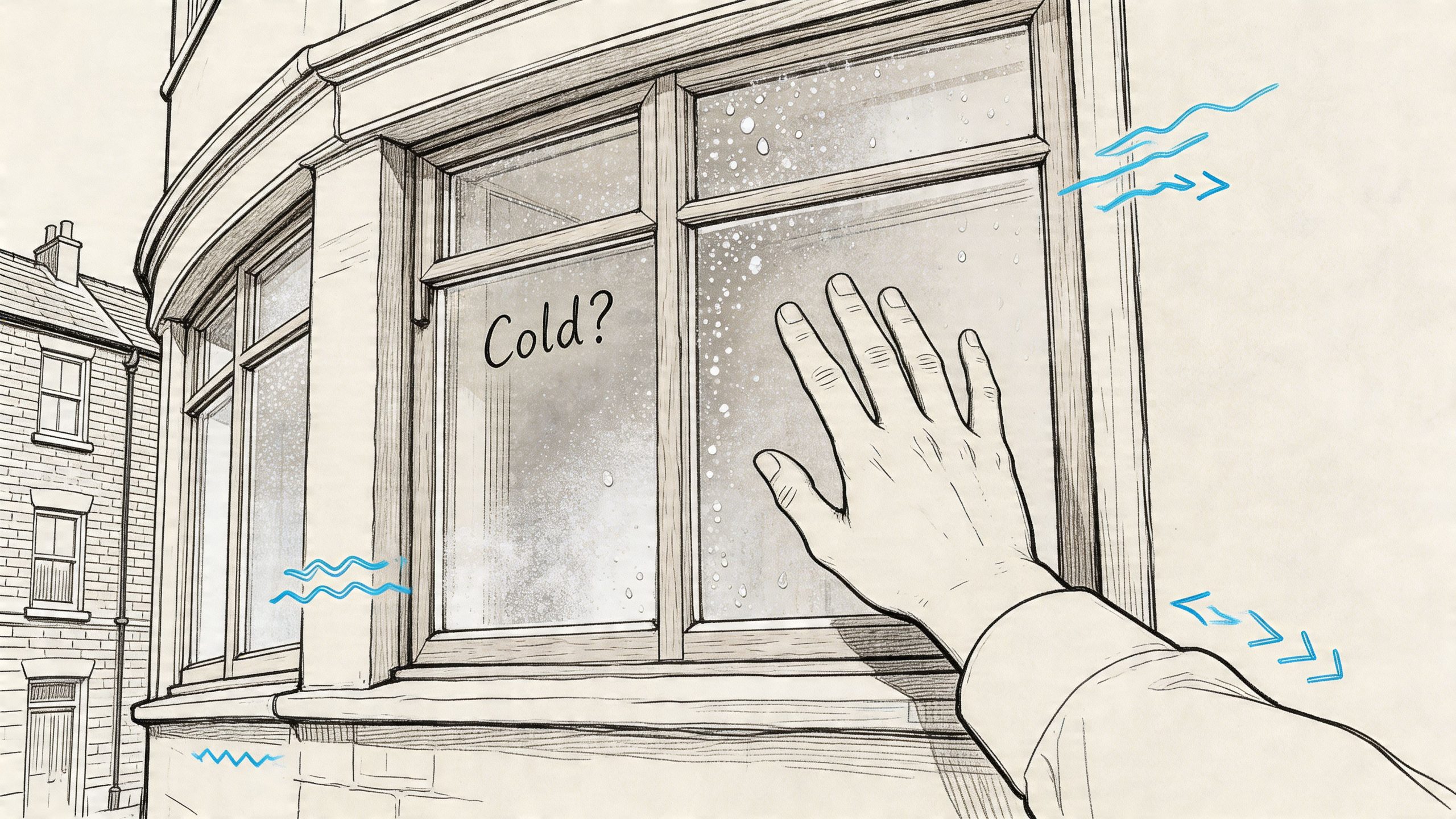
In Yorkshire and the wider North, that story is common in period homes. A bay window that looked fine ten years ago can now be letting in cold air, trapping moisture and pushing up heating costs. Timber bays on older terraces in places like Leeds and York are especially prone to this if seals have failed or the frame has started to move.
Some problems are obvious. Others only show up once a fitter removes trims and checks the structure behind them.
Old bay windows rarely fail all at once. They usually fail bit by bit, which is why homeowners often underestimate how much heat they’re losing.
There’s also a practical side people don't always think about until the work is booked in. Bay window replacement can disrupt a front room for a short period, especially if furniture needs moving and the opening needs repair. If you're clearing a room during renovations, these practical renovation storage solutions can make that process much easier.
One reason bay window quotes can feel confusing is that the web is full of irrelevant price ranges and product suggestions from overseas. Existing content overwhelmingly provides US-centric cost estimates for bay window replacements, leaving a major gap in UK-specific pricing for regions like Yorkshire. It also notes that regional installers can offer 15-25% savings over national chains, something many generic guides miss, especially when they ignore UK regulations and local grants (homebuildwindows.com on UK-specific bay window pricing gaps).
That rings true in practice. A family-run installer working across Yorkshire usually understands the housing stock better than a call-centre-led national chain. They know what tends to happen in Victorian terraces, 1930s semis and stone-built properties. They also know when a quote should include extra joinery work, lintel checks or scaffolding, and when it shouldn’t.
For most homeowners asking about the cost to replace bay windows in Yorkshire, the starting point is £3,000 to £6,000 per window, with a Yorkshire median around £4,200. That figure reflects typical 2026 pricing and includes materials, labour and installation, with labour making up 40-50% of the total. The same source notes that a replacement can improve a home's EPC rating by one band and add an estimated £10,000-£15,000 in value according to RICS valuation metrics (Angi reference used for the verified UK/Yorkshire cost range).
That headline range is broad because bay windows vary far more than standard flat windows. A simple uPVC bay in a straightforward opening sits at the lower end. A timber replacement in a period property, or a larger bay with premium glass and access issues, can move much closer to the top end.
If you want a quick budgeting guide, think in these terms:
| Frame Material | Average Cost Range | Key Characteristics |
|---|---|---|
| Vinyl / uPVC | Around £3,500 | Usually the most budget-friendly option, low maintenance, suits many modern replacements |
| Wood / Timber | Around £4,200 | Better match for period homes and traditional streetscapes, but usually dearer |
| Fibreglass | Up to £5,500 | Premium option with strong thermal performance and durability |
Those figures sit inside the broader £3,000 to £6,000 Yorkshire replacement range. They’re useful as working benchmarks, not fixed quote promises.
Yorkshire prices are often more grounded than what you’ll see from large firms advertising across the South. At the same time, our region has a high number of older homes, and older homes can create extra work that flat national averages don’t capture well.
Three things usually explain the difference:
Practical rule: If a bay window quote looks unusually cheap, check what’s missing before you compare totals. Waste removal, making good, trickle vents, trims and structural allowances often separate a serious quote from a headline number.
A proper bay window quotation in Yorkshire should usually cover more than just the new frame and glass. In day-to-day trade terms, homeowners should expect clarity on:
If a surveyor can’t inspect the head, base or side returns properly at first visit, they may leave structural items provisional until opening up begins. That isn’t a red flag on its own. It’s often the honest way to price an older bay.
A bay on a 1930s semi in Leeds is usually a straightforward replacement. A bay on a Victorian terrace in York can be a different job altogether. From the pavement they may look similar, but the price often changes because of what sits behind the plaster, under the cill, and above the head.
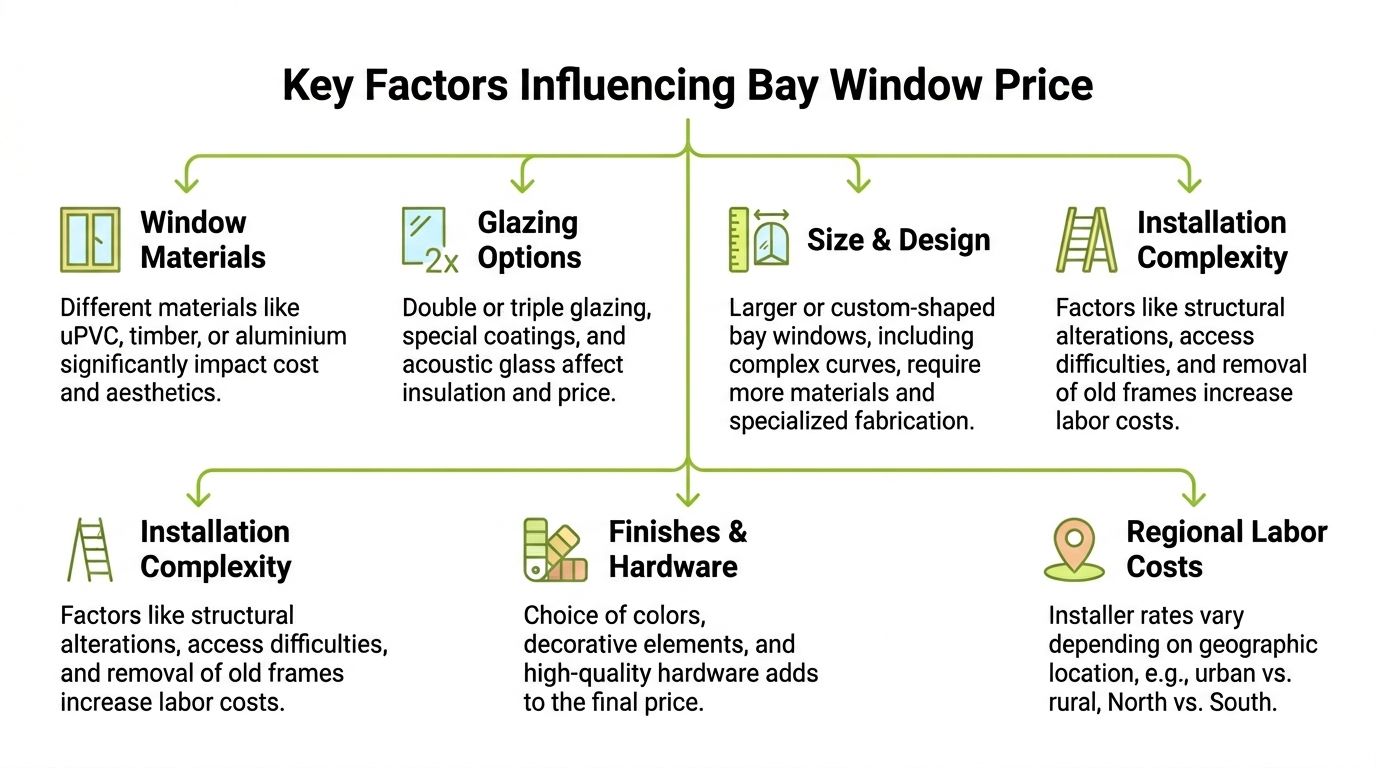
Frame choice shapes both the quote and the finished look.
uPVC is usually the lower-cost option and suits plenty of homes across West and North Yorkshire where the aim is better warmth, easier cleaning and a sensible overall spend. Timber costs more, but on period properties in Harrogate, York and older parts of Leeds it often sits better with the house. It can be the difference between a replacement looking in keeping or looking like an obvious modern insert. Composite and fibreglass systems tend to sit higher again.
The right choice depends on the property. A cheaper frame can still be poor value if it jars with the front elevation or creates maintenance issues later.
Glass is another major cost point. Homeowners often start by comparing frame prices, then find the glazing package shifts the total just as much.
Double glazing is still the standard choice for many replacements. Triple glazing can make sense on exposed front bays, especially where the room always feels cold and traffic noise is an issue, but it is not automatically the best buy for every house. On some older terraces, the extra weight and the deeper unit build-up need careful thought, particularly if you are trying to keep slimmer sightlines.
If the existing frame is still in decent order and the problem is failed units, misting or cracked panes, a full replacement may not be the only answer. It is often sensible to compare the cost of a new bay against glass replacement for failed sealed units and damaged panes.
Some bays are simple three-section designs. Others have sharper returns, deeper projection, wider cills, top openers, side openers, or decorative bars that all need to line through properly.
Costs usually rise where the bay has:
Those details affect more than the manufacturing cost. They also affect fitting time, handling on site, and how much finishing work is needed inside and out.
This point gets missed in broad UK pricing guides. It matters in Yorkshire because we work on a lot of houses where the bay is original or has been altered badly in the past.
Victorian terraces in Leeds and York regularly hide movement around the bay head, tired timber supports, rotten base sections, old patch repairs, and plaster that is holding together better than the structure behind it. In those homes, the survey is doing real work. It is not just measuring the opening.
During survey, I would pay close attention to:
If support above the opening needs attention, that can change the job from a standard replacement to a small structural repair as well. That is one reason period bays in Harrogate and York often price above newer suburban bays of a similar size.
If an installer flags support, settlement, or decay around an old bay, that is usually good surveying, not sales pressure.
Front bays are visible, but they are not always easy to work on. Tight pavements, parked cars, steps up to the entrance, limited side access and restricted unloading all slow the job down. That comes up often on terraced streets and busier roads in Leeds and York.
Upper-floor bays add another layer. Safe access equipment, extra labour for lifting, and more careful handling of larger glazed sections can all push the total upward.
Small items have a habit of becoming expensive once they stack up. Cills, trims, colour finishes, hardware, internal boards, plaster making good, external seal lines, and period-style details all feed into the final number.
They also affect how the bay looks every day. On a prominent front elevation, poor finishing stands out immediately. Good finishing is what makes a replacement look like it belongs to the house rather than just filling the hole.
A front room in a Leeds semi and a front room in a Harrogate terrace can both have bay windows, but they rarely price like the same job. In Yorkshire, house type, street access, and the condition of older brickwork around the bay often matter just as much as the frame you choose.
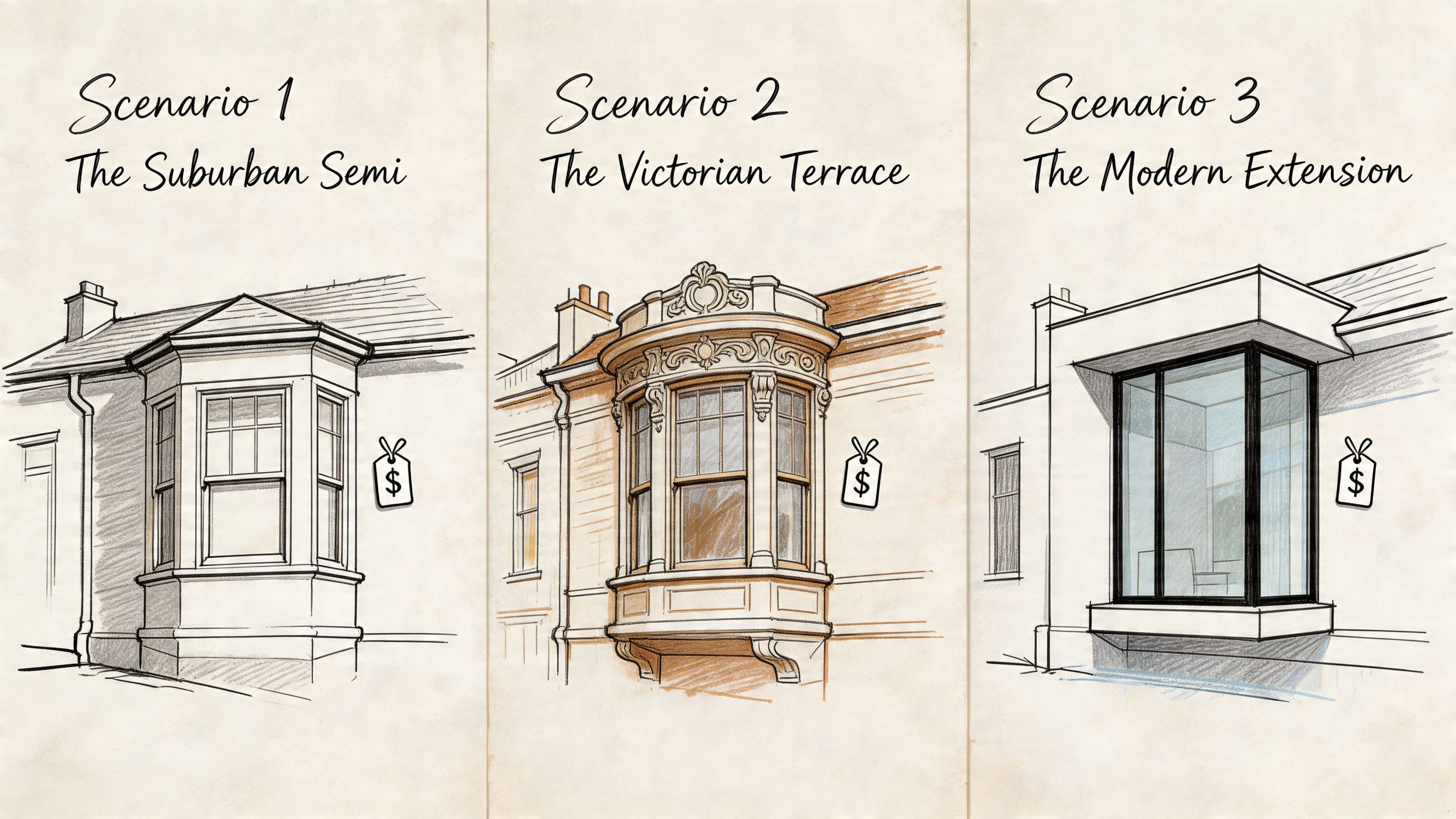
A standard front bay on a Leeds semi is often the cleanest type of replacement. The opening is usually familiar, the access is decent, and many homeowners want a practical result that stops draughts and smartens the front elevation.
For that sort of job, a uPVC bay window often comes in around £2,500 to £4,500. The lower end usually covers a straightforward white finish with no major repair work. Costs rise if the bay is larger than average, coloured outside, upgraded in glass specification, or needs more internal making good than expected.
For many Leeds semis, this is the value option. It keeps maintenance low and gives a noticeable improvement in warmth and day-to-day comfort.
Generic UK price guides often fall short.
A Harrogate terrace can look simple from the pavement, then turn into a more careful job once the old bay is opened up. Original timber, movement around the reveals, patch repairs from older leaks, and uneven floors all show up regularly in period properties. Matching the character of the street also matters more here than it does on a newer estate.
That usually pushes the cost into the mid to upper range. Timber or flush sash-style replacements cost more than standard uPVC, and period details take more workshop time and more care on site. If support work is needed, the total rises again. That is one reason two bays that measure roughly the same can price very differently.
In some homes, full replacement is not the only route. Where owners want to improve comfort while keeping more of the original appearance, secondary glazing for period properties and draughty bays can be a sensible alternative.
Newer homes near York often come with a different brief. Homeowners usually ask for slimmer sightlines, better thermal performance, and finishes that suit a cleaner, more contemporary front elevation.
That often means aluminium-effect styling, better glass, or triple glazing. The total tends to sit above a basic replacement, but the trade-off is lower heat loss and a more solid feel in winter. For households planning to stay put, that can be money well spent.
It can also support resale appeal. Wider presentation, energy performance, and kerb appeal all influence buyer perception, which is why the best ways to increase the value of your home often include visible upgrades that improve both appearance and efficiency.
| Property type | Likely budget direction | Why |
|---|---|---|
| Leeds semi | Lower to mid range | Standard opening, easier access, simpler specification |
| Harrogate Victorian terrace | Mid to upper range | Period details, higher chance of hidden repair work |
| Modern York detached | Mid to upper range | Premium styling, higher-spec glazing, larger units in some cases |
In Yorkshire, the postcode does not set the price on its own. The age of the house, the condition of the bay structure, and how closely the new window needs to match the property often make the bigger difference.
A bay window replacement is rarely just about replacing old glass. For most homeowners, it’s about making one of the coldest parts of the house feel like part of the house again.
The thermal side matters first. Verified figures show that moving to energy-efficient triple glazing can reduce heat loss by up to 50% and save £150 to £250 annually on energy bills in a typical bay. That’s one of the few upgrades you notice both in comfort and on monthly running costs.
The numbers are useful, but day-to-day comfort is what usually convinces homeowners they made the right choice.
A properly fitted modern bay can help with:
Some homes aren't ready for full replacement, or the owner wants to improve thermal performance while preserving existing windows. In those cases, secondary glazing can be a practical route for added insulation and noise control, particularly in properties where appearance or planning sensitivity matters.
The property side is often stronger than people think. Verified Yorkshire data shows that replacing a bay window can improve an EPC rating by one band and add an estimated £10,000 to £15,000 to property value according to RICS valuation metrics, as noted earlier in this guide.
That doesn’t mean every window automatically adds the same return. Buyers notice quality. They notice whether the replacement suits the house. A well-proportioned bay with the right finish improves kerb appeal in a way a poor match never will.
For homeowners thinking more broadly about resale, this guide to the best ways to increase the value of your home is a useful wider read alongside window upgrades.
A full bay replacement is a building job, but in a normal domestic setting it should still feel organised.
The process usually runs like this:
If the survey has been done properly, the installation tends to go smoothly. Problems usually start when the original survey was rushed or key structural issues were ignored.
The cheapest quote isn't always the lowest-cost decision. With bay windows, mistakes are expensive because the opening projects from the house, carries weight, and sits right where weather hits hardest.
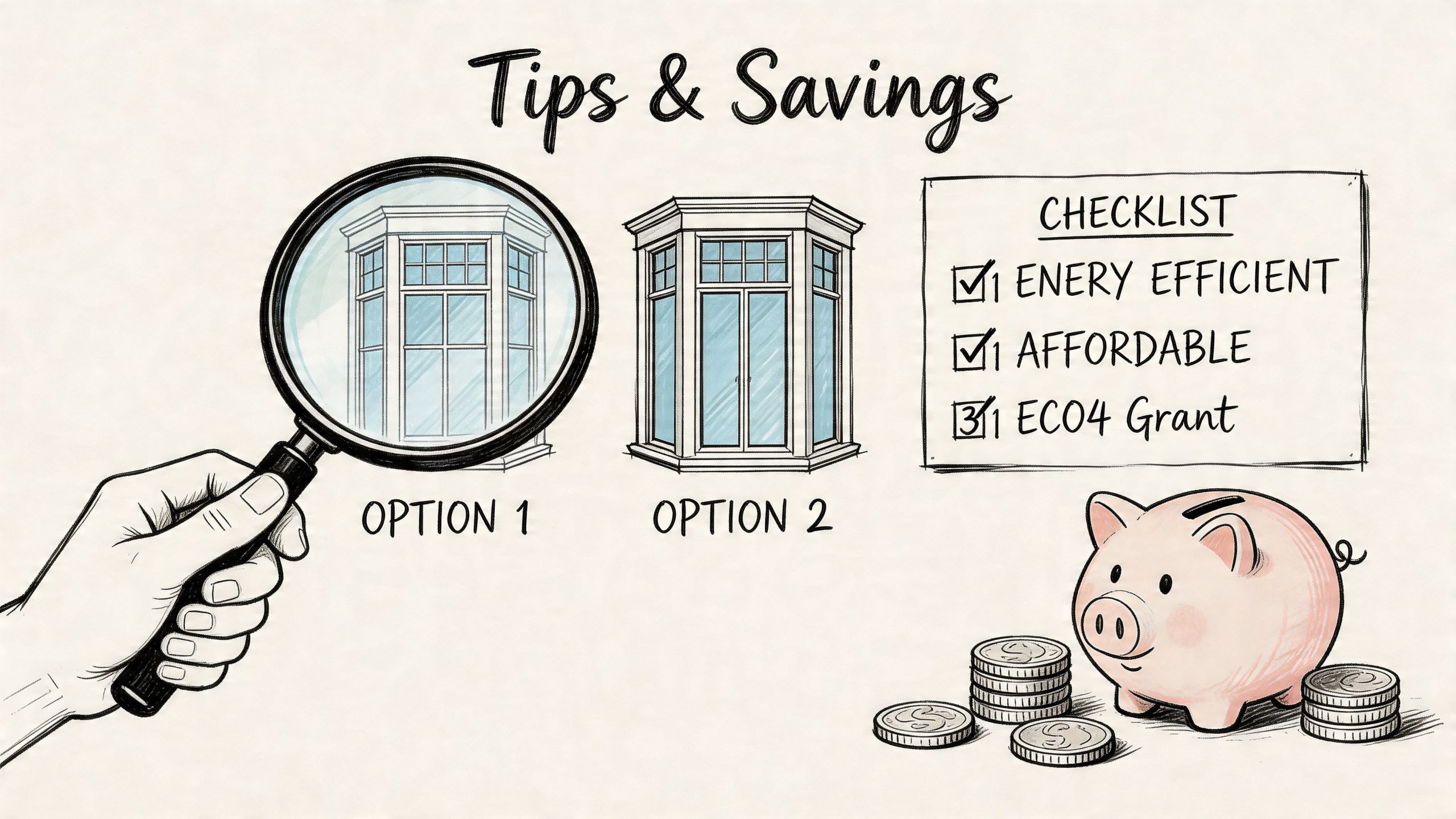
There are good ways to control cost, and bad ways.
Good savings usually come from:
Bad savings usually come from:
A good installer should answer these directly and without waffle.
Is VAT included in the quote?
If it isn’t clear, ask for a revised written total.
Does the price include removal and disposal of the old bay?
Some firms leave this vague.
What happens if you find structural issues once the frame is out?
This matters in older homes.
Are scaffolding or access costs included if needed?
Especially important for upper-level work.
What glazing specification am I getting?
Ask for the glass details in writing.
Will the finish match the style of the property?
On period homes, this is a major point.
Who is carrying out the installation?
You want to know whether it’s the surveying firm’s own team or a subcontract crew.
A clear quote is usually a sign of a clear installation process. If the paperwork feels slippery, the job often will too.
In the North, local knowledge still counts for a lot. A team that regularly works in Leeds, Harrogate, York, Hull or Newcastle is more likely to understand common bay layouts, access constraints and period property quirks.
That often leads to better surveys and more realistic pricing. It also makes aftercare easier if anything needs adjusting once the installation has settled.
A strong local fitter should be able to explain, in plain English, why a quote sits where it does. If they can’t, keep looking.
If you're budgeting for the cost to replace bay windows, the key is getting a quote based on your actual property, not a generic online estimate. Bay size, frame choice, glazing, access and structural condition all affect the final figure.
Homeowners across Yorkshire, Harrogate, Leeds, York, Hull, Manchester and Newcastle often have the same starting point. They want a warmer room, a cleaner look and a replacement that complies properly without cutting corners. The right survey makes all the difference.
If you want a detailed, no-obligation assessment of your bay window, the next step is simple. Book a survey through Glass Tech contact page and get a transparent quote specific to your home.
If you’re ready to replace an ageing bay window and want practical advice from a family-run Yorkshire specialist, contact Glass Tech for a free survey and honest quotation.

A professional team of experts providing glass and glazing solutions covering the whole of Yorkshire & more...
Whether it's Leeds, York, North Yorkshire, Birmingham, Hull, Liverpool, Machester, Newcastle or Nottingham, get in touch to find out how we can help you with your bespoke glass project.