
A cold January morning in Leeds tends to expose a poor door fast. You feel the draught at floor level, the glass mists up at the edges, and the hall still needs the light on before lunch. We see the same pattern across Yorkshire, whether it is a Victorian terrace with a narrow rear entrance or a newer Harrogate home where the original specification was built to a price.
That is why upvc doors with glass stay high on homeowners’ shortlists. They solve a practical problem first. More daylight, less maintenance, and better weather resistance in a county where driving rain and sharp temperature changes quickly show up weak frames, tired seals, and poor glazing choices.
They also suit very different properties.
In Leeds, a glazed uPVC door can brighten a compact kitchen or side return without the cost and disruption of changing a full wall. In York, it often helps older homes feel less closed in while keeping the look simple enough to sit comfortably with period brickwork. In Harrogate, many homeowners want cleaner sightlines, good insulation, and a finish that still looks right ten years on.
The style has moved on as well. Modern profiles, better glass units, improved locking systems, and lower U-values have made these doors a sensible option for households that want solid performance without the upkeep that comes with painted timber. If you are weighing up appearance as well as practicality, this guide on how glass can make your home feel luxurious shows why the right amount of glazing can change how an entrance feels without making it look overdone.
Homeowners keep choosing them for a straightforward reason. When the frame, glass, and installation are specified properly for the property, they work.
A glazed door changes more than an entrance. It changes how a room feels when you walk into it first thing in the morning, how much artificial light you need on a grey afternoon, and whether the space by the garden or side return feels inviting or shut off.
In Leeds terraces, one of the most common complaints is a dark rear kitchen. In York town houses, it’s often an entrance that feels closed in. In Harrogate family homes, we regularly see homeowners wanting more light at the back without moving to a fully open glazed wall. In all three cases, upvc doors with glass solve a practical problem before they solve a design one.
Glass helps a door feel lighter in both senses. The room looks more open, and the door itself doesn’t present as a heavy visual block. That matters in narrow halls, small kitchens and garden-facing rooms where every bit of daylight counts.
The other reason is maintenance. Timber has charm, but it asks more of the homeowner. Aluminium has a sharper look, but for many people the right uPVC specification strikes the best balance between insulation, upkeep and price over time.
A good glazed uPVC door usually suits people who want:
A well-chosen glazed door should make the room feel better even when the door is shut.
Style matters too. Frosted panels on a front door can preserve privacy. Clear panes on French or sliding doors can open up a garden view. If you’re already thinking about interior brightness and cleaner sightlines, it’s worth looking beyond doors alone and seeing how glass can make your home feel luxurious. The same principles apply on a smaller scale at your entrance or patio.
Some door choices look good in a showroom and then feel wrong in the house. That’s the bit homeowners often appreciate once they’ve lived with the result.
For example, a heavily divided glass pattern can suit a period frontage, but on a shaded elevation it may cut light more than you’d like. A full-height clear glazed panel can brighten a hallway brilliantly, but it may not be ideal if your front door opens straight onto the pavement. The best results usually come from matching the glazing layout to the way the home is used.
This is what makes modern uPVC so appealing. It isn’t one standard product. It’s a broad category of doors that can be configured for warmth, privacy, security, access and appearance in a way that suits the house rather than fighting it.
uPVC stands for unplasticised polyvinyl chloride. In plain terms, it’s a rigid, durable frame material that doesn’t rot, won’t need repainting, and copes well with wet and cold conditions. That’s a major reason it suits the North so well.
What many homeowners don’t see is the internal structure. A decent door frame isn’t just hollow plastic. It’s a framed system, typically with reinforcement to improve rigidity and support glazing, hinges and locks over years of use.
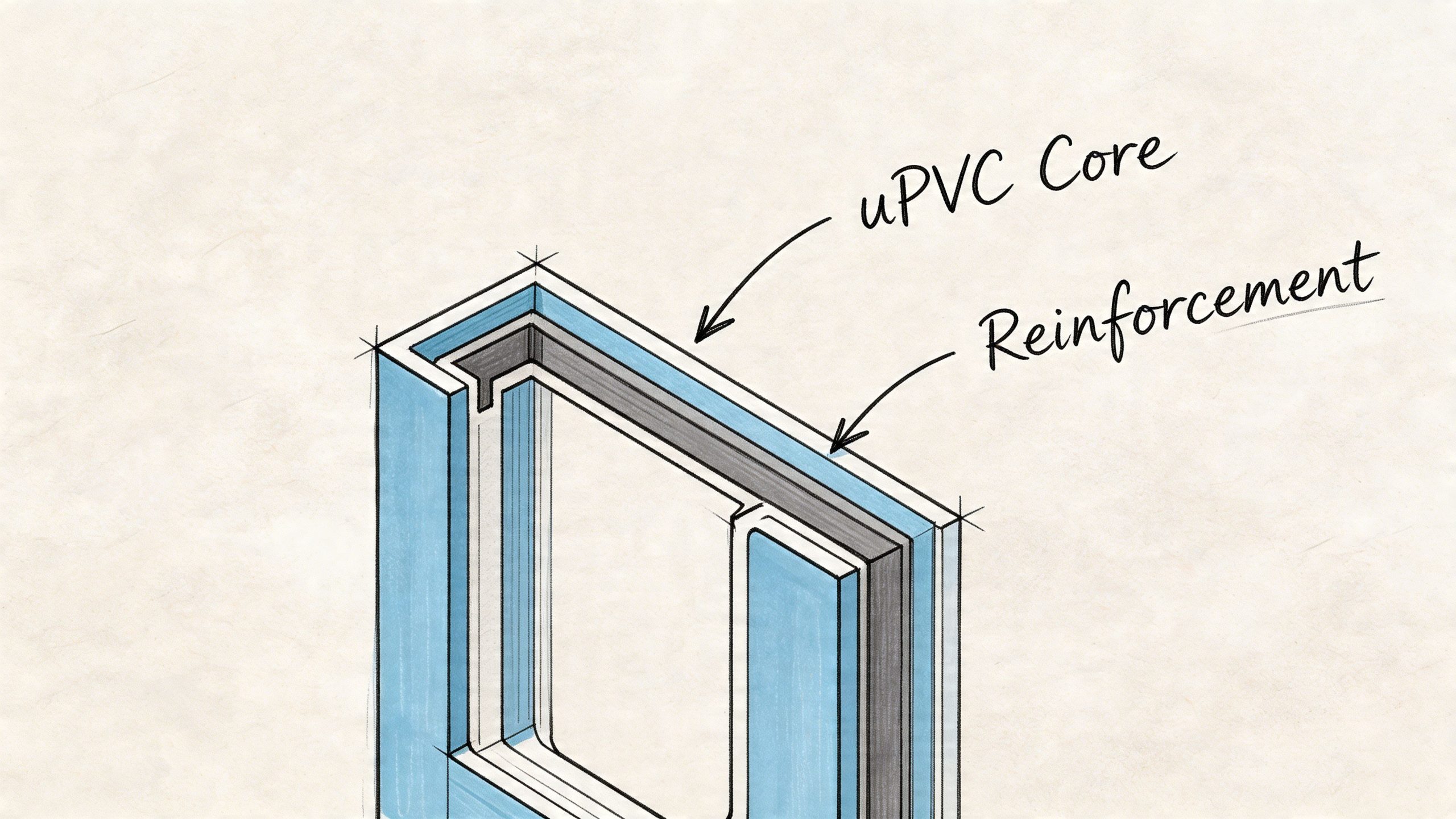
A good uPVC door reliably earns its keep. It shuts cleanly, seals properly, and doesn’t ask for much beyond washing and routine checks. That low-maintenance side is one of its strongest advantages.
Typical benefits include:
If you’re comparing different entrance products more broadly, it also helps to look at windows and composite doors options alongside glazed uPVC doors, especially if you’re weighing appearance against maintenance.
Not every door style suits every opening. The shape of the room, how much clearance you have, and how you move through the space matter more than brochure photos.
These are the workhorses. A glazed front or back door usually has a stronger emphasis on privacy, security and weather performance. Smaller glazed apertures, patterned glass and mid-rail designs often suit entrances well.
They’re a good fit when you need:
French doors work best where you want a balanced, traditional look with a wide opening onto a garden or patio. They suit period homes particularly well, but they also work in newer houses if the glazing bars and hardware are chosen carefully.
The trade-off is swing space. They need room to open.
Sliding configurations save floor space and keep the visual line clean. They’re especially useful where furniture placement is tight or where an outward-opening leaf would interfere with a path or patio arrangement.
Their strength is ease of use and broad glazed views. Their weakness is that one panel always sits behind another, so you don’t get the full opening width.
Bifolds create a larger opening and suit modern rear elevations well. They can look excellent, but they need thoughtful specification. Cheap hardware and poor installation show up quickly on bifolds because there are more moving parts and more points that need precise alignment.
Practical rule: the larger and more complex the door set, the less forgiving it is of weak hardware or poor fitting.
A Victorian terrace in Leeds often benefits from a more traditional sightline and restrained glazing layout. A new-build in Harrogate may suit cleaner panels and broader glass sections. A side entrance in York might need a durable half-glazed back door that withstands knocks, mud and daily traffic.
That’s the sensible way to choose. Start with the opening, the room and the way you live with it. Then decide on the style.
A homeowner in Leeds might look at a glazed door and see style first. We look at how that glass will feel in January, how it will cope with school-run traffic through the hallway, and whether it suits the street-facing elevation or the garden. The pane does far more than let light in.
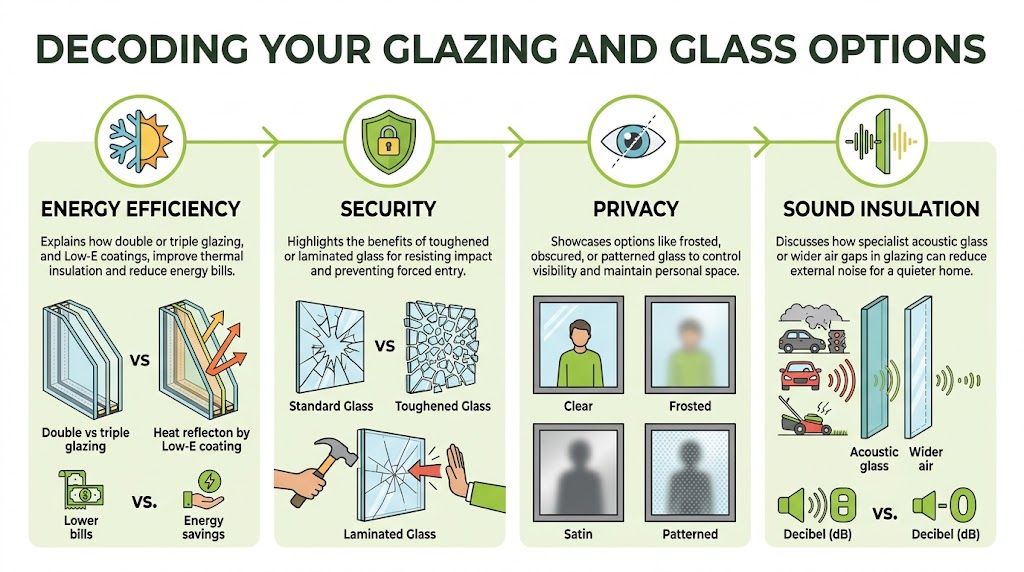
For most homeowners, the starting point is thermal performance. Part L sets a maximum U-value of 1.8 W/m²K for uPVC doors, and a properly specified double-glazed unit can meet that. Wrekin’s technical guide shows that a 70mm uPVC door frame with 4/16/4 low-e double glazing can achieve 1.8 W/m²K, while triple glazing can reduce that further to around 1.2 to 1.4 W/m²K, according to Wrekin’s technical guide on compliant uPVC door specifications.
The trade-off is straightforward. Triple glazing gives better insulation, and it can improve comfort near the door on cold, exposed elevations. It also adds weight and cost. On a sheltered side entrance in York, that extra spend often brings less benefit than it would on a windy rear elevation in Harrogate or an older Leeds terrace where cold spots are more noticeable.
| Glazing option | Best suited to | Main strength | Main trade-off |
|---|---|---|---|
| Double glazing | Standard entrances, many back doors, milder exposures | Meets compliance when correctly specified | Less insulating than triple glazing |
| Triple glazing | Exposed sites, premium upgrades, noisier locations | Lower U-values and better overall thermal performance | Heavier unit and higher upfront cost |
Older Yorkshire properties sometimes need a different conversation altogether. If the priority is retaining original features while improving comfort, secondary glazing for listed or character-sensitive properties can be worth considering alongside the main door specification.
Glass in and around doors has to be safe as well as attractive. Where glazing sits low enough to be at risk from everyday impact, the correct approach is to use safety glass that complies with the relevant building requirements.
The distinction is important, as standard float glass breaks differently. In a busy family home, especially with children, dogs, shopping bags and muddy boots all passing through the same doorway, toughened or laminated glass is the sensible specification.
A few practical points help:
If a door has large glazed areas low down, safety glass should be treated as a baseline requirement.
The right glazing balance depends on where the door sits and how the room is used. Clear glass suits rear doors opening onto a garden or patio because it brings in the most daylight and keeps the view open. Front doors are different. Most homeowners want light in the hall without putting the whole entrance on show, so obscure or patterned glass is often the better fit.
Noise can also shape the specification. While not a concern for every home, it becomes a real factor on busier roads in Leeds or for houses near through routes where traffic is constant. In those cases, the glazing build-up deserves as much attention as the frame. Some homeowners also pair improved glazing with wider home upgrades such as smart home security systems when they are improving both comfort and security at the same time.
In practice, the best glass option is the one that suits the elevation, the house type and the way the door gets used every day.
A sensible approach is:
That approach usually gives Yorkshire homeowners a better result than chasing the thickest unit or the most decorative panel without considering how the door will perform once it is fitted.
A January morning in Leeds tells you very quickly whether a front door was specified properly. The hallway feels cold near the threshold, the slab moves slightly when the wind catches it, and the lock needs an extra shove before it throws. A glazed uPVC door should not behave like that. In Yorkshire, security and weather performance have to work together because a door that flexes, leaks or drops out of alignment rarely stays secure for long.
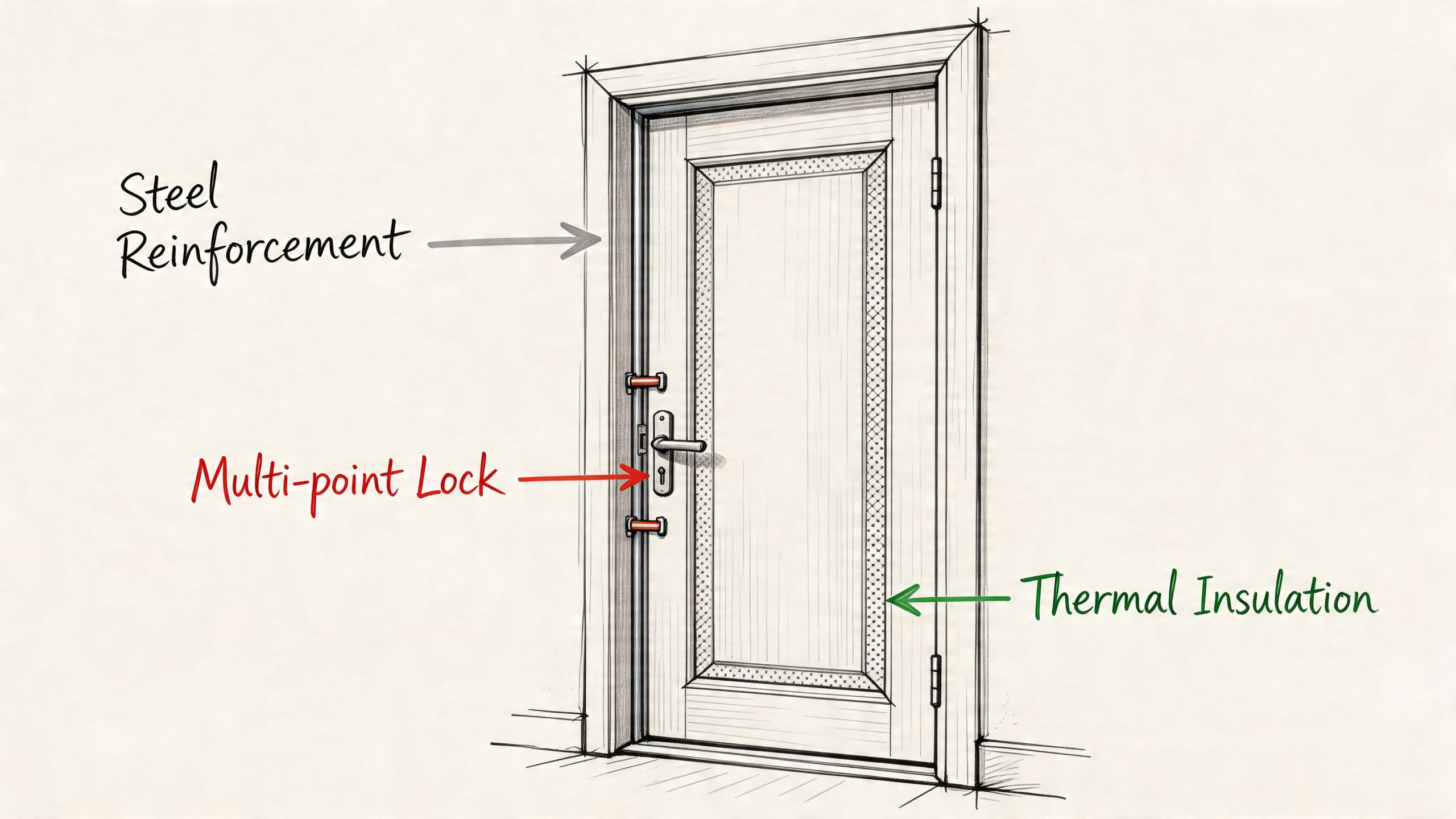
The frame is where a lot of the long-term performance is won or lost. We see this on replacements across Leeds and York, especially where an older door looked fine on day one but never stayed tight in the opening through winter. Reinforcement inside the profile, secure fixing into the surrounding structure and properly retained glazing all matter as much as the cylinder in the handle.
For Yorkshire homes, the practical checks are straightforward:
This matters more on exposed elevations. A rear door facing open garden space in Harrogate takes different punishment from a sheltered entrance in a York terrace. The basic principle is the same. If the slab and frame move too much under wind pressure or repeated use, seals break contact, locks become harder to operate and the whole door starts to feel cheaper than it looked in the showroom.
A decent multi-point lock does two jobs at once. It secures the door at several points and it pulls the sash evenly into the frame, which helps with weather sealing and day-to-day closing feel. On many poor installations, homeowners blame the lock when the underlying issue is movement in the door slab or frame.
Standards are the useful shortcut here. Ask whether the door set has been tested to PAS 24 and check what hardware is included in that tested build-up. A PAS 24 capable design fitted with a weak cylinder or substituted hardware is not the same thing as a properly specified door set. We always advise homeowners to ask for the exact lock, handle and cylinder spec, not just a broad claim that the door is "secure."
Cylinder choice deserves attention too. A glazed door with a basic euro cylinder can still be the weak point. Anti-snap, anti-pick and anti-drill cylinders are the safer starting point, particularly for accessible front entrances and side doors.
Judge the whole door set, not just the frame material. Reinforcement, glazing retention, lock specification, cylinder quality and installation all affect security.
Some homeowners also want the entrance to work as part of a wider setup, especially on rear access doors or properties that back onto ginnels or open paths. In those cases, it can make sense to compare smart home security systems alongside the physical door upgrade.
Security gets the attention, but comfort is usually what people notice first after installation. A better door should feel warmer around the hall, cut draughts and close with a firmer seal. That is where U-values matter.
A lower U-value means less heat passes through the door set. For a homeowner, that usually translates to a less chilly entrance and fewer cold spots near the glass and threshold. In an older Leeds terrace with a narrower hallway, that difference is often more noticeable than on paper because the front door sits so close to the main living space. In a newer Harrogate build, the gain may be more about trimming heat loss and keeping the entrance consistently comfortable rather than fixing a glaring weak point.
Good thermal performance also depends on the full assembly. A strong door slab with poor threshold detailing or careless fitting can still leak cold air. We see that regularly on replacements where the brochure specification sounded good, but the finished job left gaps, weak packers or poorly sealed perimeter joints.
Homeowners usually spot poor performance through small irritations before they ever think about standards or reinforcement.
Common warning signs include:
A well-made glazed uPVC door feels settled. It shuts squarely, the handle action stays consistent, and the glass area adds light without making the entrance feel vulnerable.
Here’s a useful visual on how secure door systems are put together and why each component matters.
More glass usually improves daylight, but it also makes specification less forgiving. Larger glazed panels need proper support and careful door design if you want the slab to stay stable over time. That is especially relevant on wide front doors and windy side elevations.
Low thresholds are another good example. They improve access and can be the right choice for prams, wheelchairs or easier everyday use. On exposed doorways, though, they need careful drainage and threshold detailing or water can become the issue instead.
We usually guide homeowners back to one question. What does this door need to do on this particular elevation, in this particular house? A Victorian terrace in Leeds, a semi in York and a detached home in Harrogate can all need slightly different answers, even if the doors look similar from the street.
Once the technical side is right, the appearance becomes much easier to enjoy. Modern upvc doors with glass no longer force homeowners into one look. The visual choice now sits in the details. Glazing layout, colour, texture and hardware finish all change the character of the entrance.
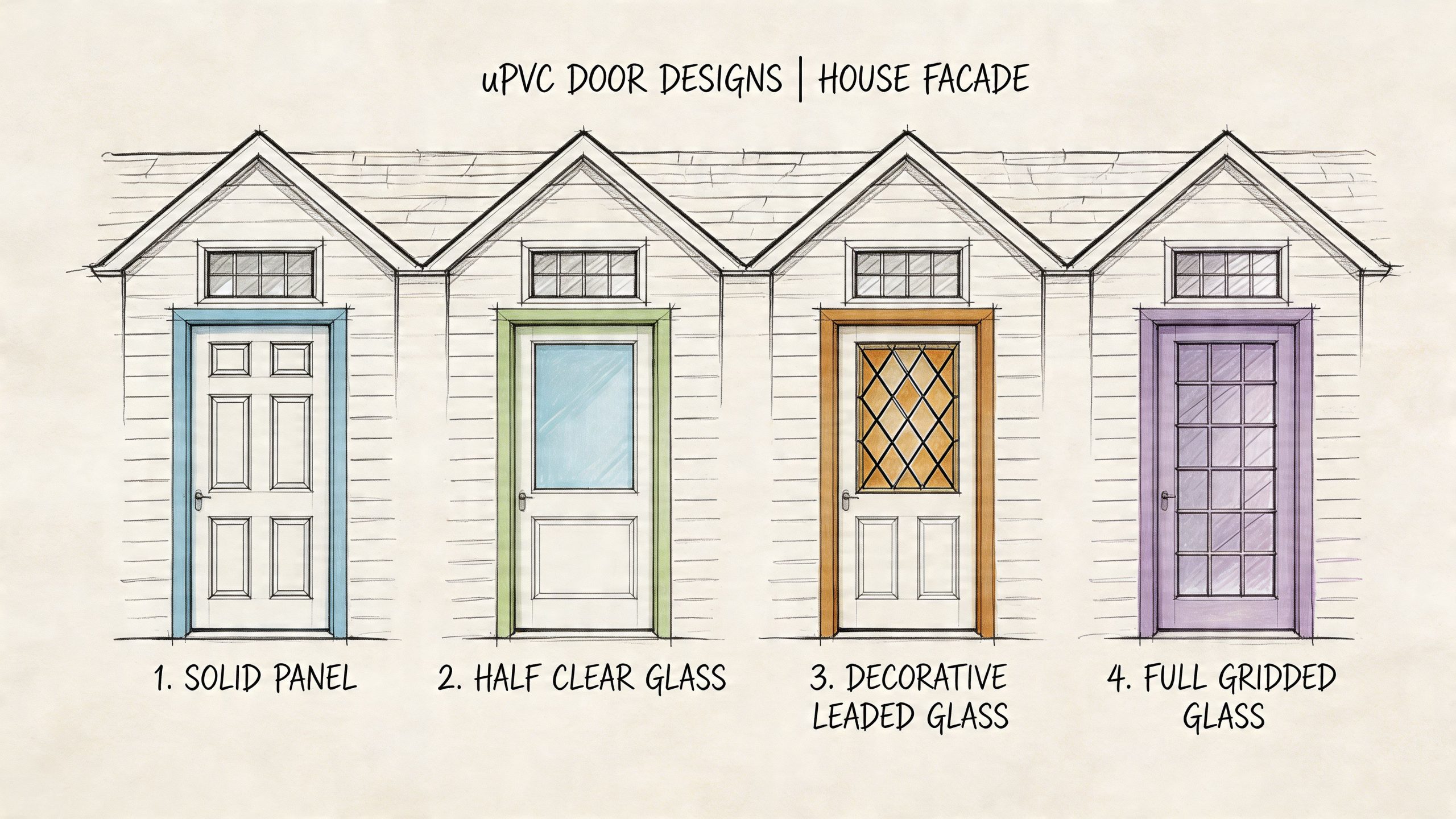
A Victorian terrace in Leeds usually responds well to restraint. That might mean a classic frame colour, a modest glazed panel and hardware that doesn’t shout. Too much contemporary detailing on a period frontage can look out of step with the brickwork and window proportions around it.
A detached home in Harrogate often gives you more freedom. Broader glazed apertures, cleaner lines and a stronger contrast between frame and masonry can all work well there, especially if the frontage already has a more modern feel.
For newer developments around York, homeowners often want a door that feels sharper without becoming sterile. In those cases, a simple glazed composition with crisp hardware tends to age better than heavily decorative patterns.
Not every choice carries equal weight. Some details transform the look. Others are better left understated.
The most important visual decisions are usually:
Good door design looks settled in the property. It shouldn’t feel borrowed from a different house.
A narrow hallway in an older Leeds terrace often benefits from a door with a taller glazed area because the extra daylight reaches further into the plan. If privacy is an issue, patterned or obscured glass solves that without making the entrance gloomy.
A rear opening onto a Harrogate garden usually suits French or sliding doors with clear glazing. The view becomes part of the room, and the garden feels more connected even in colder months.
On a side entrance in York, durability often matters more than drama. Homeowners tend to choose a practical glazed panel arrangement that brings in enough light for the utility or kitchen while still coping with bins, boots, bikes and everyday knocks.
The biggest mistakes are usually about proportion, not colour.
A few to avoid:
Kerb appeal isn’t about chasing trends. It’s about making the front or rear elevation feel considered. When the frame style, glass choice and hardware all support the house instead of competing with it, the result is usually timeless.
A glazed uPVC door that looks perfect in the showroom can be a nuisance by the first Yorkshire winter if the fitting is off by a few millimetres. We see that most often in older homes around Leeds and York, where openings have moved over time, lintels are not always level, and the original brickwork rarely gives you a neat, modern aperture to work with.
Installation decides whether the door keeps heat in, keeps water out, and closes cleanly under pressure. On a Victorian terrace, that often means more time on the survey and more care in packing and fixing the frame so it stays square. On a newer build in Harrogate, the opening is usually more regular, but the fitting still needs to account for threshold level, seal compression, and how the door will behave after a spell of wet, cold weather.
A good installation starts before fitting day.
The survey needs to check the opening properly, the surrounding masonry, the sill condition, and any signs that the old frame has been hiding damp or movement. Once the new door is going in, the frame should be packed and fixed so it is stable without being twisted into place. Perimeter sealing then does the quiet work. It helps stop draughts, limits water ingress, and supports the thermal performance you paid for in the glass and frame specification.
The finishing details matter just as much. Hinges and locks need adjusting so the sash pulls in evenly against the seals, and the door should be checked again once everything has settled. A poor fit often shows up slowly. You notice a cold patch near the threshold, a handle that gets harder to lift, or a top corner that starts catching.
If the problem sits in the glass rather than the frame, a full replacement is not always the sensible first step. In plenty of cases, glass replacement for failed or damaged sealed units sorts the issue without changing the whole door.
uPVC is low maintenance, but it still benefits from basic care. Homes near busy roads in Leeds usually need the frames and seals cleaning more often because grime builds up faster. Exposed properties outside Harrogate or on open edges of York tend to put more strain on hinges, drainage points, and weather seals because of wind and driving rain.
The routine is simple:
In practice, doors that are surveyed properly, fitted carefully, and adjusted when needed tend to give years of reliable service. The homeowners who get the best lifespan are usually the ones who deal with the first signs of wear early, rather than waiting for a minor alignment issue to become a full repair job.
Homeowners usually ask the same core questions once they’ve narrowed the options down. The answers often come back to suitability. Not every door style is right for every house, but a well-specified glazed uPVC door is a strong fit for many homes across Yorkshire and the wider North.
| Question | Answer |
|---|---|
| Are upvc doors with glass secure enough for a front entrance? | Yes, if the specification is right. Look for reinforced frames, internal beading, safety glazing where required, and tested security standards rather than assuming all doors are equal. |
| Are they only suitable for modern houses? | No. They can work on period and contemporary homes alike. The frame design, glazing pattern and hardware make the difference. |
| Is triple glazing always worth it? | Not always. It tends to make most sense on exposed elevations, in noisier locations, or where comfort is a higher priority. Standard compliant double glazing is often enough for many homes. |
| Do glazed doors lose too much privacy? | They can if the wrong glass is chosen. Obscure or patterned glazing is often the best answer for front and side doors. |
| Are sliding doors better than French doors? | It depends on the room. Sliding doors save space and give broad views. French doors provide a more traditional look and a full central opening. |
| Do uPVC doors look cheap? | Poorly chosen ones can. Well-designed doors with the right proportions and finish usually look clean and appropriate to the property. |
| How much maintenance do they need? | Very little compared with timber. Regular cleaning, occasional hardware checks and keeping drainage routes clear are usually enough. |
| Can the glass be replaced if it fails? | In many cases, yes. If the frame is sound and only the glazed unit has an issue, replacement can be a sensible option. |
| Are they a good choice for older Yorkshire homes? | Often, yes. They’re especially useful where homeowners want better comfort and less upkeep without introducing a high-maintenance material. |
| What’s the biggest mistake people make? | Choosing by appearance alone. The opening, exposure, glazing type, security spec and installation quality matter just as much as colour and style. |
When someone asks whether a uPVC glazed door is “worth it”, they’re usually really asking three things. Will it make the house warmer, will it feel secure, and will it still look right in five or ten years.
That’s the correct way to judge it. A door is part energy upgrade, part security product and part design choice. If only one of those three is considered, the result often falls short.
If you’re comparing options, use this quick filter:
A good door should disappear into daily life in the best possible way. It should open easily, keep the weather out, let the right amount of light in and suit the house without constant attention.
If you’re weighing up upvc doors with glass for your home in Yorkshire, York, Leeds, Harrogate, Hull, Manchester or Newcastle, Glass Tech can help with practical advice, careful surveying and a clean, professional installation. As a family-run glazing firm, we focus on getting the specification right for the property so the finished door looks good, performs properly and stays that way.

A professional team of experts providing glass and glazing solutions covering the whole of Yorkshire & more...
Whether it's Leeds, York, North Yorkshire, Birmingham, Hull, Liverpool, Machester, Newcastle or Nottingham, get in touch to find out how we can help you with your bespoke glass project.