
If you're looking to replace your windows anywhere in the UK, you need to know that trickle vent installation is now a legal requirement. It’s no longer just an optional extra. These small, adjustable slots fitted into your window frames are crucial for providing background ventilation, helping to fight condensation and mould by letting stale, damp air out and fresh air in. This isn't just red tape; it's a direct response to how modern and airtight our homes have become, which makes proper airflow more critical than ever for a healthy living environment.
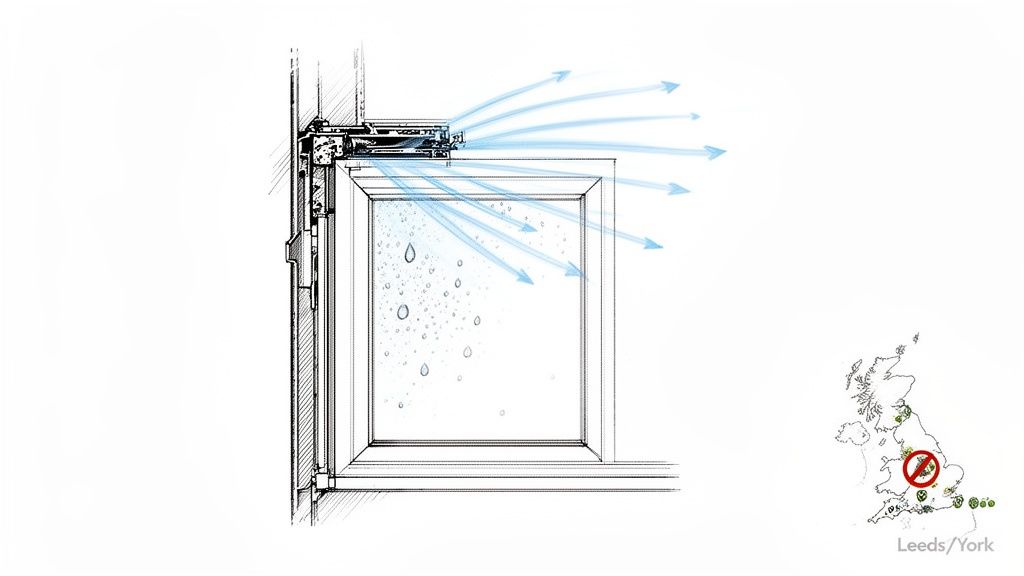
The rulebook on home ventilation has had a major update. What was once a simple recommendation is now a non-negotiable part of UK Building Regulations. This shift directly affects anyone carrying out window replacements, especially in regions like Yorkshire where damp can be a real headache.
The driving force behind this is Approved Document F of the Building Regulations, which covers ventilation. Over the years, we've become brilliant at insulating our homes to improve energy efficiency. The downside? We’ve also made them incredibly airtight. While this is great for keeping the heat in, it also traps moisture inside, creating the perfect breeding ground for condensation, damp, and nasty mould growth.
To combat this, the regulations now insist that new and replacement windows must include trickle vents to guarantee a minimum level of background ventilation. This isn't a mere suggestion—it’s a legal necessity to get that all-important FENSA certificate.
A professional trickle vent installation ensures your home meets the latest standards, safeguarding its value and, more importantly, the health of your family by improving indoor air quality.
This change has really shaken things up. Since the rules became fully effective on 15 June 2023, we've seen a huge increase in requests from clued-up homeowners asking specifically for compliant window replacements. It shows a growing awareness among families from Manchester to Newcastle who turn to experts like Glass Tech for a hassle-free installation. Without these vents, even a straightforward window replacement can fail inspection, leading to frustrating delays and complications.
For you as a homeowner, this regulation is more than just another box to tick. It’s a vital step towards creating a much healthier space for you and your family to live in. Proper trickle vent installation helps to:
Getting your head around these new requirements can feel like a challenge, but it doesn’t have to be. For projects across Yorkshire and beyond, including Leeds, York, and Newcastle, our team at Glass Tech offers expert guidance on every part of modernising your property. From stunning new windows and doors to bespoke glass features, we make sure every installation is not only beautiful but fully compliant with the latest building standards.
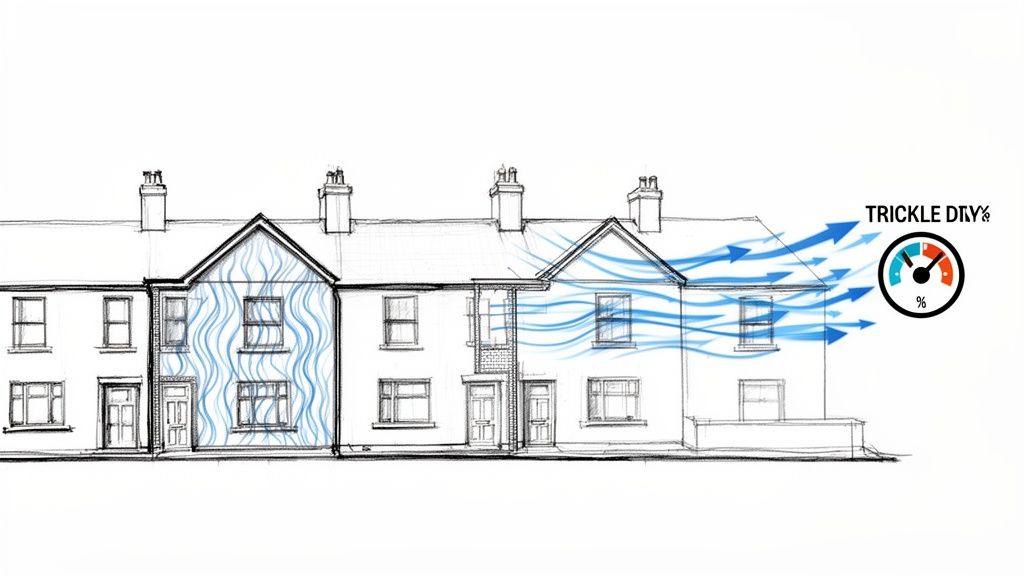
Let's be honest, damp is a persistent worry for homeowners across the UK. It's more than just an inconvenience; it's a growing national issue that can seriously damage a property's structure and, more importantly, the health of the people living inside. From Hull to Manchester, we see families constantly fighting a losing battle against condensation and the tell-tale black spots of mould that inevitably follow.
The irony is, the problem often starts with our best intentions. We've all become better at making our homes energy-efficient, sealing up draughts with top-notch insulation and double glazing. While this is fantastic for keeping the heat in, it also creates an airtight trap. All the moisture from cooking, showering, and even just breathing has nowhere to go. It settles on cool surfaces like windows and walls, and that’s when the damp and mould really take hold.
The latest figures paint a stark picture. In 2023, a staggering 5% of all dwellings in England were struggling with damp, the highest it’s been in the last five years. That’s a massive 1.3 million homes affected, with social housing being hit the hardest. For homeowners here in Yorkshire and across the North, these aren't just statistics; they're a daily reality that needs a proper, practical solution.
This is exactly where a professional trickle vent installation makes all the difference. These small, unassuming devices are the key to providing the constant, gentle background ventilation your home needs to break the cycle of trapped moisture.
By allowing a slow, controlled flow of fresh air, trickle vents work around the clock to balance humidity. They quietly push out the stale, damp air before it can cause problems, all without creating annoying draughts or letting your expensive heating escape.
Think of a trickle vent as a permanent breathing mechanism for your house. It ensures that even when your windows are locked up tight, your property can still 'exhale' moisture and 'inhale' fresh air. This constant air exchange is fundamental in stopping damp conditions where mould thrives.
Proper ventilation is also your first line of defence against everyday condensation. To truly prevent window condensation, you need to understand all the factors at play, and a trickle vent provides a simple yet powerful solution.
Of course, if condensation is a major issue in your home, it's also worth looking at other improvements. Exploring options like secondary glazing can add another brilliant layer of thermal protection, further reducing the cold surfaces where moisture loves to gather.
So, you’re ready to get the tools out? Fitting trickle vents yourself is a brilliant weekend project. It’s definitely achievable with a bit of care and a steady hand, but good preparation is absolutely key to getting it right first time.
Drawing on our two decades of fitting windows across Yorkshire, we’ve put this guide together to walk you through the entire job – from picking the right vent to getting that perfect, weatherproof seal.
Before you even think about drilling, you need to have the right bit of kit. The size of your trickle vent isn’t just about what fits the frame; it’s about making sure your home meets the specific ventilation needs laid out in the UK Building Regulations.
Different rooms have different requirements for airflow, which is measured in Equivalent Area (EA). The goal is to get a gentle, constant background airflow without creating annoying draughts. A tiny vent in a steamy bathroom just won't cut it.
To help you get it right, we've put together a quick reference table based on the minimum requirements outlined in Part F of the Building Regulations.
This table gives you a straightforward baseline for the most common rooms in a house. It helps you match the room type to the minimum required ventilation and the typical vent size you'll be looking for.
| Room Type | Minimum Required Equivalent Area (mm²) | Typical Vent Size (mm) |
|---|---|---|
| Habitable Room (e.g., Living Room, Bedroom) | 8,000 mm² | 400 mm |
| Kitchen | 8,000 mm² | 400 mm |
| Bathroom (with no window) | 8,000 mm² | 400 mm |
| Bathroom (with a window) | 4,000 mm² | 250 mm |
Remember, these are minimums. If your home is in a particularly damp area or prone to condensation, it can be a smart move to go for a slightly higher EA rating to be on the safe side.
Once you've chosen your vents, it's time to get your tools ready. Trust us, having everything you need laid out before you start makes the whole process much smoother and helps you avoid any mid-job panics.
Here’s what you’ll need on hand:
If you’re working on uPVC frames, we’d strongly recommend getting a routing jig. It’s a simple guide that clamps onto the frame, ensuring you drill a perfectly straight slot. It massively reduces the risk of the drill slipping and scarring your window.
This is the part that needs real precision. How you create the slot for the vent depends entirely on what your window frames are made of.
For uPVC and Aluminium Frames:
The standard method here is to drill a series of overlapping 10mm holes to create a single, clean slot.
Start by marking the exact position on the top part of the window sash (the bit that opens). The easiest way to do this is to use the vent itself as a template. Mark where your screw holes will go and, most importantly, the start and end points of the main airflow slot. If you're using a jig, now's the time to clamp it securely in place.
For Timber Frames:
Wood is a bit more forgiving, but it still demands care. You can use the same overlapping-hole technique, but if you're confident with a router, it will give you a much neater finish. The key with timber is to go slowly and clear out the wood shavings as you work to keep your line clean.
A Pro Tip From The Field: Before you commit to the main 10mm holes, always drill a small pilot hole first. This stops the larger drill bit from 'wandering' off course, giving you a much cleaner entry and preventing damage to the frame. It's a small step that makes a huge difference.
With the slot cut, you're on the home stretch. First, give the area a good clean, removing any plastic swarf or sawdust. This ensures the vent can sit perfectly flush against the frame for a tight seal.
Take the external canopy (the part with the grille to keep insects out) and position it on the outside of the window, lining it up with your holes. Secure it with the screws provided, but don't be tempted to overtighten them – it’s easy to crack the plastic housing if you go too far.
Next, head inside and fit the internal canopy. This is the part you’ll see and use every day to open and close the vent. Fix it in place with its own screws.
The final and most critical step is the seal. Apply a thin, neat bead of your weatherproof sealant around the top and side edges of the external canopy only. This creates an impenetrable barrier against wind and rain.
Give the open/close mechanism a quick test to make sure it moves smoothly, and that's it – job done.
Making your home healthier and more energy-efficient with a professional trickle vent installation doesn't have to break the bank. What many homeowners in the UK don't realise is that there are government-backed schemes out there designed to help cover the costs of essential ventilation and insulation upgrades.
This kind of support is all about helping properties become warmer, greener, and cheaper to run. It's particularly useful for those of us in areas like Yorkshire and Newcastle, where older housing stock can really benefit from modern, energy-saving measures. Upgrading your home isn't just about comfort; it's a smart financial move that adds real, long-term value.
The main programme homeowners should be looking into is the Great British Insulation Scheme (GBIS). This scheme, running from April 2023 to March 2026, is specifically designed to help households improve their energy efficiency.
It's part of the wider Energy Company Obligation (ECO) framework, a long-standing initiative that requires large energy suppliers to fund home improvements. Since 2013, the ECO framework has already supported over 3.1 million improvements across the country.
The crucial point here is that as homes become better insulated, proper ventilation isn't just nice to have—it's essential. That's why support for measures like trickle vent installation is often bundled into a broader package of works. With only 42% of England's homes currently hitting an EPC rating of C or better, these schemes are vital. You can find out more about the GBIS scheme and trickle vents on UK Energy Services.
Improving your home's Energy Performance Certificate (EPC) rating isn't just about ticking a box. For qualifying households, the right upgrades can lead to annual energy bill savings of between £300 and £400. It's an investment that genuinely pays for itself over time.
These financial incentives reframe a professional trickle vent installation. It stops being an expense and becomes a strategic investment in your home's future and your family's health. It’s a key part of a bigger picture: creating a healthier, more cost-effective place to live.
The installation itself is a straightforward, three-step process.
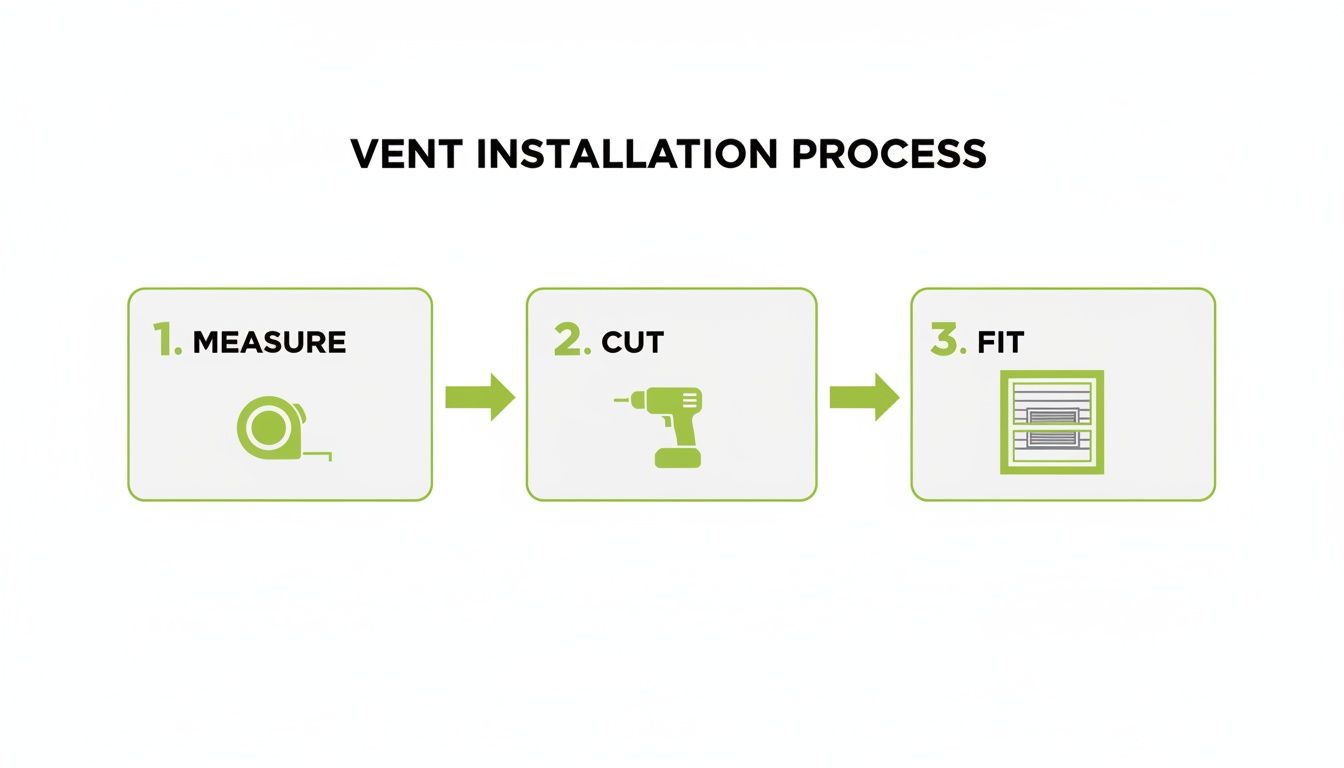
It all comes down to measuring the frame accurately, cutting the slots cleanly, and fitting the vent securely. Each step is critical for ensuring a weatherproof seal that delivers the background ventilation you need without ever compromising the integrity of your window.
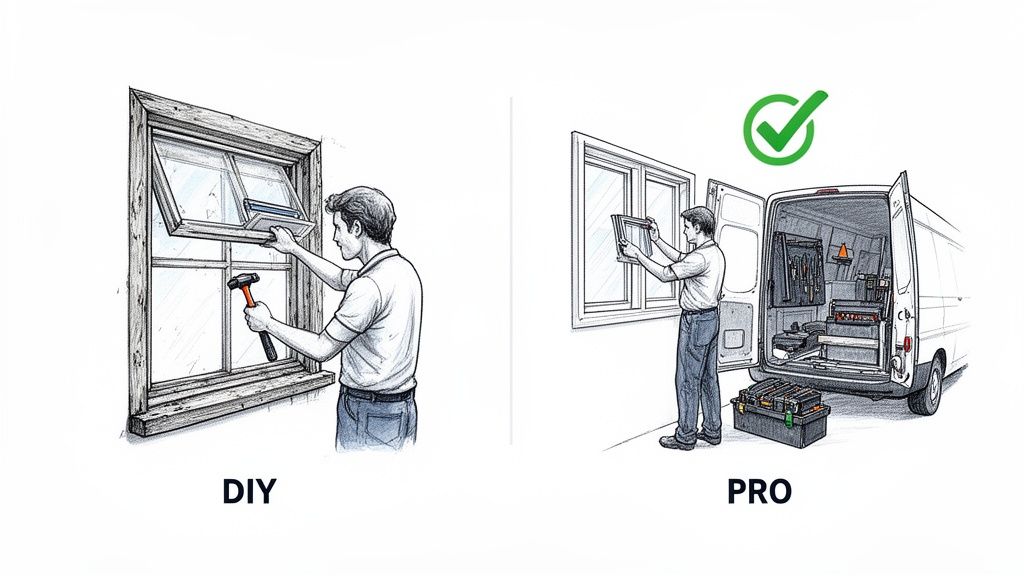
So, you've got your trickle vents ready to go, and now comes the big question: tackle the job yourself or call in the experts? It’s a classic dilemma for any homeowner, and the right path really boils down to your window type, your confidence with a drill, and what’s at stake if things go wrong.
Let’s be clear, a DIY installation can be a great option in the right circumstances. If you're working on an old timber-framed window, maybe in a workshop or garage where a cosmetic slip-up isn't the end of the world, then by all means, get the tools out. Wood is generally quite forgiving and it can be a satisfying job to complete yourself.
But the moment you start looking at modern, expensive uPVC or aluminium frames, the game changes completely. This is where a professional installation isn't just a luxury, it's often a necessity.
For most projects in your main living space, the risks of a DIY attempt can easily outweigh the potential cost savings. From our experience, it’s always best to bring in an expert when you’re facing one of these situations:
Choosing a professional firm like Glass Tech eliminates the risk of costly mistakes. You get a guaranteed weatherproof seal, zero damage to your window frames, and the peace of mind that comes with a fully compliant installation.
We have specialised expertise in seamlessly integrating ventilation into all kinds of properties, from modern homes in Newcastle to period properties across Yorkshire. Ultimately, calling in a professional is about protecting the investment you've made in your windows. While we focus on glazing, knowing how to pick the right tradesperson is a universal skill—understanding the essential tips for finding the right plumber or heating engineer can be valuable for any home project.
If you want to discuss your project and get a flawless result the first time, get in touch with our team today.
When it comes to fitting trickle vents, there are a few common questions we hear all the time from homeowners. We get it – you want to make sure you’re making the right choice for your home. Here are some straightforward answers based on our years of experience in the field.
Yes, absolutely. This is a non-negotiable part of modern window replacement.
Under the latest UK Building Regulations, specifically Approved Document F, any new or replacement windows must have trickle vents. The goal is to bring your home up to current ventilation standards, even if the windows you’re taking out were vent-free.
Failing to do this will mean the installation won’t receive FENSA certification. This can cause major headaches down the line, especially when you come to sell your property.
This is probably the biggest concern we hear, but it’s a common misconception. Modern trickle vents are intelligently designed to provide gentle, continuous background ventilation – they're not there to blast a cold gale into your living room.
Their job is to create a controlled airflow that pushes stale, damp air out without you even noticing. Most models are adjustable, and you can close them completely if you ever feel the need. The benefit of fighting off condensation and mould growth far outweighs the minimal, and usually unnoticeable, effect on room temperature.
In most cases, yes, trickle vents can be retrofitted to windows and doors that don't currently have them. However, this is one of those jobs that looks easier than it is. We strongly recommend a professional trickle vent installation.
It's incredibly easy to damage an expensive window frame or compromise the weatherproof seals if you don't have the right tools and experience.
Retrofitting requires precision. One slip can lead to cracked uPVC or a permanently scarred frame, turning a simple upgrade into a costly repair job. A professional guarantees a clean fit that maintains the integrity of your window.
At Glass Tech, we specialise in seamlessly integrating ventilation solutions into properties across Glass Balustrades Yorkshire and Glass Balustrades Newcastle. We ensure both performance and aesthetics are spot-on, protecting your investment.
For expert advice and a flawless trickle vent installation that protects your home and meets all regulations, trust the team at Glass Tech. Visit our website to learn more and get a quote.

A professional team of experts providing glass and glazing solutions covering the whole of Yorkshire & more...
Whether it's Leeds, York, North Yorkshire, Birmingham, Hull, Liverpool, Machester, Newcastle or Nottingham, get in touch to find out how we can help you with your bespoke glass project.