
When you get down to it, the whole "composite decking vs wood" debate really boils down to one simple question: are you after modern convenience or traditional character? Composite decking is the engineered, low-maintenance choice built for the long haul. Traditional timber, on the other hand, gives you that classic, natural look but asks for a bit of annual TLC in return. Your decision rests on whether you value set-and-forget durability over the authentic charm that only real wood can offer.
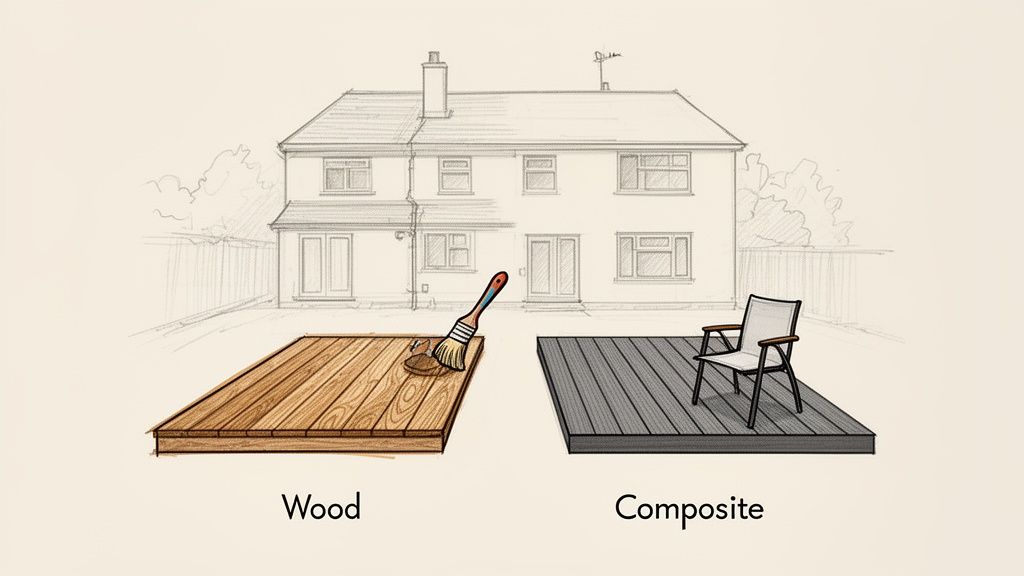
Adding a deck is one of the best ways to transform your garden, giving you a proper outdoor living space for relaxing, dining, or entertaining. But before you get to the fun part, picking the right material is a critical first step. It’s a decision that will affect everything from your weekend plans to your long-term budget. For homeowners across the UK—especially in places with notoriously unpredictable weather like Yorkshire—this isn’t just a purchase; it’s an investment in your home and your lifestyle.
The choice isn't as simple as it used to be. It’s no longer just about picking between different types of timber. Modern composite decking, crafted from a smart blend of recycled wood fibres and plastic, has become a serious rival to traditional woods like pine and cedar. Getting to grips with the core differences is the key to building a deck that not only looks brilliant but can also handle the unique challenges of the British climate.
To get a quick sense of the playing field, it helps to see the two materials side-by-side. This table gives a straightforward breakdown of their essential traits, offering a snapshot before we dive into the finer details.
| Feature | Composite Decking | Wood Decking |
|---|---|---|
| Maintenance | Just needs an occasional clean with soap and water. | Requires annual sanding, staining, and sealing to protect it. |
| Durability | Built to resist rot, warping, splintering, and insects. | Can be prone to rot, warping, and insect damage without proper care. |
| Initial Cost | A higher upfront investment. | A lower initial purchase price, particularly for softwood options. |
| Lifespan | Typically 25+ years with very little effort. | Varies from 10-15 years; its lifespan is tied directly to maintenance. |
| Aesthetics | Consistent colour and finish, with a huge range of modern styles. | Authentic, natural grain with a classic look that weathers beautifully over time. |
| Safety | Often made with anti-slip surfaces; you'll never get a splinter. | Can get slippery with algae; splinters are a real risk as it ages. |
This comparison really highlights the central trade-off. Wood has a lower barrier to entry financially but demands a genuine commitment to upkeep. Composite, in contrast, asks for more money upfront in exchange for decades of virtually hassle-free enjoyment.
Your outdoor space should feel like a natural extension of your home, and a new deck can be the perfect stage for modern glass features. Find out more about how you can create a seamless flow between your house and garden with stylish bifolding doors. In the sections that follow, we'll explore these points in much more detail, giving you all the insight you need to make the right call for your home.
When you invest in a new deck, you’re not just buying materials; you’re deciding how you want to spend your future weekends. The day-to-day reality of living with wood versus composite decking reveals one of the biggest differences between them, especially when you’re up against the damp, unpredictable Yorkshire climate.
Traditional timber decking requires a hands-on approach. Let's be honest, the annual cycle of maintenance isn't a suggestion—it's essential if you want to preserve its look and structural integrity. This means cleaning, sanding down rough patches or splinters, and then applying a fresh coat of stain or sealant to protect the wood from moisture, which quickly leads to rot, mould, and algae.
Composite decking, on the other hand, is engineered for a life of minimal fuss. For busy homeowners, this is a game-changer. It completely does away with the need for sanding, staining, or sealing. Its resilience comes from its very makeup—a blend of wood fibres and recycled plastics—making it inherently resistant to the issues that plague timber. A simple wash with soap and water a couple of times a year is all it takes to keep it looking its best.
The true test for any outdoor material in the UK is how it handles a long, wet winter. Imagine a standard pine deck in Hull after months of rain, frost, and maybe even a bit of snow. Without a perfect seal, moisture seeps in, causing the wood to swell. As temperatures fluctuate, this leads to warping, cracking, and splintering, creating a surface that's both unsafe and unsightly.
Now, picture a capped composite deck in the same conditions. Its protective polymer shell acts as a barrier, stopping water absorption dead in its tracks. This means it won’t warp, rot, or degrade, even after prolonged exposure. That resilience translates into a longer, more reliable lifespan, freeing you up to actually enjoy your garden rather than constantly working on it.
"The core difference really comes down to proactive versus reactive care. With wood, you're in a constant battle against nature, trying to seal it against the inevitable. With composite, the durability is built-in, so your time is spent relaxing on your deck, not restoring it."
The practical and financial benefits of this durability are huge. UK homeowners who choose composite over wood can save a significant amount on upkeep. Wood treatments often cost between £500-£1,000 annually for an average 20m² deck, whereas composite materials just need that occasional clean to last for decades.
This is a key reason why the UK's wood-plastic composite (WPC) decking market is growing so fast, projected to hit $476.54 million by 2028. The data is clear: in our damp climate, traditional wood can deteriorate quickly. One survey found that a staggering 62% of wooden structures showed signs of decay after just three years. What's more, the textured surfaces on many composite boards offer far better slip resistance, reducing the risk of falls in wet weather by as much as 45%—a crucial safety feature for families with kids or elderly relatives. You can find out more about the WPC decking market growth and its drivers.
To make the differences even clearer, this side-by-side table breaks down the key performance factors. Think of it as a quick reference for how each material truly holds up over time.
| Feature | Wood Decking (e.g., Pine, Oak) | Composite Decking |
|---|---|---|
| Annual Maintenance | Requires sanding, staining, and sealing every 1-2 years. | Needs only occasional cleaning with soap and water. |
| Resistance to Rot | Highly susceptible, especially in damp UK climates. | Extremely resistant to rot, mould, and mildew. |
| Warping & Splintering | Prone to warping and splintering as it ages and weathers. | Will not warp or splinter, ensuring a safe, smooth surface. |
| Pest Resistance | Vulnerable to wood-boring insects like termites and beetles. | Impervious to insect damage. |
| Colour Stability | Fades naturally to a silver-grey; stain requires regular reapplication. | Engineered for UV resistance, maintaining its colour for years. |
| Typical Lifespan | 10-15 years with diligent and consistent maintenance. | 25+ years with minimal upkeep required. |
Ultimately, the choice comes down to what you value most. If you’re after a long-lasting, hassle-free outdoor space that stands up to the worst of the British weather with minimal effort, composite decking is the clear winner on durability and lifespan.
When weighing up composite decking vs wood, the price tag is often the first thing people look at. And it’s true, traditional softwood decking usually has a lower initial cost, which can feel like a win if you're working to a tight budget.
But that upfront saving is a bit of a red herring. It only tells a fraction of the financial story. The real cost isn’t just buying the boards; it’s the total cost of ownership over the deck’s entire life. This is where composite decking starts to make a lot more sense, especially for homeowners in places like Leeds or Newcastle where the weather really puts materials to the test.
A timber deck isn't a one-and-done purchase. It’s more like a subscription that demands regular payments—in both time and money—just to keep it safe and looking good. These ongoing costs creep up faster than you might think.
Here’s a rough idea of what you’re signing up for with wood:
When you add it all up over a decade, that "cheaper" wooden deck can easily end up costing you more than a composite one would have from the start.
Composite decking completely flips this financial model. Yes, the initial investment is higher, but the running costs are practically zero. No annual sanding, no pricey stains or oils, and absolutely no replacing rotten boards. It’s a predictable, low-maintenance approach that offers real financial clarity.
Let's run some simple numbers for a standard 20m² deck in a city like Leeds, where the weather can be particularly harsh on outdoor materials.
A typical softwood deck might cost £1,500 initially. But with maintenance averaging £250 per year (for treatments, cleaners, and the odd repair), the total spend over 10 years climbs to £4,000. Push that to 25 years, and you could easily be looking at over £7,750.
In contrast, a quality composite deck costing £3,500 upfront needs virtually no more money spent on it. Over its 25-year lifespan, the cost remains £3,500. Suddenly, it’s the far more economical choice for the long haul. That higher ticket price is buying you decades of freedom from recurring bills and weekend labour.
This chart really brings home the difference in durability, which is a massive factor in long-term value.
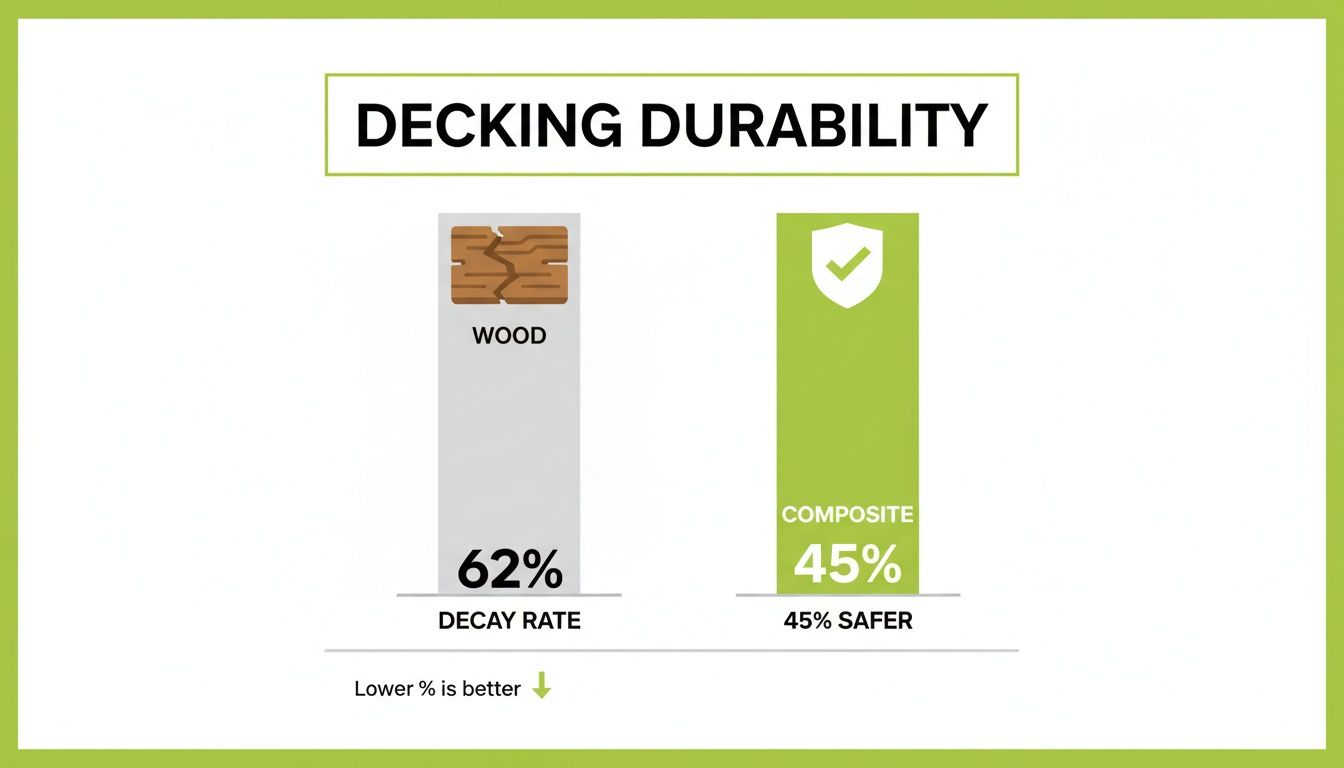
As you can see, wood is highly susceptible to decay, whereas composite materials provide a much safer and more resilient surface for years of enjoyment.
Ultimately, it comes down to how you view the investment. Wood gets you started for less but demands a long-term commitment of time and money. Composite decking gives you a clear, fixed cost that delivers far better lifetime value, making it the smarter financial move for anyone planning to enjoy their garden for years to come.
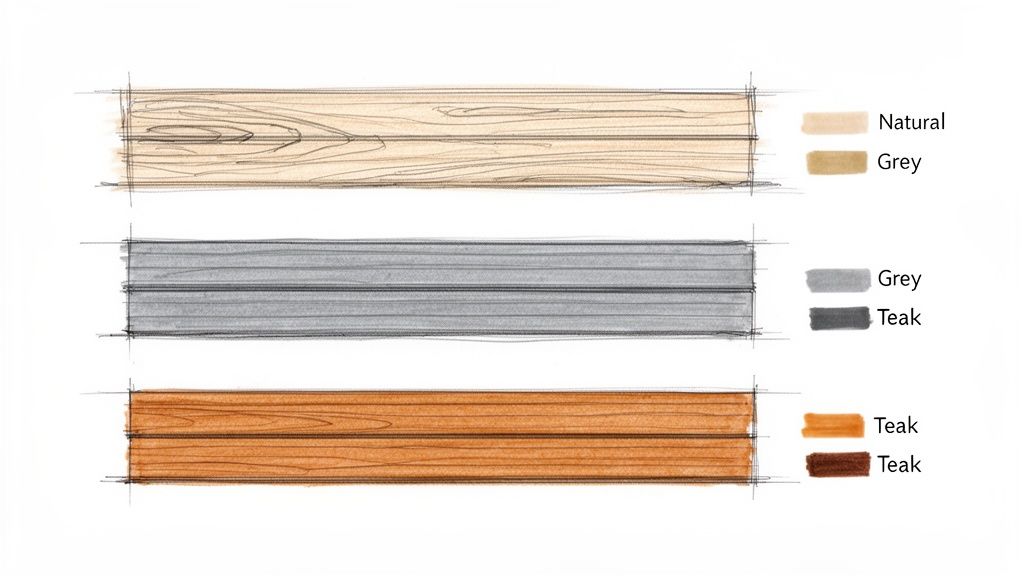
The look and feel of your deck play a huge role in defining your entire outdoor space. When it comes to the composite decking vs wood debate, aesthetics are often the deal-breaker, with each material offering a distinctly different design personality.
Traditional timber decking has an undeniable, authentic charm. Its natural beauty comes from the unique grain patterns, knots, and subtle colour variations that make every single board one of a kind. This organic character is perfect for creating a rustic, timeless feel that works beautifully with classic British homes and country gardens.
You can stain timber to achieve a range of finishes, but no matter what you do, wood will always respond to the elements. Over time, it will weather gracefully into a soft, silvery-grey patina—a look many people love, but one that is impossible to prevent entirely.
The real appeal of wood lies in its living, breathing quality. Each board tells a story through its grain, offering a warmth and texture that manufactured materials struggle to replicate.
For those who appreciate this organic aesthetic, the so-called "imperfections" are the main attraction. It does mean, however, accepting a degree of inconsistency across your deck.
If wood is about embracing natural variation, composite decking is about achieving design precision and lasting vibrancy. It offers a level of consistency that timber simply can't match. The manufacturing process ensures every board is uniform in colour and texture, creating a clean, seamless, and polished look from day one.
This consistency provides the perfect canvas for contemporary design. For homeowners seeking a sleek, modern outdoor area, composite is often the superior choice. The colour palette is vast, ranging from incredibly realistic wood-effect finishes to sophisticated, solid greys and blacks engineered to resist fading.
While wood’s colour evolves with the weather, composite decking is designed for colour stability. High-quality boards have built-in UV resistance, meaning that striking grey or deep brown you choose today will look just as vibrant in five or ten years' time, even after enduring harsh northern winters.
This design reliability is a major advantage. It allows you to create a cohesive outdoor living space where your decking seamlessly complements other modern features. Imagine pairing a dark grey composite deck with the clean lines of frameless glass balustrades; the result is a sophisticated, high-end finish that elevates your entire property. You can explore a variety of stunning projects in our glass balustrade projects gallery to see how these elements work together.
When exploring backyard pool landscaping ideas, for example, the non-slip and consistent finish of composite often makes it a practical and stylish choice. Ultimately, the aesthetic choice comes down to personal style. If you want a deck that embodies natural, rustic beauty and evolves over time, wood is a fantastic option. But if your vision is a clean, contemporary, and consistent outdoor space that retains its colour for years, composite offers unparalleled design flexibility.
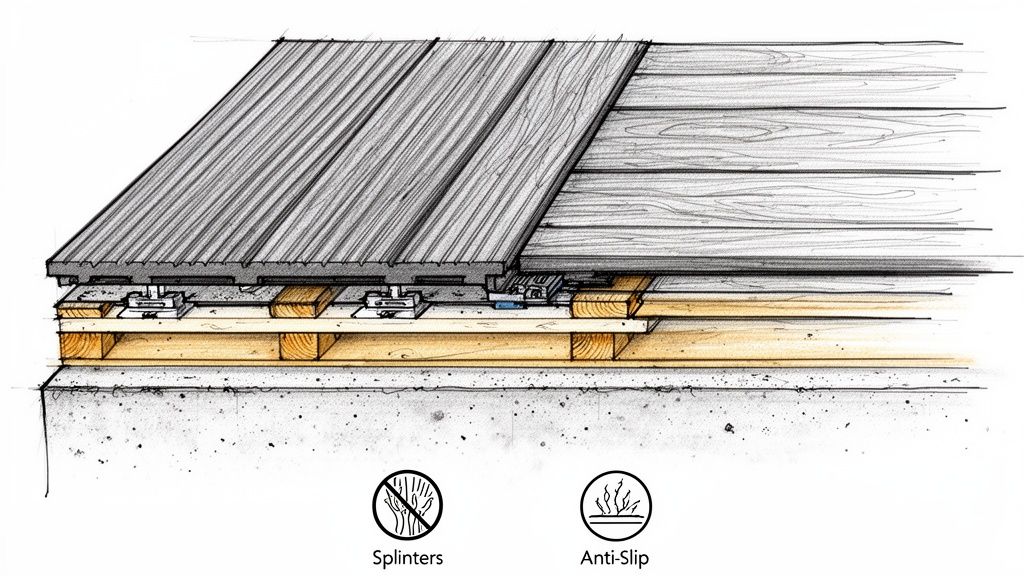
Beyond the look and feel, the real-world practicalities of safety and installation are what often sway the decision between composite and timber decking. For any home in the UK, and especially in the damper climes of Yorkshire, you simply can't afford to overlook the safety of an outdoor surface.
We’ve all experienced it: traditional wood decking has a nasty habit of becoming incredibly slippery when wet. In a climate where rain is a regular feature, this poses a constant risk. Wood’s porous nature is a perfect breeding ground for algae and moss, which quickly forms a slick, hazardous film that needs constant, aggressive cleaning to keep at bay.
High-quality composite decking, on the other hand, is engineered with safety built-in. Many boards are designed with enhanced anti-slip properties, often featuring textured surfaces or deep grooves that offer far better grip underfoot, even in a downpour. This makes it a much safer bet for families with young children or elderly relatives.
Another common grievance with timber is the inevitable risk of splinters. As wood ages and weathers, it naturally starts to crack and split. This can be painful and dangerous, especially for bare feet or the paws of family pets.
Composite decking completely sidesteps this problem. Its blend of wood fibres and recycled plastic means it will never splinter, giving you a consistently smooth and safe surface for its entire lifespan.
The installation method itself has a huge impact on the final look and safety of your deck. Modern composite systems often use hidden fixing systems, creating a flawless, screw-free surface that’s not only beautiful but also much safer to walk on.
Of course, the integrity of your deck's foundation—the substructure—is just as crucial. For any project, understanding the essential groundwork in construction is vital for creating a stable, long-lasting structure. A robust composite deck provides a reliable and unyielding base, making it the ideal platform for heavy additions like hot tubs or outdoor kitchens without ever compromising on stability.
From a builder's perspective, installing composite decking is often a more streamlined and predictable process than working with wood. The boards are perfectly uniform, and the precision of clip-based fixing systems allows for a faster, cleaner build. This is a massive plus for projects needing seamless integration with other features, like the glass balustrades we specialise in.
The UK's appetite for composite decking is growing, with the market forecast to expand significantly as homeowners demand these low-hassle solutions. In areas like Newcastle, capped composite varieties are dominating due to their protective polymer shell that boosts UV resistance and stops colours from fading. In stark contrast, it's been noted that a significant number of wooden decks require major repairs within just five years because of weathering, highlighting the huge durability gap.
This move towards durable, safe, and efficient materials reflects a bigger shift in what homeowners prioritise. For anyone planning a complete garden overhaul, expert glass balustrade installers can provide guidance on creating a cohesive and modern outdoor space. Ultimately, choosing composite is an investment in a safer, stronger, and more reliable deck, right from the ground up.
The old "composite decking vs wood" debate doesn't have a one-size-fits-all answer. The right choice is less about the material itself and more about you—your priorities, your lifestyle, and the vision you have for your garden. It’s about matching the material’s character to your own.
For some people, the timeless appeal of natural timber is impossible to ignore. If you genuinely enjoy weekend DIY projects and have a firm grip on your initial budget, wood is a brilliant choice. It gives you that authentic, rustic aesthetic that evolves over time, slowly weathering to a silvery-grey patina that looks right at home in a classic Yorkshire garden. A homeowner who sees the annual staining as a labour of love, rather than a chore, will find real satisfaction in a timber deck.
However, for a growing number of homeowners, especially in places like York or Newcastle, the goal is different. They're after a high-performance, long-term investment that gives them their weekends back. If your time is precious and you want an outdoor space that’s ready for a barbecue at a moment's notice, composite decking is the clear winner. Its sheer resilience against our damp northern weather means no annual sanding, no staining, and no worrying about rot setting in.
This low-maintenance appeal is particularly powerful for modern homes. Composite boards provide a clean, consistent canvas that perfectly complements the sleek lines of glass balustrades, creating a sophisticated, cohesive look that enhances both your home's style and its market value.
Think about your long-term plan. Are you looking for the lowest cost to get started, or the best value over the lifetime of the deck? Answering that one question often makes the final decision between wood and composite much clearer.
To help you decide, let's look at a few homeowner profiles. See which one sounds most like you.
Ultimately, this isn't just a building project; it's an investment in your lifestyle. By weighing up the realities of cost, maintenance, aesthetics, and safety, you can confidently choose the material that will bring you the most enjoyment for years to come.
Choosing between composite and timber decking always sparks a few good questions. Here are the straightforward answers to the queries we hear most often from homeowners planning their perfect garden space.
This is a common concern, and it's a fair one. It's true that darker coloured composite boards will absorb more heat from the sun than lighter ones. However, the high-quality composites we use are engineered with modern, heat-dissipating technology.
For a typical British summer, even here in a Yorkshire sun trap, this is rarely an issue. If your garden gets prolonged, direct sunlight for most of the day, the solution is simple: opt for a lighter colour. A stone grey or a soft beige will keep the surface much cooler and perfectly comfortable for bare feet.
Both materials have a good story to tell, but from very different perspectives. Timber is, of course, a natural, renewable resource. Its green credentials, however, rely entirely on it being sourced from responsibly managed forests – you should always look for that FSC or PEFC certification. Don't forget, the chemical treatments needed for its annual upkeep also have an environmental footprint.
On the other hand, premium composite decking is often manufactured from a clever blend of reclaimed wood fibres and recycled plastics, diverting a huge amount of waste from landfill. Its biggest environmental win, though, is its sheer longevity. A deck that lasts for decades without needing constant chemical input means fewer replacements and a lower overall impact on resources.
The real long-term environmental benefit of composite decking is its durability. A deck that lasts 25+ years without needing chemical treatments or replacement boards has a significantly lower lifetime impact than a timber deck that may be replaced two or three times in the same period.
A well-designed, well-kept deck of either kind is a fantastic selling point. It’s an instant extension of your home's living space and a massive boost to its kerb appeal. When you dig into the details, though, composite often delivers a better return on your investment.
Think about it from a buyer's point of view. Someone looking for a home in York or Leeds sees a pristine composite deck as a finished, 'move-in-ready' feature that requires no work. A weathered wooden deck, however, can easily be clocked as a project-in-waiting, representing future weekends lost to sanding and staining. That potential effort can subtly detract from your home's immediate appeal, particularly if they're considering options with Glass Balustrades Newcastle wide.
Your garden is an extension of your home, and the right decking is the foundation for years of enjoyment. At Glass Tech, we specialise in creating beautiful, durable outdoor spaces with premium composite decking and stunning glass balustrades. We are the trusted choice for Glass Balustrades Yorkshire and beyond.
Ready to transform your garden? Get in touch with our expert team today.

A professional team of experts providing glass and glazing solutions covering the whole of Yorkshire & more...
Whether it's Leeds, York, North Yorkshire, Birmingham, Hull, Liverpool, Machester, Newcastle or Nottingham, get in touch to find out how we can help you with your bespoke glass project.