
When it comes to your home's entrance, a composite front door is often described as the "best of all worlds." It’s an intelligent blend of different materials, engineered to give you superior strength, fantastic insulation, and kerb appeal that lasts, making it a serious step up from older timber or uPVC doors.
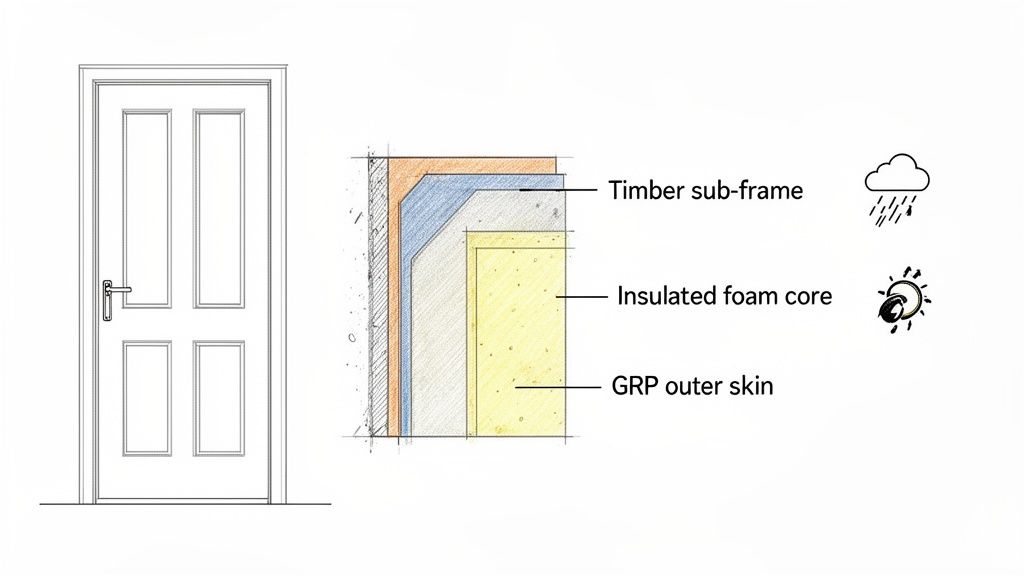
If you were to design the perfect front door from scratch, you'd want the reassuring sturdiness of solid wood, the draught-proofing of modern insulation, and a finish that could shrug off the worst of the British weather without ever needing a lick of paint. This is precisely what a composite door delivers by cleverly layering materials, each with a specific job to do.
Think of it like a high-performance sandwich. At its heart is a solid core, giving it a weight and rigidity that many standard uPVC doors just can't match. This core is then wrapped in a highly durable, weatherproof skin.
This multi-layer design is what gives a composite door its name and its edge over other door types. Let's break down what’s inside:
This smart construction means a composite door avoids the common pitfalls of single-material doors. It won’t rot or warp like timber can, and it feels far more substantial and secure than older, hollow-feeling uPVC models. You can explore our complete range of high-quality composite and uPVC doors to feel the difference for yourself.
To make it even clearer, here's a quick summary of what makes a composite door stand out.
| Feature | What It Means | Benefit for Your Home |
|---|---|---|
| Multi-Layered Build | A sandwich of different materials (timber, foam, GRP). | You get the best qualities of each material—strength, insulation, and durability—in one package. |
| Solid Insulated Core | A dense polyurethane foam fills the door's centre. | Excellent thermal efficiency, keeping your home warmer and potentially lowering energy bills. |
| GRP Outer Skin | A tough, weatherproof skin that doesn't need painting. | A great-looking door that resists dents, scratches, and fading for years with minimal cleaning. |
| Structural Frame | A rigid internal frame prevents twisting and warping. | Your door will close perfectly and remain secure, whatever the weather. |
This table shows how each component works together to create a door that's greater than the sum of its parts.
The demand for these doors has rocketed across the UK, from the Victorian terraces in Leeds to modern family homes throughout Yorkshire. Homeowners really value the blend of top-tier security, energy savings, and long-lasting good looks.
This isn’t just a feeling; the numbers back it up. In 2024, the UK composite doors and windows market hit a revenue of USD 43.8 million, and it's projected to climb to USD 63.8 million by 2030. This impressive growth, highlighted in market analysis by Grand View Research, shows just how many homeowners are choosing to invest in durability and efficiency.
Ultimately, a composite front door is an investment in your home’s comfort, security, and overall kerb appeal. It’s a modern, hassle-free solution that’s built to perform and look fantastic for decades to come.
Choosing a new front door can feel like a real tug-of-war. You’re often stuck between the classic good looks of timber, the budget-friendliness of uPVC, and the promise of modern performance. It’s a decision that’s easy to get lost in, but it’s one you really want to get right.
We’re here to cut through the noise and show you exactly how these three contenders stack up in the areas that truly matter: keeping your home secure, warm, and looking its best for years to come. For homeowners across the north of the UK, where the weather can be a real test of a home's defences, understanding these differences isn't just helpful—it's essential. This isn't just a purchase; it's a long-term investment in your home's comfort and protection.
Your front door is the first line of defence, and its construction directly impacts how well it protects your family and home. When you look closely, the differences between the materials become crystal clear.
Composite Doors: Security is baked into the very design of a composite front door. They have a solid, high-density core—think of a strong timber sub-frame packed with high-performance insulated foam—all sealed within a tough, weather-resistant GRP skin. Paired with multi-point locking systems as standard, this construction is exceptionally resistant to forced entry.
uPVC Doors: While modern uPVC doors are a step up from their predecessors, many older or cheaper models have a hollow, chambered construction. This makes them feel lighter and can leave them more vulnerable. While they can be fitted with good locking systems, the inherent strength of the door slab itself simply doesn't compare to a solid-core composite.
Timber Doors: There's no denying that a solid hardwood door feels incredibly secure. Its weakness, however, isn't brute force but the slow, persistent attack of the elements. Over time, wood can warp, split, or rot, and this can seriously compromise the integrity of the frame and the alignment of the locks.
Simply put, a composite door takes the reassuring solidity of timber and engineers out the weaknesses, creating a barrier that won't degrade with age or weather.
No one wants to pay to heat the street. A front door's ability to keep the warmth in is measured by its U-value—and with this measurement, the lower the number, the better the insulation.
A poorly insulated door is like leaving a window open on your heating budget. A typical solid timber door might have a U-value of around 3.0 W/m²K, and a standard uPVC door is a bit better at about 1.5 W/m²K. A high-performance composite front door, however, can achieve U-values as low as 0.8 W/m²K. That’s a massive difference, offering superior insulation that keeps your hallway feeling cosy and your energy bills under control.
The secret is the insulated core. While uPVC doors rely on pockets of air and timber doors on the natural (but limited) insulating properties of wood, the dense polyurethane foam inside a composite door is specifically engineered to halt heat transfer. It works much like a thermal flask keeps your coffee piping hot.
Finally, let's think about the future. How much work are you willing to put in to keep your door looking and performing its best in five, ten, or even twenty years?
| Door Type | Durability & Weather Resistance | Maintenance Needs |
|---|---|---|
| Composite | The GRP skin is incredibly tough, resisting dents, scratches, and fading from UV light. It won’t warp, crack, or peel. | Virtually maintenance-free. A simple wipe-down with a cloth and soapy water is all it ever needs to look brand new. |
| uPVC | Generally durable but can become brittle and discolour or turn yellow over time, particularly with prolonged exposure to the sun. | Low maintenance, but once discolouration sets in, it’s often irreversible without resorting to specialist painting. |
| Timber | Prone to swelling, shrinking, and warping with changes in moisture and temperature. Can rot if the protective finish isn't kept in perfect condition. | High maintenance. Demands regular sanding, painting, or staining every few years to protect it from the weather. |
For any busy household, the ‘fit and forget’ nature of a composite door is a huge plus. You get the timeless aesthetic of a wooden door without the weekend-stealing upkeep, and it holds its colour and structural integrity for far longer than a standard uPVC door. For long-term value and complete peace of mind, it’s the clear winner.
Let’s be honest, while looks are important, the two biggest reasons people upgrade to a composite front door are security and energy efficiency. These aren't just minor tweaks; they represent a fundamental shift in how your home protects you from both intruders and eye-watering energy bills – a major concern for homeowners from Newcastle right across the North.
A strong lock is one thing, but real security comes from the entire door system working as a single, formidable barrier. This is where a composite door really comes into its own, offering a level of peace of mind that many older uPVC or timber doors simply can't match.
The sheer strength of a composite front door comes from its incredibly dense, solid core. Unlike some uPVC doors that can feel disappointingly lightweight or even hollow, the solid-core construction of a composite door makes it exceptionally resistant to brute force. This inherent toughness is then beefed up with some serious security hardware.
A crucial feature to look for is an anti-snap cylinder on the lock. This small but vital component is designed to thwart one of the most common break-in methods, where a burglar tries to snap the lock in two. When you pair this with a multi-point locking system that bolts the door to the frame in several places, you create an incredibly secure entrance.
To guarantee this level of protection, you should always look for doors that are certified to specific security standards.
Choosing a door with these certifications is a clear signal that you’re serious about your family's safety. When you're weighing up your options, security is often the number one priority.
The chart below gives you a simple way to visualise which type of door might be right for you based on what you value most.
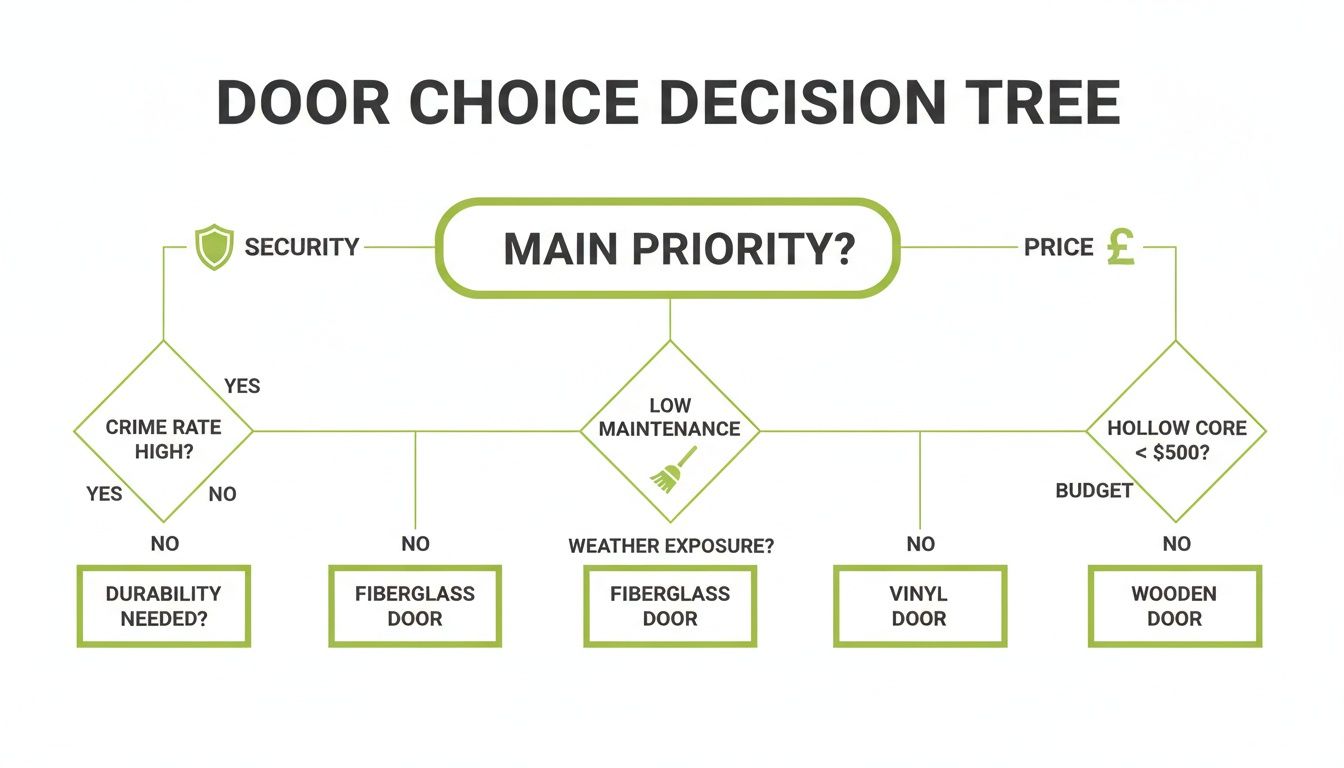
As you can see, if low maintenance or high security are your main drivers, composite doors quickly become the front-runner.
With energy costs being a constant worry for households across the UK, stopping heat from escaping your home has never been more important. Think of a composite front door as a thermal flask for your house; its advanced insulation keeps your home's interior comfortable, no matter what the northern weather is throwing at it. The secret lies in its high-density polyurethane foam core, which is specifically engineered to prevent heat transfer.
This superior insulation means a cosier home and, most importantly, lower heating bills. In fact, a new trend shows that by 2026, an estimated 25% of UK home sellers plan to upgrade to a new composite front door before putting their property on the market. This is driven by both security concerns and rising energy costs, with these high-performance doors capable of slashing heat loss by up to 30% compared to older, draughty timber models.
To get the absolute most from your door's efficiency, understanding the various types of weatherstripping for exterior doors is also a smart move. High-quality seals around the frame are vital for stopping draughts and allowing the insulating core to do its job properly. A professional installation ensures all these components work together perfectly, leaving you with a warm, secure, and energy-efficient entrance for years to come.
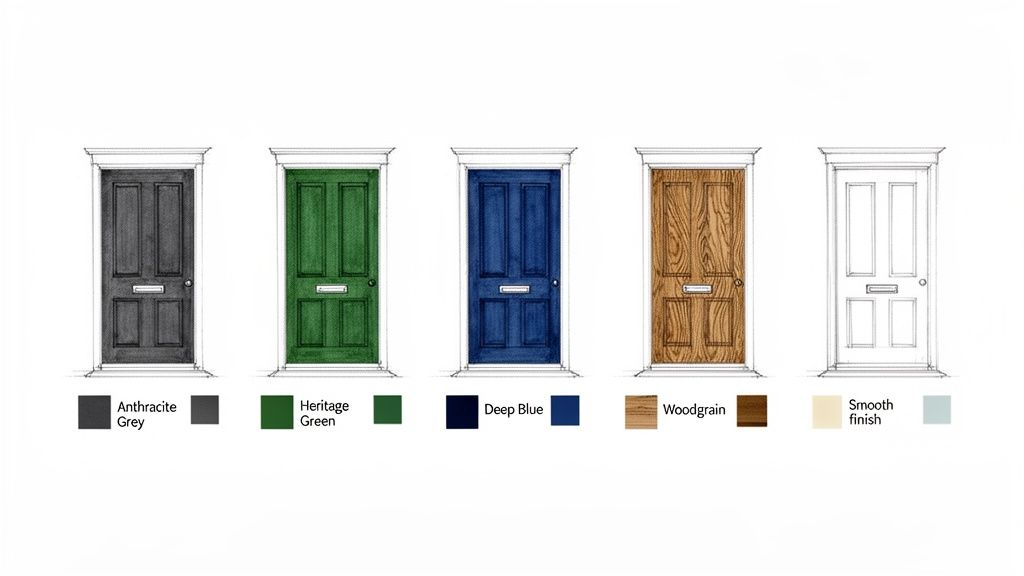
Your front door is the first hello your home gives. It’s a genuine centrepiece that sets the tone for everything inside, reflecting your personal style long before a guest even steps across the threshold. A composite front door doesn't just offer security and warmth; it provides a canvas to express your home's unique personality.
This is true whether you’re in a traditional stone cottage in the Yorkshire Dales or a sharp new-build in Harrogate. The right door can tie your whole property together.
The right colour can completely transform your home's kerb appeal. And while classic whites and bold reds will always have their place, the palette for 2026 is leaning towards sophisticated, liveable shades that feel both modern and timeless.
Choosing a colour might feel like a huge decision, but certain shades consistently stand out for their ability to complement a wide range of property styles. From contemporary chic to heritage charm, here’s a look at the most sought-after colours and what they say about a home.
To help you visualise the perfect shade for your property, here’s a quick guide to the most popular colours we’re seeing and the types of homes they suit best.
| Colour | The Vibe | Perfect for... |
|---|---|---|
| Anthracite Grey | Sleek, sophisticated, and undeniably modern. | New-builds, contemporary homes, and Victorian terraces wanting a sharp, urban update. |
| Heritage Green | Calm, traditional, and connected to nature. | Stone cottages, rural properties, and period homes that suit a classic, understated elegance. |
| Statement Blue | Confident, welcoming, and distinguished. | Making a memorable first impression on any property, from coastal homes to grand townhouses. |
| Classic White | Clean, crisp, and timeless. | Any home style where you want a bright, fresh entrance that never looks dated. |
| Rich Woodgrain | Warm, characterful, and authentic. | Period properties or anyone seeking the classic look of timber without the upkeep. |
These trends point towards a desire for colours that are both stylish and versatile. The enduring appeal of grey, for instance, shows how a neutral palette can adapt to the diverse architecture we see all across Yorkshire.
Recent industry data confirms this, suggesting that grey shades are set to dominate UK composite front door sales well into 2026. If you’re curious to learn more, you can explore the latest composite door trends and see what’s on the horizon.
Beyond just colour, the finish of your door has a huge impact on its overall feel. You essentially have two choices, and each one creates a distinct aesthetic.
A woodgrain effect is perfect for homeowners who love the traditional look of timber but want none of the maintenance headaches. This finish brilliantly mimics the natural texture of wood, adding real character and warmth. It’s an ideal choice for period-style doors, especially on homes in historic areas like York.
On the other hand, a smooth finish delivers a clean, contemporary look that is perfectly suited to modern homes. In fact, data shows that around one in every five new composite door installations now features an innovative smooth texture, showing a clear shift towards this minimalist style.
Finally, don’t overlook the hardware. It really is the jewellery for your door. Chrome remains the top choice for its versatility, but we're seeing graphite and stainless steel grow in popularity for a more industrial or modern feel. The right handle, letter plate, and knocker complete the look, tying everything together into one cohesive design.
To see the full spectrum of options, you can browse our complete product brochure to view all the available styles and find your perfect match.
Even the most advanced, stylish, and secure composite front door is only as good as the hands that fit it. A flawless installation is what unlocks decades of performance, ensuring your door keeps your home warm, quiet, and protected. Choosing the right installer is arguably as important as choosing the door itself, especially with the huge variety of homes we see across the north of England, from the stone cottages of Yorkshire to the brick terraces of Leeds.
A poor fit can cause a whole host of issues. Draughts, sticking doors, and compromised security are just the start. That’s why vetting your local installer isn't just a box-ticking exercise; it’s the step that turns a good purchase into a fantastic long-term investment for your home.
The north of England’s architecture is wonderfully diverse. A fitter with deep roots in the region will understand the unique challenges that come with different property types, whether it’s a Victorian villa in Harrogate, a 1930s semi in York, or a brand-new build in Newcastle. They’ll know exactly how to work with local stone and brickwork to get a seamless, weather-tight fit every time.
A reputable company will never shy away from showing you their work. Don't be afraid to ask for a portfolio of recent installations in your area. This isn't just proof of their experience—it’s a real-world look at the quality of their craftsmanship.
This kind of local knowledge is priceless. It’s the difference between a generic job and a tailored installation that truly respects the character of your home.
These days, a company's reputation is out in the open. Don't just take their word for it; do your own digging on independent platforms like Google, Checkatrade, and even local community groups on social media. Look for consistent, positive feedback that highlights a few key things:
Reading through these reviews gives you a powerful, honest insight into the real customer experience—something a glossy brochure can never provide.
There's a lot to be said for choosing a trusted, family-run business with deep roots in the community. It’s a level of service that larger, national chains often struggle to match. For a family-run company based in the north of England, our reputation isn’t just a business asset—it's personal. We live in the communities we serve, from Harrogate to Newcastle, and pride ourselves on a quality of work that builds trust and earns word-of-mouth recommendations.
That local connection means more accountability, a more personal touch, and a genuine commitment to getting the job done right. You're not just another order number; you're a neighbour.
To help you out, here’s a simple checklist to run through when you’re speaking to potential installers. A solid, professional company will have no problem giving you clear answers to every point.
Taking that extra bit of time to find the right installer is the final piece of the puzzle. It’s your guarantee that your new composite door won't just look stunning, but will perform perfectly for years to come, giving you total security, warmth, and peace of mind.
Deciding on a new front door is a big step. It’s an investment in your home's look, its warmth, and its security, so it’s only natural you’ll have questions before you commit. We get it.
To help you feel completely confident in choosing a composite door, we’ve put together answers to the most common queries we hear from homeowners across Yorkshire and beyond. Whether you're wondering about cost, durability, or how a modern door can work on a period home in a place like York, this should give you the clarity you're looking for.
Let's start with the question on everyone's mind: the cost. In 2026, a professionally installed, high-quality composite door will typically fall somewhere in the range of £1,800 to £3,500. That’s a fairly wide bracket, because the final price really depends on the choices you make.
The specific door style, your colour choice (standard vs. a custom shade), and the type of glazing all play a role. Adding intricate decorative glass or frosted privacy panels, for instance, will naturally influence the total. The hardware you select—from premium handles and letter plates to door knockers—also contributes to the final figure.
While the initial cost for a composite front door is higher than a basic uPVC model, it's so important to see it as a long-term investment, not just a purchase. The brilliant thermal insulation can lead to real savings on your energy bills over the years. When you factor in the enhanced security that brings priceless peace of mind and the serious boost to your home's kerb appeal, the door delivers incredible value over its lifespan. For complete transparency, always make sure you get a detailed, itemised quote from your installer.
One of the biggest draws of a composite door is just how long it lasts and how little looking after it needs. You can absolutely expect a quality composite door, when fitted correctly, to last for at least 30 to 35 years. Many will perform perfectly for much longer.
For busy households, though, their best feature is how incredibly low-maintenance they are.
This 'fit and forget' quality makes it a brilliantly practical solution, giving you your weekends back from tiresome DIY jobs. It's a genuine advantage for homeowners across the North, from Newcastle to Manchester, who need a door that can take a battering from the elements without needing constant attention.
A composite front door is built to withstand the realities of daily life and variable British weather. Its robust construction ensures that it won't just look good on day one, but will maintain its integrity and appearance for decades, making it a reliable and enduring feature of your home.
This incredible durability is a huge part of why they’ve become the go-to choice for so many people.
A professional installation is absolutely critical to make sure your new door performs exactly as it's meant to. The whole process is methodical, designed to achieve a perfect, weatherproof fit that maximises both security and thermal efficiency. It usually breaks down into three key stages.
The Initial Survey: It all starts with a precise survey at your home. A skilled technician visits to take incredibly detailed measurements of your door opening. This is the most important step, as your new composite front door will be custom-made to these exact specs to guarantee a perfect fit.
Custom Fabrication: Your door is then built to order based on the survey and your chosen style, colour, glass, and hardware. This made-to-measure approach means there's no chance of awkward gaps or a door that doesn't feel right.
Installation Day: On the day we’ve agreed, our professional fitting team arrives. They'll start by carefully removing your old door and frame, making sure to protect the surrounding brickwork or render. The new door and frame are then fitted, checked meticulously to ensure it's perfectly level, and then securely fixed into place. Finally, the team seals the entire perimeter to make it completely draught-proof before fitting and testing all the hardware.
A standard installation is usually done and dusted within a single day, keeping disruption to a minimum and leaving you with a clean, secure, and beautiful new entrance.
This is a really common and important question, especially for homeowners in areas full of beautiful old buildings, like the Victorian terraces in Harrogate or the Georgian townhouses in York. The answer is a definite yes. Modern composite doors are now designed with heritage properties firmly in mind.
Manufacturers have developed a fantastic range of traditional styles that authentically capture the look and feel of classic period doors.
It means you no longer have to choose between character and performance. You can perfectly complement your home's historic aesthetic while gaining all the modern benefits of first-class security, insulation, and durability. It truly is the best of both worlds, preserving your home's charm while bringing it firmly into the 21st century.
Ready to transform your home’s entrance with a secure, stylish, and energy-efficient composite front door? The team at Glass Tech has over 20 years of experience helping homeowners across Yorkshire find the perfect solution. Contact us today for a free, no-obligation quote and let our family-run business bring quality craftsmanship to your doorstep.

A professional team of experts providing glass and glazing solutions covering the whole of Yorkshire & more...
Whether it's Leeds, York, North Yorkshire, Birmingham, Hull, Liverpool, Machester, Newcastle or Nottingham, get in touch to find out how we can help you with your bespoke glass project.