
You've probably heard the term ‘composite door’ mentioned a lot, but what does it actually mean? Unlike a door made from a single material like timber or uPVC, a composite door is a sophisticated blend of materials, each one selected to do a specific job. This clever construction results in a front door that's significantly stronger, warmer, and more secure than most single-material doors on the market.
It helps to think of a composite door not as one solid thing, but as an engineered system. I often compare it to a high-end piece of outdoor gear; you have a tough, weatherproof outer layer, a dense insulating core, and a solid internal frame holding everything together. During manufacturing, these layers are permanently bonded under immense pressure, forming a single, incredibly strong door slab.
This multi-layered design is precisely what sets them apart. A traditional wooden door, for all its charm, is susceptible to warping and twisting with the weather. A standard uPVC door is mostly plastic and can lack the sheer rigidity and premium feel of a composite. By combining the best attributes of several materials, we get a modern entrance door that brilliantly solves the common weak points of older designs.
The real-world advantage of this layered construction is superior performance right across the board. From bustling city centres to quiet country lanes, homeowners across the UK are upgrading to composite doors for a few key reasons:
In essence, a composite door is a product meticulously engineered for modern life. It combines different materials to achieve a level of security, thermal efficiency, and long-term durability that is simply very difficult to get from a single material. This is the secret to their lasting performance and why they’ve become so popular. In the next sections, we'll break down exactly what these materials are and the vital role each one plays in protecting your home.
To really get to grips with what a composite door is, we need to look under the bonnet. Think of it less as a single object and more as a highly engineered system. Each material is chosen for a specific job, and when they’re fused together, they create a door that outperforms traditional options in every meaningful way.
This multi-layered construction is precisely what gives these doors their edge. It's why the UK composite doors market was valued at £35.4 million in 2024 and why they’ve become so incredibly popular. In fact, over 65% of new-build homes in areas like Yorkshire now feature composite doors, with 77% of them easily exceeding UK Building Regulations for thermal performance.
Let's break it down, layer by layer, to see how this clever construction delivers such impressive benefits for your home.
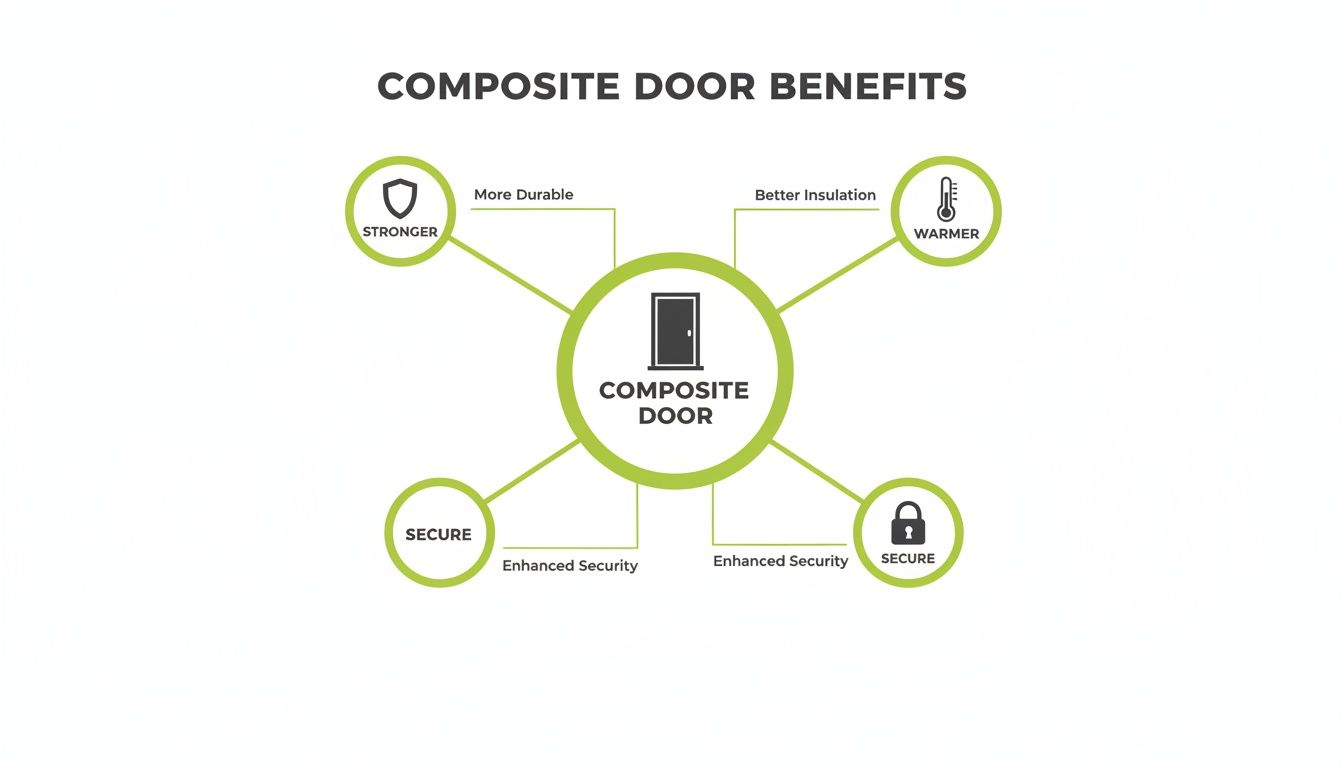
As you can see, it's this combination of specialist materials that results in a front door that's stronger, warmer, and far more secure.
The first thing you see and touch is the outer skin, which acts as the door's primary shield against the elements. This is almost always made from Glass Reinforced Plastic (GRP), better known as fibreglass.
There's a reason it's the same material trusted for the hulls of boats and the bodywork of high-performance cars. It’s incredibly tough, designed to shrug off dents, scratches, and the very worst of the British weather—from driving rain in Manchester to the salty coastal air near Hull.
Crucially, the colour isn’t just a surface layer of paint. It's embedded right through the GRP itself, so it can't chip, flake, or peel. This means your door will look fantastic for years to come with nothing more than a simple wipe-down. No more sanding and repainting every few years.
Beneath that rugged exterior lies the real heart of the door's performance: its core. This is a solid, high-density polyurethane foam, engineered for one primary purpose—insulation.
Think of this core as the insulation in a premium thermal flask. It's purpose-built to stop heat from passing through it, keeping your home warm through a bitter Newcastle winter and helping it stay cool during a summer heatwave.
This is what makes a composite door a champion of energy efficiency. By creating such a formidable thermal barrier, it stops heat from escaping your home, which helps reduce your energy use and, ultimately, your heating bills. The sheer solidity of the core also adds massively to the door's strength and provides excellent soundproofing.
Holding the whole assembly together is a sturdy internal frame, often made from engineered timber or a modern composite sub-frame. This structural skeleton is absolutely vital for the door's long-term stability and performance.
Its main job is to prevent the door from twisting, bowing, or warping as temperatures and humidity fluctuate through the seasons. This guarantees a perfect, snug fit in the frame year after year, completely eliminating draughts and ensuring it always opens and closes smoothly.
Let's take a look at how these materials come together in a typical composite door.
This table summarises the key components we've just discussed, highlighting the role each material plays in the door's overall performance.
| Component | Primary Material | Key Benefit |
|---|---|---|
| Outer Skin | Glass Reinforced Plastic (GRP) | Weather resistance and colour stability |
| Inner Core | Polyurethane Foam | Thermal insulation and soundproofing |
| Internal Frame | Engineered Timber/Composite | Structural stability and warp prevention |
Each layer works in harmony with the others, creating a final product that is far greater than the sum of its parts. This robust construction, which you can explore in the specs of our full product range, also provides the immense strength needed to support today’s advanced multi-point locking systems, giving you complete peace of mind.
Of course, a new door needs to look great and keep your home secure. But one of the biggest, and often overlooked, benefits of a composite door is its incredible ability to keep your home warm and your energy bills in check. We’re not just talking about a minor improvement here; this is a core advantage built right into the door's DNA.
Think of that dense polyurethane foam core we talked about. It acts like a high-performance winter coat for your home. During a chilly winter in Leeds or York, an old or poorly insulated door lets your expensive central heating leak straight outside. A composite door does the exact opposite. That solid core creates a powerful thermal barrier, trapping warmth inside your living room where it belongs. The result is a much cosier home, even when the weather is doing its worst.
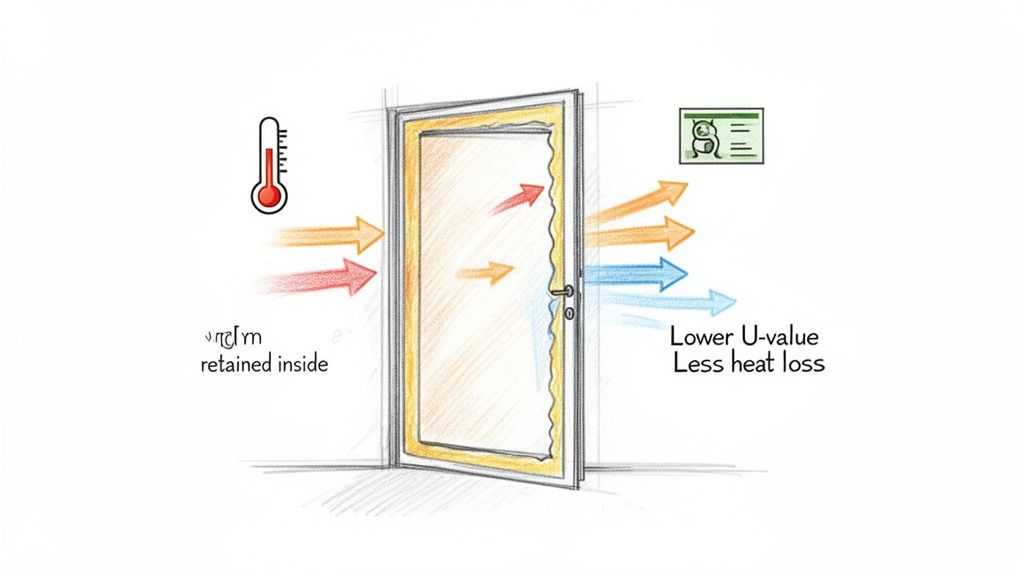
When you're looking at windows and doors, you'll often hear the term U-value. It sounds technical, but the idea behind it is actually very simple. A U-value is just a measure of how easily heat can pass through a material.
The only thing you really need to remember is that a lower U-value is better. A low U-value means very little heat is escaping, which points to fantastic insulation. A high U-value means heat is pouring out, leading to a colder home and wasted energy.
This is where composite doors really pull ahead of the pack. They are specifically engineered to achieve exceptionally low U-values, often performing far better than the minimum standards set by UK Building Regulations. For homeowners in colder areas like Newcastle, this makes a real, tangible difference.
So, how does a modern composite door compare to the other options you might be considering?
Timber Doors: A classic solid wood door can look wonderful, but its thermal performance is often a weak point. Over the years, wood can warp or shrink, creating tiny gaps that cause draughts and let heat out. Their natural U-value is almost always higher than a quality composite.
uPVC Doors: While standard uPVC doors are a step up from old wooden ones, their hollow or chambered construction just can't compete with the solid, dense core of a composite door when it comes to stopping heat transfer.
This superior insulation has a direct impact on your bank balance. By keeping so much more heat inside, your boiler doesn't have to fire up as often or work as hard to keep your home comfortable. This means lower energy consumption and cheaper heating bills, year after year, making a composite door a very shrewd long-term investment.
It's a popular strategy, too—for older properties, many homeowners look to improve overall thermal efficiency by pairing a new front door with solutions like secondary glazing for their windows.
Anyone living in the UK, from the rolling hills of Yorkshire to the coast, knows our weather is nothing if not unpredictable. Your front door faces it all, day in and day out. It needs to look fantastic the day it’s installed, but more importantly, it has to keep looking that way for decades to come. This is where the sheer durability of a composite door really proves its worth, offering genuine long-term value and total peace of mind.
The secret is all in the materials. Think about a traditional painted timber door. Over time, it's almost guaranteed to chip, flake, or peel, demanding constant upkeep. A composite door, on the other hand, has its colour baked right into its outer skin. This GRP (Glass Reinforced Plastic) layer isn't just painted on top; the colour is an integral part of the material itself.
This means it won’t fade under years of harsh summer sun or need laborious sanding and repainting. It’s engineered from the ground up to resist the scuffs and knocks of daily life, keeping your entrance looking sharp.
This tough exterior is your home’s first line of defence against driving rain and howling winds, forming an impenetrable barrier that stops moisture from ever reaching the door's inner core. To achieve this, composite doors use advanced, stable materials, taking cues from the performance of high-end exterior products like accoya cladding, which is renowned for its incredible longevity against the elements.
We’ve all experienced it. That one wooden door in the house that swells up and sticks in its frame every damp winter, only to shrink in the summer, leaving frustrating, draughty gaps. It’s a constant battle with the seasons that many homeowners know all too well.
A composite door’s multi-layered construction is specifically designed to eliminate this problem. The solid internal frame provides immense structural rigidity, while the inert materials of the skin and core are not susceptible to moisture absorption in the same way timber is.
This inherent structural stability means your door will hold its perfect shape and fit, year after year, whatever the weather decides to do. It will continue to open and close with a satisfyingly smooth action, never jamming or letting cold air sneak inside. This absolute reliability is a cornerstone of what makes a composite door such a smart investment for any British home.
The robust, weatherproof design of a composite door brings real, tangible advantages that save you time, money, and hassle in the long run.
Your front door is the single most important barrier protecting your home. While looks and insulation matter a great deal, they’re secondary to robust, reliable security. This is where the very nature of a composite door shines, offering a level of protection that older uPVC and timber doors simply can't match.
The strength is built right into its DNA. The answer to what are composite doors made of is the first clue to their security credentials. That dense, multi-layered core creates an incredibly rigid and solid door slab that is exceptionally resistant to brute-force attacks like kicking or ramming.
Real security isn’t about a single lock; it’s about an entire system working in harmony. A composite door is designed from the ground up to be a complete security package, where every part supports the others to create a truly formidable defence.
The star of the show is the locking mechanism itself.
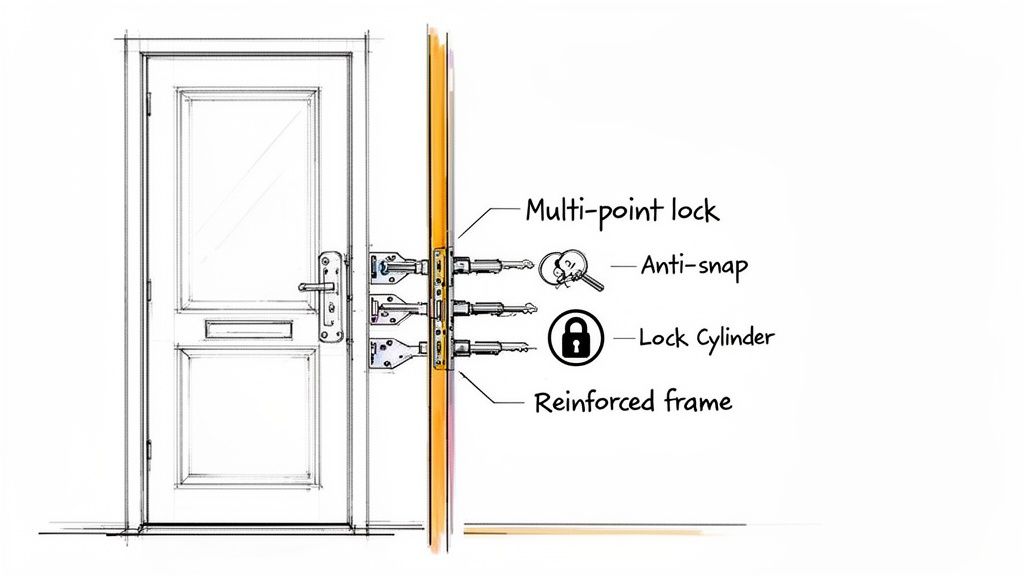
At the heart of it all is a multi-point locking system. This isn't your grandad's single deadbolt. When you turn the key or lift the handle, a series of heavy-duty steel hooks and bolts shoot out from the door's edge and lock securely into the frame at the top, middle, and bottom.
This simple but powerful action anchors the door to its frame, making it almost impossible for an intruder to pry it open. For homeowners anywhere, from bustling city centres in Sheffield and Manchester to quieter suburbs, that solid clunk offers priceless reassurance.
Beyond the main locking mechanism, several other pieces of hardware work together to defeat common break-in methods. These aren’t afterthoughts; they’re integral parts of the door’s design.
You’ll find key features like these on any high-quality composite door:
From its solid core right through to the last screw, every element is chosen with one goal in mind: giving you total confidence that your home is safe and sound.
The same clever engineering that gives you all that strength and warmth also opens up an incredible world of aesthetic choice. This means you never have to choose between performance and appearance. Whether your home is a brand-new build in Manchester or a traditional stone cottage in the Yorkshire dales, there’s a composite door design that will feel like it was made just for it.
Composite doors are the ultimate chameleons. The GRP skin isn't just tough; it can be moulded into a huge variety of styles. We can create timeless designs that perfectly echo the classic elegance of Victorian and Georgian timber doors, or sleek, minimalist styles for sharp, contemporary homes.
The finish is just as adaptable. You can pick from a massive spectrum of colours, from bold and modern greys to soft, welcoming heritage greens. And if you love the natural beauty of wood, you can choose an authentic woodgrain finish. They mimic oak or rosewood so closely it’s almost impossible to tell the difference, but you get to skip all the sanding, painting, and headaches that come with real timber.
One of the best things about composite doors is that all this design flexibility never comes at the cost of security or efficiency. The core performance is baked in, no matter which style you choose.
Letting some light into your hallway can completely transform the space, but with many older doors, adding glass meant creating a weak spot. That’s not the case here. With a composite door, the glazing units are incredibly secure and just as thermally efficient as the solid parts of the door.
You can really put your own stamp on your door with a whole range of glazing options:
Whether you go for a small, classic diamond pane or a large, modern rectangular panel, the glass is securely fitted as a double or even triple-glazed unit. If you're keen to see how modern glazing can elevate your whole home, take a look at our guide on high-performance windows and composite doors.
When you're looking to invest in a new front door, you'll naturally have a few questions. It’s a big decision. To help you choose with confidence, we've put together answers to some of the most common queries we hear from homeowners considering a composite door.
In almost every key area, the answer is yes. While uPVC doors are a perfectly good, cost-effective choice for many, composite doors simply outperform them where it matters most: thermal insulation, security, and sheer strength, all thanks to their clever, layered build.
Their Glass Reinforced Plastic (GRP) skin is also far tougher against dents and scuffs, and it achieves a premium, authentic wood grain finish that uPVC can't quite match. For homeowners looking for the very best in long-term performance and durability, especially for projects in areas like Glass Balustrades Yorkshire, a composite door is an investment that pays dividends. It's built to last while keeping your home warmer and more secure.
A high-quality composite door is engineered for a long life, designed to last 30 to 35 years – and often even longer with a little bit of care. The robust materials used in its construction are highly resistant to weathering, warping, and fading.
Unlike traditional timber doors that demand regular painting and varnishing to stop them from deteriorating, a composite door needs next to no attention. This makes it a brilliant, low-maintenance choice for any home, providing real value for decades to come.
The final price tag for a composite door can vary quite a bit, depending on the style, glass, and hardware you go for. As a rule of thumb, they are more of an initial investment than a standard uPVC door but are typically more affordable than a premium solid hardwood door.
It’s helpful to see this not just as a cost, but as a long-term investment in your property. The significant energy savings from a properly insulated composite door will help offset the initial price over its long and reliable lifespan.
Composite doors are famous for being incredibly low maintenance. For most people, a simple wipe-down with a soft cloth and some warm, soapy water is all that’s ever needed to keep the door looking as good as new.
The hardware, like hinges and locks, might benefit from a quick spray of lubricant once a year just to keep everything operating smoothly. This simplicity is a huge plus for busy families who want great looks without the constant upkeep that other materials demand. It’s one of the main reasons they’ve become a top choice for homes right across the North of England, whether you're looking for solutions for Glass Balustrades Newcastle or updating a property elsewhere.
At Glass Tech, we specialise in providing and installing high-performance composite doors that elevate the style, security, and energy efficiency of your home. If you're ready to upgrade your entrance, explore our stunning range at hgwsolutions.co.uk.

A professional team of experts providing glass and glazing solutions covering the whole of Yorkshire & more...
Whether it's Leeds, York, North Yorkshire, Birmingham, Hull, Liverpool, Machester, Newcastle or Nottingham, get in touch to find out how we can help you with your bespoke glass project.