
If you’ve spotted those dark, unsightly patches of mould appearing around your windows, you’re not alone. It’s a battle many UK homeowners face, especially during the colder, damper months. The culprit is almost always one thing: condensation.
When the warm, moist air inside your home hits a cold window pane, the moisture turns back into water droplets. Give it a bit of time, and that damp windowsill becomes the perfect breeding ground for mould. The good news is that it’s an entirely solvable problem, and it all starts with understanding why it’s happening in the first place.
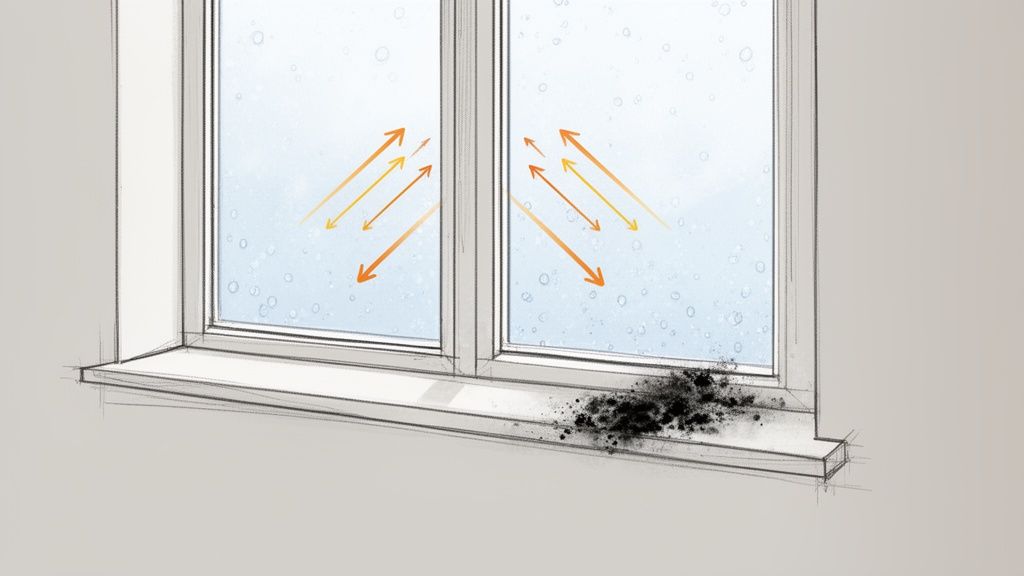
Seeing black mould crop up can be alarming, but it’s an incredibly common issue right across the UK. Whether you’re in a modern flat in Manchester or an older property in Yorkshire, windows are natural hotspots for this unwelcome guest.
The reason is simple. Your windows are often the coldest surfaces in any given room.
When the warm, damp air we create just by living – breathing, cooking, showering – drifts over and makes contact with that cold glass, it cools down fast. This change in temperature forces the moisture out of the air and onto the glass and sill as condensation.
Mould spores are everywhere, all the time, just floating in the air. They’re simply waiting for the right conditions to land and grow. A damp, dusty windowsill is the perfect invitation.
This isn’t just a cosmetic issue you can paint over. It’s a red flag signalling a moisture imbalance in your home. If you ignore it, that mould can start to damage your window frames, rot plaster, and release spores that impact your indoor air quality.
Here's a breakdown of immediate actions you can take to fight mould growth, from daily habits to long-term fixes.
| Action | Impact on Mould | Best For |
|---|---|---|
| Wipe Sills Daily | Removes the moisture mould needs to grow. | All homes, especially during autumn and winter. A crucial daily habit. |
| Ventilate Rooms | Replaces damp indoor air with fresh, drier air. | Kitchens and bathrooms after use; bedrooms in the morning. |
| Maintain Steady Heat | Keeps surfaces (like glass) warmer, reducing condensation. | Homes that get very cold overnight. Even low, consistent heat helps. |
| Improve Glazing | Creates a much warmer internal pane of glass. | Properties with single glazing or old, failed double-glazing units. |
Tackling window mould is about being consistent with these small actions, which collectively make a huge difference.
Getting to the root of the problem is the only way to stop it for good. There are three key factors at play here:
Surface Temperature: This is the big one. Single-glazed windows or old, inefficient double-glazing units get incredibly cold in winter. It’s this stark temperature difference between the glass and the air in your room that triggers condensation.
Indoor Humidity: We produce a surprising amount of moisture in our homes. In fact, a family of four can generate several litres of water vapour every single day just by going about their normal lives.
Poor Air Circulation: Stagnant air is a problem. It lets humidity build up in pockets, especially around windows where heavy curtains or blinds can trap damp air right up against the cold glass.
By tackling these root causes with a smart combination of ventilation, heating, and simple cleaning routines, you can make your windowsills a place where mould simply can’t survive.
Sometimes, the problem isn’t your habits but the window itself. If a double-glazed unit has failed (you might see condensation between the panes), no amount of wiping will fix the cold surface. In these cases, professional glass replacement is often the most effective long-term solution.
Looking beyond just your windows can also be a massive help. Getting a handle on your home’s overall moisture levels is key, and you can learn more about how to avoid mold in your home and damp buildings with some broader strategies.
When it comes to stopping mould, good ventilation is your first and most powerful tool. It’s all about a simple exchange: swapping out the warm, damp air inside your house for the fresher, drier air outside. This isn't just a case of cracking a window now and then; it’s about building smart, consistent habits to manage your home's environment.
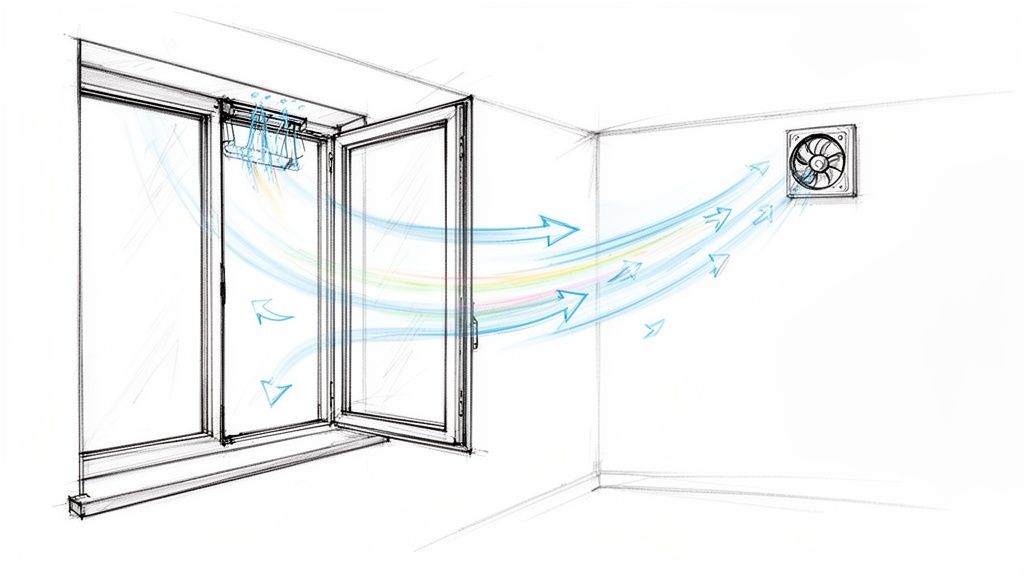
Everyday life—cooking, showering, even just breathing—pumps a surprising amount of moisture into the air. If that humid air has nowhere to escape, it will find the coldest spot in the room to settle on. Nine times out of ten, that's your window panes, where it condenses into the very water droplets that black mould needs to thrive.
One of the most effective, zero-cost strategies for preventing mould around windows is a technique I always recommend called 'purging'. This just means fully flushing out the air in a room by opening windows wide for a very short, sharp burst.
I’ve seen this work wonders time and time again. Think of a family in a typical Leeds terrace who were plagued by streaming condensation on their bedroom windows every winter. They started a simple routine: every morning after waking up, they’d throw all the upstairs windows wide open for just 10-15 minutes. This simple act was enough to expel the humid air that had built up overnight, drastically cutting condensation and stopping the mould dead in its tracks.
You should get into the habit of purging the air after any moisture-heavy activity:
A common mistake is leaving windows on the latch all day during winter. This does very little for humidity but does a great job of making your home cold and forcing your heating to work overtime. A short, sharp purge is far more efficient.
For day-to-day background airflow, many modern windows come fitted with trickle vents. These are the small, slatted vents you see in the frame. They are designed to be left open to provide constant, gentle ventilation without creating a noticeable draught. People often close them to stop a draught they can't even feel, but in doing so, they're starving the room of fresh air and trapping moisture inside.
Extractor fans in kitchens and bathrooms are just as essential. They are your active defence, designed to physically pull damp air out of the building before it gets a chance to wander into other rooms. Always switch them on when you're cooking or showering, and make sure they are properly ducted to vent outside, not just recirculating stale air. Getting your airflow management right is a fundamental step in keeping homes from Newcastle to Manchester dry and free from mould.
While good ventilation is essential for swapping out damp air, how you heat your home is just as important in stopping moisture from settling in the first place. The real secret lies in managing the temperature of your home's internal surfaces, especially your windows.
It’s a common mistake to think that blasting the heating for an hour or two will solve the problem. In fact, this can often make things worse. A short, intense burst of heat warms up the air, allowing it to hold a lot more moisture. But as soon as the heating clicks off and the house begins to cool, that heavily moisture-laden air finds the coldest surface available—usually your windows—and deposits all its water content as condensation.
A much better approach to keeping window mould at bay is to maintain a low, consistent background temperature. By aiming to keep your home from dropping below 14-15°C, even overnight, you help keep the internal surfaces, including your window panes, that little bit warmer.
This small but constant temperature difference is often all it takes to prevent condensation from ever forming. Think of it like taking the chill off a glass just out of the fridge; a warmer surface gives moisture nowhere to stick. This strategy is particularly effective in older properties, like many we see across Yorkshire and Newcastle, which tend to lose heat more quickly.
Maintaining a steady, low heat is more energy-efficient and effective against damp than the boom-and-bust cycle of high heat followed by a deep cold. It's about keeping surfaces just warm enough to stay dry.
Beyond just heating, getting to grips with the wider strategies to help prevent damp and condensation in your home is vital for long-term prevention.
Proper insulation and effective heating go hand-in-hand. Good quality loft and wall insulation acts like a blanket for your house, dramatically slowing down heat loss and, in turn, keeping your internal wall surfaces warmer. This directly combats the cold spots where damp patches and mould love to appear.
Of course, your windows are a huge part of this equation. Old, single-glazed panes are notorious 'cold bridges' that can undo all the good work of your heating system. The inner pane of glass will always be close to the outside temperature, making it a prime target for condensation. This is why, for a permanent fix, upgrading your glazing is the ultimate solution. High-quality modern windows and composite doors create a robust thermal barrier, keeping the inner pane of glass significantly warmer and effectively eliminating the cold surface where mould begins its life.
One final tip: be mindful of your curtains. While heavy thermal curtains are brilliant for insulation, it’s important to pull them back fully during the daytime. If left drawn, they can trap a pocket of cold, damp air against the glass, creating the perfect microclimate for mould to thrive overnight.
Getting your heating and ventilation sorted is a massive step, but the real secret to keeping mould from ever coming back is building a few simple habits into your routine. This is about being proactive, not reactive.
These small, consistent actions stop mould in its tracks by taking away the one thing it needs most: moisture. It’s how you win the war before the first battle even begins.
It’s just a matter of making a few small tasks a non-negotiable part of your household chores. Think of it as creating a permanent defence against damp.
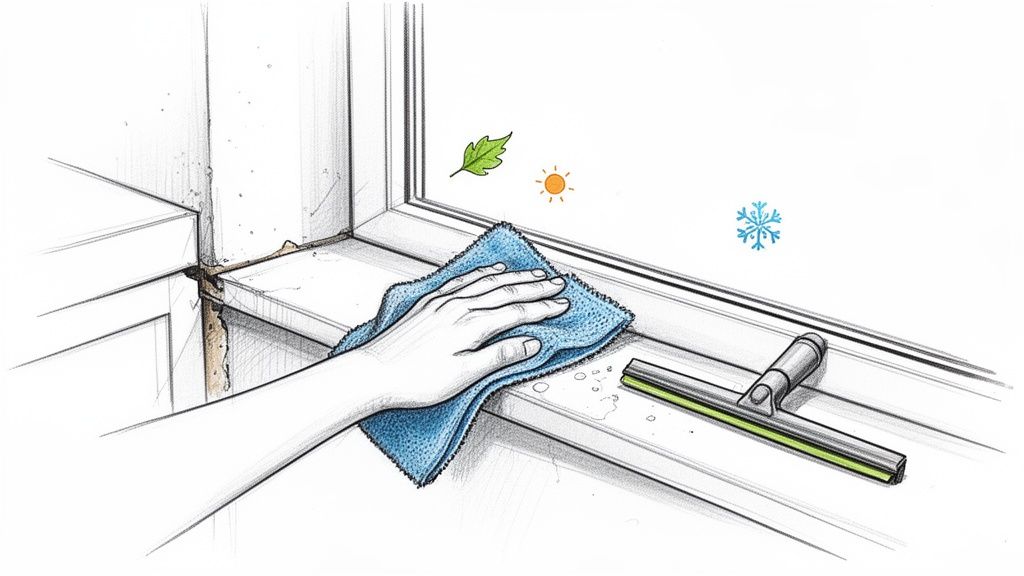
If you only adopt one new habit, make it the morning wipe-down. That condensation you see on your windows every morning is a drinking fountain for mould spores. Cut off their water supply, and they simply can't grow.
Each morning, get into the rhythm of wiping all the moisture from the glass and sills. I find a cheap window squeegee works wonders—just a few quick passes, then a final wipe with a dry microfibre cloth to catch any drips. This two-minute job makes a world of difference.
Also, have a quick look at where your furniture is placed. Air needs to move freely, especially along cooler external walls where damp loves to settle. Try to leave a gap of at least 10cm between big items like sofas or wardrobes and any outside wall. This prevents those stagnant, damp air pockets where mould thrives unseen.
Think of your home as a living, breathing space. Proactive maintenance is about ensuring it can breathe properly. A daily wipe-down and smart furniture placement are like daily vitamins for a healthy, mould-free home.
To stay ahead of the game all year round, a seasonal checklist is your best friend. Different seasons throw different challenges at your home, and this approach ensures nothing gets forgotten—something homeowners across the north of the UK, from Newcastle to Yorkshire, know all too well.
Are you constantly wiping down windows and fighting back black mould, only for it to reappear? If your best efforts at ventilation and cleaning feel like a losing battle, it’s a strong sign the problem isn't your routine—it’s the windows themselves. When the daily mop-up stops being effective, it’s time to look at a permanent fix.
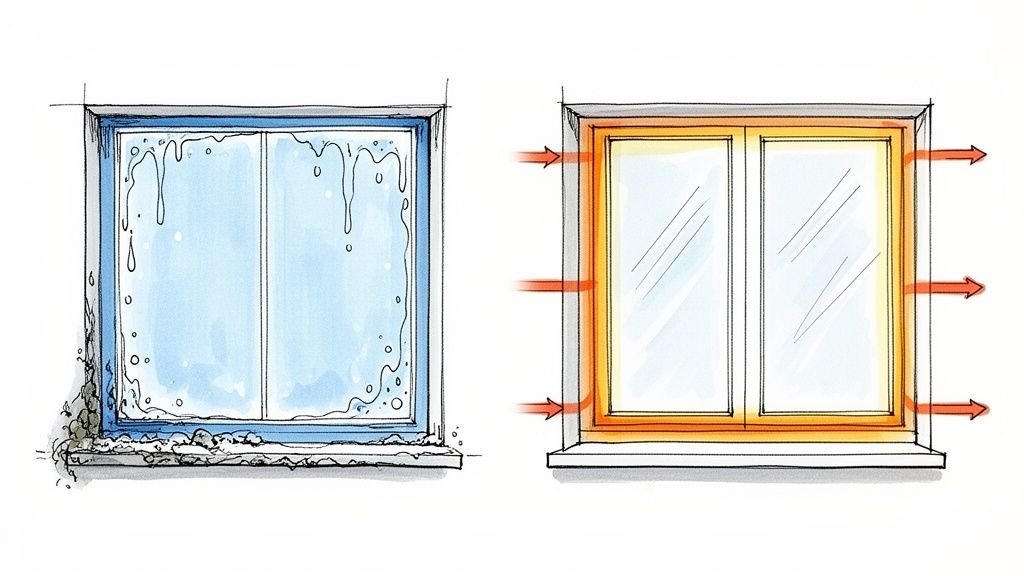
The first step is learning to spot the tell-tale signs that your glazing is past its prime. With older double glazing, the most obvious red flag is condensation trapped between the two panes of glass. This is what we in the trade call a ‘blown’ or ‘failed’ unit.
That internal fogging means the airtight seal has broken and the insulating gas (usually argon) has escaped. Once that happens, the window loses most of its thermal efficiency, leaving the inner pane almost as cold as single glazing and a prime surface for condensation to form.
It’s not just misting between the panes that signals an issue. Keep an eye out for these other clear indicators:
Here in the UK, particularly across Yorkshire where we see so many beautiful older homes, poorly performing windows are a leading cause of damp and mould. For properties in areas like York and Harrogate, installing secondary glazing is often the perfect fix. It adds a crucial second barrier of glass, creating an insulating air gap that drastically reduces condensation without altering the building’s original character.
When you’ve exhausted the DIY options, a professional glazing upgrade is the only way to stop the cycle for good. You have two main routes to go down.
For many homeowners, especially those in listed buildings or conservation areas, secondary glazing is a fantastic choice. The process involves fitting a slim, discreet second window inside your existing one. This creates a large, sealed air gap that acts as a powerful insulator.
Secondary glazing is a highly effective and often more cost-efficient solution. It dramatically improves thermal performance while preserving the external appearance of a property, making it a go-to choice for period homes.
The other route is a full window replacement. Modern A-rated double or even triple-glazed units are engineered to keep the inner pane of glass significantly warmer. By eliminating the cold surface condensation needs to form on, they stop mould at its source.
While it’s a larger upfront investment, a full replacement is a permanent solution. It not only solves the mould problem but also cuts energy bills, reduces outside noise, and improves your home's comfort and value—making homes from Newcastle to Manchester warmer, drier, and healthier.
Even after you've got a handle on the causes of condensation, some specific questions almost always come up. We get asked these all the time by homeowners, so we've put together some straightforward answers to help you tackle any lingering doubts.
For small patches—we're talking less than a square metre—you can absolutely tackle it yourself. The key is to do it safely. You must wear protective gear: rubber gloves, safety goggles, and a proper FFP3-rated face mask to stop you from breathing in spores.
Use a dedicated mould and mildew spray, or a simple solution of one part bleach to four parts water. Here’s a critical tip we always give: never dry-scrub or brush mould. This just sends a cloud of invisible spores into the air, making the problem worse. If the mould covers a large area, or if anyone in the house has asthma or other respiratory issues, don't take the risk. It's much safer to call in a professional cleaning service.
A dehumidifier is a fantastic tool for managing the symptoms of a damp home. It physically pulls moisture out of the air, which is exactly what you want. They make a real difference, especially in rooms that always feel a bit damp or don't have great airflow.
But it's crucial to realise a dehumidifier only deals with the effect (the damp air), not the cause. If the root of your problem is a cold surface, like old single-glazed windows or failed double glazing, that cold spot will still be there, and condensation will keep forming on it.
Think of a dehumidifier as supportive care, not a cure. Use it alongside better ventilation and heating, but for a permanent fix, you really need to address the reason the window is so cold in the first place.
This is a really common and frustrating one. It usually means your new windows are doing their job perfectly. Modern A-rated windows are incredibly airtight to stop draughts, but this also means they trap moisture inside your home that used to escape through older, leakier frames.
That condensation and mould you’re seeing is caused by everyday moisture—from breathing, cooking, and showering—that now has nowhere to go. The solution is all about managing the air inside your home. You have to be more proactive:
It's a classic case of new, efficient products requiring a slight change in habits to get the best results.
The single biggest giveaway of a 'failed' or 'blown' double-glazed unit is moisture trapped between the two panes of glass. You’ll see it as a persistent mist, fog, or even water droplets that you simply can't wipe away from the inside or the outside.
This is a clear sign the airtight seal around the edge of the unit has broken. When that happens, moist air gets in, and the insulating gas (usually argon) escapes. The unit loses its thermal efficiency, making the inner pane of glass much colder and a magnet for condensation, which quickly leads to mould on the frames and seals. If you see this, it’s a definite sign the glass unit needs replacing.
At Glass Tech, we specialise in providing permanent solutions to condensation and mould problems. From high-performance secondary glazing for period properties to full window replacements, our team helps homeowners across Yorkshire, Newcastle, and the North create warmer, drier, and healthier homes.
Get in touch today for expert advice on upgrading your glazing.

A professional team of experts providing glass and glazing solutions covering the whole of Yorkshire & more...
Whether it's Leeds, York, North Yorkshire, Birmingham, Hull, Liverpool, Machester, Newcastle or Nottingham, get in touch to find out how we can help you with your bespoke glass project.