
Picture a classic Yorkshire home, maybe a Tudor cottage tucked away in the Dales or a proud Edwardian terrace in Leeds. What often gives these properties their soul? It’s frequently the intricate beauty of a lead glass window. This isn't just a pane of glass; it’s a piece of living history, a handcrafted feature that defines a home's character. For homeowners who love their property’s heritage but also want the comforts of modern living, getting to grips with these windows is essential.
So, what exactly is a lead glass window? Often known as a ‘leadlight’, it's a decorative window built from many small pieces of glass held together by lead strips. While we often think of stained glass with its vibrant colours, leaded lights are frequently made with clear, textured, or bevelled glass. The artistry comes from creating elegant patterns through geometric shapes and lines, a hallmark of British architectural history that adds undeniable charm and kerb appeal.
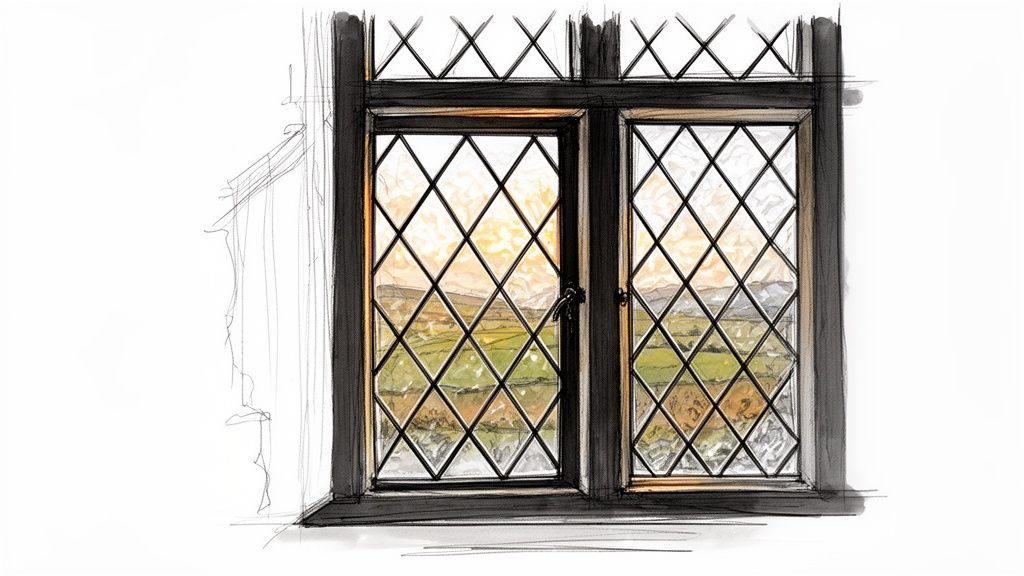
The construction is a traditional craft. Each piece of glass is carefully fitted into H-shaped lead channels, which are known as cames. It's a bit like putting together a jigsaw puzzle, where the lead cames form the outlines holding everything securely. The joints are then soldered, creating a single, strong panel. It's this time-honoured skill that gives leaded windows their enduring, artisanal quality.
For homeowners right across the North of England, from Newcastle down to Sheffield, these windows are much more than a way to let in daylight. They are a direct link to the past and a defining feature of a property’s personality.
"People are realising that stained glass isn’t confined to factory-produced doors or ornate church windows. Instead, we’re seeing it used in modern spaces, which speaks to its timeless appeal.” - Debbie Bean, Stained Glass Artist.
This idea absolutely applies to leaded lights, too. They represent a blend of artistry and function that has been prized for hundreds of years, and deciding how to preserve or thoughtfully upgrade them is a common challenge for discerning property owners.
This guide is for homeowners ready to tackle that challenge. We’ll walk you through everything you need to know about your lead glass windows, covering all the crucial points:
Whether you’re looking at a sensitive repair for a period property in Harrogate or wondering how to bring a leaded design into a newer home, this guide will give you clear, practical advice. With our expertise in bespoke glass projects across Yorkshire and Newcastle, we can help you keep the timeless charm of leaded glass while bringing your home up to today’s standards of comfort and performance.
The story of the leaded glass window isn’t just about architecture; it’s woven into the very fabric of British history. We see its grandest expressions in the soaring, jewel-toned windows of cathedrals like our own York Minster, telling biblical stories in light and colour. These were staggering displays of wealth and devotion.
But the journey of leaded glass into the everyday home had far more practical beginnings. For centuries, glass was an eye-wateringly expensive luxury. Most homes made do with simple wooden shutters or even oiled cloth to keep the weather out. So, when glass did become available for domestic use, it was in small, often uneven pieces. The simple, effective technique of joining them with lead cames was the only way to create a larger window panel.
The 17th century brought a seismic shift that would change the face of British homes forever. In the late 1600s, an English glassmaker named George Ravenscroft perfected a new formula for what he called 'flint glass'. By adding lead oxide to the mix, he created a remarkably stable, brilliant, and clear material that we now know as lead crystal. To explore this key moment in more detail, you can read about the development of early modern glass in England.
Ravenscroft's innovation was a game-changer, putting English glassmaking leagues ahead of its European rivals. Suddenly, larger and clearer window panes were possible. This had a profound impact on architecture, allowing the solid, stone-built houses you see across Yorkshire—from Leeds to Harrogate—to be designed with bigger windows, flooding their interiors with natural light in a way that was previously unimaginable.
While larger, single-pane sash windows dominated the Georgian era, the traditional leaded window came roaring back into fashion in the late 19th and early 20th centuries. This revival was powered by the Arts and Crafts movement, which celebrated traditional skill and handcrafted beauty as a rebellion against industrial mass production.
The interplay with light is fascinating—it offers privacy at night and a kaleidoscope of colours when the light shines through. With such a wide range of glass choices, I get to explore not just colours, but also opacities, textures, and even create my own glass. The possibilities are endless.
This period saw an explosion of decorative leaded lights in the new suburban homes popping up during the Victorian and Edwardian building booms. Simple diamond patterns gave way to more ornate and expressive designs, often featuring:
Today, these windows are a cherished feature in period properties right across the North, from terraced houses in Sheffield to grand villas in Ilkley. They are more than just a way to let in light; they're a direct link to the tastes and craftsmanship of a bygone era, and a vital part of our shared architectural heritage.
To properly look after a period feature like a leaded window, it helps to understand how it was put together. These windows aren't just single panes of glass; they are intricate mosaics, where the real artistry lies just as much in the construction as it does in the final pattern. Getting to know the materials and styles will help you speak confidently with specialists about any repairs or restoration work.
First, let's clear up a common question: what's the difference between ‘leaded lights’ and ‘stained glass’? While both are types of leaded windows, the terms usually point to different looks. ‘Stained glass’ typically brings to mind the vibrant, colourful scenes you’d find in a church. ‘Leaded lights’, which are far more common in homes, generally use clear or subtly textured glass, creating a pattern from the lead lines themselves.
The fundamental part holding the whole window together is the lead came. You can think of it as the window's skeleton. These are soft, flexible strips of lead, most often with a cross-section shaped like an 'H' or a 'U'.
Each small piece of glass is carefully cut to shape and fitted within this lead framework. Where the lead cames meet, the joints are soldered together to form a strong, single panel. To finish, a waterproofing cement is pushed into the small gaps between the glass and the lead, which not only keeps the weather out but also stops the glass from rattling. It's this painstaking, traditional process that gives a leaded window its unique character.
The design of your leaded glass can be a fantastic clue to the age of your house. Different eras had their own distinct tastes, many of which are still on display in homes right across Yorkshire and the North.
Leaded glazing dominated UK windows through the 17th and 18th centuries, with casement designs featuring lead strips holding small panes remaining the choice for over 75% of households outside the elite. In Yorkshire's stone-built homes from York to Leeds, these leaded lattices were set into timber mullions, allowing larger glazed areas that flooded interiors with natural light. You can learn more about this distinct English trend by exploring the history of windows and glass.
While those early lattice styles were common, the most decorative examples we see in homes today often come from later, more flamboyant periods.
Common UK Leaded Window Styles:
Knowing the style of your leaded window is the first step toward appreciating its heritage. This isn't just for interest's sake; it’s vital when you’re thinking about repairs or commissioning new work. It ensures any changes are historically sympathetic to your home, whether you're in a Harrogate conservation area or a Sheffield suburb.
If you own a home with original leaded glass, you’ll eventually face a big decision: should you conserve the windows or replace them? It’s a classic dilemma, weighing the authentic charm of the past against the performance demands of today. There’s no single right answer, and the best path forward really depends on your window’s condition, your property, and what you hope to achieve.
Essentially, conservation is all about preserving the original window. This approach focuses on skilled repair, aiming to keep as much of the authentic glass and leadwork as possible. Replacement, on the other hand, usually means upgrading to a brand-new, high-performance window that incorporates the traditional design, often by encapsulating the original leaded panel.
For many homeowners in heritage-rich areas like Yorkshire and across the North, conservation is the natural first choice. The goal is to fix problems like rattling panes, cracked glass, or bowing leadwork while keeping the window’s soul intact.
Common conservation repairs we handle include:
Understanding the craftsmanship involved in preserving historic joinery and glass is key. Looking into broader practices like sash window restoration can offer valuable insight into the level of skill required to properly care for period features.
Sometimes, however, conservation just isn’t practical or doesn’t deliver the comfort and efficiency a homeowner needs. A modern replacement can be the better option if the original window is severely damaged or if your main priority is to maximise thermal performance.
This is a decision that has to be made with care, especially when you consider the history involved. Many surviving pre-1600 fragments are incredibly precious, as Puritan iconoclasm under Cromwell destroyed an estimated 90-95% of England’s medieval stained glass.
The most popular modern solution we offer is encapsulation. This is where your original leaded panel is carefully removed, restored, and then sealed inside a new double-glazed unit. The result is a triple-glazed system that preserves the authentic design while offering superb insulation and security. If your original panels are simply beyond repair, we can create a beautiful new leaded design from scratch to match the original style. You can find out more in our guide to professional glass replacement services.
This flowchart helps visualise the choices you face.
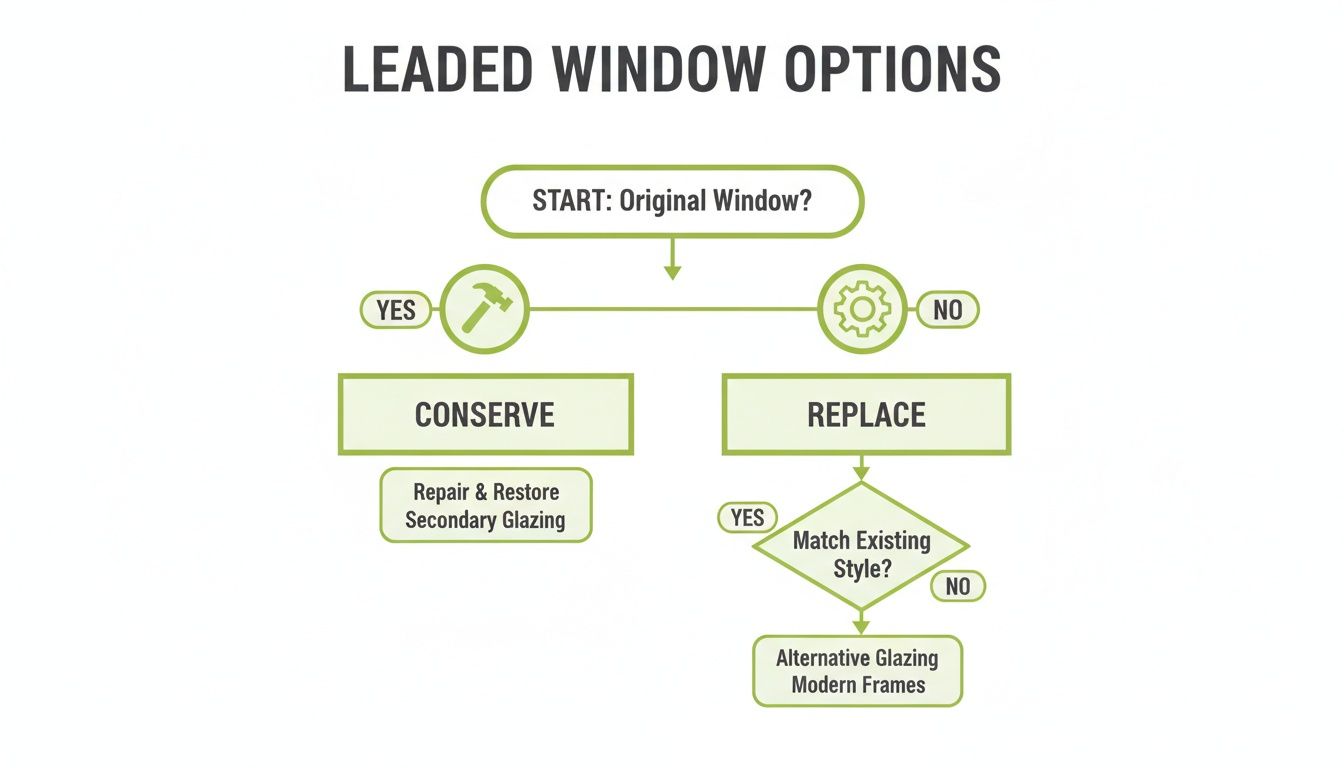
As you can see, the path you choose depends on weighing up factors like the window's current condition against your needs for modern performance.
For many properties in York, Newcastle, or designated conservation areas, your decision might be made for you by strict regulations. If your home is a listed building, you will almost certainly need Listed Building Consent for any alterations, and the official stance will be firmly on repair and conservation first.
Even if your home isn't listed but is located within a conservation area, you may face restrictions under an Article 4 Direction. This removes normal permitted development rights for things like window replacement, meaning you’ll need planning permission.
Always check with your local council's conservation officer before you plan any work. They can give you essential advice and make sure your project complies with all heritage laws. Getting it right from the start will protect both your home’s unique character and its long-term value.
There's no denying the historic charm of a traditional lead glass window, but living with single glazing can often be less than romantic. Draughts, high energy bills, and poor sound insulation are the all-too-common reality. Fortunately, you don't have to choose between period character and modern comfort; the right glazing solutions can bring 21st-century performance to your home without compromise.
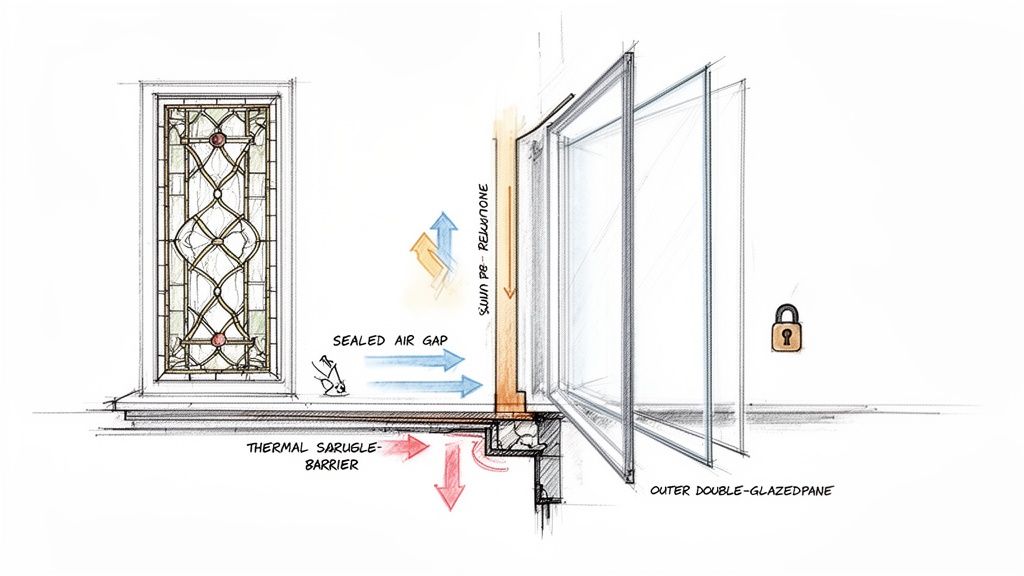
The trick is to upgrade your windows in a way that respects their original beauty while tackling these performance issues. For homeowners across Yorkshire and the North, two outstanding methods stand out: encapsulation and secondary glazing.
Encapsulation is a fantastic technique that marries old-world artistry with modern thermal efficiency. Picture your original leaded panel, with all its unique character, being carefully restored by craftsmen and then hermetically sealed inside a brand new, high-performance double-glazed unit. The final product is, in effect, a triple-glazed window.
This process gives your property a comprehensive upgrade on all fronts:
By preserving the original lead glass at the heart of the new unit, encapsulation lets you keep the authentic aesthetic that's so central to your home’s character, all while enjoying the full benefits of modern glazing technology.
Encapsulation is the perfect compromise for homeowners who love the look of their original leaded lights but need the performance of new windows. It solves the practical problems of heat loss and security without sacrificing a single ounce of historical charm.
For some properties, especially listed buildings or those in strict conservation areas in places like York or Harrogate, altering the original window simply isn't an option. This is where secondary glazing offers an excellent, minimally invasive solution.
Secondary glazing involves fitting a slim, discreet second window to the inside of your existing leaded one. This creates an insulating air gap between the two panes, which delivers impressive benefits without touching the historic fabric of the building. It's for this reason that it is often the preferred—and sometimes only—approved method for heritage properties.
Key benefits of secondary glazing include:
If you're dealing with a listed building or simply want a high-performance solution with minimal disruption, it's well worth exploring your options. You can learn more about how you can improve your home's efficiency with our guide on the benefits of secondary glazing. Whether through encapsulation or secondary glazing, you can make your home warmer, quieter, and more secure.
You've explored the rich history of leaded glass, understood the materials, and seen the modern solutions available. Now comes the exciting part: turning that knowledge into a beautiful, tangible feature for your home. This is where theory meets practice, and it requires a partner who marries traditional craftsmanship with up-to-the-minute technical knowledge. At Glass Tech, this is precisely what we do for homeowners across Yorkshire and the North of England.
Whether your home is in Leeds, York, or Newcastle, we know that every window has its own character and its own story. Our whole approach, from the very first conversation to the final fitting, is built on listening to what you need. We're here to find that perfect balance between authentic aesthetic beauty and genuine, practical performance. It’s a point of pride for us, rooted in our identity as a family-run business with over 20 years of hands-on experience.
Our commitment is simple: we provide a complete service that covers every possible angle of your leaded glass project. We have a solution for every requirement, property style, and budget, applying the same high standards we bring to all our work.
Here’s how we can help:
Our philosophy is straightforward: deliver outstanding quality and ensure you're completely happy with the result. We treat every project, no matter the size, with the same meticulous attention to detail because we know these features are what make a house feel like a home.
As a Harrogate-based company, our roots are planted firmly in the North of England. We have a deep appreciation for the region's unique architecture and understand the specific challenges older properties can present, from installing glass balustrades in Yorkshire to fitting leaded windows in Newcastle.
Our team handles the entire process from start to finish. It begins with a detailed survey and a transparent, no-obligation quote. From there, we manage the design, fabrication in our own workshop, and a clean, efficient installation by our experienced fitters. This end-to-end control guarantees every stage meets our exacting standards.
If you’re looking for inspiration for other ways to enhance your home, feel free to browse our gallery of bespoke glass projects.
Contact us today to arrange a consultation. Let's work together to preserve and enhance the unique beauty of your lead glass windows for years to come.
When you're looking after a home with character, questions about its unique features are bound to come up. Leaded windows, in particular, often prompt queries from homeowners across Yorkshire who want to balance their property's heritage with modern comfort and performance. Here are our answers to the questions we hear most often.
This really depends on the scale of the job. A simple repair, like replacing a single cracked pane of glass within the leadwork, is a relatively small and affordable task.
On the other hand, a full restoration where the entire panel has to be taken apart and completely re-leaded is a much more intensive, specialist job and will cost more. The final price tag is always linked to the window's size, the complexity of the design, and the level of damage. We always recommend an on-site survey to give you a clear, accurate quote for what your specific window needs.
Yes, absolutely—and it's a fantastic solution. The process is known as encapsulation, and it's one of our core specialities for clients from Newcastle right down to Manchester.
We carefully remove your original leaded panel, have it professionally cleaned and repaired in our workshop, and then hermetically seal it inside a brand-new double-glazed unit. This effectively creates a triple-glazed window. You get all the benefits of modern double glazing—warmth, quiet, and security—while keeping the authentic look of your original glass.
This method is the ideal compromise. It preserves the authentic, handcrafted appeal of your original leaded panel while upgrading its performance to meet today's standards for warmth and energy efficiency.
For listed buildings or homes in conservation areas, secondary glazing is an excellent choice. In many cases, it's the only solution that planning authorities will approve.
Because it involves fitting a slim, discreet window frame to the inside of the room, your original, historic window is left completely untouched. This method provides a huge boost in thermal efficiency and noise reduction without altering the protected fabric of the building, making it the perfect go-to for heritage projects.
Gentle cleaning is key. Use a soft, lint-free cloth with a mild, non-abrasive glass cleaner. Take care around the lead cames themselves and don't use too much water, as it can get trapped and cause issues down the line.
It’s also wise to periodically check for signs of trouble, like bulging panels, multiple cracked panes, or leadwork that looks like it's crumbling. If you spot anything amiss, it’s best to call a specialist sooner rather than later to prevent the problem from getting worse. For more general advice on glass care, you might find this page of general glass FAQs useful.
The team at Glass Tech has the expertise to answer all your questions and guide you through your project, from a simple repair to a full encapsulation or secondary glazing installation. For a no-obligation consultation and to see how we can enhance your home, visit us at https://www.hgwsolutions.co.uk.

A professional team of experts providing glass and glazing solutions covering the whole of Yorkshire & more...
Whether it's Leeds, York, North Yorkshire, Birmingham, Hull, Liverpool, Machester, Newcastle or Nottingham, get in touch to find out how we can help you with your bespoke glass project.