
Picture this: swapping out bulky walls and old-fashioned spindles for a crystal-clear barrier that invites light to pour into your home. That’s the effect of a glass panels balustrade, a premium feature that completely redefines modern living spaces. It’s far more than just a safety rail; it’s a design statement that creates an open, airy atmosphere and unlocks gorgeous, uninterrupted views.
A glass panels balustrade uses sheets of toughened or laminated glass to create a protective barrier for staircases, landings, balconies, and decking. While traditional wood or metal can feel heavy and block out the sun, glass panels establish a seamless and almost invisible boundary. This one change can make any space feel instantly larger, brighter, and more connected to the world outside.
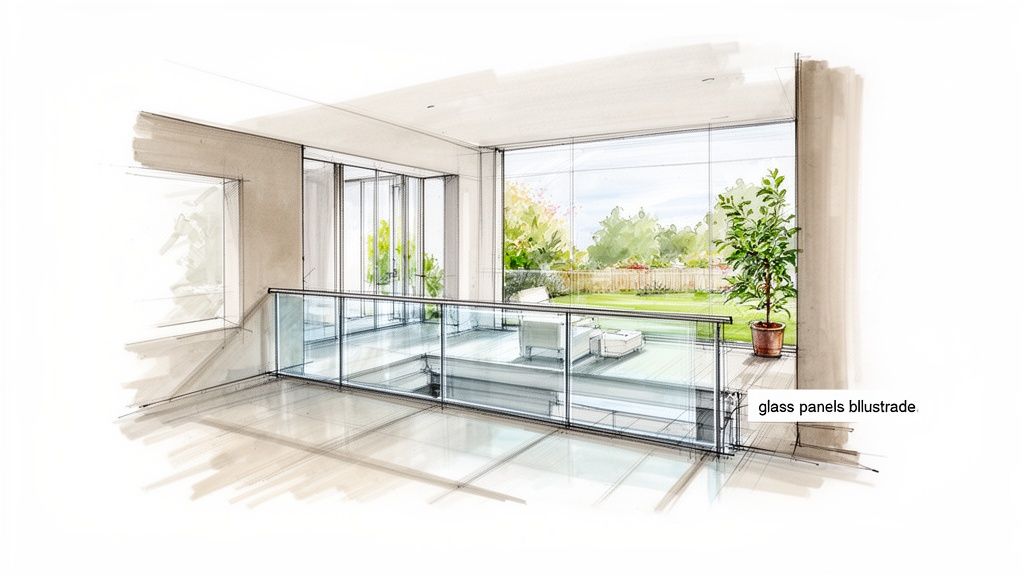
The appeal of this modern approach is clear, and its popularity is surging across the country. In fact, the United Kingdom now accounts for a massive 24.6% share of the entire European frameless glass balustrade market, making it the largest regional market. This demand is growing at a steady 4.6% each year, driven by homeowners and developers who are prioritising sleek, contemporary design in their projects.
From the character-filled homes of Yorkshire to modern flats in Newcastle and beyond, property owners are turning to glass balustrades for some very good reasons. The benefits reach far beyond pure aesthetics, adding real value and practicality to a home.
Here are the key advantages we hear from our clients time and again:
The real magic of a glass balustrade is its ability to be both present and absent. It provides essential safety without visually dividing your living space, preserving the architectural flow of your home.
This guide will walk you through everything, from picking a style to understanding how it all comes together. By the end, you'll have all the knowledge you need to start planning your project. For some fantastic real-world inspiration, take a look at our glass balustrade project gallery. Now, let's explore the different systems, safety must-haves, and why professional installation is key to bringing your vision to life.
Deciding on the right system for your glass panels balustrade is a bit like choosing the perfect frame for a piece of art. The style you pick sets the tone for the entire installation, defining its look, feel, and how it interacts with the light and space in your home.
Let's walk through the three main options. Getting to grips with the differences between them is the first real step in making a confident choice for your project, whether that’s a staircase, a balcony with a view, or an outdoor deck area.
Think of a frameless system as the ‘infinity pool’ of balustrades. It’s all about creating a pure, uninterrupted view by completely doing away with the need for vertical posts between the glass panels.
The structural integrity comes entirely from the glass itself – thick, toughened laminated panels secured discreetly at the base. This is the top choice for homeowners who want to make a bold, contemporary statement and truly connect with their surroundings.
Because the system relies solely on the strength of the glass, it naturally requires thicker panels, typically between 15mm and 21.5mm. It’s the go-to solution for high-end properties from Harrogate to Leeds, where maximising a stunning view is the number one priority.
A semi-frameless system strikes a fantastic balance between the pure minimalism of a frameless setup and the defined structure of a framed one. It uses slim, elegant posts between the glass panels but often leaves off a top handrail to keep that clean, open feeling.
The posts add structural reinforcement while being subtle enough not to steal the show.
This is an incredibly popular and versatile option. It delivers much of the open, airy aesthetic of a frameless system but often at a more accessible price point, making it a brilliant all-rounder for many family homes.
This balanced approach makes semi-frameless balustrades a perfect fit for a huge range of jobs, from internal landings and mezzanines to external garden decking. The posts can be finished in materials like brushed stainless steel or powder-coated aluminium to perfectly match your home's character.
A framed glass balustrade is the most traditional of the three styles, and for good reason. It features structural posts, a base support, and a continuous handrail running along the top of the glass panels.
This creates a complete, reassuring frame around the glass, offering a solid and timeless look. The handrail provides both a visual border and a functional element to hold onto, something many people find essential, especially on staircases.
While it doesn't have the same "invisible" quality as its counterparts, it remains an elegant choice that works beautifully with all sorts of architectural styles. The handrail and posts can be specified in stainless steel, warm timber, or other materials, making it a highly customisable option for any home in the Yorkshire area.
To help you visualise the options at a glance, here’s a quick-reference table breaking down the key differences between the three main styles.
| System Style | Key Feature | Best For | Aesthetic Appeal |
|---|---|---|---|
| Framed | Glass panels are fully enclosed by posts and a handrail. | Staircases, traditional properties, and areas needing a very robust feel. | Classic, secure, and highly customisable. |
| Semi-Frameless | Uses minimal posts between glass panels, often without a top rail. | Decking, landings, and projects wanting a modern look on a versatile budget. | Balanced, contemporary, and versatile. |
| Frameless | No posts at all; structural integrity comes from thick glass. | Balconies with views, minimalist interiors, and poolside areas. | Ultimate minimalism, luxurious, and seamless. |
Ultimately, the best choice depends on your personal taste, the style of your property, and how you plan to use the space. Each system offers a safe and beautiful solution when designed and installed correctly.
Once you've settled on a style—be it frameless, semi-frameless, or framed—the real heart of your glass panels balustrade comes down to two things: the glass itself and how it's fixed in place. These aren’t just minor details; they are crucial decisions that define the final look, safety, and lifespan of your installation. Getting to grips with them is key to a project you'll love for years.
The glass we use isn't the sort you'd find in a window pane. It's a highly sophisticated safety material, and you'll typically come across two main types.
Most often, we'll use toughened glass, which you might also hear called tempered glass. It's made by heating standard glass to extreme temperatures and then cooling it very quickly. This creates immense compression on the surface, making it incredibly robust.
The result is a panel that's around four to five times stronger than ordinary glass of the same thickness. But its real magic is how it breaks. If it does fail, it won't shatter into long, dangerous shards. Instead, it crumbles into small, blunt, pebble-like pieces, which massively reduces the risk of injury. You can see the same safety principles applied in high-quality tempered glass desks, where strength and safe breakage are just as important.
For an even higher level of safety, there’s laminated glass. We often recommend this for fully frameless systems, high-level balconies, or commercial spaces where the rules are stricter. It's essentially a glass sandwich: two sheets of glass bonded together with a tough, clear plastic interlayer.
Think of your car windscreen. If it gets hit by a stone, it might crack, but the glass pieces stay stuck to the interlayer. Laminated glass for balustrades works in exactly the same way. If a panel breaks, the interlayer holds everything together, maintaining the barrier and preventing a dangerous gap from opening up. This post-breakage integrity is precisely why it’s the gold standard for ultimate peace of mind.
The growing demand for these superior safety glasses is a great thing for UK homeowners. The balustrade market has seen huge advancements, and as specialists in areas like Yorkshire and the North East, we’ve seen first-hand how the availability of top-tier toughened and laminated glass has improved. This means premium, ultra-safe designs that were once purely commercial are now accessible for stunning residential projects.
Just as vital as the glass is the method we use to secure the panels. This is what brings the whole system together, providing the structural integrity while creating a specific aesthetic—from a seamless wall of glass to a 'floating' panel effect.
The fixing method is the unsung hero of your balustrade. It provides the essential structural support while defining the system's character, whether that's ultra-modern minimalism or a more grounded, substantial feel.
Here are the most common methods we use:
Base Channel/Shoe: This is our go-to for achieving that pure, uninterrupted frameless look. We fix a solid aluminium channel to the floor, and the glass panels slot neatly into it. The final effect is a seamless barrier of glass rising straight from the ground—a real showstopper.
Spigot Clamps: If you're after a contemporary, slightly elevated look, spigots are a fantastic choice. These are small, incredibly strong stainless steel posts that are bolted to the floor and clamp the bottom of the glass, lifting it slightly. This creates a stylish ‘floating’ appearance and makes cleaning underneath a breeze.
Standoff Bolts/Pins: Perfect for staircases or balconies where you want to keep the floor area completely clear. With this method, we fix the glass panels to the side—the 'fascia'—of your staircase or landing. Round stainless steel bolts go through pre-drilled holes in the glass, creating a clean, architectural look that feels both incredibly secure and wonderfully open.
This diagram helps visualise how these different fixing choices and components come together to create the distinct styles.
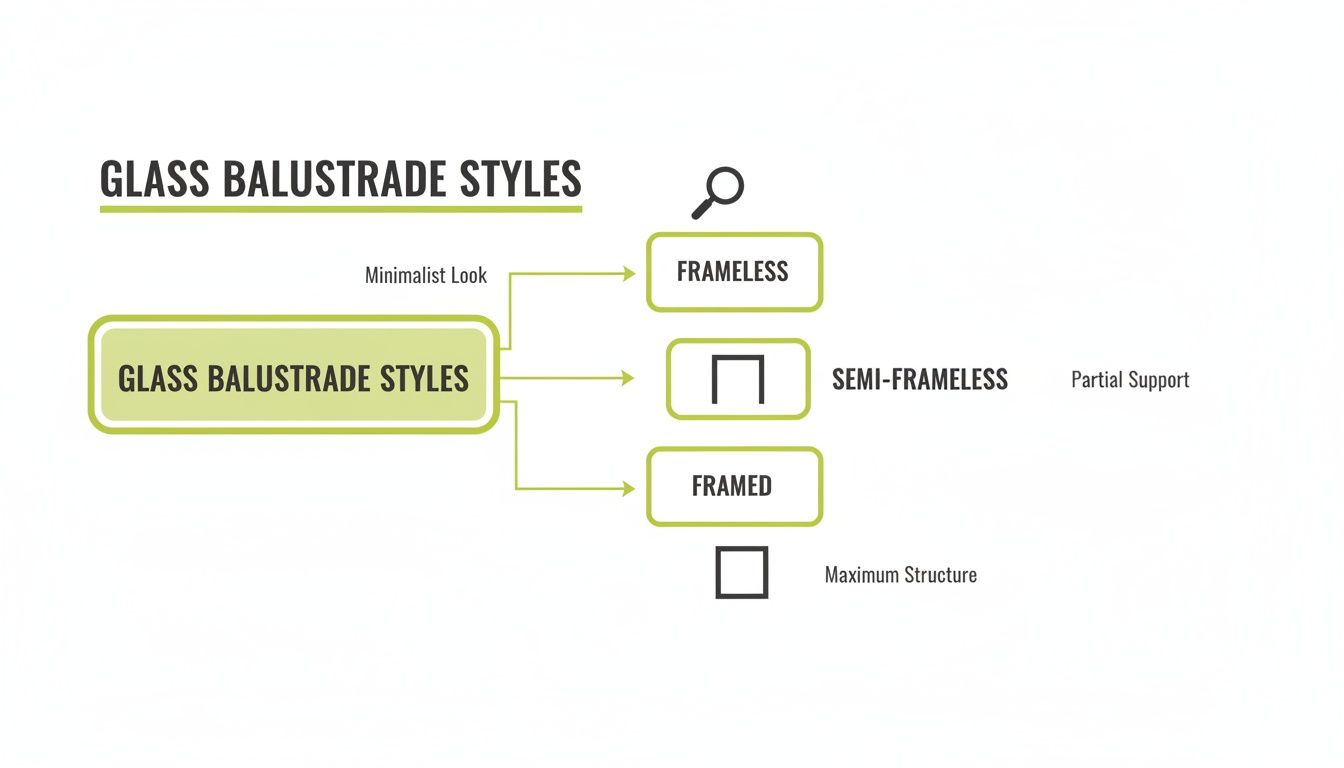
As you can see, the presence (or absence) of posts and handrails, which is determined by the fixing method and glass type, is what truly defines the overall look—from a fully supported system to one that is beautifully minimalist.
While the beauty of a glass panels balustrade is what first catches your eye, its most critical job is keeping you and your family safe. The idea of navigating UK Building Regulations can sound daunting, but they’re there for a very good reason: to give you complete peace of mind.
Think of them not as a set of restrictions on your design ideas, but as your built-in guarantee of quality and safety.
These rules, mainly found in Approved Document K, create a non-negotiable framework that every professional installation must adhere to. They aren’t just polite suggestions—they are strict requirements that cover everything from the balustrade's height to the forces it must withstand without fail.
One of the first things the regulations lay out is the minimum height of the balustrade. The logic here is beautifully simple: the higher the potential fall, the higher the protective barrier needs to be.
For residential properties across the UK, the rules are straightforward:
These are the absolute minimums. Getting them right is the first step to a safe, compliant balustrade for your home.
A balustrade has to do more than just stand there and look pretty; it has to be incredibly strong. The regulations define the specific horizontal forces, known as 'loads', that a system must resist without breaking or even flexing too much. This ensures it’s safe if someone leans heavily against it or if there’s an accidental impact.
For a single-family home, the system must typically handle a uniform load of 0.74 kN/m (kilonewtons per metre) along its top edge. This isn't just a random number; it's a precise engineering calculation that a professional installer uses to design a system that is fundamentally safe.
This is where choosing the right glass thickness and fixing method becomes absolutely crucial. It’s the expert combination of these elements that provides the required strength, turning a beautiful design feature into a robust, protective barrier you can trust.
"Do I need a handrail?" is one of the most common questions we get, especially from clients dreaming of that ultra-minimalist, fully frameless look. The answer depends on the location.
In most domestic situations, if the balustrade is protecting a drop of less than 600mm, a handrail is not a legal requirement.
However, for any drop greater than 600mm, a handrail is almost always needed to provide a secure grip and add extra structural integrity. On staircases, a continuous handrail is a must to help people go up and down safely. For homeowners across the north, from Leeds to Sheffield, wondering about a specific balcony project, the best course of action is always to get expert advice.
A skilled installer can integrate a slim, low-profile handrail that perfectly complements the clean look of a glass panels balustrade, so you don't have to sacrifice your aesthetic. Partnering with an expert like us takes this worry off your hands completely—we ensure every last detail of your project is fully compliant, safe, and built to last.
To see how we bring stunning design and robust safety together, take a look at our balustrade and balcony solutions.
Getting a new glass panels balustrade fitted might seem like a huge undertaking, but when you work with specialists, it's actually a straightforward and even exciting journey. We've refined our process over the years to be precise, safe, and completely focused on one thing: turning your idea into a stunning reality. It’s all about careful management to guarantee that perfect finish.
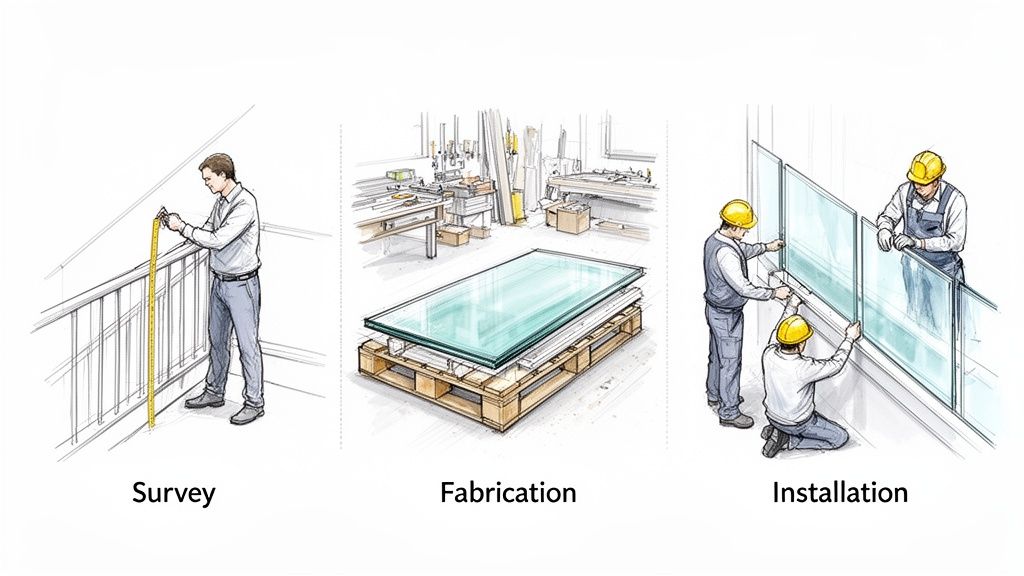
It all kicks off with a conversation about your goals, the look you’re after, and how you need the space to function. From there, we move to the most critical stage: a detailed site survey by an experienced technician. This is far more than just a quick tape measure job; it’s a deep dive into the structure, access points, and unique quirks of your home.
There's a reason people search for "Glass Balustrades Yorkshire" or "Glass Balustrades Newcastle." It's not just about finding a supplier; it's about finding a partner who gets the local character. A firm based in the North of England understands our region's architecture, from the beautiful old stone properties dotted across the Dales to the sharp, modern new builds popping up in Sheffield.
Being local means we can be there, on-site, in person. A surveyor standing in your home can spot challenges and opportunities that are simply invisible over a video call or on a set of drawings. That personal touch is the bedrock of a genuinely bespoke installation.
Choosing a local company isn’t just for convenience. It’s about accountability. A business with roots in your community has a reputation to uphold, and that's built on exceptional work and real, face-to-face customer service.
After the survey, with every measurement double and triple-checked, we get down to the technical design. Using specialist software, we map out your balustrade down to the last millimetre. This digital blueprint ensures every single component—especially the glass—is made to the exact specifications for a flawless fit and full compliance with building regulations.
The glass panels are then cut with absolute precision. Any required drill holes for fixings or custom shapes for stairways are done before the glass goes through its toughening process. Your chosen fixings, whether it’s a base shoe, spigots, or stand-off bolts, are also prepared.
Finally, our expert fitting team arrives. This is where you really see the expertise in action. They work methodically and cleanly, taking great care to protect your home while they get the job done. The fitters will:
The result is a rock-solid, beautiful glass panels balustrade that looks like it was always meant to be part of your home.
To feel confident you’re working with a top-tier company, you need to ask the right questions. A good firm will have clear, honest answers ready. If you want a deeper dive, you can learn more about what to look for in professional glass balustrade installers.
Here are a few key questions to start with:
How a company handles these questions tells you everything you need to know. Clear answers and evidence of their experience are the surest signs of quality, giving you the peace of mind to move forward with your project.
There’s a common misconception that a beautiful glass panels balustrade must be a hassle to keep clean. In our experience, the exact opposite is true. One of the best things about glass is its non-porous surface, which makes looking after it surprisingly simple. With just a few minutes of care, you can keep your balustrade looking crystal-clear for years to come.
You don't need any specialist chemicals or expensive cleaning gadgets. The secret to a perfect, streak-free shine is probably already in your kitchen cupboard. All it takes is a simple mix of one part white vinegar to four parts water in a spray bottle. Grab a couple of good-quality microfibre cloths—one for cleaning, the other for buffing dry—and you have the perfect kit.
This straightforward approach easily removes the usual suspects on interior glass, like fingerprints, dust, and smudges. For our clients with outdoor installations, especially in areas like Yorkshire where the weather can leave its mark, this routine is just as good at getting rid of water spots and grime left by the rain.
Keeping your balustrade in prime condition isn’t just about the glass. It’s also about peace of mind. A quick, regular check of the fixings is essential for long-term safety, and bundling it with your cleaning routine makes it a habit you won't even think about.
Here’s our recommended two-step process:
A glass panels balustrade is a perfect blend of high-end design and low-effort ownership. A few minutes of simple maintenance each month is all it takes to protect both its flawless appearance and its structural integrity.
This minimal upkeep ensures your investment continues to look as stunning as the day our team installed it. It’s a tiny amount of effort that pays off massively, keeping your home feeling bright, open, and above all, safe. The pristine clarity of your glass system isn’t just for day one—it’s built to last.
Making the decision to invest in a bespoke glass balustrade is exciting, but it’s completely natural to have a few questions before you move forward. It’s a significant addition to your home, and feeling confident in every detail is part of the process.
We’ve gathered some of the most common queries we hear from homeowners across Yorkshire and the North of England. Our goal is to give you clear, straightforward answers, so you feel fully informed and ready for the transformation ahead.
Absolutely. This is often the first question we’re asked, and the answer is a resounding yes. When a frameless system is specified and installed correctly by professionals, it's incredibly robust and safe.
We use specific types of toughened and laminated safety glass engineered to not only meet but comfortably exceed strict UK building regulations for strength and impact resistance. The solid panels create a complete barrier with no gaps, making them one of the most secure and popular choices for family homes where safety is non-negotiable.
The final cost of a glass panels balustrade depends entirely on your unique project. Several factors come into play: the style you choose (frameless systems, for example, are a different investment to framed ones), the thickness of the glass required for your specific application, the total length, and the complexity of the installation itself.
A professional site survey is the only way to receive a precise, detailed quotation. Think of it not as an expense, but as the first step in a valuable investment that will add significant long-term character and value to your property.
In the vast majority of cases, yes. Retrofitting a modern glass balustrade to an existing structure is a common request and something our teams are highly experienced in.
A key part of the initial survey is assessing the structural integrity of your current staircase, landing, or balcony. Whether the base is timber, concrete, or steel, our installers use specialised fixings and proven techniques to ensure a perfectly secure and seamless integration.
While any outdoor feature is exposed to the elements, you might be surprised at how low-maintenance glass is. Because the surface is non-porous, dirt and water spots don't get a chance to cling on.
For homeowners from Newcastle down to Leeds, keeping a glass balustrade looking pristine is far less work than they imagine. A simple, regular wipe-down with water and a drop of vinegar is often all it takes. We can also discuss optional easy-clean coatings, which cause water to bead and run off, reducing cleaning time even further.
Ready to explore how a stunning glass feature could transform your home? The team at Glass Tech is here to guide you from initial idea to flawless installation. With over 20 years of experience serving Yorkshire and the North of England, we specialise in creating bespoke glass solutions that enhance light, space, and value.
Start your project today by requesting a professional survey and quote from Glass Tech

A professional team of experts providing glass and glazing solutions covering the whole of Yorkshire & more...
Whether it's Leeds, York, North Yorkshire, Birmingham, Hull, Liverpool, Machester, Newcastle or Nottingham, get in touch to find out how we can help you with your bespoke glass project.