
Ever noticed those small, slatted vents at the top of a window frame? They’re called trickle vents, and while they might seem like a minor detail, they play a massive role in keeping your home healthy and comfortable.
They're essentially a secure, controllable slot designed to allow a constant, gentle flow of fresh air into your home without you ever having to open the window. Think of it as a way for your house to breathe.
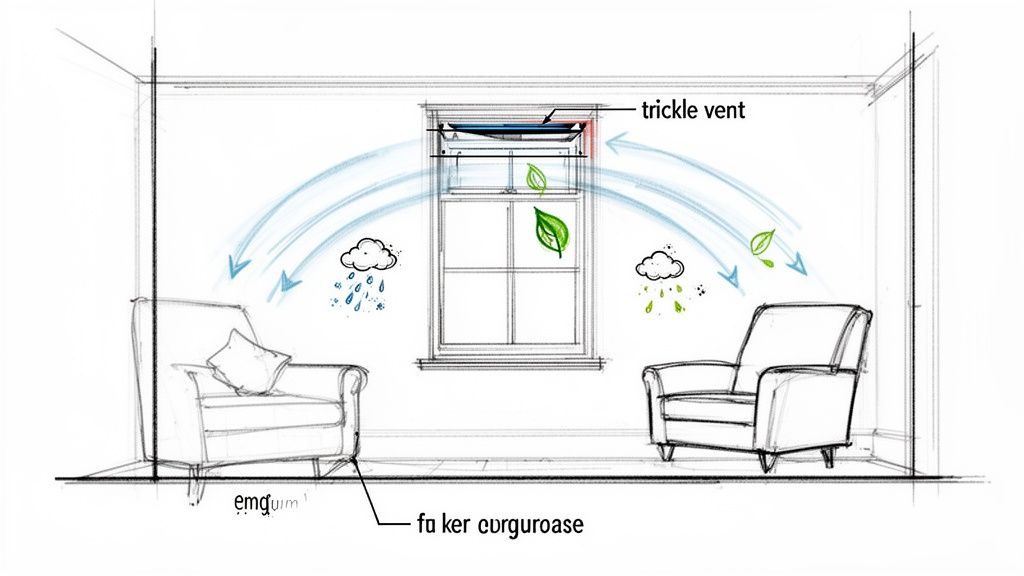
As we've made our homes more energy-efficient with high-performance windows and doors, we've also made them incredibly airtight. This is great for keeping the heat in, but it can trap stale, moist air inside—a common headache given the UK's climate.
Everyday life generates a surprising amount of moisture. Cooking, showering, drying clothes, and even just breathing all release water vapour into the air. In a well-sealed home, this moisture has nowhere to go. It settles on the coldest surfaces it can find, which are usually your windows, leading to that familiar sight of condensation.
This isn't just a cosmetic issue. That excess moisture is the perfect breeding ground for damp and mould, which can damage your property and, more importantly, have a negative impact on your family’s health.
This is exactly where window trickle vents come in. They provide the constant, low-level background ventilation needed to break this cycle. By allowing a small, continuous exchange of air, they are a simple but incredibly effective part of how to improve indoor air quality at home.
This silent ventilation works around the clock to:
To give you an idea of why these are becoming so common, let's look at the benefits in a quick summary.
| Benefit | Why It Matters |
|---|---|
| Condensation Control | Prevents moisture build-up on windows, reducing the risk of water damage to frames and sills. |
| Mould Prevention | Creates a drier indoor climate where black mould and mildew can't grow, protecting property and health. |
| Improved Air Quality | Continuously replaces stale indoor air, removing pollutants and allergens for a fresher, healthier home. |
| Building Regs Compliance | Often a mandatory requirement for new window installations to ensure adequate background ventilation. |
| Energy Efficiency | Provides necessary ventilation without needing to open windows wide, preventing significant heat loss. |
These small additions make a huge difference in the overall health and longevity of your home's interior environment.
The UK's ventilation market, which includes trickle vents, is growing steadily at a 5.8% CAGR and is expected to continue through 2036. This reflects a huge investment in residential upgrades across cities like London, Manchester, and key Yorkshire hubs such as Leeds, Hull, and Newcastle. Retrofitting a basic vent can cost as little as £15-£25 per unit, making it a very affordable and impactful upgrade.
For any homeowner in Yorkshire, Leeds, or Newcastle with modern, energy-efficient windows, these vents aren't just a "nice-to-have"; they're critical. They ensure your investment in new, high-performance glazing works as it should, keeping your home comfortable, healthy, and compliant with building regulations.
Whether you're thinking about installing new windows or upgrading your current ones, understanding the importance of trickle vents is the first step. For more details on modern, compliant installations, take a look at our range of high-quality windows and composite doors.
If you've been looking into upgrading your windows recently, you’ve probably heard that trickle vents are no longer just an optional extra. A major change in UK Building Regulations has made these small vents a mandatory feature for most homes, and it’s left many homeowners with questions.
This change wasn't just made on a whim. It’s a direct response to how we now build and modernise our houses. For years, the big push has been to seal up our homes for better energy efficiency—think better insulation, draught-proofing, and high-performance double glazing. While this has been fantastic for keeping our homes warm, it’s created an unexpected problem: our houses have become almost airtight.
In these sealed-up spaces, all the moisture from everyday life—cooking, showering, even just breathing—gets trapped inside. With nowhere to escape, this humid air leads straight to condensation, damp, and the potential for harmful mould to grow. It's a very modern problem, born from a good intention, and it needed a proper, regulated solution.
The driving force behind this shift is Part F of the UK Building Regulations, which covers everything to do with ventilation. A key update in 2022 made fitting window trickle vents a legal requirement for the vast majority of new and replacement window installations.
What this means for you is that if you're replacing windows in your home—whether it’s a single window in Harrogate or a full house refurbishment in Newcastle—the new windows must come with trickle vents to be compliant. The rule is there to guarantee a minimum level of background ventilation, protecting both the fabric of your property and the health of everyone living inside.
The whole point of this regulation is to make sure every home has a steady, consistent source of fresh air. This helps to water down indoor pollutants and keep humidity levels under control, setting a new standard for healthy living in our highly insulated homes.
This mandate has been a hot topic in the glazing and construction world. Since the rules changed in 2022, trickle vents became mandatory for all new and replacement windows. The decision, aimed squarely at fighting damp and mould, adds around £50 to the cost of each window on average, which is a significant new expense for homeowners across the country. For families planning projects in Leeds, York, or Harrogate, every new window must now include these crucial vents. You can read more about this industry-wide change over on Glasstimes.co.uk.
One of the first questions we get from homeowners is whether adding vents completely defeats the purpose of energy-efficient windows. It does feel a bit backwards to install airtight double glazing only to then cut a hole in it. But trust us, the science behind it is solid.
The amount of heat lost through a properly designed trickle vent is tiny, and it’s completely overshadowed by the huge health benefits it brings. Here’s a good way to think about it:
Essentially, the government and industry experts have agreed that a small, managed amount of ventilation is a vital trade-off. It’s the key to preventing the serious problems caused by trapped moisture. This ensures that our modern, energy-efficient homes are also healthy and safe places to live. For homeowners across Yorkshire planning window upgrades, being compliant isn't just about ticking a box—it’s about protecting your home’s future.
Now that we've covered why trickle vents are so important, let's get into the practical side of things: choosing the right ones for your home. It’s not just a box-ticking exercise for building regulations; it’s about finding a solution that works with your specific windows, your home's location, and how you live.
While your installer will give you expert advice, having a bit of background knowledge yourself makes the whole process smoother. The main types of vents are usually defined by where they sit on the window, and the best fit often depends on whether your frames are uPVC, aluminium, or timber.
To help you get a clearer picture, it's useful to compare the main options you'll come across. Each type is designed to solve a particular fitting challenge, ensuring there's a neat and effective solution for almost any window design.
| Vent Type | Best For | Key Feature |
|---|---|---|
| Through-Frame | Most standard uPVC, aluminium, and timber windows. | The most common and discreet option, fitted directly through a slot in the window frame or sash. |
| Over-Frame | Windows with slim or unusually shaped frames. | Sits neatly on top of the window frame, tucked away between the frame and the wall. |
| Glazed-In | Minimalist designs, curtain walling, or very thin frames. | Fitted into the glass unit itself, either at the top or bottom, preserving the frame's look. |
| Acoustic | Homes near busy roads, train lines, or in noisy urban areas. | Contains internal foam or baffles to block out noise while still allowing fresh air to circulate. |
Ultimately, the goal is to integrate the vent as seamlessly as possible, and a good installer will recommend the type that best suits your window's construction.
If you're wondering when trickle vents are a must-have, the rules are actually quite straightforward. This flowchart simplifies the decision-making process for new and replacement window projects.
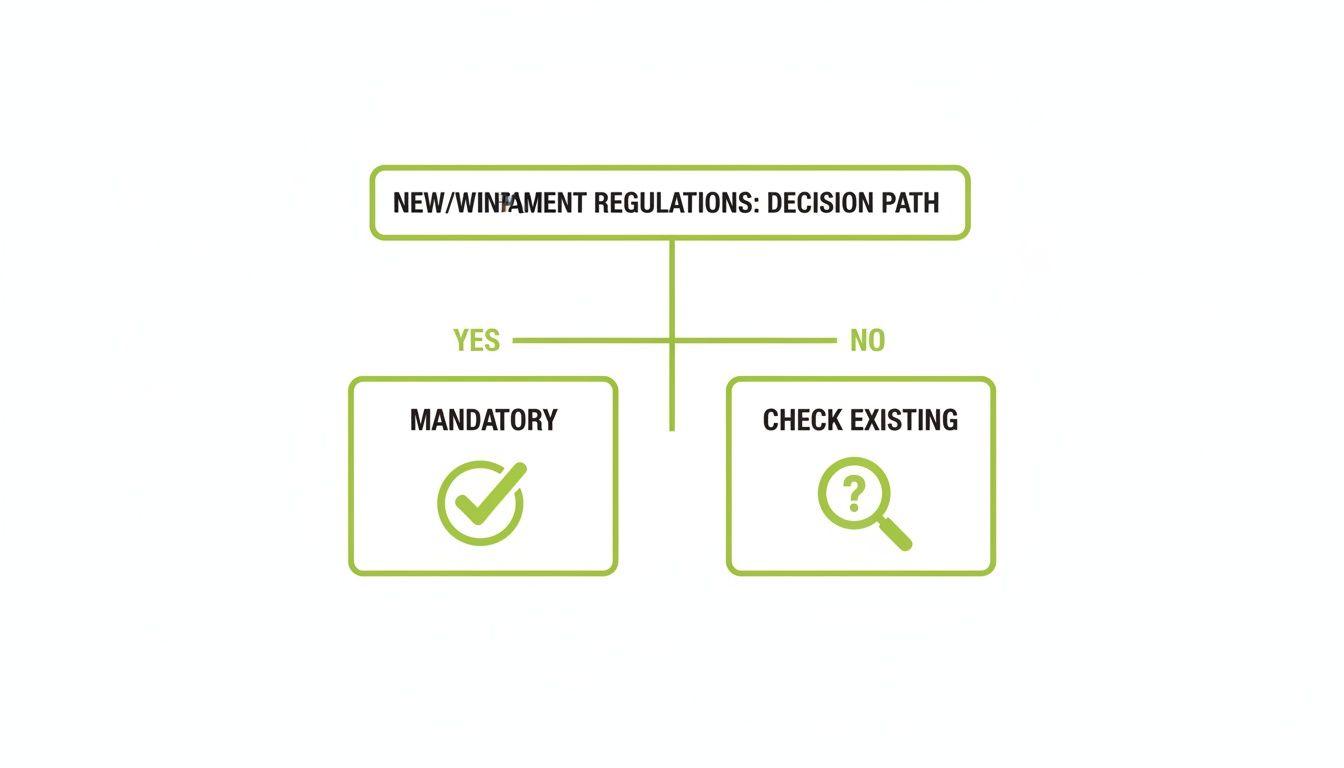
The key takeaway is clear: if you are fitting brand new or replacement windows, trickle vents are now mandatory. This ensures your home meets the current standards for healthy background ventilation.
For anyone living in a busy urban area, the thought of adding an opening to the outside understandably raises concerns about noise. If your home is near a main road in Leeds or in a bustling part of Newcastle, the last thing you want is for your fresh air to come with a side of traffic rumble.
This is exactly where acoustic trickle vents come in. They are cleverly engineered to give you the ventilation you need while dramatically cutting down on noise pollution. On the outside, they look much like a standard vent, but internally they contain specialist acoustic foam or baffled chambers that absorb and disrupt sound waves before they can get into your home.
Demand for these vents has surged in cities like Manchester, Hull, and Leeds, and the global market is predicted to hit USD 100 million by 2034. It's a smart investment that can transform a noisy property into a peaceful one, making them perfect for modern glass doors and windows in busy spots. You can read more about this growing market over at Market Report Analytics.
When you're discussing options with your window professional, a term you’ll almost certainly hear is 'Equivalent Area' (EA). It might sound a bit technical, but it’s the single most important measurement for a trickle vent.
Equivalent Area (EA): This isn't just the physical size of the slot. It’s a tested and certified figure that measures the actual amount of air that can flow through the vent, taking into account resistance from grilles and covers. It’s the true measure of a vent's performance.
The EA is measured in square millimetres (mm²), and Building Regulations set out clear minimums. For instance, habitable rooms like bedrooms and living rooms require a total of 8,000mm² EA, while bathrooms need 4,000mm² EA. Your installer will handle the calculations to ensure the vents they fit provide the right amount of airflow, keeping your project fully compliant and your home healthy.
So, you’re sold on the benefits of trickle vents. But how do you actually get them into your windows, and what do you need to do to keep them working? Getting the installation right is absolutely vital for performance and compliance, whether you’re fitting brand-new windows or upgrading your current ones.
The good news is that once they’re in, upkeep is incredibly simple. It really comes down to two key questions: can you add them to existing windows, and how do you look after them? Let’s get into the practical side of things.
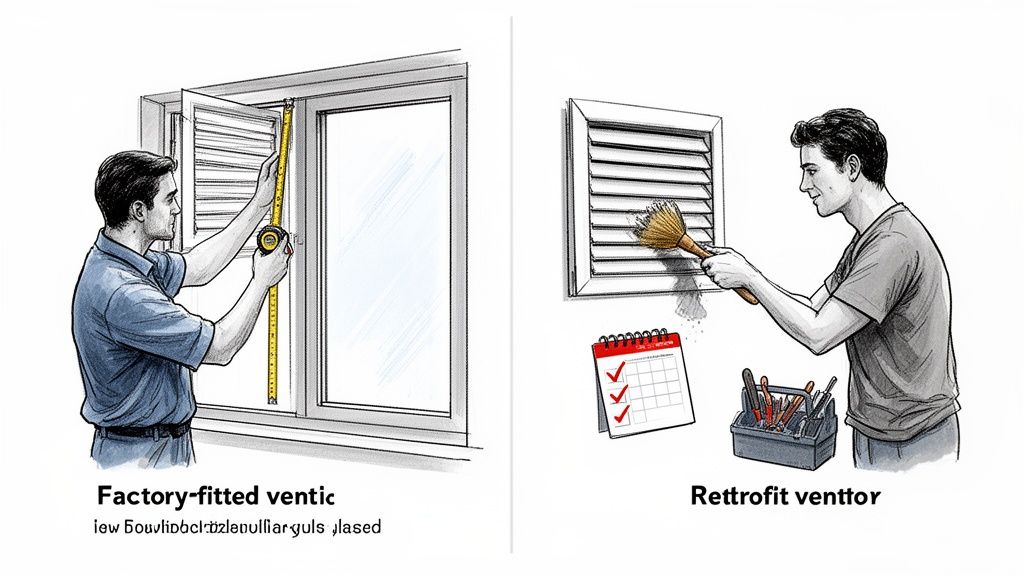
When it comes to getting trickle vents installed, you have two main options. Your choice really depends on whether you're replacing your windows entirely or just looking to improve ventilation in your existing setup.
Factory-Fitted Vents: This is the best and most common approach. When you order new windows, the trickle vents are built right into the frame during manufacturing. This gives you a perfect, weatherproof seal and guarantees the whole window system meets Building Regulations from day one.
Retrofit Vents: It is possible to add trickle vents to windows that are already installed. This process, known as retrofitting, involves an expert carefully cutting a slot into the window frame to fit a vent kit. While it can be a great solution for older windows, it’s not a DIY job.
A professional installation isn't just about making a hole for a vent; it’s about protecting the integrity of your window. One wrong cut can compromise weatherproofing, security, and even the frame’s strength, leading to much bigger problems down the road.
The idea of a DIY retrofit might sound appealing, but this is a job that should always be left to the experts. A professional glazier has the specialised tools and experience to cut into a window frame without causing any damage. For homeowners anywhere from Yorkshire to Newcastle, a perfect fit is essential to stand up to the unpredictable British weather.
A pro will make sure the job is neat and secure, and crucially, that the vent provides the right amount of airflow required by Part F of the Building Regulations. This gives you total peace of mind. If you're thinking about updating your glazing anyway, our glass replacement service can help ensure your entire window system is up to scratch.
Here’s the best part: looking after your trickle vents is incredibly easy. A few simple checks and a quick clean every now and then is all it takes to keep them working perfectly and ensuring that quiet, constant flow of fresh air.
Just follow this simple routine:
While you're giving your vents some attention, it’s a good time to think about the bigger picture. For some great general window maintenance tips, having a look at what other experts say can help you keep everything in top condition for years to come.
Whenever you’re looking at a home improvement, it’s always smart to get the full picture. While window trickle vents are now a legal must-have for most new window installations, it’s worth understanding both their benefits and the common concerns homeowners raise.
When you weigh it all up, you start to see why they’ve become such a valuable part of modern, healthy homes.
The upsides are clear and genuinely compelling. First and foremost, trickle vents are your home's front-line defence against condensation, damp, and the dreaded black mould. They get right to the root of the problem by stopping humid, stale air from getting trapped inside. This protects not just your property, but more importantly, your family's health.
On top of that, meeting Building Regulations isn't optional. Fitting the right trickle vents makes sure your project is fully compliant, saving you from any headaches with building control or when you eventually decide to sell your home.
Of course, homeowners have perfectly valid questions. The concerns we hear most often are about potential draughts, heat loss, outside noise, and how they look. Let’s tackle each one head-on.
Concern 1: "Will they make my house cold and draughty?"
This is the number one worry, and it’s completely understandable. But modern trickle vents are engineered for controlled, minimal airflow. They provide gentle background ventilation, not a noticeable gale blowing through your living room. The amount of heat lost is tiny compared to the huge energy savings you get from high-performance double glazing. Think of it this way: cracking a window open for five minutes loses far, far more heat.
Concern 2: "Won't they let in more noise from outside?"
For homes in busy city centres like Leeds or near main roads in Newcastle, this is a very real issue. Standard vents can let in a bit of sound, but this is easily solved with acoustic trickle vents. These are specially designed with sound-dampening materials inside that slash noise levels while still letting the fresh air circulate.
Concern 3: "Do they look ugly and spoil my new windows?"
Thankfully, vent design has moved on a lot. Today’s trickle vents are incredibly discreet. They can be perfectly colour-matched to your window frames, whether you’ve chosen uPVC, aluminium, or timber. Often, they are built so neatly into the frame that you barely even notice they’re there. The days of bulky, tacked-on plastic strips are long gone.
Concern 4: "Is this just another unnecessary cost?"
While vents do add a small amount to the price of a new window, it’s better to see it as a vital investment in your property's long-term health. The cost of dealing with mould removal, redecorating damp-stained walls, or tackling health issues from poor air quality is significantly higher than the modest price of a compliant vent.
When all is said and done, the benefits of properly installed trickle vents massively outweigh any potential downsides. They are a quiet, hardworking part of a modern, healthy, and energy-efficient home, protecting your investment behind the scenes.
The key takeaway is that trickle vents provide a solution to a problem created by making our homes more airtight. They restore the natural, gentle breathing process that every healthy home needs, striking a vital balance between energy efficiency and good ventilation.
For properties with unique challenges, like listed buildings or homes in conservation areas, there are often specialist solutions. For instance, some homeowners in the historic parts of York might find that a well-designed secondary glazing system is a better route for improving both thermal and acoustic performance. You can explore how secondary glazing works for different property types to see if it’s a suitable option for you.
By understanding both the requirements and the available solutions, you can make a confident and informed decision for your home.
While it's great to understand the basics of window trickle vents, there are moments when bringing in a professional isn't just a good idea—it's essential. Trying to interpret complex Building Regulations or retrofit vents without the right experience can easily turn into a costly mistake.
If you’re planning any kind of window replacement, that’s the perfect time to get in touch. A specialist can make sure your new windows are fully compliant with the latest standards right from the start, saving you a world of potential headaches down the line.
The same goes for persistent problems with condensation, damp, or mould. These are classic signs that your home’s ventilation isn't up to scratch. An expert can properly diagnose the issue and recommend the most effective fix, whether that's adding vents or looking at a full glazing upgrade.
It’s also smart to keep an eye on the horizon. The upcoming 2026 Future Homes Standard is set to introduce even tougher requirements for energy efficiency.
Seeking professional advice now means you can future-proof your property, ensuring it’s ready for these changes and protecting its value for years to come.
With over 20 years of experience serving homeowners across the north, from projects for Glass Balustrades Yorkshire to window installations in Newcastle, we understand the unique challenges of properties in our region. Our expertise ensures you receive a solution that is perfectly suited to your needs.
At Glass Tech, our job is to guide you through the whole process. We’ll help you choose the right ventilation solutions for your project, whether you’re installing modern new windows or fitting sophisticated secondary glazing into a period property.
Our deep knowledge of the local housing stock across Yorkshire means we provide advice that is both practical and perfectly tailored to your home.
Our commitment is to deliver a solution that is fully compliant, performs brilliantly, and leaves you completely happy with the result. From the initial survey to the final, tidy installation, we manage every detail. You can rest assured your home is in safe hands with our experienced team.
Trickle vents are a hot topic for homeowners these days, especially with recent changes to regulations. To help clear things up, we’ve put together plain-speaking answers to the questions we hear most often from our customers.
The short answer is, almost certainly, yes. Following a major update to the Building Regulations Part F in 2022, trickle vents became a legal requirement for the vast majority of new and replacement windows across England.
This isn't just red tape. The rule was brought in to guarantee that modern, well-sealed homes get the background ventilation they need. It’s a crucial defence against condensation, damp, and poor indoor air quality. While one or two very niche exceptions exist, it's safest to work on the basis that your project will need them to be compliant.
This is probably the number one concern we hear, and it’s completely understandable. The good news is that trickle vents are designed specifically to avoid creating noticeable draughts.
Think of them as providing a slow, controlled, and almost imperceptible breath of fresh air, not a gust. Modern vents are fully adjustable and can even be closed, putting you in complete control. That tiny amount of air exchange is a small price to pay for the huge benefits of preventing damp, mould, and stale air in your home.
Yes, it’s technically possible to retrofit trickle vents into most uPVC, aluminium, or timber windows. The job involves precisely routing a slot through the window frame to house the vent mechanism.
However, just because you can buy a DIY kit doesn't mean you should. We strongly advise against it. One wrong move with the router can permanently compromise your window's strength, security, and weatherproofing, creating far bigger and more expensive problems down the line. Professional installation is key.
Standard trickle vents might let in a little more outside sound, but if noise is a big concern for you, there's a fantastic solution. This is something we often discuss with homeowners living near busy roads in Leeds, Hull, or other urban centres.
Acoustic trickle vents are engineered precisely for this scenario. They look similar on the outside but contain specialist sound-dampening foam that breaks up soundwaves, massively reducing the noise that gets through. You get all the benefits of fresh air without the disturbance. Many of our customers across Yorkshire and Newcastle now choose acoustic models as standard for a peaceful home.
For expert advice on your window and glazing needs, from ensuring regulatory compliance to selecting the perfect products for your property, trust the team at Glass Tech. With over 20 years of experience, we provide high-quality, professional installations across Yorkshire and beyond. Explore our services and get in touch today.

A professional team of experts providing glass and glazing solutions covering the whole of Yorkshire & more...
Whether it's Leeds, York, North Yorkshire, Birmingham, Hull, Liverpool, Machester, Newcastle or Nottingham, get in touch to find out how we can help you with your bespoke glass project.