
When you're trying to cut down on unwanted noise in your home, your windows are almost always the place to start. They're typically the weakest point in a building's acoustic defences, but the good news is there are some incredibly effective solutions out there. From installing secondary glazing to upgrading to specialised acoustic glass, you can make a huge difference to the peace and quiet inside your home.
This guide will walk you through the best options for soundproofing your windows, helping you get that sense of calm back.
Living with the constant drone of traffic, nearby construction, or noisy neighbours is more than just irritating; it can genuinely affect your wellbeing. It’s a growing problem across the UK, especially in our bustling northern cities where life never seems to slow down. For a lot of homeowners, standard double glazing just doesn't cut it anymore.
If you find yourself constantly reaching for the TV remote to drown out passing cars or you just can’t seem to relax in your own living room, it’s probably time to look at more effective measures. We’re going to move beyond the simple fixes and explore proven technologies designed specifically for sound insulation.
The problem of noise pollution isn't just in your head—it's a documented reality. The UK is facing a real noise crisis, which is why effective acoustic window solutions are more important than ever.
According to recent data, over 20% of Europeans are exposed to harmful levels of transport noise, and road traffic is the main offender. In bigger UK cities, it's estimated that over 30% of the population endures harmful noise levels while trying to sleep. You can learn more about how noise pollution trends highlight the need for superior acoustic windows.
This guide is a practical roadmap to understanding your options, tailored for properties right here in the North. We want to help homeowners in places like Yorkshire and Newcastle find the right solution to reclaim their home's tranquillity.
To give you a clear starting point, the table below summarises the main noise reduction options, their effectiveness, cost, and where they work best. We'll dive into each of these in much more detail as we go.
| Solution Type | Noise Reduction Level | Typical Cost | Best For |
|---|---|---|---|
| Secondary Glazing | High | Medium | Listed buildings, conservation areas, significant noise issues |
| Acoustic Glass | Very High | High | Main roads, airports, railways, maximum noise reduction |
| Triple Glazing | Medium | High | Primarily thermal efficiency, moderate noise reduction |
| Draught Proofing | Low | Low | A basic first step, addresses gaps and air leaks |
Each of these solutions has its place, and the best choice for you will depend on the level of noise you're dealing with, your property type, and your budget.
To really get to grips with choosing the right windows for noise reduction, it helps to first understand how that unwanted sound gets into your home in the first place.
Imagine sound as ripples spreading across a pond. These are essentially vibrations travelling through the air. When they hit your windows, they cause the glass to vibrate, a bit like a drum skin. This vibration passes through the glass and into the air inside your room, which your ears then pick up as sound.
Windows, especially older or standard double-glazed ones, are often the weakest link in a home's defences against noise. They just don't have the mass or clever design needed to stop these vibrations in their tracks.
But it’s not just about the glass. Sound is sneaky. Gaps in the frame, worn-out seals, or a poor fit can create direct, unfiltered pathways for sound waves to pour straight into your home. This is why proper weatherproofing your windows and doors is always a fantastic starting point.
When we talk about noise levels, the unit we use is the decibel (dB). The decibel scale is a bit quirky because it's logarithmic, which is a fancy way of saying a small change in numbers can mean a huge difference in what you actually hear.
A quiet library might be around 30dB, a normal chat is about 60dB, and a busy road in a city like Sheffield or Leeds could easily hit 80-85dB. For every 10dB increase, the raw sound energy actually increases tenfold.
The key takeaway here is that a 10dB reduction in sound is perceived by the human ear as making the noise 50% quieter. That’s a massive, life-changing improvement in peace and quiet.
When you start looking at windows designed for noise reduction, you'll see a rating called the Sound Reduction Index (Rw). This is the single most important number to pay attention to.
Measured in decibels, the Rw value tells you how much sound a window, door, or wall is capable of blocking. It’s that simple.
To put it in context, a standard double-glazed window might have an Rw rating of around 28-32dB. A specialist acoustic glass window, on the other hand, could have an Rw of 40dB or more. That difference of 8-12dB would make a huge difference, effectively halving the perceived noise from outside.
The final piece of the puzzle is knowing that windows don't block all sounds equally. It all depends on the frequency, or pitch, of the noise.
Truly effective noise reduction requires a solution that can tackle this whole range of frequencies, especially the troublesome low-frequency rumble that plagues so many homes across Yorkshire. Armed with this knowledge, you can now look at different window technologies and understand exactly how they'll perform in the real world.
Now that we have a feel for how sound sneaks into our homes, we can start looking at the best ways to stop it. When it comes to effective noise reduction for your windows, not all solutions are created equal. The right choice for you will really come down to the specific noise you're dealing with, the type of property you live in, and of course, your budget.
So, let's put the main contenders side-by-side: secondary glazing, acoustic laminated glass, and the often-misunderstood triple glazing. Each has its own strengths, and getting to grips with them is the key to making a smart investment in a more peaceful home.
This diagram shows the simple journey sound takes from the source, through your window, and into your living space.
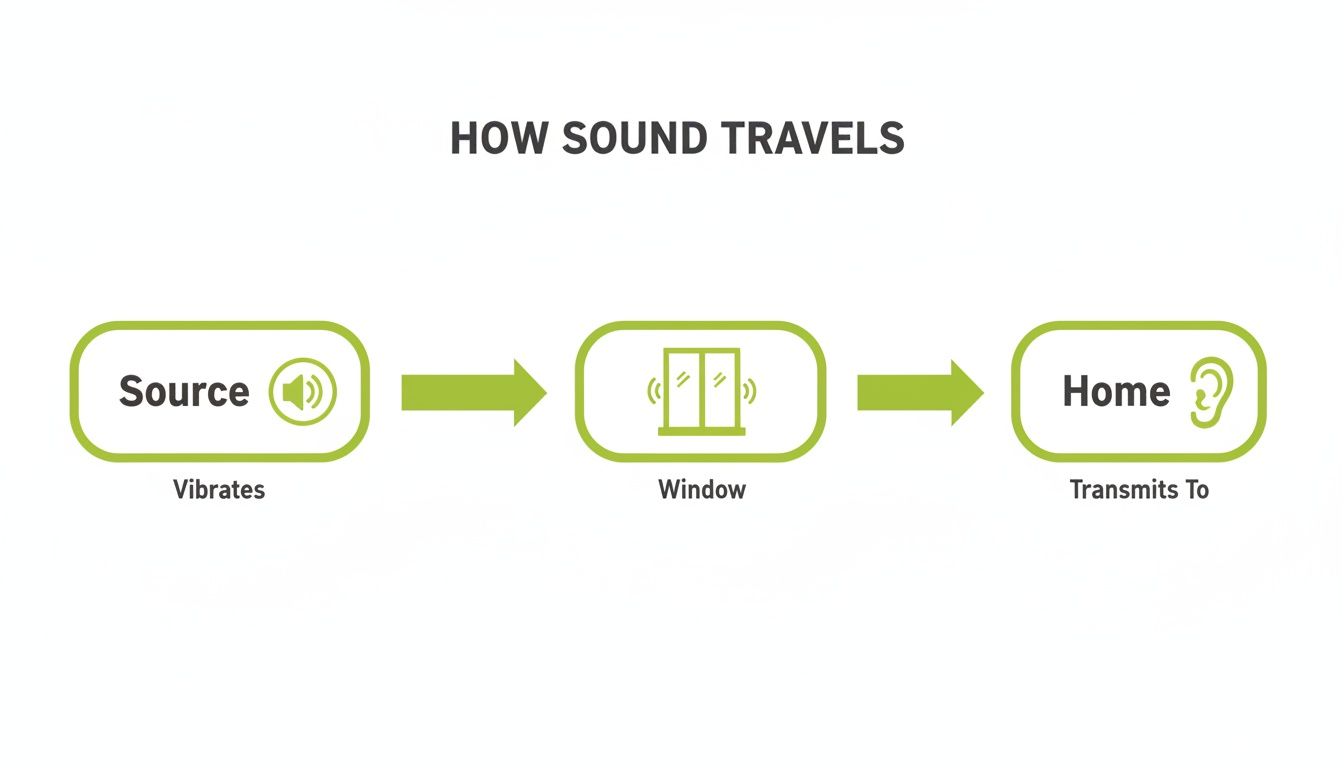
It’s clear the window itself is the crucial battleground where those vibrations have to be stopped.
For good reason, secondary glazing is often praised as one of the single most effective ways to soundproof your existing windows. It’s a simple but brilliant concept: we install a slim, discreet second window pane on the inside of your current one, creating a substantial air gap between the two.
That air gap is the secret weapon. A gap of 100-200mm is ideal, as it creates a fantastic insulating buffer. Sound waves lose a massive amount of energy trying to cross that void, which drastically cuts down the noise you hear. This method is especially good at blocking those low-frequency rumbles from traffic that normal double glazing just can't handle.
A huge plus is that it’s far less disruptive than a full replacement. Because we aren't ripping out your entire window unit, the installation is much quicker, cleaner, and less messy.
This makes it the perfect solution for listed buildings or homes in conservation areas—something we see a lot of in historic cities like York and Harrogate. It allows you to get modern acoustic performance without touching the building's original, protected exterior.
For Yorkshire homeowners looking to blend heritage with modern comfort, secondary glazing is an exceptional choice.
When you need the absolute best noise reduction possible, acoustic laminated glass is the undisputed champion. This isn't just about using thicker glass; it's a clever piece of engineering specifically designed to kill sound waves.
Acoustic glass is made of two panes of glass permanently bonded together with a special transparent interlayer of Polyvinyl Butyral (PVB). This soft, flexible interlayer is the magic ingredient—its job is to absorb sound vibrations. When sound hits the outer pane, the PVB layer quite literally dampens the vibration before it can transfer through to the inner pane.
Think of it as a shock absorber for sound. It doesn't just block noise with sheer mass; it actively dissipates the sound energy. This makes it incredibly effective against everything from high-pitched chatter to the deep drone of a busy road. A double-glazed unit with just one pane of acoustic glass can hit an Rw rating of 40dB or more, which makes a genuinely astonishing difference to a room.
It’s a common assumption: if double glazing is good, triple glazing must be even better for soundproofing. It seems logical, but it’s one of the biggest myths in the industry. Standard triple glazing is designed almost entirely for thermal performance, not for acoustics.
Your typical triple-glazed unit has three panes of glass, usually all the same thickness, with two small air gaps. This setup is fantastic for keeping heat in, but the identical panes can actually resonate at the same frequency, sometimes letting certain sounds pass through more easily.
For triple glazing to actually work for soundproofing, it has to be specifically engineered for it. That means using panes of varied thicknesses (like 4mm, 6mm, and another 4mm pane) and different gap widths. This asymmetry breaks up the sound waves and stops that resonance, which does improve acoustic performance. But without that specialist design, it often won't beat a well-made acoustic double-glazed window.
To help you weigh up the options, the table below gives a clear comparison of how each solution stacks up across the most important factors.
| Feature | Secondary Glazing | Acoustic Glass (Double Glazed) | Standard Triple Glazing |
|---|---|---|---|
| Primary Mechanism | A large air gap acts as a powerful barrier to sound transmission. | A PVB interlayer absorbs and dampens sound wave vibrations. | Two small air gaps are designed for thermal insulation, not sound. |
| Noise Reduction (Rw) | High (up to 45dB) | Very High (up to 50dB) | Medium (typically 32-36dB) |
| Best For | Listed buildings, traffic noise, and preserving original windows. | Busy roads, airports, railways—any situation needing maximum noise reduction. | Primarily thermal efficiency, with only a moderate noise improvement. |
| Installation Disruptiveness | Low | High (full window replacement) | High (full window replacement) |
| Cost | Medium | High | High |
| Key Advantage | Highly effective, less disruptive, and preserves your property's character. | Superior acoustic performance across the entire sound spectrum. | Excellent at keeping your home warm. |
This comparison makes it clear that the best choice isn't always the most obvious one. It’s all about matching the right technology to the specific noise problem you're trying to solve.
Ultimately, understanding how different frame materials work is also part of the puzzle. It's worth exploring dedicated resources on soundproofing solutions with aluminium and UPVC windows to see how the complete system comes together.
Investing in high-performance acoustic glass is a brilliant step towards a quieter home, but it's crucial to realise that the glass itself is just one piece of a larger puzzle. Even the most advanced glazing can be completely let down if the other components of the window aren't up to scratch.
Think of it like trying to soundproof a room but leaving the door wide open. Sound will always find the path of least resistance. If your window frames are poorly sealed or the gaskets are worn and cracked, you've created tiny acoustic motorways for noise to travel directly into your living space, undermining your entire investment.
This is why we always take a holistic view. An expert doesn't just look at the glass; they assess the entire window assembly to ensure every single element works together as an effective barrier against unwanted sound.
The material and construction of your window frames play a significant part in the overall acoustic performance. Different materials have their own sound-dampening properties, and choosing the right one can make a noticeable difference.
Regardless of the material, the single most important factor is the installation. A precise, airtight fit is non-negotiable for effective soundproofing. Even the slightest gap can compromise the result, which is why professional fitting is paramount.
Sound is like water; it will exploit any weakness to get through. A perfect seal around the entire window unit is just as important as the quality of the glass itself. A tiny gap can reduce a window's overall sound insulation by several decibels.
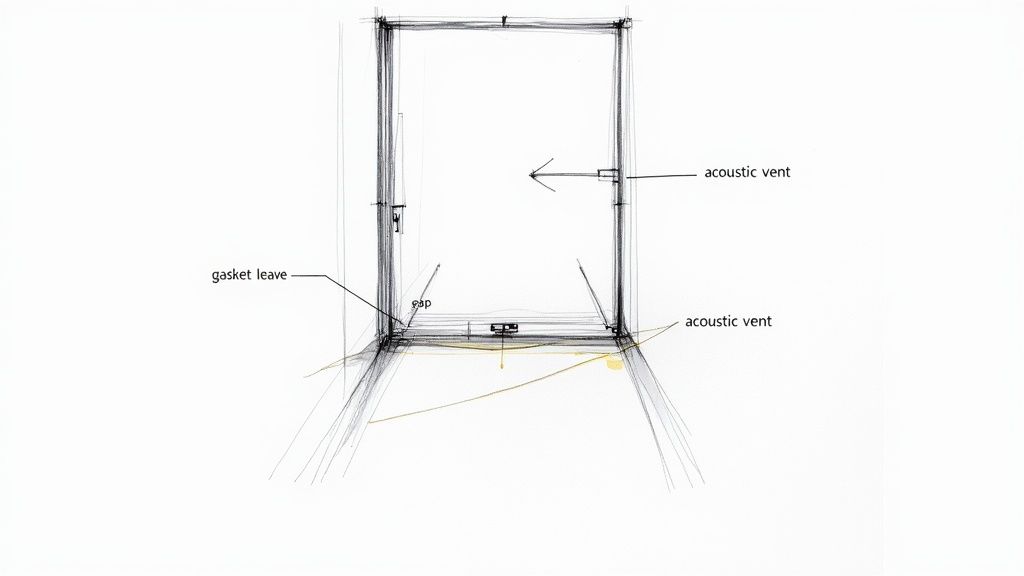
Over time, the rubber seals or gaskets around your windows can perish, becoming brittle and creating gaps. This is a common failure point that allows noise to leak in. High-quality, durable seals are a small but vital detail.
In many cases where seals are failing, the most straightforward and cost-effective upgrade involves looking into our expert glass replacement services, where we can address the entire failing unit.
Ventilation presents another common challenge. Standard trickle vents, designed to let air circulate, are essentially open holes that also let in sound. Fortunately, modern acoustic trickle vents are available. These clever devices are designed with an internal baffle system that allows air to pass through while significantly dampening incoming noise, offering the best of both worlds.
Right, so we've got a handle on the science behind it all. The next logical step is to bring this knowledge back home—literally. Now you can look at the options with a clear head, ready to pick a solution that genuinely fits your property, the specific racket you're dealing with, and what you're planning to spend.
Remember, every home and every noise problem is unique. There's simply no one-size-fits-all fix when it comes to soundproofing. The best choice is always a careful balance of things like how bad the noise actually is, the style of your home (especially if you've got planning restrictions to think about), and your budget.
Let’s walk through a few real-world scenarios to see how this plays out in practice.
To make this really practical, we’ll look at three common situations we see all the time with homeowners across Yorkshire and the North. Each one needs a slightly different approach to get the best noise reduction from your windows.
You’re right on a major A-road, and the traffic is relentless. The real problem is that low, deep rumble from lorries and buses that seems to vibrate through the house. Your standard double glazing just isn’t touching it.
You live in a gorgeous period property, but those lovely original single-glazed sash windows let in every bit of street noise. You're desperate for a proper acoustic upgrade, but you can't change the look of the building from the outside.
Your house is on a fairly new estate, but you're still getting bothered by everyday noise—neighbours, barking dogs, kids playing on the street. It’s not deafening, but it’s definitely disruptive.
Let’s talk money, because budget is always a massive part of the decision. The final price tag on any window project comes down to a few key variables, which is why getting a tailored quote is so important.
The main things that influence the cost are:
Investing in the right solution from the start is always cheaper in the long run than trying a quick fix that doesn't actually solve the problem. A proper installation is a long-term investment in your home's comfort and value.
The UK's push for better home performance has really spurred on advances in glazing technology. While government stats show over 93% of UK homes now have double glazing, the latest acoustic installations are getting incredible results. These new systems not only insulate against sound but can also slash heat loss by up to 54%. If you're interested, you can discover more insights on window glazing statistics and projections. The data clearly shows a move towards solutions that offer both thermal and acoustic benefits rolled into one.
What this means for you is that a well-chosen upgrade doesn’t just make your home quieter—it can also make it warmer and cheaper to run. Whether you're thinking of a full refit or just upgrading the glass, a complete system of new windows and composite doors can completely transform how your home feels. Our job is to help you find that perfect solution, giving you complete confidence in your investment.
Getting to a quieter, more peaceful home is a brilliant investment in your quality of life. We've looked at how proper noise reduction isn't about one single fix, but about a whole system working together. Your journey to a bit of peace and quiet starts with getting a real handle on your specific noise problem and figuring out the right solution for you.
The main points are pretty clear. Secondary glazing is a fantastic choice for serious noise issues, and it's often the go-to for listed buildings. For homes battered by the constant drone of heavy traffic, acoustic laminated glass is the top performer. And whatever you choose, never underestimate the role that high-quality, professionally fitted frames and seals play in getting a truly airtight, sound-blocking result.
Before you pick up the phone, just take a moment to think about your situation. Answering these simple questions will give you a much clearer idea of what you need and make the conversation with an expert far more productive.
Once you’ve got a better picture, it’s time to get some expert advice. If you're dealing with noise that genuinely affects your daily life, a professional consultation is the logical next step. At Glass Tech, we specialise in creating bespoke acoustic solutions that are spot-on for homeowners and their properties.
We're proud to serve communities all over the north, delivering outstanding results for everything from projects needing Glass Balustrades Yorkshire to those requiring Glass Balustrades Newcastle. Our expertise is in crafting the perfect soundproof window systems for your home. Get in touch with our friendly team today for a no-obligation chat about what you need.
When you start looking into soundproofing your windows, it’s natural to have a few questions. We’ve been helping homeowners across the north of England find peace and quiet for years, and these are some of the most common queries we hear.
This is a very common concern, but rest assured, a professionally installed secondary glazing system is engineered specifically to prevent condensation.
By creating a perfectly sealed unit with a substantial air gap, it isolates the cold outer pane from the warmer inner one. While good room ventilation is always important, the system itself won't cause that frustrating moisture build-up between the panes.
The difference is genuinely remarkable. A standard double-glazed unit typically has a Sound Reduction Index (Rw) of around 28-32dB. Upgrading to a unit with specialised acoustic laminated glass can boost that rating to 40dB or more.
Now, that might not sound like a huge leap on paper, but a 10dB improvement is perceived by the human ear as making the outside world sound 50% quieter. For anyone living on a busy road in Leeds or trying to sleep through city noise in Sheffield, it’s the difference between constant background stress and a peaceful home.
Yes, absolutely. This is exactly what secondary glazing is for. It involves fitting a slim, discreet second window inside your existing window frame.
This method creates a large, sound-deadening air gap that cuts down noise dramatically, all without the disruption or cost of removing your original windows. It's the perfect solution for listed buildings, period properties, or anyone who wants a less intrusive installation.
They certainly are. The very things that make a window brilliant at blocking sound also make it fantastic at stopping heat from escaping.
Airtight seals, multiple panes of glass, and well-insulated frames all work together to keep your home warmer in winter and cooler in summer. Think of it this way: upgrading to a modern acoustic window system is an investment that pays you back twice—first with a quieter environment, and then with lower energy bills. It's a major reason why homeowners from Yorkshire to Newcastle are making the switch.
For expert advice tailored to your home's specific noise problems, get in touch with the team at Glass Tech. We'll help you find the perfect solution to restore the peace. Find out more at https://www.hgwsolutions.co.uk.

A professional team of experts providing glass and glazing solutions covering the whole of Yorkshire & more...
Whether it's Leeds, York, North Yorkshire, Birmingham, Hull, Liverpool, Machester, Newcastle or Nottingham, get in touch to find out how we can help you with your bespoke glass project.