
You've probably heard the term 'balustrade' used on property shows or by architects, but what does it actually mean? Put simply, a balustrade is the complete safety barrier you see alongside staircases, landings, and balconies. Its job is to prevent falls, but it also plays a huge role in a home's architectural character.
It’s not just a handrail. A balustrade is a full system, a row of vertical posts joined by a top rail that you can hold onto.
While the word itself might sound a bit technical, the concept is something we all instinctively understand. It’s the protective barrier that lines any open or raised edge, but it's much more than just a fence. It's an entire assembly designed to work as one.
Think of it as a complete unit. You have the main vertical posts—what we call balusters or spindles—providing the core strength. These are then connected at the top by a handrail for support and often secured at the bottom with a base rail, creating a strong, cohesive structure.
Balustrades have been a key feature in UK homes for centuries. We’ve seen them evolve from the heavy, ornate wood and ironwork of the Georgian and Victorian eras to the clean, minimalist lines that homeowners favour today. This journey mirrors our changing tastes, moving away from decorative bulk towards a lighter, more open feel.
A balustrade's primary job is to provide a robust safety barrier. However, its secondary role as a major design feature has become increasingly important, especially with the rise of minimalist and light-filled interiors.
Glass is now at the forefront of this shift. The demand for glass balustrades is climbing steadily across the UK, with industry forecasts showing a projected revenue growth of 6-8% yearly between 2025 and 2031. This isn't just a fleeting trend; it’s a clear sign that homeowners want modern, unobtrusive designs. You can explore the latest industry reports to see the growth in the structural glass market for yourself.
This preference is especially strong here in the north of the UK. When people look for Glass Balustrades Yorkshire or Glass Balustrades Newcastle, they aren’t just thinking about safety. They’re looking for a way to open up their homes, pull in more natural light, and enjoy uninterrupted views. It's about creating a sense of space and modern elegance.
To really understand what a balustrade is, it helps to see it as a complete system rather than a single object. It’s made up of individual parts, and each one has a critical job to do. Getting to grips with the terminology means you can talk confidently about your project, whether you’re planning a new staircase or designing a dream balcony.
At its most basic, a balustrade is simply a row of posts supporting a top rail. But the specific names for these parts can often cause confusion. Let’s break down the components so you know exactly what’s what.
To visualise how it all fits together, here’s a look at the main players in a classic balustrade setup.
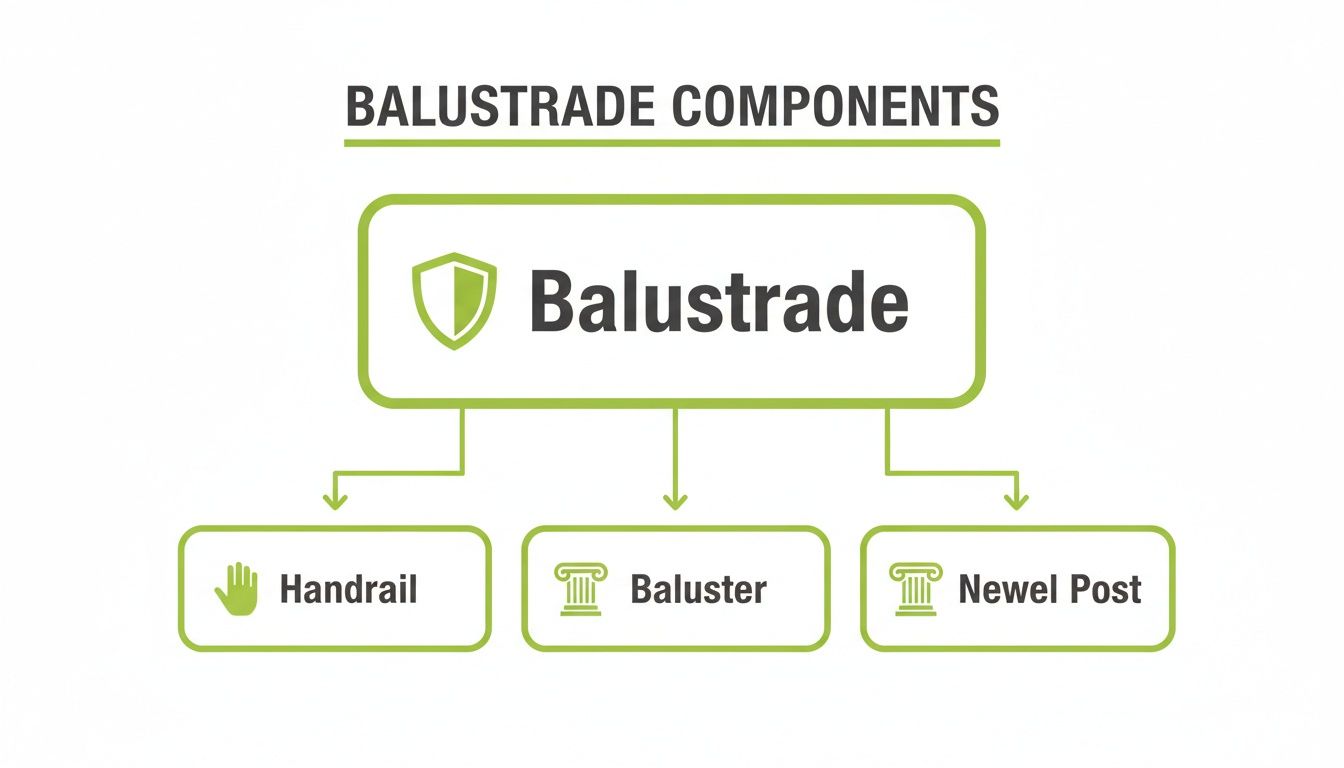
As you can see, the handrail, balusters, and newel posts all work together to form one secure, unified structure. Understanding how they connect is the key to appreciating why professional design and installation are so important.
Every single component is essential, contributing to both the safety and the final look of the system. A modern glass balustrade might appear deceptively simple, but these parts are working hard behind the scenes.
You could think of it like a football team. The newel posts are the sturdy goalposts, the balusters are the reliable line of defenders, and the handrail is the manager holding the whole structure together and providing guidance.
This combination of parts is precisely what makes a balustrade a complete safety system, not just a decorative touch. Whether you’re dreaming of Glass Balustrades Yorkshire for a new terrace or updating an old staircase in Newcastle, knowing these terms is the first step. It empowers you to have clearer, more effective conversations with designers and installers, ensuring you get the perfect result.
A balustrade is so much more than a simple safety rail; it’s a powerful design element that helps define the character of your home. Whether you lean towards the robust charm of traditional materials or the clean, minimalist lines of modern glass, your choice can completely transform a space.
Think of it as choosing a frame for a beautiful painting. An ornate, classic frame can complement a traditional piece of art, while a barely-there modern frame lets the artwork itself shine. The same principle applies here—the style you select frames the view of your home and garden.
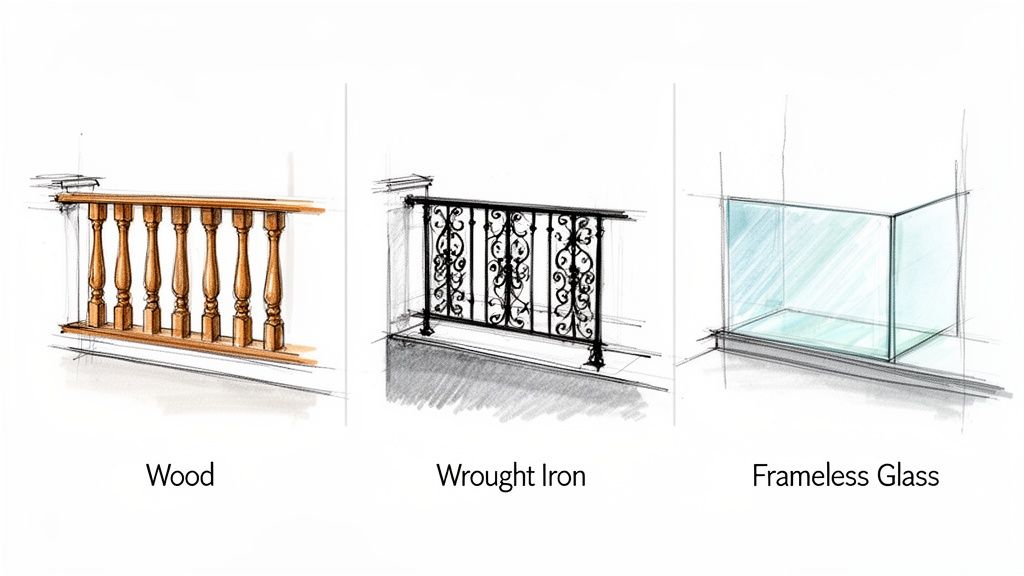
For period properties or homes with a classic feel, traditional materials bring a sense of history, warmth, and substance that’s hard to replicate.
In recent years, we’ve seen a huge shift towards minimalist designs that champion light and space. This is where glass balustrades have completely changed the game, moving from a simple safety barrier to a sophisticated design feature.
Glass systems are incredibly popular, and for good reason. They deliver a clean, high-end finish while being exceptionally strong and functional, opening up spaces in a way no other material can.
The real magic of a glass balustrade is in what it doesn’t do. It doesn’t block light. It doesn’t interrupt your view. It doesn’t add visual clutter. It simply creates a seamless sense of flow and openness.
When you're considering glass, there are three main types of systems to explore:
This minimalist approach provides a completely seamless barrier, perfect for showcasing a beautiful view. Our team specialises in designing and installing these incredible features, creating safe and stunning additions to homes. You can see more of our work in our guide to balustrade and balcony solutions.
While the aesthetic possibilities of a new balustrade are exciting, let’s be clear: safety is completely non-negotiable. Getting to grips with the rules isn’t about ticking boxes; it’s about giving you total peace of mind that your beautiful new feature is also a completely secure barrier for you and your family.
This is where the UK Building Regulations come into play. Specifically, we're talking about Part K, which sets out the legal requirements for protection from falling, collision, and impact. Any professional installer worth their salt treats these rules as the absolute minimum standard, and it's our job to translate that official guidance into practical knowledge for you.
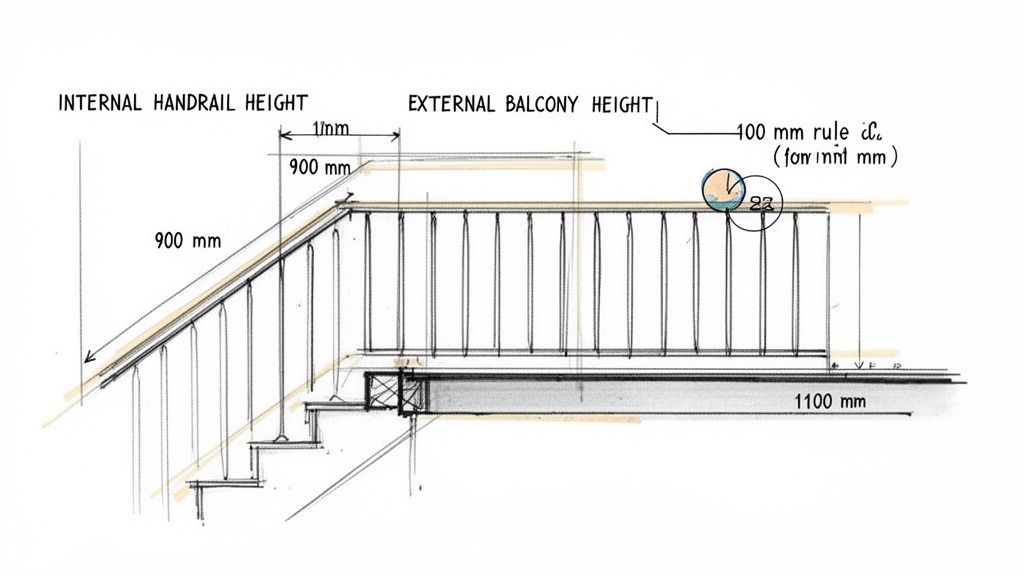
The first and most critical safety check for any balustrade is its height. The regulations are crystal clear on this, with different minimums depending on where the barrier is located.
These specific heights aren't arbitrary. They're carefully calculated to prevent an average adult from accidentally toppling over. So, whether you're planning a sleek installation of Glass Balustrades in Yorkshire or renovating a period property up in Newcastle, these minimums are a legal requirement you can't ignore.
Beyond just the height, the regulations also focus on the gaps within the balustrade itself. This is where you'll hear professionals talk about the ‘100mm sphere rule’.
The 100mm sphere rule is a simple yet effective test: no gap anywhere in the balustrade system should be large enough for a 100mm sphere to pass through. This is designed to prevent small children from getting their heads stuck or falling through the barrier.
This rule applies everywhere—between vertical posts, underneath the bottom rail, or between any decorative elements. It’s one of the reasons frameless glass systems are such a fantastic and safe option for family homes; the large, solid panels naturally eliminate these gaps.
Getting the dimensions right is only half the battle; using the correct materials is just as vital. For any glass balustrade, the law mandates the use of safety glass. This means using either toughened or laminated glass that meets strict British Standards for strength and impact resistance.
The data speaks for itself. Health and Safety Executive (HSE) reports show that while balustrade failures contribute to about 12% of falls in homes each year, compliant glass installations can slash these incidents by as much as 85%. This is thanks to materials like laminated glass, which is engineered to withstand significant impacts and meets the rigorous standards of BS EN 12600. It's a testament to how modern materials are making our homes safer. You can discover more insights about trends in construction glass and see how it's shaping modern building safety.
It's one thing to know what a balustrade is, but it’s far more interesting to see why one particular style is completely changing the look and feel of homes across the UK. Glass balustrades have gone from a niche architectural detail to a must-have feature in modern homes, and for good reason. They offer a unique blend of style and function that few other materials can touch.
Think about a traditional staircase or landing with solid wood or metal spindles. They do their job, but they also carve up the space, casting shadows and making hallways feel darker and smaller. A glass system achieves the exact opposite. It lets natural light pour through, instantly making your home feel brighter, bigger, and far more open.
If you're aiming for a clean, high-end, and contemporary finish, a glass balustrade is one of the most impactful changes you can make. The clean lines provide totally unobstructed views, a huge advantage if you have a beautiful garden, an open-plan living area, or a feature wall you want to show off. This feeling of seamlessness is what drives so many of our clients to seek Glass Balustrades Yorkshire, as it helps to effortlessly connect the inside of their home with the outside.
The real magic of a glass balustrade is its ability to provide crucial safety without any visual clutter. It’s a barrier you can see right through, enhancing both the beauty and the perceived value of your property.
This core principle—safety without sacrificing the view—is a hallmark of modern design. You can even see it in a practical guide to glass pool fences, which points out how the material's aesthetic and safety benefits are the key to its popularity, just like with home balustrades.
Don't let the elegant, delicate appearance fool you; modern glass balustrades are incredibly robust. They are crafted from toughened or laminated safety glass, specifically engineered to be strong, resilient, and to last for years to come. This strength comes with another major perk: they are exceptionally easy to look after.
Unlike timber, which needs constant sanding, painting, or staining to stop it from rotting or looking tired, glass is beautifully low-maintenance. A quick wipe with a standard glass cleaner is all it takes to keep it looking brand new. This fantastic combination of strength, style, and simplicity makes it a genuinely smart investment for any homeowner.
Whether you're looking to transform a staircase or add a touch of class to a new balcony, you can explore the possibilities in our full range of glass balustrade systems.
You’ve settled on a vision for your new glass balustrade, but bringing it to life hinges on one final, critical step: choosing the right installer. This is where the plans on paper become a physical reality, and the difference between a flawless finish and a project riddled with issues comes down entirely to the hands doing the work.
A quick search for specialists in Glass Balustrades Yorkshire or Glass Balustrades Newcastle will bring up plenty of options, but it’s crucial to know what separates a true craftsman from a simple supplier. A top-tier company acts as your project partner, guiding you from the initial design ideas right through to the final sign-off.
The best installers provide a complete, end-to-end service where quality and compliance are the top priorities. They should have a strong, local portfolio of completed projects you can look at—real-world examples are far more telling than any sales pitch.
A truly expert installer provides more than just fitting. They offer bespoke design consultations, take meticulous on-site measurements, and possess an in-depth, practical understanding of UK safety regulations, ensuring your project is not only stunning but also fully compliant and built to last.
A local specialist also brings an invaluable understanding of the architecture and environment across the North of England. They know which materials and fixings will stand up to our regional weather, ensuring your balustrade performs perfectly and looks great for years to come. That local knowledge is priceless.
Your confidence in the project really starts to build during that first consultation. A quality installer will take the time to properly understand what you want to achieve, talk you through the design possibilities, and give you a clear, detailed quote with no hidden costs.
When it comes to the fitting, meticulous work is non-negotiable. Every panel must be perfectly aligned, every fixing securely tightened. This precision is the hallmark of a professional team. To get a better sense of the full journey, check out our guide on finding the right glass balustrade installers. Making the right choice here ensures your investment pays off, enhancing your home’s beauty and safety for decades.
When you’re thinking about a significant home improvement like a new balustrade, it's natural to have questions. Over the years, we've found that homeowners often have the same key queries. Here, we've gathered our answers to help you get a clearer picture before you begin.
This is usually the very first question we get asked, and we’re happy to say the answer is an emphatic yes. It’s a common concern, but any professionally installed glass balustrade is built with safety as the absolute priority.
We only use specific types of safety glass – either toughened or laminated. This isn't your standard window pane; it's engineered to be incredibly strong and withstand significant impacts. Furthermore, every single installation must comply with strict UK building regulations, which includes the vital '100mm rule'. This ensures there are no gaps in the system large enough for a curious toddler to squeeze through, making them a secure and reliable choice for any family home.
The final cost of a glass balustrade can vary quite a bit, as every project is completely unique. Think of it less like an off-the-shelf product and more like a tailored piece of furniture for your home.
The price really comes down to a few key choices:
While a glass balustrade is a fantastic home improvement that genuinely adds value to your property, the only way to get a precise figure is to get in touch for a bespoke quote.
This is one of the best parts about choosing glass – they are incredibly easy to look after. A quick wipe with a standard glass cleaner and a good microfibre cloth is all it takes to remove fingerprints and keep them looking crystal clear.
Unlike timber, there's no need for laborious sanding, staining, or repainting every few years. Glass doesn't warp, rot, or fade. This long-term durability and low-maintenance appeal saves you a huge amount of time and effort down the line, making it the perfect practical solution for a busy, modern home.
If you’re considering a glass installation for your home in Yorkshire or elsewhere in the North of England, the expert team at Glass Tech is here to help. We offer bespoke design and installation services to create the perfect balustrade for your space. Contact us today for a free, no-obligation quote.

A professional team of experts providing glass and glazing solutions covering the whole of Yorkshire & more...
Whether it's Leeds, York, North Yorkshire, Birmingham, Hull, Liverpool, Machester, Newcastle or Nottingham, get in touch to find out how we can help you with your bespoke glass project.