
Before you even think about spending money, the first step in reducing noise through your windows is a bit of simple detective work. You need to figure out what kind of noise you're dealing with and where it's coming from. The low rumble of traffic needs a completely different approach to the high-pitched chatter from a nearby pub garden, after all.
Effective soundproofing starts with understanding, not spending.
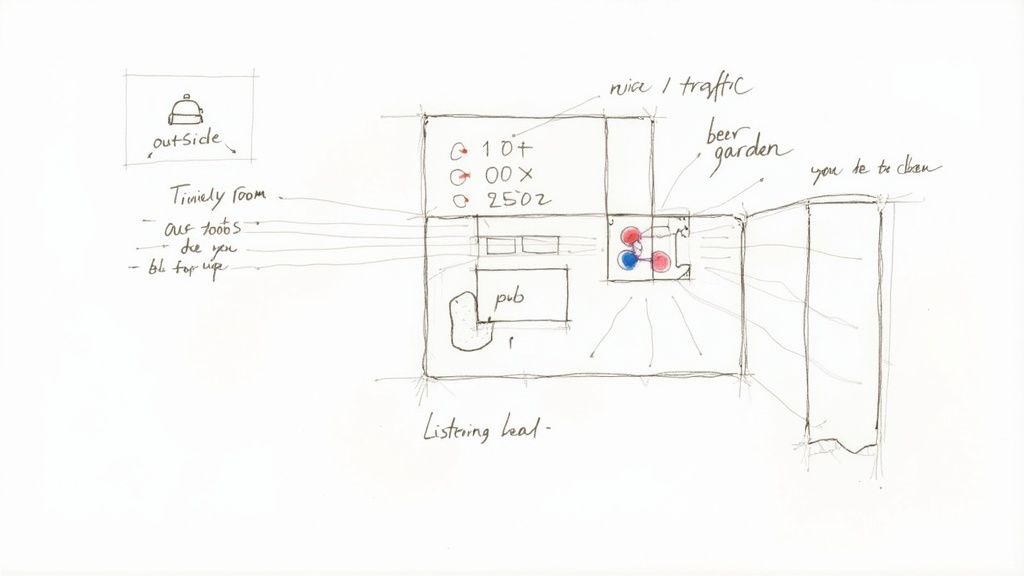
To tackle unwanted sound properly, you need to become a noise detective in your own home. Different sounds travel in different ways and, you guessed it, require very different solutions.
The good news is that this initial investigation doesn't require any special kit—just your ears and a bit of patience. By simply listening and looking, you can gather all the crucial information you need to choose the right noise reduction strategy, whether you're in a bustling city centre like Newcastle or a quieter part of Yorkshire.
First, identify the main culprits. Is it the constant, low drone of traffic? The sharp, sudden sounds of children playing next door? Or maybe the intermittent rumble of a nearby train line? Pay close attention to when these sounds are at their worst.
Make a quick note of which windows seem to be letting the most sound in. This will help you prioritise which rooms need attention first.
Sound behaves a lot like air—it will find any gap or weak point to sneak through. A proper visual and physical inspection of your window frames is absolutely essential. Get up close and look for:
This diagnostic step is vital. I've seen people spend a fortune on new windows, only to be disappointed because they didn't fix the gaps around the frame first. Addressing the source and the physical entry points is key to getting the peace and quiet you're after.
It's an issue that's becoming more and more common. In fact, noise complaints in the UK have surged recently, highlighting just how much we need effective soundproofing. Government statistics from 2021 showed a massive 54% rise in complaints, particularly in cities where traffic and neighbour noise are constant problems. You can get more insights about these noise pollution trends and their impact on UK homes.
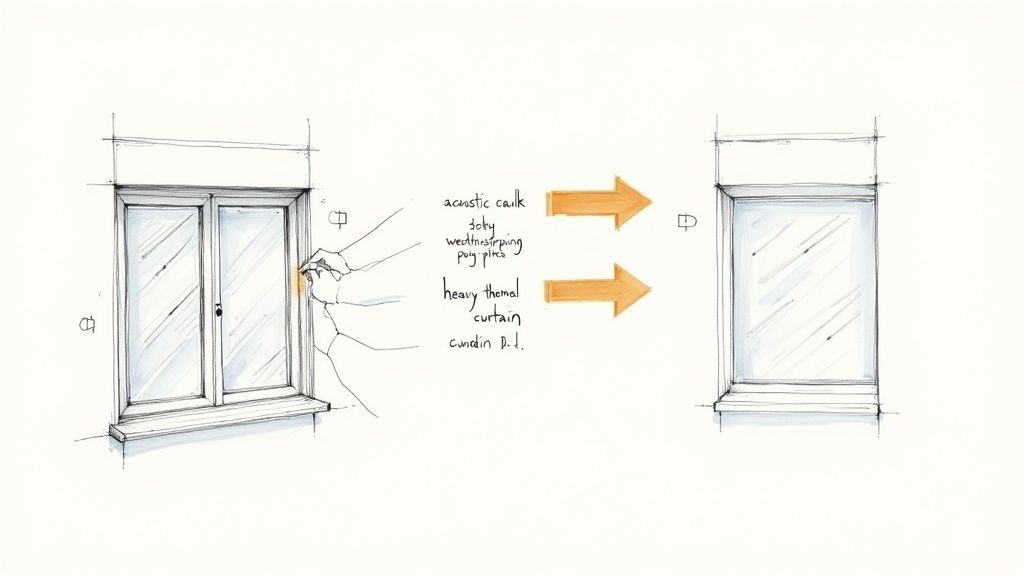
You don’t always need a major overhaul to get noticeable results. When it comes to reducing window noise, there are several powerful, low-cost fixes perfect for a weekend project that can make a genuine difference to the peace and quiet in your home.
These methods focus on the two main ways sound gets in: sneaking through gaps and vibrating directly through the glass.
The first port of call should always be sealing those air gaps around your window frames. It's often the biggest culprit and the most overlooked entry point for noise. Sound travels with air, so if you can feel a draught, you can be sure noise is getting in too.
Your mission here is simple: create an airtight seal around the entire window unit. It’s a straightforward task that any homeowner can tackle, but the results are remarkably effective.
Start by giving your window frames a close inspection. Years of a building settling and seasonal temperature changes can cause small cracks to appear between the frame and the wall. For these static gaps, acoustic caulk is your best friend. This isn't your standard decorator's caulk; it's a specialised sealant designed to stay flexible and absorb sound vibrations, making it far superior for this job.
Next, turn your attention to the moving parts of your windows. The seals on opening sashes are critical weak points. You can easily upgrade them with a trip to the hardware shop for:
For anyone keen to get started, exploring effective DIY window insulation techniques can offer quick relief from both draughts and noise, providing a great starting point for enhancing your home's comfort.
Once you've plugged the gaps, the next step is to manage the sound that passes straight through the glass pane itself. This is where soft furnishings come into play, acting like a sponge for sound waves that make it into the room.
Think of it like this: a hard, empty room creates echoes, while a room with carpets and sofas feels much quieter. The same principle applies to your windows. By adding absorbent materials, you can dampen sound and reduce reverberation.
Heavy, thick curtains are an excellent and easy choice. Look for materials like velvet, thermal-lined fabrics, or those specifically marketed as 'sound-dampening' curtains. The heavier and more densely woven the fabric, the better it will be at absorbing a wide range of sound frequencies.
For the best results, make sure the curtains extend well beyond the window frame on all sides and hang from the ceiling right down to the floor. This creates a substantial barrier that effectively traps sound. Cellular or 'honeycomb' blinds also work surprisingly well, as their unique structure traps air, helping to insulate against both noise and temperature changes.
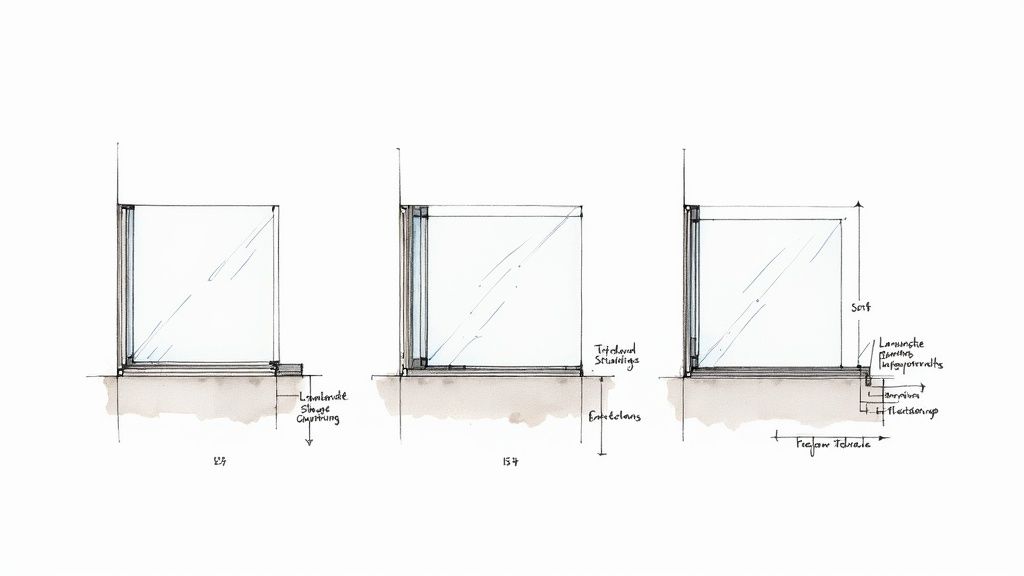
When you've caulked every gap and hung the thickest curtains but the noise still gets through, it's time to look at the windows themselves. Upgrading your glazing is hands-down the most powerful step towards reclaiming a truly peaceful home. This is where you move beyond quick fixes and invest in a permanent, professional solution.
Making a smart choice here is about more than just adding panes of glass. It’s about understanding the science of how different glazing setups disrupt sound waves. Get this right, and you’ll secure long-term quiet.
The most familiar upgrade for most homeowners is double glazing. It’s a simple but effective concept: two panes of glass are separated by a sealed gap filled with air or an inert gas like argon. That gap is the crucial element. As sound waves hit the first pane and travel through the gap to the second, they lose a significant amount of energy, which is how the noise gets dampened.
But here’s a pro tip: for even better sound reduction, the two panes should have different thicknesses. We call this asymmetrical glazing, and it’s remarkably effective because each thickness tackles a different range of sound frequencies. It's an excellent strategy for blocking the varied, complex noise of a busy urban street.
What about triple glazing? This adds a third pane of glass and a second insulating gap. While it's a champion for thermal efficiency, it is not automatically better for soundproofing. In fact, a well-designed acoustic double-glazed unit with varied glass thicknesses can often outperform a standard triple-glazed window for noise reduction alone. For a closer look at the specifics, it's worth reading up on energy efficient double glazed windows.
If you’re dealing with serious noise pollution—think main roads, flight paths, or city-centre living—then acoustic glass is the top-tier solution. This isn't just standard glass; it's a laminated sandwich. A transparent layer of polyvinyl butyral (PVB) is bonded between two panes of glass, and this interlayer is a game-changer. It acts as a vibration dampener, absorbing sound energy before it has a chance to get through.
Acoustic glass is particularly brilliant at stopping low-frequency noise like the constant rumble of traffic.
But what if replacing your windows isn't an option? This is a common problem in period properties, conservation areas, or flats with strict rules. In these situations, secondary glazing is an outstanding alternative. It involves fitting a slim, discreet second window on the inside of your existing one.
This creates a very wide air gap—much larger than in a standard double-glazed unit—that acts as a powerful sound buffer. Many homeowners from Yorkshire to the Cotswolds find this the perfect way to preserve their property's character while making a massive dent in outside noise. If this sounds like the right fit for your home, you can explore our specific secondary glazing solutions.
Secondary glazing is so effective that 30% of installations are now fitted over existing double glazing. This "double-double" effect provides an extra layer of defence against extreme noise without the disruption of a full window replacement. It’s an approach we see more and more in projects from Newcastle to Manchester where absolute quiet is the goal. This just goes to show that you don't always need to start from scratch to transform your home's tranquillity.
To help you weigh up the options, it’s useful to see how the main contenders stack up against each other. Each has its strengths, and the best choice really depends on your specific noise problem and budget.
| Feature | Double Glazing | Triple Glazing | Acoustic Glass |
|---|---|---|---|
| Noise Reduction | Good. Effective for general noise. Can be enhanced with varied glass thickness. | Good, but primarily focused on thermal performance. Not always better than acoustic double. | Excellent. The PVB interlayer specifically targets and absorbs sound vibrations. |
| Energy Efficiency | Very good. A significant upgrade over single glazing, reducing heat loss. | Excellent. The extra pane and air gap provide superior thermal insulation. | Very good. Offers similar thermal benefits to standard double glazing. |
| Cost | Standard and cost-effective upgrade. | Higher cost than double glazing, often a 15-20% increase. | Premium option. More expensive than standard double glazing due to the lamination process. |
| Best For | General residential upgrades, improving both comfort and energy bills. | Homes where maximising thermal efficiency and reducing heating costs is the top priority. | Properties on busy roads, near railways, or under flight paths where noise is the primary concern. |
Ultimately, the table shows there isn't one "best" window for everyone. If your main goal is blocking sound, acoustic glass is the clear winner. If you're balancing thermal performance with cost, double glazing is a fantastic all-rounder, while triple glazing is the champion for anyone chasing the lowest possible energy bills.
Getting to grips with the technical side of soundproof windows can feel a bit like learning a new language. But trust me, understanding these numbers is the key to making a confident choice and actually getting the peace and quiet you’re paying for. It helps you see past the marketing fluff and focus on what really matters: real-world results.
Once you know what to look for, you can start building a realistic budget. Whether you're in a terraced house in Leeds battling road noise or a modern flat overlooking the Tyne in Newcastle, connecting performance metrics to actual costs ensures you invest wisely.
When you start looking at window specifications, you'll come across a few key acronyms. These aren't just jargon; they are standardised ratings that tell you exactly how well a window blocks different kinds of noise.
The main rating you'll see is Rw, the Weighted Sound Reduction Index. It’s measured in decibels (dB) and gives you a general idea of a product's overall sound insulation. The thing is, it doesn't tell the full story, especially for those of us in the UK dealing with relentless traffic.
For a much more accurate picture, you need to look at two crucial adjustments:
The 'Ctr' part is a 'correction factor', which is always a negative number subtracted from the main Rw rating. For example, a window with a solid Rw of 40 dB might have a Ctr correction of -6 dB. This means its true performance against traffic noise is closer to 34 dB. Always, always check the Rw+Ctr value.
With a better grasp of the performance ratings, you can start to plan your costs. The price of sorting out noisy windows varies massively, depending on the scale of your project and the level of sound reduction you need.
Modern acoustic glazing is a game-changer, with some systems able to cut external sounds by up to 40 dB. This is becoming more essential than ever, especially when you consider that UK noise complaints shot up by 54% by 2021. Experts always stress that a proper site assessment is crucial, as the noise hitting the front of your house can be completely different from the back, which should guide your choices. You can learn more about the science behind acoustic glass and how these ratings are determined.
Here’s a rough guide to help you budget for a project in a typical Yorkshire home:
For detailed specifications across a whole range of high-performance glazing products, you can explore our full product brochure. It'll give you a clearer idea of the options that might suit your home, helping you match the right product to your specific noise issue and budget.
You’ve seen the options, from simple DIY seals to high-performance acoustic glazing. So, how do you pull the trigger and choose the right strategy for your home? The best decision always comes down to balancing three things: the specific noise you’re fighting, your budget, and any restrictions tied to your property.
This is where the rubber meets the road. A homeowner in a listed building in Yorkshire, for instance, faces a completely different set of rules than someone in a modern flat next to a busy Newcastle road. For the historic property, secondary glazing is often the only way to preserve its character. The city-centre flat, however, would be transformed by brand-new, high-performance acoustic windows.
Let's make this tangible. The first step is to pinpoint your main goal. Are you trying to block the low, persistent rumble of lorries or the sharper, higher-pitched sound of people talking outside a pub? Your answer points you directly to the right kind of acoustic rating.
This decision tree helps visualise how to pick an acoustic rating, depending on whether you're tackling general noise or that specific, annoying traffic drone.
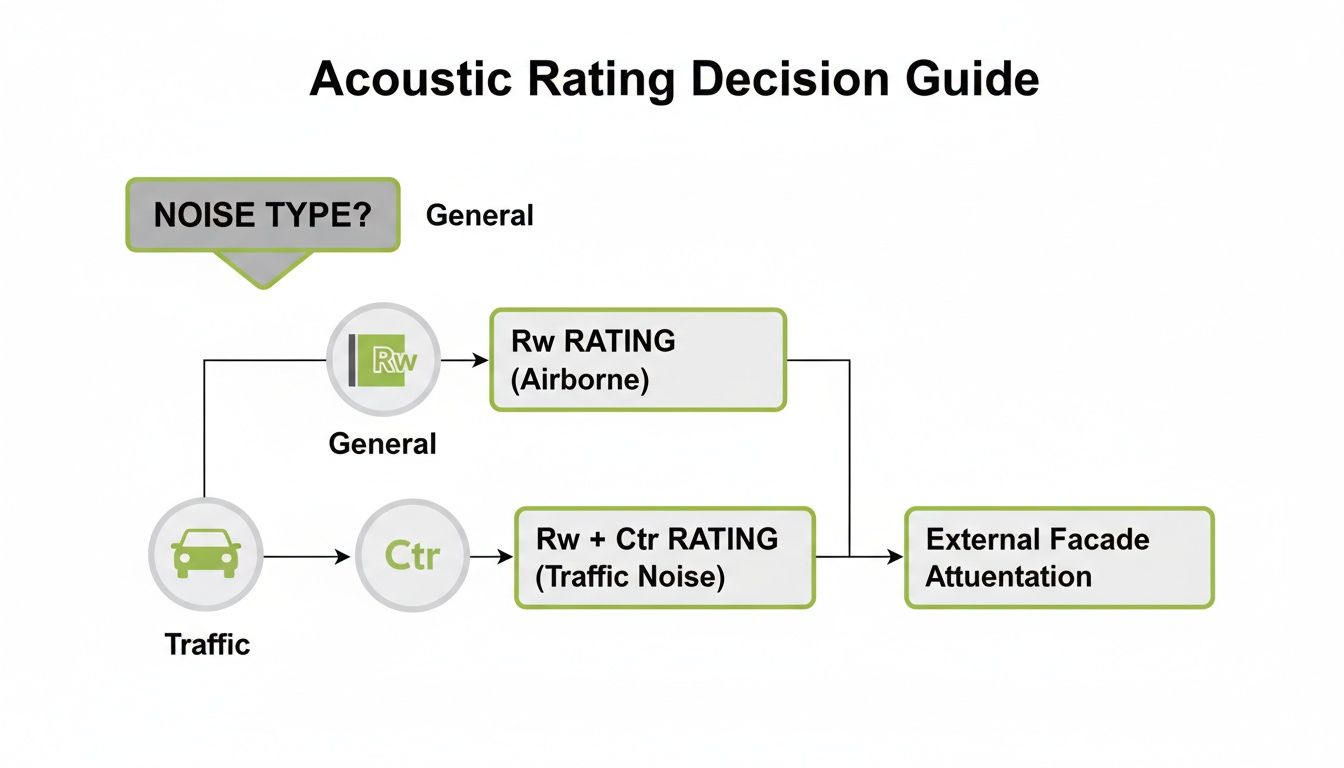
The crucial takeaway here? If traffic is your enemy, always focus on the Ctr value. It’s the only number that tells you how well the window will perform against those challenging low frequencies.
Ultimately, the best solution is the one that fits your home and your life. Think about the long-term gains. You're not just buying quiet; you're investing in better thermal efficiency, improved property value, and your own peace of mind.
A quieter home isn't just a luxury; it's a significant improvement to your wellbeing, focus, and privacy. The goal is to choose a strategy that provides the peace you deserve without compromising your home's character or your budget.
If you’re leaning towards a full replacement, remember that the frame and the quality of the installation are just as important as the glass itself. For a complete picture of what’s possible, you can explore our range of high-quality windows and composite doors designed for homes across the north of the UK. We make sure every single component works together to create a quieter, more comfortable home.
When you’re looking to quieten your home, a lot of questions come up. To help you weigh up the options and feel confident in your decision, we've put together straightforward answers to the questions we hear most often.
A high-quality, professionally installed double-glazed unit can make a massive difference, typically cutting external noise by around 35 decibels (dB). For many people, this is enough to turn the roar of daily traffic into a much less intrusive, distant hum.
But not all double glazing is created equal. Its real-world performance depends heavily on things like the thickness of the glass panes and, crucially, the width of the gap between them. If you’re dealing with constant traffic noise, it’s worth looking at specialist acoustic double glazing, which is engineered to achieve a reduction of 40 dB or more.
This is a common misconception. While triple glazing is brilliant for thermal insulation—keeping your home warmer—it isn't automatically better for soundproofing. In fact, it can sometimes be less effective than a good acoustic double-glazed unit.
Sound waves are best disrupted when they have to travel through different densities. A standard triple-glazed window often uses three panes of the same thickness, which can be less effective at stopping certain sound frequencies. For this reason, a purpose-built acoustic double-glazed unit, which uses two panes of different thicknesses, will almost always outperform it for noise reduction.
If your main goal is a quieter home, your focus should be on purpose-built acoustic glass, not just the number of panes.
Absolutely. It makes an enormous difference. Think of sound like water—it will find any crack or gap to sneak through. Even the smallest gaps around your window frames or worn-out seals can let in a surprising amount of noise, completely undermining the performance of even the best glazing.
Applying acoustic sealant and fitting high-quality weatherstripping is one of the best value-for-money actions you can take. It’s a job that provides an immediate, noticeable improvement and should always be your first port of call before you start thinking about bigger investments.
Yes, you can, and it's a fantastic technique for achieving maximum noise reduction. Adding a secondary glazed panel inside your existing double-glazed windows creates an exceptionally large air gap, and that gap is a powerful sound insulator.
This "double-double" glazing approach is perfect for homes right next to major roads in cities like Newcastle or Leeds, where noise levels can be extreme. It’s also a go-to solution for listed buildings across Yorkshire, where replacing the original windows simply isn't an option. It lets you preserve the building's character while getting modern acoustic performance.
At Glass Tech, our specialism is creating quieter, more comfortable homes with high-performance glazing. Whether secondary glazing is the right fit or a full window replacement makes more sense, our team has the expertise to guide you. From Glass Balustrades Yorkshire to glazing installations in Newcastle, we serve a wide area in the north of the UK.
Contact us today to talk through your project and get a free, no-obligation quote.

A professional team of experts providing glass and glazing solutions covering the whole of Yorkshire & more...
Whether it's Leeds, York, North Yorkshire, Birmingham, Hull, Liverpool, Machester, Newcastle or Nottingham, get in touch to find out how we can help you with your bespoke glass project.