
Picture your hallway bathed in a warm, amber glow from the afternoon sun, or a front door that makes a bold, stylish statement from the kerb. This is the effect of coloured glass panels for doors. It’s a way to weave personality, light, and colour directly into the fabric of your home, completely changing its character from the inside out.
More than just a simple design flourish, coloured glass door panels are where artistry and function meet. They offer a unique way to manage the light and atmosphere in your home while making a distinctly personal statement. Whether you're drawn to a classic, intricate pattern or a sleek, modern block of colour, the right panel can entirely reshape the feel of a space.
For homeowners looking to boost their property’s kerb appeal, these panels are a brilliant investment. They can make an older door feel contemporary and fresh or provide the perfect finishing touch to a brand-new entrance.
Coloured glass isn't just about the look. It serves crucial, practical purposes, which is why we’ve seen its popularity continue to grow across the UK.
To really get a sense of how coloured glass panels can revitalise your home, it helps to think about how they fit into the bigger picture. Exploring the fundamentals of different types of interior design can offer some fantastic inspiration, showing how a splash of cobalt blue or a subtle bronze tint can complement everything from minimalist décor to a more traditional scheme. This kind of thoughtful integration is what makes the final result feel so cohesive and impressive.
In our experience, the most successful projects are the ones where the glass isn't just an addition, but an integral part of the home's architectural story. It’s about creating a feature that feels both intentional and deeply personal.
From historic townhouses in Yorkshire to modern new-builds in Newcastle, the right coloured glass can bridge the gap between old and new. It’s a wonderfully versatile medium that can honour a property’s heritage while introducing a touch of contemporary elegance. In this guide, we'll walk you through how to bring this beautiful feature into your own home.
Picking the right type of coloured glass for your door isn't just a design choice; it's about defining the character and feel of your entrance. Each manufacturing method offers a completely different aesthetic and performance. Understanding your options is the crucial first step to bringing your vision to life.
We can broadly group these into two camps: the time-honoured, traditional methods steeped in history, and the sleek, innovative techniques of modern glass manufacturing. Your final choice will likely come down to your home’s architectural style, how much privacy you need, and the specific atmosphere you want to create.
For centuries, artisans have used coloured glass to control light and add breathtaking beauty to buildings. These methods carry a sense of history and classic elegance, perfect for properties with a distinct character.
Stained Glass: This is what most people picture when they think of decorative glass. It's essentially a mosaic made of light. Small pieces of coloured glass are cut to shape and arranged to form a picture or pattern, then carefully joined with lead strips (known as 'came'). It’s a technique synonymous with heritage properties and grand entrances, offering unmatched intricacy and timeless appeal.
Fused Glass: While also a traditional craft, fusing creates a more organic, fluid look. Instead of being joined by lead, different pieces of coloured glass are layered and heated in a kiln until they melt and fuse into a single piece. This process creates unique, blended patterns and textures, making it ideal for a one-of-a-kind artistic statement in a doorway.
These handcrafted options are particularly fitting for period properties across the North, from Victorian terraces in Harrogate to Edwardian homes in York, as they honour the building’s original architectural spirit.
Technology has unlocked a whole new world for coloured door glass, focusing on uniform colour, enhanced performance, and a clean, contemporary finish.
To help you navigate these modern choices, we've put together a quick comparison table that breaks down the key characteristics of each type.
| Glass Type | Aesthetic | Privacy Level | Light Transmission | Best For |
|---|---|---|---|---|
| Back-Painted | Sleek, uniform, opaque | 100% Opaque | None | Modern homes, bold colour statements, complete privacy. |
| Laminated | Consistent, solid colour | 100% Opaque | None (with opaque interlayer) | External doors, high-security areas, combining colour with safety. |
| Acid-Etched | Frosted, soft, matte | High (obscures view) | Diffused Light | Balancing privacy and light, subtle colour effects. |
| Decorative Film | Varies widely | Adjustable | Varies by film type | Budget-friendly updates, replicating other styles, temporary designs. |
As you can see, the right choice really depends on balancing aesthetics with practical needs like privacy and security.
This is a thoroughly modern technique where we apply a specialist, durable paint to the back surface of a toughened glass panel. The result is a flawless, opaque, and uniform block of colour that delivers a crisp, minimalist look. It's an incredibly popular choice for new-builds and contemporary renovations, offering total privacy and a powerful design statement.
The desire for bolder front doors is certainly on the rise. While white was once the default, recent data shows a major shift in UK homeowner preferences. One study found that while 36% of doors are currently white, a huge 87% of people would choose a different colour next time. Colours like black (jumping to a 15% preference), blue (14%), and green (10%) are the new favourites, and back-painted glass is the perfect way to achieve these rich, solid tones.
This simple guide can help you narrow down the options based on your home's style.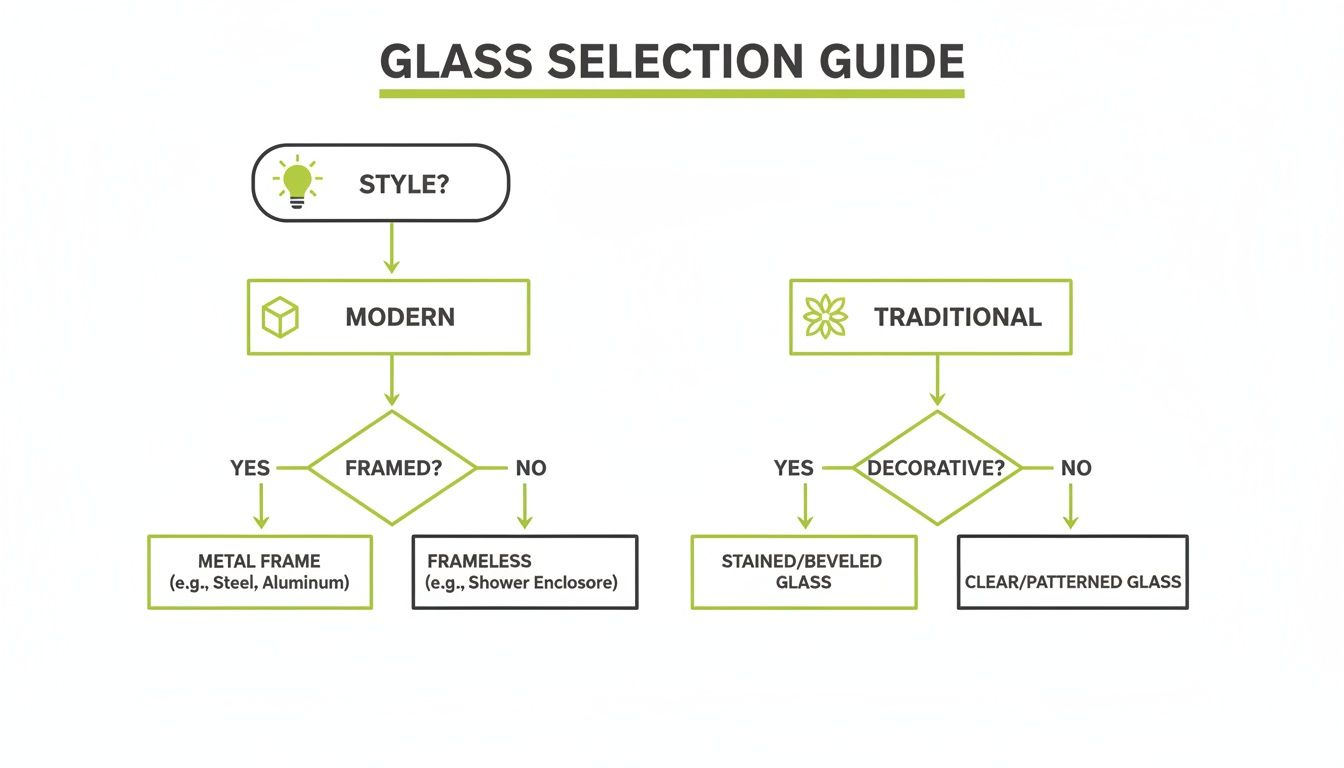
As the guide shows, whether you're aiming for a contemporary or a classic look will point you towards very different but equally beautiful glass solutions.
Here, safety and style work in perfect harmony. Think of it as a "safety sandwich"—a coloured plastic interlayer is bonded between two panes of glass under immense heat and pressure. This process creates a vibrant, consistent colour while also offering a major safety advantage. If the glass breaks, the fragments adhere to the interlayer instead of shattering dangerously.
This makes it an ideal method for external doors where security is a key concern. You get the dual benefits of robust safety and an enormous range of available colours, making it a versatile choice for any property, from city-centre apartments in Manchester to family homes in Newcastle.
For those who need privacy but don't want to sacrifice natural light, acid-etched glass is a fantastic solution. A chemical process creates a beautiful frosted, matte finish on the glass surface. This wonderfully diffuses light while completely obscuring the view. We can apply this finish to clear or tinted glass to create a soft, subtle colour effect.
Beyond these permanent glass solutions, there are also high-quality modern alternatives like decorative window film. These advanced films can convincingly replicate the look of etched or even stained glass for a fraction of the cost, giving you flexibility. They are a great way to experiment with colour and privacy, and can easily be changed if you fancy a new look in a few years.
When you think about upgrading your front door, it's easy to focus on materials and hardware. But the glass you choose can have a truly transformative effect. Far more than just a decorative flourish, coloured glass panels are a smart, functional upgrade that brings a surprising number of practical advantages to your home, enhancing everything from daily living to your property’s overall value.
And it’s a choice more and more UK homeowners are making. The doors market, valued at £2.41 billion in 2023 and forecast to reach £3.06 billion by 2029, is seeing a huge demand for premium designs. Composite doors featuring coloured glass now hold a dominant 56% market share, a testament to their popularity. This growth is supported by a robust UK flat glass manufacturing industry, ensuring homeowners from Leeds to Hull have access to high-quality, beautifully crafted glass. For a deeper dive into the industry data, you can review the full flat glass manufacturing report from IBISWorld.
Your front door is the first thing guests see; it’s the handshake of your home. A vibrant, well-chosen coloured glass panel can dramatically lift the entire look of your property, instantly boosting its kerb appeal. It’s an opportunity to express your personal style and create a focal point that feels genuinely welcoming.
A thoughtfully designed entrance does more than just look good. It signals a home that is cared for and stylish on the inside, which can have a tangible impact on how your property is perceived by visitors and, crucially, potential buyers. In competitive markets like those across Yorkshire and the North East, this visual upgrade can translate directly into a higher perceived value.
A front door with a unique coloured glass design doesn't just say "welcome"; it says "this home is special." It's an investment in character that pays dividends in first impressions.
One of the most compelling benefits of coloured glass is its ability to shape the atmosphere inside your home. The colour you choose acts as a natural filter, transforming daylight to create a very specific mood and feel in your entrance hall.
Think about the effect this can have:
This is your chance to curate the experience of entering your home, setting the tone for the entire property.
For many homes, especially those on busy streets or with close neighbours, privacy is a real concern. Traditional solutions like curtains or blinds do the job, but they often block out precious natural light, leaving your hallway feeling dark and enclosed.
This is where coloured and decorative glass truly shines. By opting for an acid-etched, frosted, or an opaque back-painted panel, you can completely obscure the view from the outside. At the same time, you'll still allow soft, diffused daylight to flood your hallway. The result is a bright, airy space that feels open and welcoming, yet remains completely private. It’s the perfect balance of seclusion and light.
There's a common misconception that adding glass to a door somehow compromises its security. With modern glazing technology, the opposite is true. Today's coloured glass panels are engineered for exceptional safety and durability, providing beauty and peace of mind in equal measure.
Most of our coloured glass installations use one of two types of safety glass, both designed to be incredibly robust:
Both options are manufactured to meet stringent UK safety standards, such as BS EN 12150 for toughened glass. This ensures they are a secure and reliable choice for any external door, giving you confidence in your home's safety.
A beautiful coloured glass panel is only half of the story; it needs the right door to truly sing. Choosing the perfect pairing isn’t about following rigid rules, but about creating a harmonious partnership that enhances your home’s unique character. The door's role—whether internal, external, or connecting spaces—is what will ultimately guide your choices for coloured glass panels for doors.
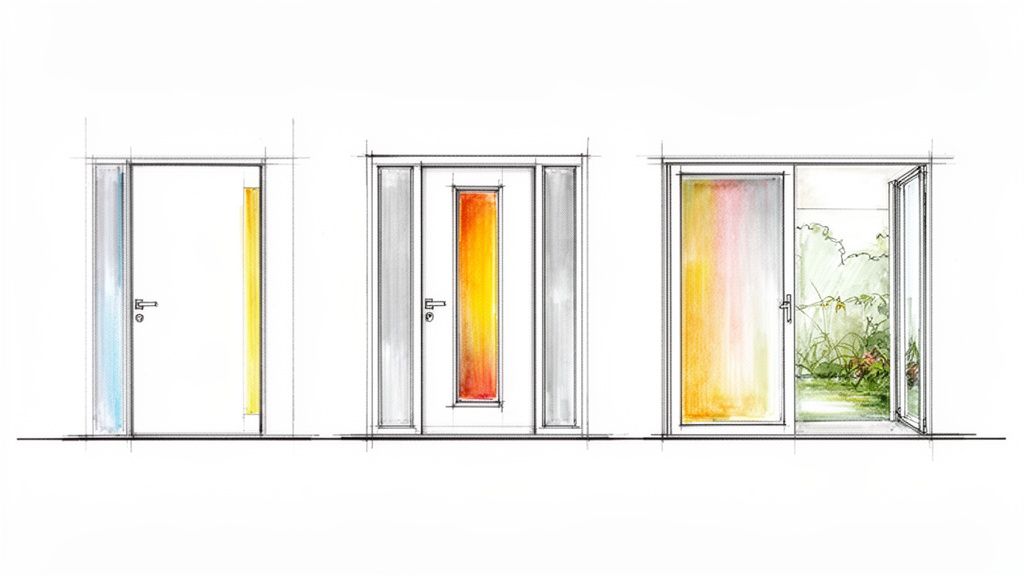
Think about an internal door between a dimly lit hallway and a bright living room. This is the perfect spot for a translucent coloured panel. It can borrow light, making both spaces feel more open and connected, while adding an artistic flair that simple painted wood just can't match.
When it comes to your front door, it's all about making a brilliant first impression. Coloured glass gives you a powerful opportunity to set the tone for your entire home before a guest even steps inside. The UK door market is thriving, and much of that growth is being driven by homeowners seeking stylish, secure, and individual options.
The market was valued at a huge £2.41 billion in 2023, and it’s projected to climb to £3.06 billion by 2029. Composite doors, which are a fantastic canvas for coloured glass designs, dominated the market with a 56% share by value in 2026. What’s really interesting is that 22% of installations are now ‘hybrid systems’—pairing composite front doors with other glass elements. In places like Leeds and York, this trend has been shown to boost property values by as much as 10%.
A thoughtfully chosen glass panel in a composite door isn’t just an accessory; it’s a statement. It tells the world that the home within is one of style, quality, and attention to detail.
This blend of robust security and almost limitless design potential makes composite doors the ideal partner for bespoke coloured glass. From a single, bold back-painted panel to intricate, modern patterns, the possibilities are truly vast.
Your connection to the garden or patio also presents a wonderful design opportunity. For contemporary patio and bifold doors, coloured glass can add a unique and practical flair. Imagine subtle bronze-tinted panels that cut down on glare while adding a warm, inviting glow to the light flooding in from your garden. These large expanses of glass can be transformed from functional openings into stunning architectural features. You can even take this idea further and create entire feature walls with our custom glass doors and walls.
For heritage and period properties, especially in historic cities like York or across the towns of Yorkshire, the challenge is different. You want to add modern performance without compromising the building's historical character. Here, the choice of glass is absolutely crucial.
The goal is always to select a design that feels authentic to the property's era, while giving you all the safety and thermal efficiency benefits of contemporary glass technology.
So, you’re considering coloured glass for your doors. It’s an exciting prospect, but two big questions always come up: what will it cost, and what’s involved in getting it installed?
We’ve built our reputation on straight answers and clear processes. Let's walk through the entire journey, from understanding the price to the day our team fits your new glass, so you know exactly what to expect.
Every piece of coloured glass we create is bespoke, so there's no one-size-fits-all price list. The final cost is a blend of a few key factors that reflect the materials and craftsmanship required for your specific project.
To give you a ballpark figure, a simple, smaller back-painted or tinted panel could start from a few hundred pounds. For larger, more elaborate pieces, like a custom-fused or intricate stained glass design for a grand entrance, the cost will naturally extend into the thousands, reflecting the artistry and materials involved.
The only way to get a truly accurate figure is to talk to us. We can discuss your ideas and provide a detailed, no-obligation quote based on the specifics of your project, whether you're here in Sheffield, up in Newcastle, or anywhere in between.
Over the past 20 years, we've fine-tuned our process to make it as smooth and transparent as possible. Our goal is to deliver a finished product that doesn't just meet your expectations, but genuinely wows you.
Here’s how we make it happen, step-by-step:
You can learn more about how we handle different glazing jobs in our guide to professional glass replacement services. From that first phone call to the final installation, our entire team is focused on quality and service, ensuring the whole experience is seamless for you.
Choosing the right design for your coloured glass door isn't just about picking a colour; it's about reflecting the character of your home and its surroundings. Inspiration is everywhere, from the slick urban architecture of our cities to the raw beauty of the northern coastline. We often find the best designs come from a simple idea rooted in place.
To get you started, here are a few concepts we frequently develop with clients, tailored for homes across Manchester, Newcastle, Yorkshire, and beyond.
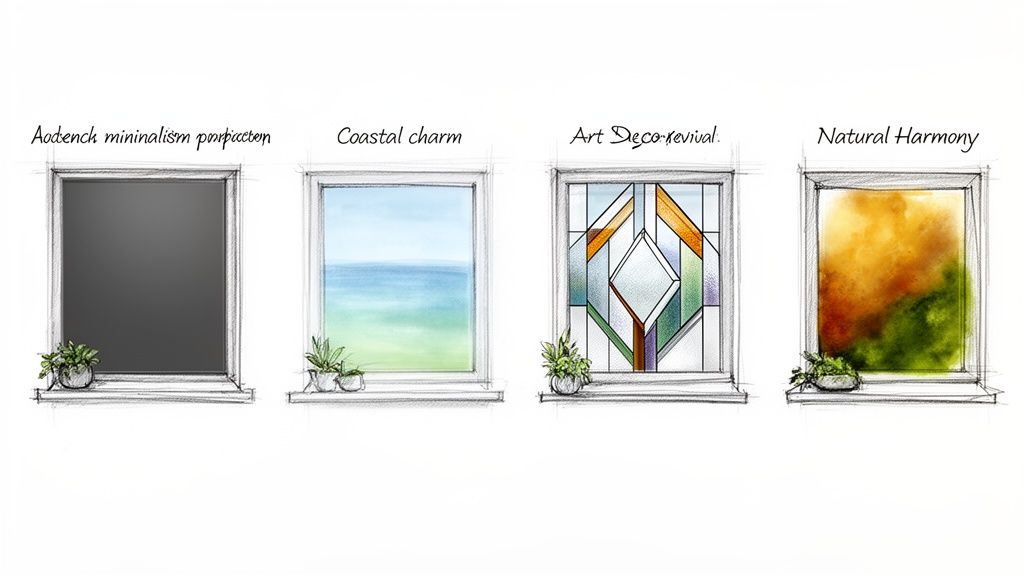
Picture a sleek new-build in Manchester or a contemporary extension in Leeds. The look is all about clean lines and bold simplicity. For this, nothing beats the crisp, uniform finish of back-painted toughened glass.
We recommend colours like Anthracite grey or pure black for a powerful, sophisticated statement. Alternatively, a single block of a primary colour, like a confident red or yellow, can create a stunning focal point. This approach works perfectly with modern composite or aluminium doors, where the solid colour complements the sharp lines of the architecture.
For homes dotted along the windswept Northumberland coast or nestled in the seaside towns of Yorkshire, the design can echo the natural landscape. The goal is to create a calm, welcoming entrance that feels connected to the sea and sky.
Here, we'd look at lightly tinted or acid-etched coloured glass. The palette would draw from sea-blues, soft aquas, and sandy greens. These tones diffuse light beautifully, giving you that serene, beach-house feel. It’s a look that pairs wonderfully with timber or composite doors painted in light, neutral shades like off-white or pale grey.
Your front door can be a canvas that reflects its environment. A coastal palette connects your home to the outside world, creating a seamless transition from the landscape to your living space.
Many northern cities are blessed with incredible Art Deco architecture. If you're lucky enough to live in a home from the 1920s or '30s, you can celebrate its heritage with a door that embraces the glamour of the era.
This calls for a combination of frosted, acid-etched, and coloured glass, often brought together in traditional leaded designs with bold geometric patterns. The key is contrast. Think black, gold, and silver paired with striking jewel tones like emerald green or sapphire blue. This style is the perfect match for dark, painted timber doors or period-style composites, adding instant historical authenticity.
If you have a unique vision for your home, our team specialises in turning ideas into reality. You can explore some of our past work and see the art of the possible in our gallery of bespoke glass projects.
This concept is all about blurring the line between your home and your garden. By pulling earthy, organic tones into your door glass, you can create a seamless flow from the inside out, making the door feel like part of the landscape.
Fused or tinted glass often works best here, as the colours can have a more natural, less uniform quality. We'd look at a palette of rich ambers, deep moss greens, and warm forest browns that harmonise with natural wood and foliage. This style is incredibly versatile and looks just as good in a modern bifold door as it does in a classic timber front door.
Deciding to add a splash of colour to your home’s entrance is an exciting step, but it’s natural to have a few questions before you commit. We find that many of our clients across Yorkshire and the North ask similar things. Here, we’ve gathered our answers to give you complete confidence in the process.
Yes, in the vast majority of cases, we can. Retrofitting a bespoke coloured glass panel into an existing timber, uPVC, or composite door is one of our most popular services. It’s a fantastic way to achieve a high-impact upgrade without the cost and disruption of replacing the entire door unit.
The process always starts with a detailed survey at your property, whether you're in Leeds, York, or Newcastle. We’ll carefully assess your door's structure and overall condition to make sure it can securely house a new panel. Then, we take meticulous measurements to ensure your new coloured glass panels for doors are fabricated for a perfect, weathertight fit.
Keeping your new glass looking its best is surprisingly simple. For modern styles like back-painted or laminated glass, all you’ll need is a soft, lint-free cloth and a standard, non-abrasive glass cleaner. The key is to avoid any harsh chemicals or abrasive scrubbers that could potentially scratch or dull the finish.
For more traditional stained glass with delicate leadwork, a gentle dusting is usually sufficient. If a deeper clean is needed, use a soft cloth with a tiny amount of mild, soapy water, being very careful not to apply too much pressure around the lead lines. We always provide full, specific care instructions after every installation, so you'll know exactly how to look after your particular piece for years to come.
Absolutely. Modern coloured glass panels are engineered to be highly energy efficient and can genuinely help to lower your heating bills. Our panels aren’t just single panes of glass; they are supplied as high-performance double or even triple-glazed sealed units.
These advanced units have a couple of crucial features:
This combination works together to create a much more stable, comfortable, and energy-efficient home environment.
While every project has its own unique character, a typical timeframe from the moment you approve the final design to our installation day is usually between 4 to 8 weeks. Simpler, more straightforward designs might be on the quicker end of that scale, while highly intricate traditional stained glass pieces will naturally take a bit longer to craft.
This lead time allows our team to carry out the meticulous fabrication of your bespoke glass panels right here in our Yorkshire workshop. We never rush the process; our priority is always quality craftsmanship over sheer speed. We'll give you a clear and realistic timeline during our initial consultation and keep you informed every step of the way.
Ready to transform your home with a beautiful and unique glass feature? The team at Glass Tech is here to bring your vision to life. Contact us today for a no-obligation quote and start your design journey.

A professional team of experts providing glass and glazing solutions covering the whole of Yorkshire & more...
Whether it's Leeds, York, North Yorkshire, Birmingham, Hull, Liverpool, Machester, Newcastle or Nottingham, get in touch to find out how we can help you with your bespoke glass project.