
So, what exactly is low-iron glass?
Let's cut right to it. Low-iron glass, which you’ll often hear called ultra-clear glass, is a special type of high-performance float glass. The key difference is that during its creation, almost all the iron oxide impurities are removed from the raw materials.
This one simple change makes a world of difference. It results in stunning clarity, allowing true colours and the maximum amount of light to shine through, which is why it’s become the gold standard for high-end home features.
Have you ever glanced at the edge of a standard piece of glass and seen that distinct green tint? That subtle colouring comes from iron oxide, a natural impurity in the sand used to make pretty much all glass. For most day-to-day uses, this is perfectly fine and goes unnoticed.
But when you're aiming for absolute clarity and brightness in your home design, that green hue can slightly muddy the colours behind it and dim the light passing through.
This is where low-iron glass truly sets itself apart. The manufacturing process starts with sourcing raw materials that have exceptionally low iron content to begin with. By getting rid of that key impurity, the glass loses its greenish tinge, giving you a product that is visibly clearer, brighter, and more brilliant.
Think of it like the difference between regular tap water and crystal-clear spring water – both do the job, but one has a level of purity you can genuinely see and feel.
The main advantage of slashing the iron content is a huge jump in light transmission. Low-iron glass allows up to 91% of visible light to pass through, a noticeable improvement over the 80-85% you get with standard glass. This difference is vital for modern features like frameless balustrades and glass balconies that are designed to flood homes across Yorkshire with glorious natural light. If you're interested in the technical side, you can explore further research on the low-iron glass market.
For homeowners, this increased light flow brings several brilliant benefits:
Low-iron glass offers a crystal-clear, neutral look that just melts into the surrounding architecture. It delivers that pristine, 'barely there' appearance that has come to define high-end, contemporary design.
Ultimately, when you choose low-iron glass, you're not just buying a piece of glass; you're investing in superior optical quality. It's less about seeing the glass itself and more about perfectly seeing everything through it and around it. This is what makes it such a smart choice for discerning homeowners tackling staircase renovations or installing new glass balustrades.
When you're choosing glass for your home, the difference between standard and low-iron glass might seem subtle at first, but it becomes incredibly obvious once you know what to look for.
Take a look at any piece of standard glass. See that slight green tint? You'll spot it most easily by looking at the edge of the panel. That's the iron oxide content at work.
This green hue gets more and more pronounced as the glass gets thicker. That’s a crucial detail for features like frameless balustrades, which legally require thick, robust, toughened safety glass. For a homeowner in Manchester, that green tinge could subtly dull the beautiful, true colour of a new oak staircase or cast a faint green shadow across their garden view.
Low-iron glass was engineered to solve this exact problem. By removing the vast majority of iron impurities during the manufacturing process, the glass achieves an absolutely crystal-clear, brilliant quality. The edge is virtually colourless, offering a diamond-like sparkle instead of a green glow.
This concept map breaks down the core idea perfectly.
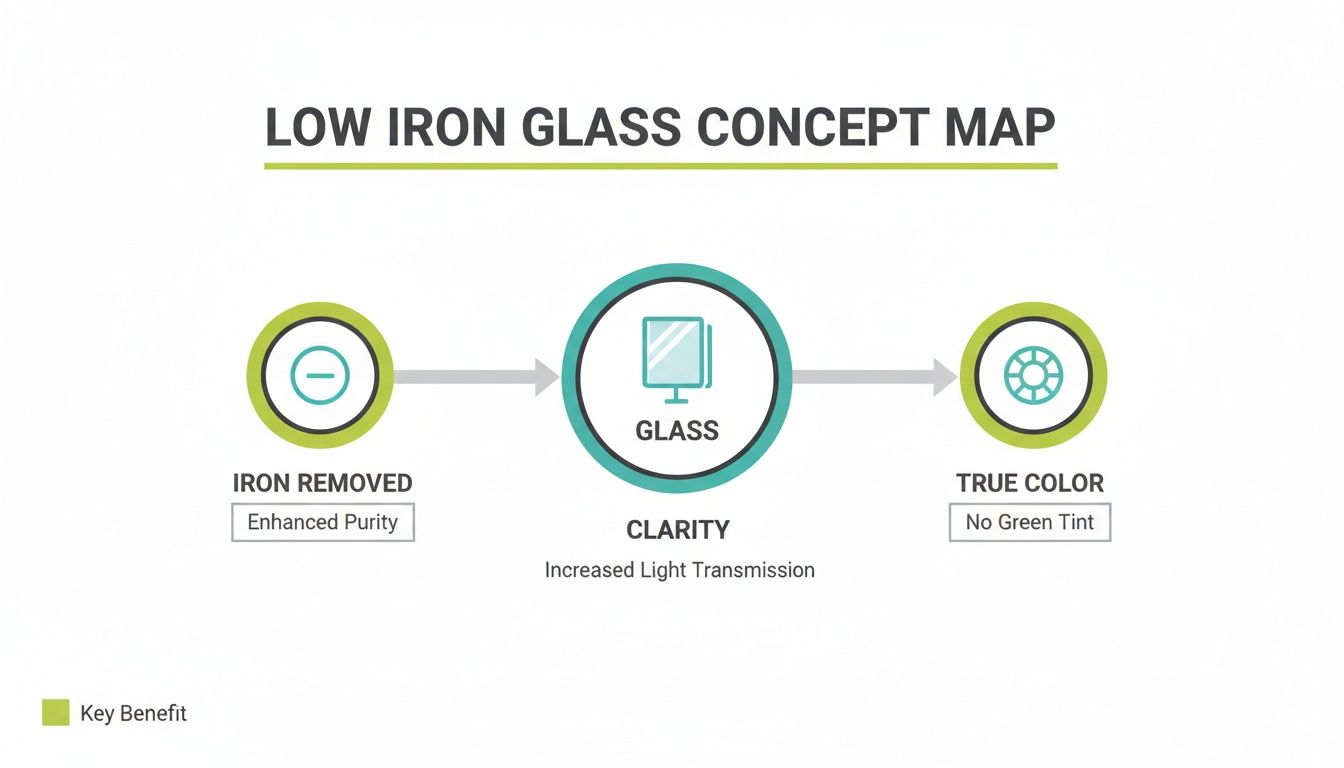
As you can see, removing the iron directly results in superior clarity and, most importantly, a true-to-life representation of colour. This means that the light, colours, and views—whether it’s the Yorkshire Dales from your balcony or your carefully chosen interior paint—pass through completely unaltered.
The result is a pristine, 'barely there' look that defines high-end design. The glass doesn't just hold a space; it enhances it by disappearing, allowing the architecture and surrounding views to take centre stage.
This level of clarity ensures your design vision is perfectly realised. The change it can make to a space is often dramatic. You can see just how powerful the effect is by looking at some real-world glass balustrade before and after transformations. It delivers an unimpeded flow of light and colour that standard glass simply can't match, making it a go-to choice for premium glass balustrade installations in Newcastle and right across the UK.
So, beyond that incredible clarity, what are the real-world benefits for your project at home? Deciding on low iron glass for your balustrade, staircase, or Juliet balcony isn't just a technical choice—it’s about actively upgrading your living space in some very noticeable ways.
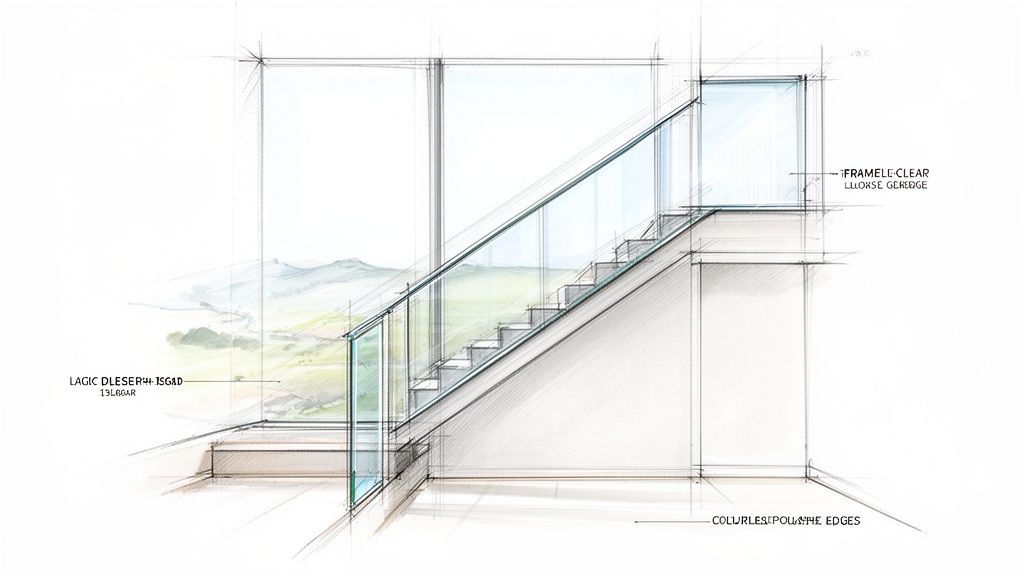
The first and most powerful advantage is its unmatched ability to maximise natural light. Standard glass, with that faint green hue, can ever so slightly dull the light that passes through it. Low iron glass, on the other hand, lets in noticeably more light, making your interiors feel brighter, more open, and altogether more spacious. This is a huge goal for homeowners we work with on renovations in cities like York and Hull, where making the most of every bit of daylight is key.
That pristine, crystal-clear transparency is absolutely fundamental to pulling off a truly high-end, contemporary look. It creates a seamless, ‘barely there’ effect that lets the architecture of your home and the views beyond take centre stage, completely uninterrupted.
Rather than imposing its own slight colour on the design, the glass steps back and complements it by almost disappearing. This is especially important for frameless systems, where the glass itself is the star of the show. For any project aiming for modern minimalism, whether it's for glass balustrades in Yorkshire or a sleek balcony in Newcastle, this flawless clarity is a must-have.
Low iron glass ensures the finished installation looks intentional and premium. It avoids that unintentional colour cast that can make a beautiful design feel just a little bit 'off', elevating the overall finish from good to exceptional.
Homeowners pour a huge amount of time, effort, and money into selecting the perfect details for their interior. Think about that specific shade of paint for the walls, the rich grain of a wooden staircase, or the texture of a carefully chosen rug—every single element matters. Low iron glass acts as a guardian for that investment.
Imagine commissioning a beautiful oak staircase, only to find its warm, natural tones are subtly distorted by the greenish tinge of a standard glass balustrade. Low iron glass stops that from ever happening. It guarantees that colours are seen exactly as you intended, preserving the integrity of your entire design vision.
This level of colour fidelity delivers a few key benefits:
For any discerning homeowner, particularly in areas like Leeds or Manchester where property aesthetics are so important, choosing low iron glass is a decision that pays for itself. It ensures the final result is a true, accurate reflection of your personal style, making sure your home looks exactly as you envisioned it.
Choosing the right glass for your balustrade goes way beyond just the aesthetics. It’s about getting the practical details spot-on to guarantee safety, longevity, and that flawless finish you're dreaming of. When you’re planning a project, it’s vital to understand the technical side of things to make sure the result is both stunning and structurally sound.
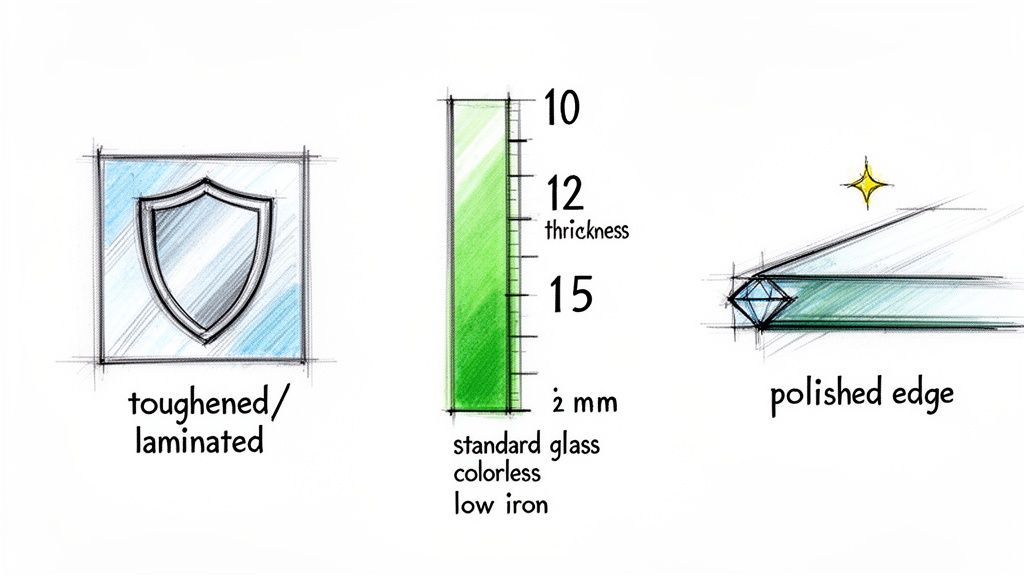
Whether you land on standard float glass or premium low-iron, any panel used for a balustrade absolutely must be either toughened or laminated safety glass. This is a non-negotiable requirement under UK Building Regulations for a very good reason.
Toughening is a process of heating and then rapidly cooling the glass, making it four to five times stronger than ordinary glass. This means it can handle significant force, providing a robust and secure barrier.
Glass thickness is another critical piece of the puzzle. For structural balustrades, you’ll typically be looking at 10mm, 12mm, or 15mm glass, with the final choice depending on the specific system and where it's being used.
It’s at this point that the difference between standard and low-iron glass really comes into focus.
The thicker a standard glass panel gets, the more obvious that green tint becomes. A heavy-duty 15mm panel of standard glass will have a much more noticeable green hue than a 10mm one. With low-iron glass, that problem simply disappears, keeping its crystal-clear look no matter how thick the panel is.
You can choose the best glass in the world, but without a perfect, secure fit, it won't matter. Professional installation is paramount to ensure every panel is aligned correctly, fastened safely, and fully compliant with all safety standards. It’s the key to the long-term integrity of your balustrade.
Our experienced teams provide expert glass balustrade installers for projects right across the North of England, from Glass Balustrades Yorkshire to Glass Balustrades Newcastle. We take care of every single detail, guaranteeing your installation isn't just beautiful but built to last.
The final look of your project really does hinge on the small details. Precision in measurement, handling, and fitting makes the difference between a good result and a truly exceptional one that enhances your home for years to come.
Finally, don’t overlook the edgework—it contributes hugely to the overall aesthetic. All safety glass for balustrades has smooth, polished edges for a safe finish, but the material itself dictates how that edge looks.
This small detail makes a massive difference to the final impression. The pristine, brilliant edge of low-iron glass provides that extra touch of refinement and quality. And when you're thinking about glass for your wider home project, exploring the various types of glass doors for your home can give you even more insight into how these material choices play out in different applications.
Let's talk about the budget. It's an essential part of any home improvement project, and there's no getting around it: low-iron glass comes with a higher price tag than standard glass. This difference comes down to the more complex and refined manufacturing process needed to remove those iron impurities we talked about earlier.
But it’s best to see this not just as an upfront cost, but as a long-term investment in the quality, feel, and appeal of your home.
Think of it like choosing premium granite worktops for your kitchen or high-end porcelain tiles for a new bathroom. Yes, there are cheaper options, but these are the features that truly elevate a project, adding a touch of luxury and refinement that you notice every single day.
Low-iron glass does exactly the same thing for your staircase or balcony. Its brilliant light transmission and flawless clarity contribute directly to your home’s aesthetic appeal, which can, in turn, have a real impact on its market value.
For discerning homeowners across our Yorkshire service areas, choosing low-iron glass is an investment in lasting quality. It’s a decision that delivers daily satisfaction through brighter, more beautiful spaces and adds tangible value to your home.
This premium finish ensures your property stands out from the crowd. Whether you’re creating a show-stopping feature staircase in Leeds or installing a crystal-clear Juliet balcony in Newcastle, the quality of the glass makes a powerful statement about the attention to detail throughout your home.
When you're planning a renovation, it helps to look at the glass as just one piece of the puzzle. When weighing up the investment, it can be useful to understand how to approach accurately calculating construction cost per square foot for the entire job. This gives you a much clearer picture of where your money is going and the relative value each element brings.
While the initial outlay for low-iron glass might be around 15-20% higher than standard options, the visual return is immediate and permanent. You'll see and feel the benefits every single day:
Ultimately, the 'real value' of low-iron glass is its unique ability to perfect your design vision. For any project where clarity, light, and a high-end finish are top priorities, it delivers a result that standard glass simply cannot match, making it a wise and worthwhile investment.
Making the right choice for your home is important, and we find our customers across Leeds, York, and Newcastle often have similar questions. We've put together some straightforward answers to help you plan your project with confidence.
Here, we'll cover everything from strength and safety to how this amazing glass can be used elsewhere in your home. Think of it as a quick guide to getting the facts you need before you take the next step.
Yes, absolutely. This is probably the most important question we get asked, and the answer is a definite yes. The strength of glass has nothing to do with its iron content; it all comes from the toughening process.
Both low iron and standard glass go through the same thermal tempering process to meet strict British Standards. The result is that low iron glass becomes every bit as tough, durable, and impact-resistant as its standard counterpart. That means it’s perfectly safe for structural jobs like frameless glass balustrades, sleek Juliet balconies, and even walk-on glass floors where safety is the number one priority. You’re simply getting a clearer view, not compromising on strength.
It certainly can, and it’s a brilliant choice for both bathrooms and kitchens. In fact, it's becoming an incredibly popular upgrade in modern home design.
The real magic here is colour fidelity. Because low iron glass doesn't have that subtle green tint, it lets the true colour of your beautiful tiles, wallpaper, or paint shine through perfectly. With standard glass, that pale grey or crisp white tile you painstakingly chose can end up looking a bit green, which can throw off your whole design. Low iron glass ensures the vision you had in the showroom is exactly what you get at home. It just looks cleaner, brighter, and more premium.
Choosing low iron glass for splashbacks or shower enclosures is a simple way to guarantee that the final look is crisp, modern, and true to your original colour palette.
Keeping that incredible sparkle is surprisingly simple. The great news is that you clean and maintain a low iron glass balustrade in exactly the same way as standard glass – no special potions or techniques required.
A bit of warm water with a drop of washing-up liquid is usually all you need. Just apply it with a soft cloth to get rid of fingerprints, dust, or everyday marks. For a flawless, streak-free finish, the trick is to dry it off with a decent squeegee or a clean, dry microfibre cloth. Just be sure to avoid any abrasive scouring pads or harsh chemical cleaners, as they could scratch the surface over time.
A quick, regular clean is all it takes to maintain that stunning clarity, ensuring your glass balustrades in Yorkshire or Newcastle look their best for years to come.
Ready to transform your home with the flawless clarity of low iron glass? The team at Glass Tech has over 20 years of experience designing and installing stunning glass balustrades, staircases, and balconies across Yorkshire and the North. Get in touch today for a free, no-obligation survey and expert advice.

A professional team of experts providing glass and glazing solutions covering the whole of Yorkshire & more...
Whether it's Leeds, York, North Yorkshire, Birmingham, Hull, Liverpool, Machester, Newcastle or Nottingham, get in touch to find out how we can help you with your bespoke glass project.