
To stop condensation forming on your windows, you need to tackle two things: reduce the amount of moisture in your indoor air and keep the surface of the glass warmer. It’s a straightforward balancing act that comes down to better ventilation, consistent heating, and getting a handle on the humidity we create every day from things like cooking and showering.
If you’ve ever woken up to find what looks like a small river running down your windowpanes, you’re definitely not alone. It’s an incredibly common sight, especially in places with damp climates like Yorkshire and Newcastle, and it’s basically just a bit of science playing out in your home.
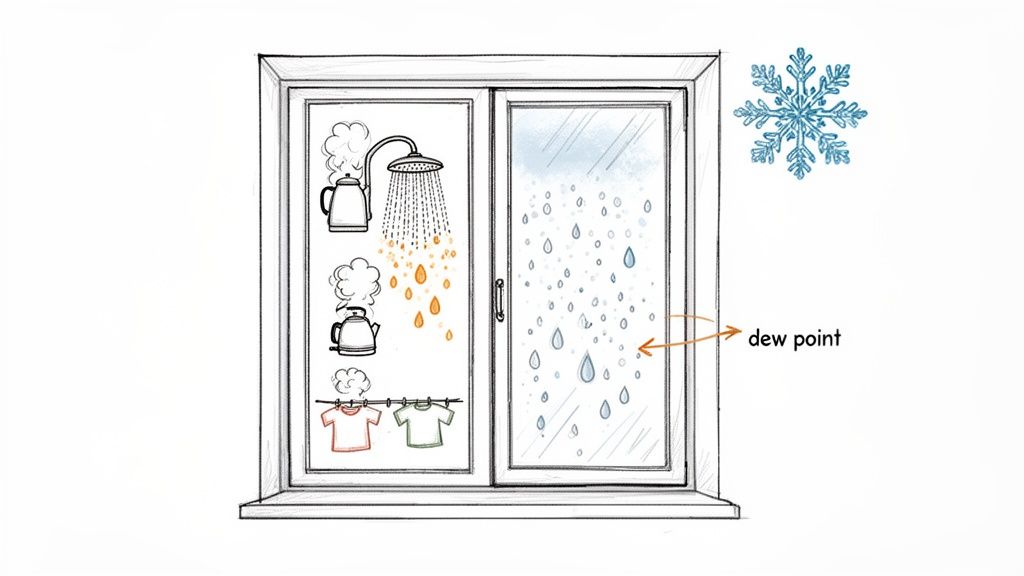
At its heart, condensation is simply warm, moisture-heavy air coming into contact with a cold surface. When it does, the air can’t hold onto that moisture anymore, and it turns back into liquid water right there on your glass.
This all hinges on something called the 'dew point' – the exact temperature where the air becomes fully saturated and has to release its water vapour. And we’re constantly adding moisture to the air in our homes through everyday activities:
When this warm, humid air drifts over to a window that’s been chilled by the cold outside, it cools down fast. The moment it hits its dew point, poof – condensation appears. This is precisely why older, single-glazed windows are the worst culprits. They offer next to no insulation, meaning their inner surface gets very cold, very quickly. It's a world away from modern, well-insulated windows and composite doors, which keep the inner pane much warmer and drastically reduce the problem.
First things first, you need to know where the condensation is forming, as this tells you exactly what the cause is. This quick decision tree will help you diagnose the issue in seconds.
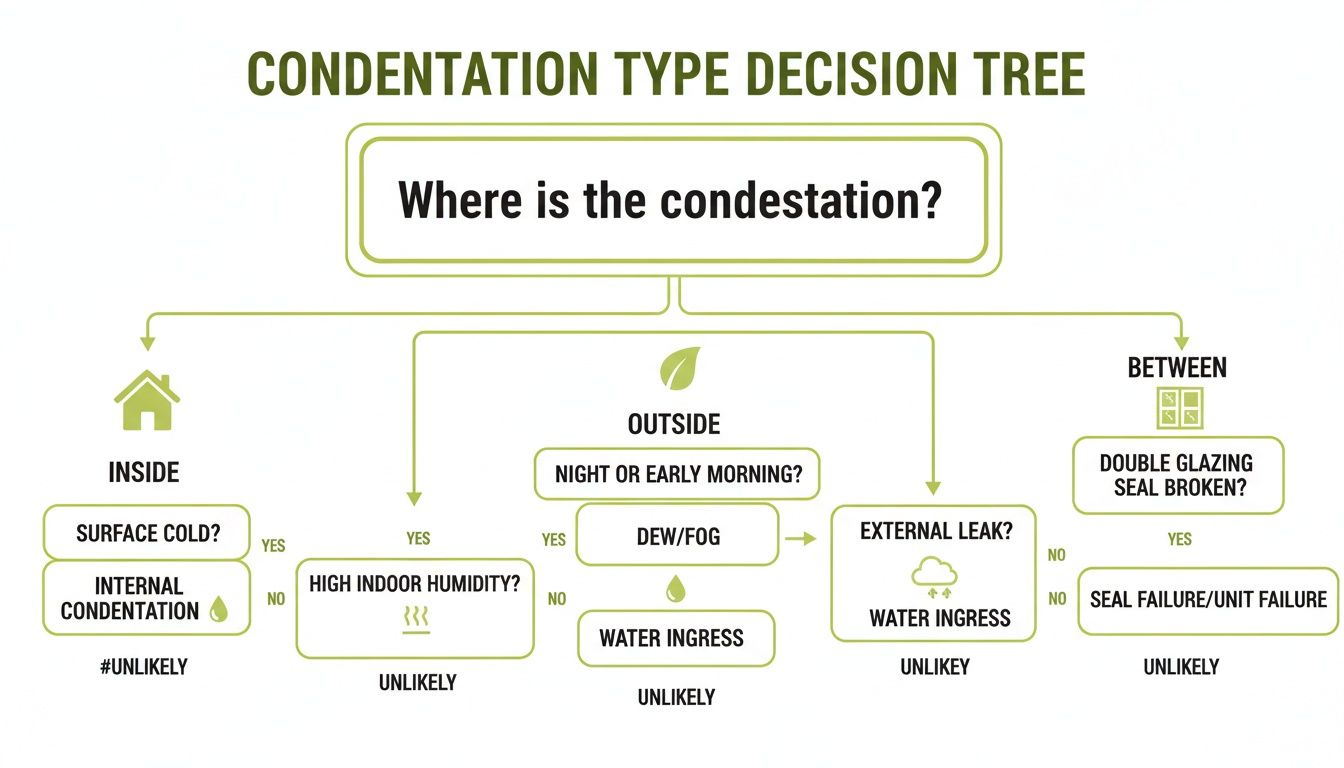
As you can see, if the water is on the inside of the window, it’s a humidity problem in your home. If it’s trapped between the panes of glass, you’re looking at a failed window seal.
In the UK, condensation has now become the number one cause of damp, affecting roughly 1 in 5 households. The problem is especially bad in areas with older housing stock, like Leeds and Harrogate, where the combination of a damp climate and people trying to reduce heating bills creates the perfect storm. To really get to the bottom of persistent issues in your property, it can be worth commissioning a professional condensation risk assessment.
Trying to get rid of that daily stream of condensation on your windows doesn't have to mean big budgets or complicated DIY. In my experience, the most powerful way to prevent condensation is by making small, consistent tweaks to your daily routine. It all boils down to two key things: getting fresh air circulating and stopping moisture at the source.
Many modern homes, particularly the well-insulated, airtight ones, are brilliant at trapping heat – but they also trap moisture from cooking, showering, and even breathing. This is a massive issue across the UK, where it's estimated that up to 6.5 million households are dealing with damp, often because of poor ventilation. In places like Yorkshire and Newcastle, the go-to solution is often just cracking a window, which isn't always practical during a chilly winter. You can read more about the nationwide impact of household moisture.
The good news is that by adopting just a few new habits, you can get a handle on your home's humidity levels and see a real difference on your windowpanes almost immediately.
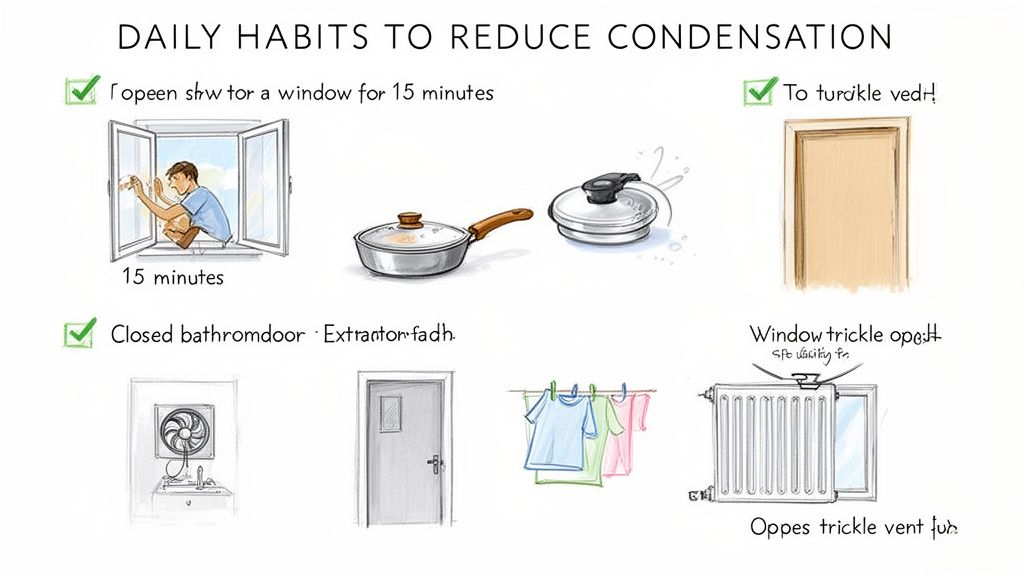
The single most effective habit you can get into is actively managing the airflow in your home. That stale, moist air needs an escape route so it can be replaced with drier air from outside.
A bit of expert advice: keeping a consistent, low level of heat on throughout the day is far better at stopping condensation than short, powerful blasts from the heating. It keeps surfaces like your window glass at a more stable temperature, making it much harder for moisture to condense in the first place.
Preventing moisture from getting into the air in the first place is half the battle won. A few simple changes in the kitchen and bathroom can dramatically cut down on the amount of work your ventilation has to do.
Think about these easy wins:
The cumulative effect of these small actions can be surprising. They don't just reduce the water on your windows; they create a healthier, drier environment throughout your home.
| Daily Habit | Area of Impact | Estimated Moisture Reduction |
|---|---|---|
| Cover Pans When Cooking | Kitchen Humidity | Reduces steam by 70-80% per pan, preventing pints of water entering the air weekly. |
| Use Extractor Fans | Kitchen & Bathroom | A good fan can extract 60 litres of moisture per second, stopping it from spreading. |
| Open Windows for 15 Mins | Whole-House Air Quality | Flushes out stale, moist air, replacing it with drier outside air, preventing overnight buildup. |
| Keep Bathroom Door Closed | Moisture Containment | Prevents steam from a single shower (around 1 pint of water) from spreading. |
| Avoid Drying Clothes on Radiators | General Indoor Humidity | Stops an average load of laundry (4-5 pints of water) from evaporating into your living space. |
Adopting these habits might feel like a small effort, but their combined impact is significant. By systematically reducing the amount of moisture you introduce into your home's air, you're directly tackling the root cause of condensation, day after day.
When you've tweaked your daily habits and improved ventilation but those pesky water droplets still appear, it's time to bring in some reinforcements. You don't need a huge budget to make a real difference; a few smart investments can actively pull moisture from the air and stop dampness in its tracks.
This is about shifting from passive management to active moisture removal. It's about using tools that do the hard work for you, especially in those high-humidity hotspots like kitchens and bathrooms.
One of the most effective ways to prevent condensation is to get rid of moist air right at the source, before it has a chance to wander through your home. A good extractor fan isn't a luxury—it's an essential bit of kit for any kitchen or bathroom.
Modern extractor fans are powerful. They physically pull the steam from a boiling pan or a hot shower straight out of the building. That pint of water vapour never even gets the chance to drift into the living room and settle on your windows. For homes in damper parts of the UK like Yorkshire, a decent fan can be an absolute game-changer.
If you're dealing with persistent damp, especially from drying clothes indoors or in a property that just doesn't get much airflow, a dehumidifier is your best friend. These machines actively draw air in, strip out the moisture, and release drier air back into the room.
There are two main types you'll come across:
For a typical northern home, a desiccant dehumidifier is often the more versatile option. Just pop it in the room where you see the most condensation or where you hang your laundry. Running it for a few hours a day can pull several litres of water from the air, making a visible difference on your windows in just a few days.
A dehumidifier is brilliant at managing the symptom (excess moisture), but it doesn't solve the core problem of a cold window surface. For properties with stubborn issues, combining a dehumidifier with a long-term solution like upgrading to secondary glazing creates a comprehensive defence.
Finally, take a quick look at how your furniture is arranged. You might be unintentionally contributing to the problem. Air needs to circulate freely, particularly near cold external walls.
Pushing a big sofa or wardrobe right up against an outside wall traps a pocket of cold, stagnant air. This creates the perfect microclimate for damp and mould to develop where you can't see it.
Simply pulling your furniture two to three inches away from the wall is often enough. This small gap allows air to flow behind, keeping the wall surface warmer and preventing moisture from settling there. It’s a simple, free adjustment that makes a surprising difference to your home's health.
If you’ve tried managing ventilation and controlling moisture but still find yourself wiping down windows every morning, it’s a clear sign you’re fighting a losing battle. While those habits are crucial for managing the symptoms, the real solution for preventing condensation on windows lies in tackling the root cause: the cold surface of the glass itself.
Upgrading your glazing isn't just a quick fix; it's a permanent one.
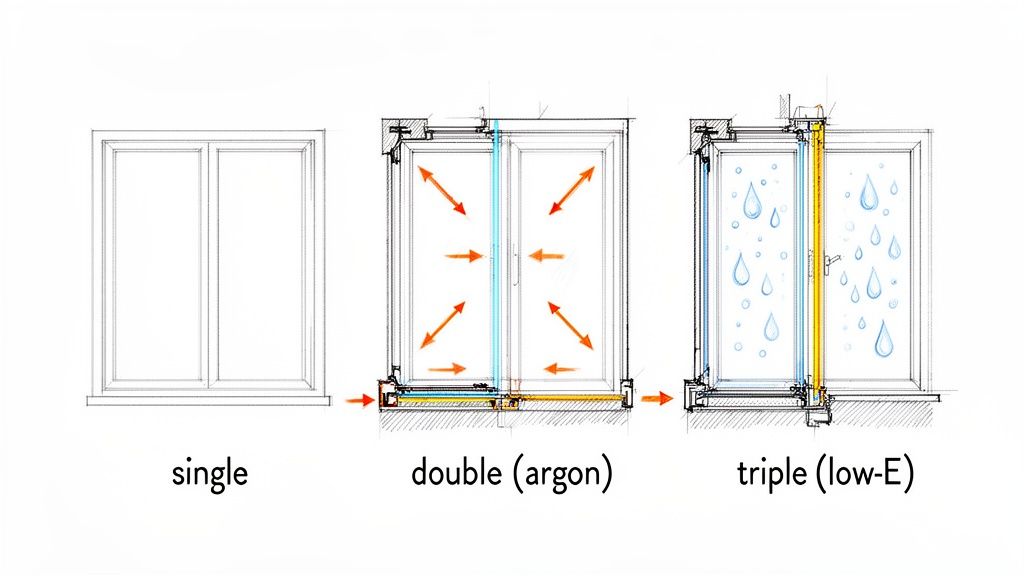
Persistent condensation is more than just an annoyance; it often points to deeper issues that can affect your home and health. It's a key contributor to damp problems in up to 27% of UK homes, creating the perfect breeding ground for mould. For homeowners in Yorkshire's damp climate, this is a familiar story, with around 1 in 5 households facing these issues. Upgrading from older single or even early double glazing is a game-changer because it fundamentally alters the temperature of the indoor glass pane.
The difference between a single pane of glass from the 1970s and a modern A-rated double-glazed unit is night and day. It’s not just about having two pieces of glass; it’s about the advanced technology sealed between them.
Here’s what makes new windows so effective at stopping condensation in its tracks:
This combination works together to keep the internal surface of your window well above the dew point, even on the coldest winter days. No cold surface means nowhere for moisture to condense. It’s that simple.
To really understand the impact, it helps to see how different glazing types stack up against each other. For anyone living in Yorkshire, the performance gap becomes starkly clear on a frosty winter morning. This table breaks down the real-world difference.
| Glazing Type | Effectiveness | Best For | Typical Cost |
|---|---|---|---|
| Single Glazing | Very Poor | Not recommended for modern homes. Best for outbuildings or where character is paramount (with secondary glazing). | Low initial cost but very high energy bills. |
| Old Double Glazing (15+ years) | Poor to Fair | Better than single glazing, but lacks modern tech. Prone to seal failure. | Often not cost-effective to repair; replacement is usually a better long-term investment. |
| New A-Rated Double Glazing | Excellent | Most homes. Offers a superb balance of performance, condensation control, and value. | A sound investment that pays for itself in energy savings and comfort. |
| Triple Glazing | Exceptional | Homes seeking maximum thermal efficiency, noise reduction, and complete condensation elimination. | Higher upfront cost but offers the ultimate performance. |
A key sign of failure in older units is persistent fogging between the panes of glass. This means the seal has broken, letting in moist air. When this happens, understanding potential double-pane window repair costs can help you decide what to do next.
However, for many with older, inefficient units, simply replacing the sealed unit isn't enough. Opting for a complete glass replacement with modern, A-rated technology provides the best long-term value and solves the condensation problem for good.
For homeowners in historic areas like York or Harrogate, ripping out beautiful original windows isn't always an option—or desirable. This is where secondary glazing comes in. It involves fitting a slim, discreet second window inside your existing ones.
This method creates an insulating air gap that functions much like double glazing. It stops the cold from the original window from reaching the warm indoor air, effectively preventing condensation while preserving the building's character. It’s a highly effective, less disruptive alternative for listed buildings or properties in conservation areas.
Ultimately, upgrading your glazing is one of the soundest investments you can make. It solves the condensation problem permanently, lowers your energy bills, and makes your home warmer, healthier, and far more comfortable.
Deciding to upgrade your windows is a brilliant step towards a warmer, drier home. But the success of the whole project really hangs on picking the right company to do the work. This is especially true when you're tackling something like condensation, which is so dependent on our regional climate here in the North.
With over 20 years of experience serving Yorkshire and the North, we've seen it all. We understand the specific challenges homeowners face, from the damp, salty air on the coast to the unique demands of period properties in places like York and Harrogate. A genuine local expert knows how to stop condensation on windows in a way that’s perfectly suited to your home and its environment, not just a one-size-fits-all solution.
When you're putting your hard-earned money into your home, you need to feel confident in the people you hire. There are a few non-negotiables you should always insist on.
A reputable company will always offer a transparent, detailed quote with no nasty surprises or hidden costs. You should also look for a solid guarantee on both the products and the installation itself – that’s your peace of mind right there.
Don't be afraid to ask to see a portfolio of their recent work. A strong track record of successful projects in your local area speaks volumes about their quality and reliability. For instance, if you're looking for glass balustrades in Yorkshire or seeking a provider of glass balustrades in Newcastle, seeing finished examples like a glass balustrade in Yorkshire is essential.
The single most important part of the entire process is the initial survey. A true professional won't just turn up with a tape measure. They will carry out a thorough assessment to correctly identify the root cause of your condensation and recommend the most effective, long-term solution—whether that’s new A-rated windows or discreet secondary glazing.
This professional survey is the absolute key to a successful outcome. It’s what ensures the solution is tailored to your property’s specific needs, preventing you from wasting money on fixes that don't even touch the real problem.
If you’re a homeowner in Leeds, York, Harrogate, Newcastle, or anywhere in between and you’re just tired of wiping down wet windows, we can help.
Get in touch with our friendly, family-run team at Glass Tech today for a no-obligation chat. Let's make your home warmer, drier, and a lot more comfortable.
Even after going through the common causes and fixes, it's completely normal to have a few specific questions pop up. Over the years, we've heard just about every query imaginable when it comes to condensation. Here are our straight-talking answers to the ones that come up most often.
Not at all – in fact, it’s a good thing! Seeing a bit of dew on the outside of your new windows, especially on a cool morning, is proof that your double glazing is doing its job exceptionally well.
It means the outer pane of glass is so well insulated from the warmth inside your home that it gets cold enough for moisture from the air to condense on it. It’s a clear sign that heat isn’t escaping, and it will usually disappear on its own as the sun comes up and the day warms up.
A dehumidifier is a brilliant tool for managing the symptoms of condensation by pulling excess moisture out of the air. It can make a huge difference to how damp a room feels, but it doesn't get to the root of the problem: the cold glass surface.
Think of it as bailing out a boat without fixing the leak. For a permanent solution, you need to combine moisture control with upgrading your glazing to a better-insulated unit that simply doesn't get as cold.
A dehumidifier is a fantastic temporary measure, but the ultimate solution to stop condensation on windows for good is to eliminate the cold surface by upgrading your glazing. This tackles the problem at its source rather than just managing the moisture.
Yes, absolutely. This is a situation we handle all the time, particularly in historic areas like York and Harrogate. For listed buildings or properties in conservation areas where the original windows must be preserved, secondary glazing is the perfect answer.
We install a discreet second pane of glass on the inside of your existing window frame. This creates a highly effective insulating gap that stops condensation and dramatically reduces heat loss, all while leaving the historical character of your home's exterior completely untouched.
If you can see mist, fog, or water droplets trapped between the two panes of glass, I'm afraid that's a sure sign the sealed unit has failed. The airtight seal around the edge has broken, allowing damp air to get inside and the insulating argon gas to escape.
Once that seal is gone, the window loses all its thermal efficiency. Unfortunately, this isn't something that can be repaired. The sealed glass unit itself needs to be replaced. It's a very common job for us on older double glazing, from homes in Newcastle right down to Leeds.
Are you ready to put a permanent end to weeping windows and enjoy a warmer, drier home? At Glass Tech, our 20+ years of hands-on experience mean we can find the perfect solution for your property, whether that’s A-rated windows or subtle secondary glazing.
Contact us today for a no-obligation survey and quote and let's get it sorted.

A professional team of experts providing glass and glazing solutions covering the whole of Yorkshire & more...
Whether it's Leeds, York, North Yorkshire, Birmingham, Hull, Liverpool, Machester, Newcastle or Nottingham, get in touch to find out how we can help you with your bespoke glass project.