
When you hear about ventilation in double glazed windows, we're simply talking about features like trickle vents. These are small, controllable slots that let a gentle, managed flow of fresh air into your home without undoing all the good work your windows do to keep you warm. For today’s well-sealed properties, this isn't a nice-to-have; it's essential for tackling stale air, condensation, and poor indoor air quality.
Picture your energy-efficient home as a thermos flask. Your new double-glazed windows are brilliant at trapping heat inside during the winter, which is fantastic for keeping your home cosy and your energy bills in check. But there’s a catch to this amazing efficiency: by sealing your home so effectively, you also trap everything else inside with you.
This includes moisture generated from everyday life—cooking a Sunday roast, taking a hot shower, even just breathing. With nowhere to go, this damp, humid air eventually finds the coldest surface around (usually your windows) and condenses, leading to those familiar puddles on the windowsill, damp patches, and, if left unchecked, mould.
It’s not just moisture, either. A perfectly sealed home can become a collection point for all sorts of indoor pollutants. We’re talking about the carbon dioxide (CO2) we all breathe out, as well as Volatile Organic Compounds (VOCs) that 'off-gas' from new furniture, carpets, paint, and even cleaning sprays. Without a steady supply of fresh air, these pollutants just hang around, which can impact your family's comfort and health.
This is precisely where dedicated ventilation in double glazed windows comes to the rescue. It gives your home a way to breathe.
As we make our homes more and more airtight to boost energy ratings, sometimes by understanding airtight comfort systems, the need for a proper ventilation strategy becomes absolutely critical. It’s a balancing act.
For homeowners here in Yorkshire upgrading their windows, getting the ventilation right is a crucial step. It's not just about ticking a box for building regulations; it's about protecting your home and making sure it stays a healthy, pleasant place to live.
A properly ventilated home brings some serious benefits:
In short, trickle vents and other window ventilation systems are the simple, elegant solution that lets your high-performance home work as it should—keeping you warm and healthy.
While modern double glazing does a brilliant job of locking in heat, it also creates an almost perfect seal. This superb efficiency, however, can introduce a couple of common headaches for homeowners: condensation building up on the inside of your windows and a noticeable drop in indoor air quality.
Without a planned escape route, the very things that make a home feel lived-in—cooking, showering, even breathing—can become the source of the problem.
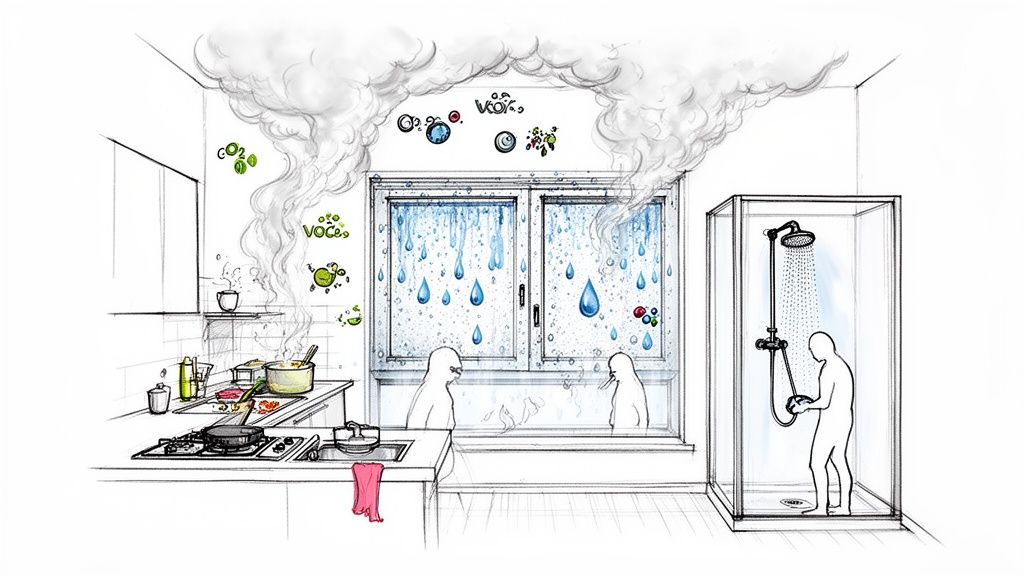
Just think about all the moisture your family produces in a single day. Boiling a kettle for a morning brew in Leeds, running a hot bath in a Hull terrace, or even just drying laundry indoors – all these activities release litres of water vapour into the air. In an older, draughtier house, this moisture would have just found its own way out. In a modern, well-sealed home, it has nowhere to go.
This trapped, humid air is naturally drawn to the coldest surfaces in the room, which are almost always the internal panes of your windows. As the warm, moist air hits the cool glass, it cools down fast and turns back into liquid water. You know it as condensation.
If you leave it, this constant dampness can lead to peeling paintwork on your sills, damp patches on the walls, and eventually, the growth of unsightly and unhealthy black mould.
Beyond the visible problem of condensation, there's a more subtle issue lurking: poor indoor air quality. An unventilated home doesn't just trap moisture; it also traps a cocktail of airborne pollutants that can build up over time.
And it’s not just about dust. Lots of common household items release substances into the air that can affect your family’s well-being.
Proper ventilation in double glazed windows is the direct answer to both of these problems. It creates a gentle, continuous exchange of air that whisks away excess moisture before it can settle on your windows and dilutes those airborne pollutants, keeping your home's atmosphere fresh and healthy. For homeowners in cities like York and Sheffield, spotting these early warning signs is the key to keeping your home comfortable and safe.
Maintaining good air quality is fundamental to a healthy home. It involves more than just opening a window now and then; it requires a consistent strategy to manage moisture and airborne particles that accumulate indoors.
For a deeper dive into enhancing your home's air, you can explore detailed strategies on how to improve indoor air quality at home, which covers everything from filtration to ventilation techniques. By understanding what causes these issues, you can take effective steps to solve them.
When we talk about making a home breathe properly, there are a few really effective ways to manage ventilation in double glazed windows. The fundamental goal is always the same: let fresh air in, but in a controlled way that you can manage. For most homes here in the UK, the simplest and most common solution is the humble trickle vent.
Think of a trickle vent as a tiny, adjustable letterbox for fresh air. It’s a small slot, usually fitted into the top of the window frame, that allows a gentle but constant stream of air to move between inside and out. This is what we call ‘background ventilation’ – it’s designed to be so subtle you don't notice it, but it works around the clock to push out stale, moisture-heavy air.
But trickle vents aren't the only game in town, particularly for new builds or big renovations where you might be looking at a whole-house ventilation strategy.
For homeowners across Yorkshire, choosing the right system usually comes down to a balance of cost, complexity, and what your property actually needs. Trickle vents are the go-to standard for almost all replacement window projects, but it’s worth knowing how they stack up against more advanced systems.
A far more comprehensive, though admittedly more complex, option is Mechanical Ventilation with Heat Recovery (MVHR). This is a full-on, whole-house system. It uses a central unit and a network of ducts to pull warm, stale air out of rooms like kitchens and bathrooms. But here’s the clever bit: before it vents that air outside, it passes it through a heat exchanger to warm up the incoming fresh air, which is then piped into your living areas.
An MVHR system is like giving your home its own set of lungs. It actively breathes in fresh, filtered air and breathes out stale, moist air, all while recycling up to 90% of the heat that would otherwise just be lost.
This approach gives you phenomenal air quality and energy efficiency, but it’s a much bigger installation job compared to just having trickle vents built into new windows. Understanding these differences is crucial when you’re looking at new or replacement windows and composite doors.
To make things a bit clearer, we've put together a simple comparison of the ventilation systems you're most likely to come across.
Here's a look at the common ventilation methods for homes with double glazed windows, breaking down how they work, where they shine, and what their main benefit is.
| Ventilation Type | How It Works | Best For | Key Benefit |
|---|---|---|---|
| Trickle Vents | Small, manually operated slots in the window frame that provide a constant, low-level airflow. | Most replacement window projects and retrofitting into existing double glazing. | Simple, cost-effective, and compliant with UK Building Regulations for background ventilation. |
| MVHR System | A whole-house mechanical system that extracts stale air and uses its heat to warm incoming fresh air. | New builds or extensive renovations where ducting can be easily installed. | Exceptional energy efficiency and superior, filtered indoor air quality. |
| Passive Stack Ventilation | Uses natural convection (warm air rising) to draw moist air out through ducts and vents in the roof. | Properties where a non-mechanical, silent solution is preferred. | No running costs or energy use, as it relies on natural air movement. |
For the vast majority of homeowners in the North, from Newcastle down to Sheffield, trickle vents hit that sweet spot of performance, compliance, and affordability. They are a tried-and-tested method for keeping your home environment healthy and comfortable.
Trying to make sense of the rules around new windows can feel a bit like wading through treacle. But the principle behind it all is actually very straightforward: as our homes get better at keeping heat in, we have to make sure they're still healthy places to live. That’s precisely where the UK’s Building Regulations step in, especially Approved Document F (Ventilation).
This key document has been updated to deal with the reality of modern, airtight homes. One of the biggest changes for homeowners is that most replacement windows now legally need trickle vents—even if the old ones you’re taking out didn’t have them. Why? Because while you’re making your home more energy-efficient, you can’t accidentally seal it up so tight that you harm the quality of the air you breathe inside.
This rule has a huge impact on the UK's hefty £1.6 billion double glazing market. While it's natural to focus on thermal ratings and the initial cost, sticking to ventilation standards is a non-negotiable part of any professional job. It’s about ensuring the long-term health of your home, not just the purchase price. You can read more about the scale of the UK glazing industry to see just how significant this is.
When you're chatting with an installer, you might hear them talk about the ‘equivalent area’ or ‘EA’. In simple terms, this is just a way of measuring how much airflow a vent can provide. A good, qualified installer will work out the exact EA needed for each room based on its size and what it’s used for. The goal is to get enough fresh air circulating without creating nasty draughts.
This is exactly why choosing the right installation company is so critical. A FENSA or CERTASS certified installer isn't just a window fitter; they're a professional who lives and breathes these regulations. They know the specific requirements for properties, whether it’s a terrace in Sheffield or a new build in Harrogate, and will make sure your project is 100% compliant from day one.
This diagram helps to show where different ventilation methods sit within a whole-house strategy.
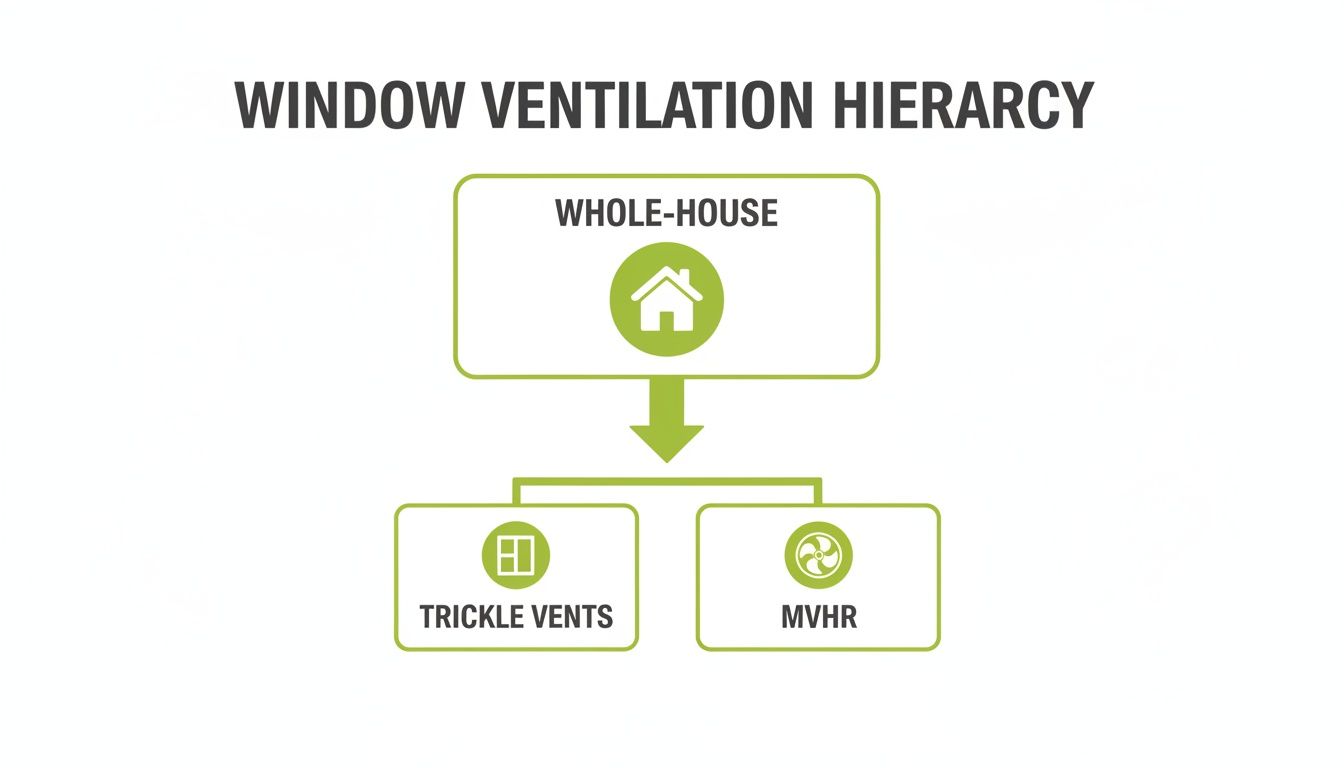
As you can see, both simple trickle vents and more complex MVHR systems are seen as key parts of a complete approach to keeping the air in your home healthy.
Working with a certified installer gives you more than just peace of mind. It’s your guarantee that the work is properly registered and meets every legal standard, which protects both your investment and your family’s health. These rules exist for a very good reason: to create healthier homes across the UK.
“The primary goal of Approved Document F is to ensure that occupants have a healthy indoor environment. As homes are built or refurbished to be more airtight, a robust ventilation strategy is no longer a recommendation—it’s a requirement.”
A true expert will handle all the technical bits and pieces for you. They’ll make sure your new double-glazed windows not only look fantastic and save you money on your heating bills, but also contribute to a fresher, healthier home that ticks every single legal box.
Of course. Here is the rewritten section, crafted to sound like an experienced human expert while preserving all the original content, links, and formatting requirements.
When it comes to ventilation, two questions pop up all the time. Can you add vents to windows that are already installed? And what’s the best way to look after them? I’m happy to say the answer to both is pretty straightforward.
If your existing double-glazed windows are still in great shape but just don’t have vents, retrofitting is often a brilliant solution. A professional glazier can precisely cut a slot into the window frame and fit a new trickle vent. This instantly boosts your home’s airflow and helps you meet modern Building Regulations, all without the cost of a full window replacement.
This is a really cost-effective way to get on top of condensation and stale air problems. It’s particularly useful for homes across Yorkshire where perfectly good uPVC windows might have plenty of life left in them.
This isn’t a DIY job, though. It demands real precision. Get it wrong, and you risk damaging the window's seals or even its structural integrity. It’s definitely one to leave to the experts.
Sometimes, retrofitting just isn't on the cards, especially with older windows that have very slim frames or unique designs. In those situations, looking at options like secondary glazing can give you a thermal boost while you figure out a longer-term plan for replacement.
Retrofitting trickle vents is a fantastic middle ground. You get all the benefits of modern ventilation standards without the immediate expense of brand-new windows, making it a smart upgrade for a healthier home.
Once your vents are in, keeping them working perfectly is incredibly easy. Over time, things like dust, pollen, and even tiny insects can get lodged inside, blocking the airflow and making them less effective. A quick clean every few months is all that’s needed.
Just follow this simple routine:
A bit of regular maintenance ensures your ventilation in double glazed windows keeps protecting your home from damp and poor air quality for years.
Getting the right balance of warmth and fresh air in your home is the absolute bedrock of a healthy living space. Modern double-glazed windows are brilliant at keeping the heat in, but as we’ve explored, that thermal efficiency comes with a trade-off. They need a controlled way to breathe to head off problems like condensation and poor air quality.
For homeowners today, features like trickle vents aren't just an optional extra anymore. They are a crucial part of a well-functioning, modern home. Proper ventilation in double glazed windows is your first line of defence against the damp that leads to mould, and it’s what keeps your indoor air feeling fresh, flushing out pollutants and stale odours. It's also a fundamental part of the UK Building Regulations, making sure your home is both safe and energy-efficient.
If you’re a homeowner anywhere across the North, from Newcastle to Yorkshire, the next step is to take a good look at your own property. Have you noticed persistent condensation on the inside of your windows, especially in the mornings? Do certain rooms always feel a bit stuffy? Or have you spotted the first signs of mould creeping in around the frames? These are all classic red flags that your home's ventilation needs looking at.
Sorting through the different options and trying to get your head around the regulations can feel a bit overwhelming, but you don’t have to figure it all out on your own. As local specialists who work with communities from Newcastle right down to Manchester, our team has the hands-on experience to give you clear, straightforward advice. We can help you pinpoint the best solution for your property, whether that’s retrofitting vents to your existing windows or installing brand-new, fully compliant units.
A healthy home is a well-ventilated home. Investing in the right window ventilation system is an investment in your property's value and your family's long-term well-being.
We believe in finding the perfect solution for every unique property. If you're ready to improve your home's air quality, get rid of condensation for good, and create a more comfortable living environment, we invite you to contact us for a no-obligation consultation to chat about your specific needs.
When it comes to the finer details of window ventilation, a few common questions always crop up. Here are the straightforward answers to what we're asked most often by homeowners.
In almost every case for UK homes, the answer is a firm yes. The updated Building Regulations, specifically Approved Document F, have made trickle vents a standard requirement for the vast majority of replacement window projects.
This change is all about protecting your home's health. As our houses in places like Yorkshire and across the North become more airtight and energy-efficient, we can't risk trapping stale, moist air inside. While there might be a handful of very specific exceptions, any professional FENSA or CERTASS accredited installer will guide you on what’s needed for your property to ensure you're fully compliant.
This is probably the biggest worry we hear, but it’s one you can put to rest. Trickle vents are not tiny open windows; they are precision-engineered to allow a very small, controlled, and consistent flow of fresh air. Think of it less as a draught and more as a gentle, constant refresh for your room.
This slow but steady background ventilation is the secret to pushing out the humid, stale air that leads to that stuffy, damp feeling. What's more, most modern vents are fully adjustable, so you can easily close them completely during a howling gale for that extra peace of mind.
While you might see DIY retrofitting kits for sale online, this is one job we strongly recommend leaving to the professionals. Fitting a trickle vent isn’t just a matter of screwing a plastic cover on; it involves very carefully and precisely cutting into the window frame itself. That takes specialist tools and a level of expertise you only get with experience.
Get it wrong, and you could easily compromise the structural integrity of the window, damage its thermal seals, or even find you’ve voided the manufacturer’s warranty. A professional ensures the job is done safely and effectively, meeting all the required standards without putting your expensive windows at risk.
Ready to improve your home's air quality and say goodbye to condensation for good? The team at Glass Tech has over 20 years of experience providing and installing high-quality, fully compliant windows across Yorkshire and the North. Contact us today for a friendly, no-obligation consultation.

A professional team of experts providing glass and glazing solutions covering the whole of Yorkshire & more...
Whether it's Leeds, York, North Yorkshire, Birmingham, Hull, Liverpool, Machester, Newcastle or Nottingham, get in touch to find out how we can help you with your bespoke glass project.