
More than just a way to get from one floor to another, a glass and wood staircase is a genuine architectural statement. It’s a beautiful marriage of two materials: the timeless, organic warmth of timber and the clean, crisp elegance of modern glass. Getting this combination right creates a wonderfully open, light-filled space that can make any hallway or landing feel bigger and far more welcoming.
Picture your hallway, not as a dark, functional corridor, but as a bright, airy space flooded with natural light. That's the real impact of swapping out a traditional staircase for a glass and wood design. It stops being just a set of stairs and becomes the architectural heart of your home, setting a new, sophisticated tone for the entire property.
This blend of materials does more than just look good; it elevates your home’s style and can even add to its market value. For homeowners across Yorkshire, Newcastle, and the North of England, this design choice is proving to be a game-changer.
In cities like York and Leeds, where you often find beautiful period properties being updated for modern life, a glass and wood staircase bridges that architectural gap perfectly. It’s a way to respect the building's original character while bringing in a fresh, contemporary element that feels completely at home.
The benefits are clear from the moment it's installed:
This isn’t just about aesthetics; it’s a smart, practical choice for modern living. To see exactly how these designs come to life in real homes, take a look through our gallery of feature staircase projects for a bit of inspiration.
A glass and wood staircase acts as a centrepiece, turning a purely functional structure into a statement of style. It’s an investment in your home's atmosphere and long-term appeal.
So, whether you're planning a full renovation in Newcastle or just looking for glass balustrades in Yorkshire, understanding how this feature can redefine your home is the perfect place to start.
Thinking about a glass and wood staircase is a bit like planning the perfect recipe; getting that stunning final result is all about combining the right ingredients. Each component has a specific job to do, and getting to know these parts helps you explain your vision clearly. It ensures the staircase you end up with is exactly what you imagined for your home.
Let’s break down the essential elements. Seeing how they all fit together will demystify the design process, whether you’re planning a full replacement or a simple, modern refresh.
A staircase is much more than just steps. It’s a carefully engineered structure where every part supports the others. Here are the main players you’ll come across:
Treads: These are the horizontal surfaces you actually step on. In the UK, oak treads are hugely popular, and for good reason—they’re durable and have a timeless, warm appearance. The natural grain of oak adds real character and holds up brilliantly to daily foot traffic.
Risers: These are the vertical bits between each tread. For a really modern, open feel that lets light flood through, some designs leave these out completely. On the other hand, solid risers give a more traditional, enclosed look.
Handrail: This is the part you hold for support as you go up and down. You can have it crafted from the same wood as the treads to create a cohesive design, or you might go for a contrasting material like stainless steel for a sleeker, more contemporary finish.
Balustrade: This is the collective name for the safety barrier running along the side of the staircase. In a glass and wood design, this is where the magic really happens. Instead of traditional wooden spindles, we use large panels of toughened safety glass to give you protection without blocking light or your view. For homeowners looking for Glass Balustrades Yorkshire, this single element often makes the biggest impact.
This simple infographic shows how all these parts work together to deliver the key benefits of a modern staircase.
As you can see, each component plays its part to boost natural light, create a feeling of spaciousness, and add real, tangible value to your property.
The true beauty of a glass and wood staircase lies in its versatility. You can mix and match these components to perfectly suit your home's style. For instance, a home in Newcastle might feature bold, dark oak treads paired with a completely frameless glass balustrade for a dramatic, modern statement. You can learn more about the possibilities by exploring our detailed guide on glass balustrade systems to see what’s possible.
The real artistry is in the balance. The solid, reassuring presence of the oak treads provides a beautiful contrast to the lightness and transparency of the glass, creating a feature that is both strong and elegant.
By understanding these fundamental parts, you’re in a much better position to discuss your project with confidence, ensuring your new staircase perfectly reflects your personal taste and enhances your home's unique character.
This is where the magic really happens. Choosing the right blend of materials is where you get to put your own stamp on the staircase, creating a feature that’s completely unique to your home. It’s all about finding that perfect balance between the warmth of wood and the clean, crisp lines of glass to match your home’s character, whether that’s a traditional townhouse in York or a contemporary new-build in Harrogate.
The first big decision usually centres on the glass balustrade itself. Are you looking for a completely seamless, unobstructed view, or something with a bit more visible structure? Your answer here will really set the tone for the entire staircase.
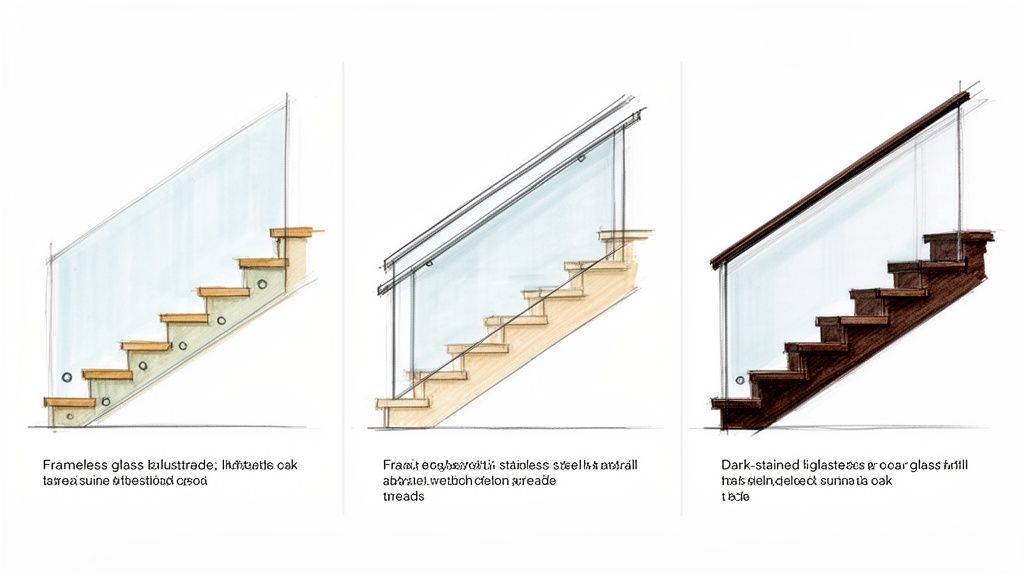
Frameless glass balustrades are the go-to for a truly minimalist look. These systems use thick, toughened glass panels that are engineered to be strong enough to stand on their own, often fixed directly into the stair treads or a hidden base channel. The result is a stunning, almost invisible barrier that lets light flood through and creates a fantastic sense of space. It’s a hugely popular choice for homeowners aiming for that clean, modern finish.
On the other side of the coin, framed or semi-framed systems use metal posts (usually stainless steel) or a continuous handrail and baserail to hold the glass panels securely. This approach can introduce a subtle industrial or architectural feel to the design, breaking up the expanse of glass and adding a different visual rhythm. Honestly, there's no right or wrong answer – it’s all down to the style you’re aiming for.
It's no surprise that these installations are becoming more common. The UK residential market for glass railings is a huge part of the £3.9 billion global sector, and it's set to grow by 7.80% each year through 2030. Here in Yorkshire and the North, where we all love to maximise natural light, residential projects make up over 50% of all installations. You can dive deeper into these market trends in this Cognitive Market Research report.
Once you’ve settled on the glass, it’s time to think about the wood. Oak is a timeless favourite for stair treads, and for good reason. It’s incredibly durable and has a beautiful, distinctive grain that provides a solid, reassuring feel underfoot – a gorgeous contrast to the lightness of the glass. Of course, other woods like ash or walnut can offer different colours and textures if you're looking for a specific tone.
The handrail is the final piece of the design puzzle. Here are a few of the most popular combinations we see:
To help you visualise these options, we've put together a quick comparison table.
| Design Style | Key Features | Best For | Considerations |
|---|---|---|---|
| Frameless Glass & Oak Treads | Minimalist, maximum light flow, seamless views. | Modern, open-plan homes where creating a sense of space is key. | Requires thicker, laminated glass for structural integrity. The "invisible" look is the main feature. |
| Framed Glass & Oak Treads | Structured, architectural look with visible steel posts. | Homes with industrial or contemporary accents. Can feel more traditional. | The posts become part of the design – finish (brushed vs. polished steel) is important. |
| Wood Handrail on Glass | Cohesive, warm, and traditional feel. | Family homes or properties where a softer, more classic aesthetic is desired. | The handrail adds visual weight to the top edge of the glass. |
| Steel Handrail on Glass | Sleek, modern, and high-contrast appearance. | Contemporary interiors looking for a sharp, clean finish. | The cool metal provides a tactile contrast to the warmer wood treads. |
This table should give you a clearer idea of how different elements work together to create a distinct overall style for your staircase.
The best designs are always born from thinking about how these elements will interact with each other and the space around them. Picture how the morning light will hit the glass, how the wood grain will pick up the tones in your flooring, and how the handrail will feel every time you use the stairs.
By carefully considering each of these components, you move from a vague idea to a specific, tangible design. Whether you’re searching for Glass Balustrades Yorkshire or planning a full staircase renovation in Newcastle, taking the time to get this combination right ensures your new staircase is a perfect reflection of you and your home.
When you’re imagining a stunning new glass and wood staircase, the design possibilities are thrilling. But before we get lost in the aesthetics, let's talk about the single most important element: safety. A beautiful staircase is only a true success if it’s completely secure for your family.
Thankfully, you don't need to become an expert overnight. UK Building Regulations provide a clear and sensible framework to ensure every part of your staircase is built to last and protect. For any project we undertake, whether it's fitting Glass Balustrades Yorkshire or a full installation in a Hull new-build, sticking to these rules is non-negotiable. It’s what gives our clients total peace of mind.
One of the first questions we often hear is, "Is the glass really strong enough?" The idea of a glass barrier can feel a little delicate, but the reality couldn't be more different. Modern glass balustrades are incredibly robust, using specially engineered safety glass that’s built for the job.
We exclusively use two types:
For residential staircases in the UK, regulations like BS 6187 dictate the use of glass thick enough (typically 12-15mm) to comfortably prevent falls. It’s this kind of reliable, engineered material that has been shown to significantly reduce the risk of accidents at home.
Building codes can seem a bit dense, but the core requirements for staircases are actually quite straightforward. They all boil down to preventing falls and making sure the structure is stable for everyone, from toddlers to grandparents.
"Safety isn't an add-on; it's the foundation of great design. The UK regulations ensure that the elegance of glass is matched by its structural integrity, providing a secure and beautiful feature for any home."
Here are the key points you need to be aware of:
Understanding these simple rules helps confirm that your new glass and wood staircase will be a safe, fully compliant, and lasting addition to your Sheffield or York home.
Right, let's talk about the investment. It’s easy to see a new glass and wood staircase as just another line item on a renovation budget, but that’s missing the point entirely. Think of it less as an expense and more as a long-term investment in your home’s character, its daily feel, and, crucially, its value on the open market.
The final figure on the quote will, of course, depend on your vision. Like any bespoke project, the details matter. A sweeping, curved staircase is a different beast to a simple, straight flight. The specific timber you choose—whether it's a classic oak or something more unique—and the complexity of the design all play their part in shaping the final cost.
To give you a clearer picture of what goes into the pricing, here are the main things that influence the final quote, whether you’re after Glass Balustrades Yorkshire or a full staircase transformation further afield:
A new staircase is a proper investment, so it pays to understand how it impacts your property's overall worth. It's well worth exploring resources on how home improvements can increase property value to get the full financial picture.
This is where a glass and wood staircase really comes into its own. It’s not just about the wow factor when you first see it; it’s about the lasting value it adds.
In the UK, a typical glass staircase installation sits somewhere in the £2,500 to £6,000 range, which is often very competitive with high-end, all-timber alternatives. The real kicker? Data shows that this kind of modern upgrade can bump up a property's value by as much as 10-15%, especially in sought-after urban spots like Leeds and Newcastle. Plus, unlike timber that needs sanding and refinishing down the line, glass just needs a clean. That alone can save Yorkshire homeowners an estimated £300-500 a year in maintenance.
By choosing a high-quality glass and wood staircase, you are not just spending money; you are investing it directly back into your property's equity while enhancing your daily living experience.
When you weigh up the stunning aesthetics, the boost in property value, and the minimal upkeep, it becomes a genuinely smart financial move. It's a modern feature that pays for itself over time, both in pounds and pence and in the simple, daily pleasure of living in a brighter, more beautiful home.
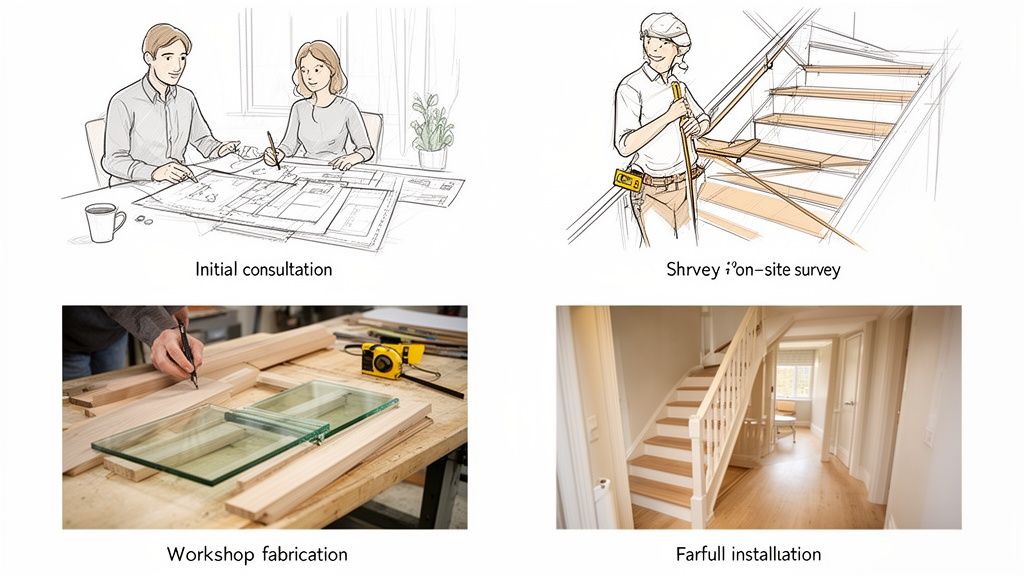
Turning an idea for a new staircase into a beautifully finished reality should be an exciting journey, not a stressful one. We've spent years refining our process to be as smooth and straightforward as possible, so you know exactly what to expect from our first chat to the final handover. Our job is to handle all the technical details, leaving you free to enjoy watching your vision take shape.
Before we jump into our specific steps, it's always a good idea to get a feel for the bigger picture. This comprehensive home renovation planning guide can be a great starting point to make sure every part of your project is considered. After all, a well-planned renovation is the key to a seamless installation.
We’ve broken down our approach into four clear, customer-focused stages. This isn't just a checklist; it’s a proven method that allows for painstaking attention to detail at every step, guaranteeing a perfect result with minimal disruption to your home.
Think of a recent project we completed in a terraced house in York. We took out a dark, enclosed wooden staircase and replaced it with a stunning oak and frameless glass design. The whole process, from their first call to our final polish, was handled with precision, turning a gloomy hallway into a bright, welcoming heart of the home.
Our streamlined service is designed from the ground up for your peace of mind. To get a better sense of our team's expertise, take a look at the work of our dedicated glass balustrade installers and see the quality for yourself.
Over our 20 years in the business, we've heard just about every question there is when it comes to glass and wood staircases. Here are a few of the most common queries we get from homeowners across Yorkshire and Newcastle, along with our straightforward, expert answers.
This is probably the number one question we're asked, and the answer always surprises people: it's far easier than you think. A quick spritz of standard glass cleaner and a wipe with a microfibre cloth is genuinely all it takes to shift fingerprints and keep it looking pristine.
Think about it this way: there's no sanding, no varnishing, no repainting. Just a simple wipe. Over the life of the staircase, that's a huge time-saver compared to maintaining traditional wooden spindles.
Absolutely, and in many ways, they're even safer. We exclusively use toughened or laminated safety glass that’s built to withstand the realities of a busy family home and meets strict British Safety Standards.
The solid panel design is a major plus point for parents. It completely removes the gaps found between traditional spindles, eliminating any risk of a small child or curious pet trying to squeeze through. It's a solid, reliable barrier.
A common misconception is that glass is fragile. The toughened safety glass used in a modern glass and wood staircase is engineered to withstand heavy impacts, making it a robust and reliable choice for a busy family home.
Yes, and this is one of our most popular services for homeowners looking for Glass Balustrades Yorkshire. A full staircase replacement can be a major upheaval, but a refurbishment offers a fantastic alternative.
We can modernise your entire hallway by carefully removing your old wooden spindles and fitting sleek, custom-made glass panels to your existing newel posts and handrail. It’s a project that delivers a massive visual transformation without the cost or disruption of starting from scratch.
Ready to transform your home with a stunning new staircase? The team at Glass Tech has over 20 years of experience creating bespoke glass and wood designs across Yorkshire and the North. Get in touch for a free, no-obligation consultation today!

A professional team of experts providing glass and glazing solutions covering the whole of Yorkshire & more...
Whether it's Leeds, York, North Yorkshire, Birmingham, Hull, Liverpool, Machester, Newcastle or Nottingham, get in touch to find out how we can help you with your bespoke glass project.