
If you own a stone terrace in Harrogate, a cottage outside Ripon, or a Victorian house in York, the window decision usually gets difficult very quickly. You want better warmth, better security, and less upkeep, but you don’t want the front of the house to look wrong.
That’s where flush casement windows tend to stand out. They solve a problem period homeowners in Yorkshire face all the time. You can keep the restrained, traditional look of older joinery without accepting the draughts, swelling timber, and poor sealing that often come with tired original units.
Done properly, they don’t shout “replacement windows”. They blend well into the architecture, which is exactly the point.
A flush casement window is simple in principle. When it’s shut, the opening sash sits flat within the outer frame, rather than projecting outward with a lipped edge.
That one detail changes the whole appearance of a house. On period homes, it gives a cleaner, more traditional line that suits older masonry, brickwork, and timber detailing far better than a bulky modern profile.
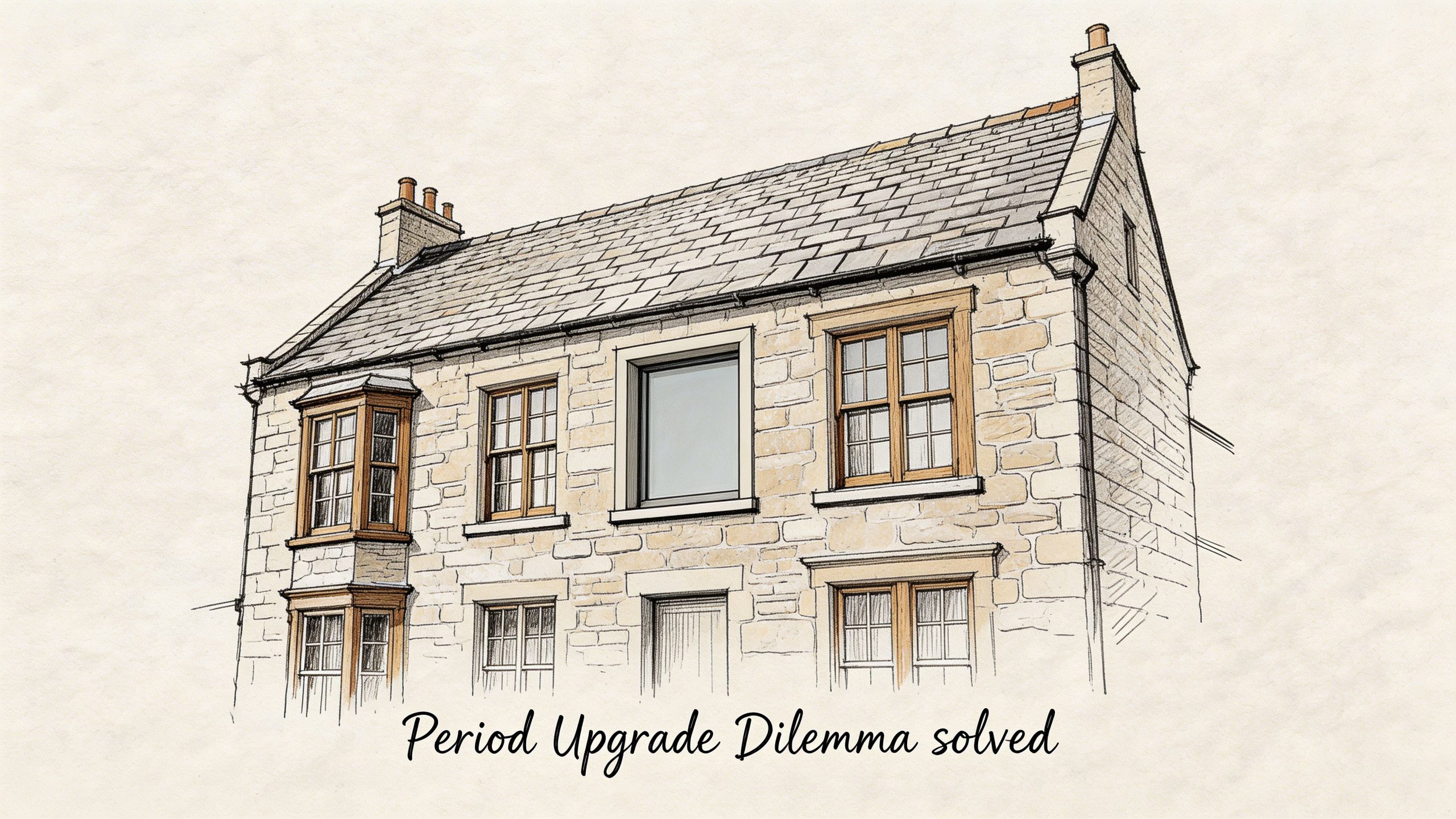
In practice, this is why they’re such a strong fit for homes across the North. A Georgian cottage in the Yorkshire Dales, a village house near Knaresborough, and a modest Victorian country property can all carry flush casement windows naturally. The profile doesn’t fight the building.
This isn’t a modern fashion dressed up as tradition. Flush casement windows became the dominant window type in British architecture by the second half of the 18th century, succeeding stone mullioned windows. They were particularly popular in cottages and rural dwellings throughout the Georgian period (1714-1837) and retained their popularity in country homes into the Victorian era, making them a defining feature of period properties across the UK, as noted by Bereco’s history of flush casements for period properties.
That matters when you’re replacing windows in an older home. Authenticity isn’t just about colour or glazing bars. It’s about proportion, face lines, and how the sash meets the frame.
Practical rule: If the building relies on understated detailing rather than grand ornament, flush casement windows usually look more at home than chunkier stormproof styles.
The appeal now is that you can pair a period look with modern manufacture. That’s why flush casement windows are popular not only in full restorations, but also in careful upgrades where owners want the house to feel right from the street.
What works well is matching the window to the age and character of the property. What doesn’t work is choosing a profile purely from a brochure photo without thinking about the surrounding stone, brick, lintels, and reveals.
On older Yorkshire homes, the best result is usually the least conspicuous one.
Material choice decides whether your windows feel appropriate, how much upkeep they need, and how straightforward planning discussions are likely to be. For period homes in Yorkshire and the North, there isn’t one universal answer.
A lot depends on whether the priority is strict authenticity, low maintenance, or slim modern sightlines.
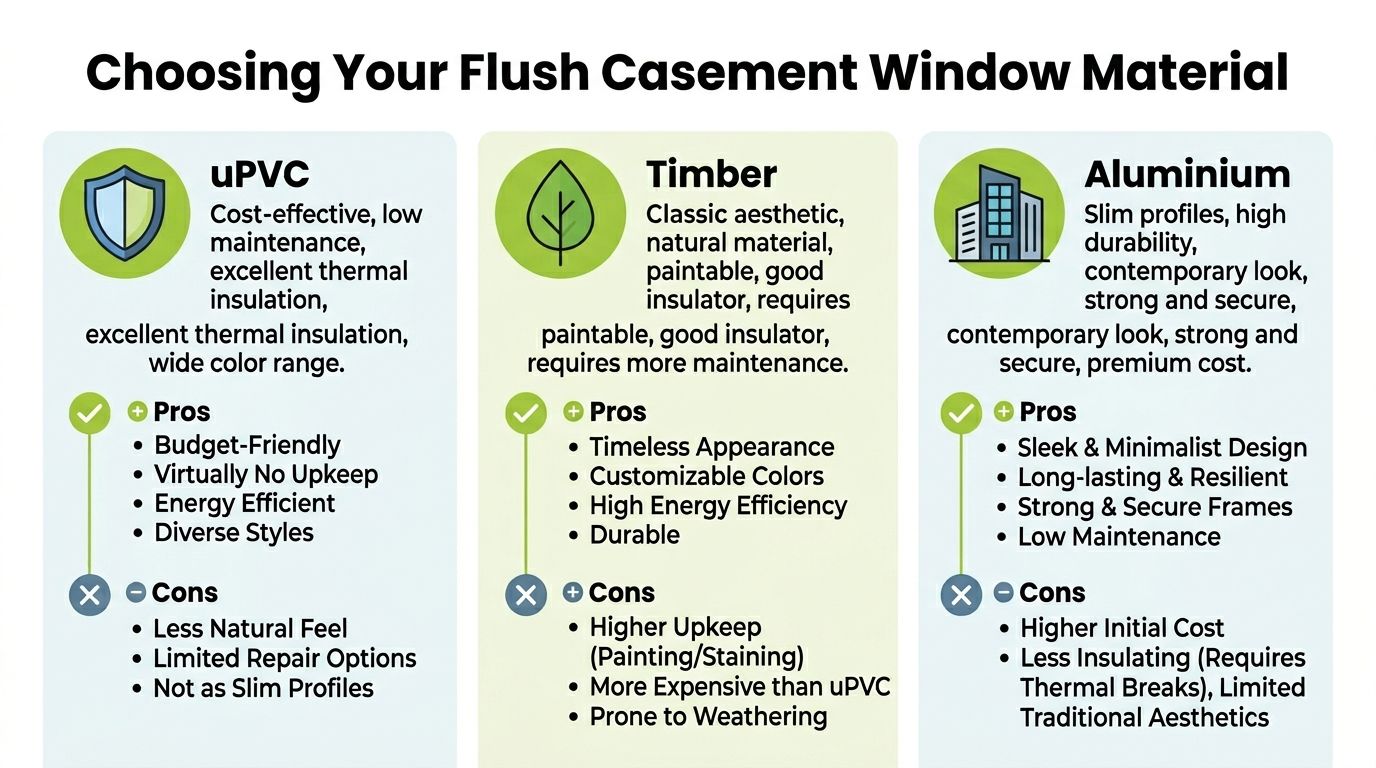
| Feature | Timber | uPVC | Aluminium |
|---|---|---|---|
| Best fit | Listed buildings and the most traditional homes | Most replacement projects where heritage style matters | Contemporary homes or period properties with a cleaner, sharper design language |
| Appearance | The most authentic surface and detailing | Can work well if the profile is carefully chosen | Crisp and slim, but visually more modern |
| Maintenance | Highest maintenance of the three | Low maintenance | Low maintenance |
| Planning suitability | Often strongest for strict conservation settings | Can be accepted in many heritage-sensitive settings if designed well | More dependent on the character of the building and local authority expectations |
| Feel in use | Warm, traditional, familiar | Practical and consistent | Solid, precise, premium feel |
| Budget position | Usually the highest commitment for ongoing care | Usually the most budget-friendly route | Premium option |
If the property is listed, or if the house has strong original detailing that would look wrong with anything synthetic, timber is often the right answer. It suits deep reveals, traditional bars, and older cottages especially well.
Its weakness is maintenance. Timber needs proper finishing and periodic care. If that routine gets ignored, the joinery suffers and so does the appearance.
For many homeowners, uPVC flush casement windows strike the best balance. You get the flat, heritage-led appearance with much less upkeep than painted timber.
This is usually the sensible route for period-style homes that aren’t under the strictest heritage control. The key is profile choice. A poor uPVC system still looks like plastic replacement windows. A well-designed one can sit very comfortably in older streetscapes.
If you’re comparing broader replacement options for the whole opening, including door sets and matching styles, it helps to review a practical range of windows and composite doors before deciding on material alone.
The mistake I see most often is choosing by frame material first and property style second. It should be the other way round.
Aluminium works best when the house can carry a slightly sharper edge. On some renovations in Leeds, Manchester, or Newcastle, that contrast looks deliberate and smart. On a softer stone cottage, it can feel too crisp.
That doesn’t mean aluminium is wrong for period settings. It means the surrounding architecture has to support it. If the property already mixes old structure with modern interventions, aluminium flush casement windows can look excellent.
A quick way to narrow the choice:
What usually fails is forcing one material onto every project. Period homes don’t respond well to generic decisions. The right material is the one that respects the building first and the sales brochure second.
The best flush casement windows improve a house without drawing attention to themselves. On older homes, that restraint matters more than people expect.
A flush profile creates a calmer exterior. You don’t get the projecting lip that can make replacement windows look heavier than the original architecture intended.
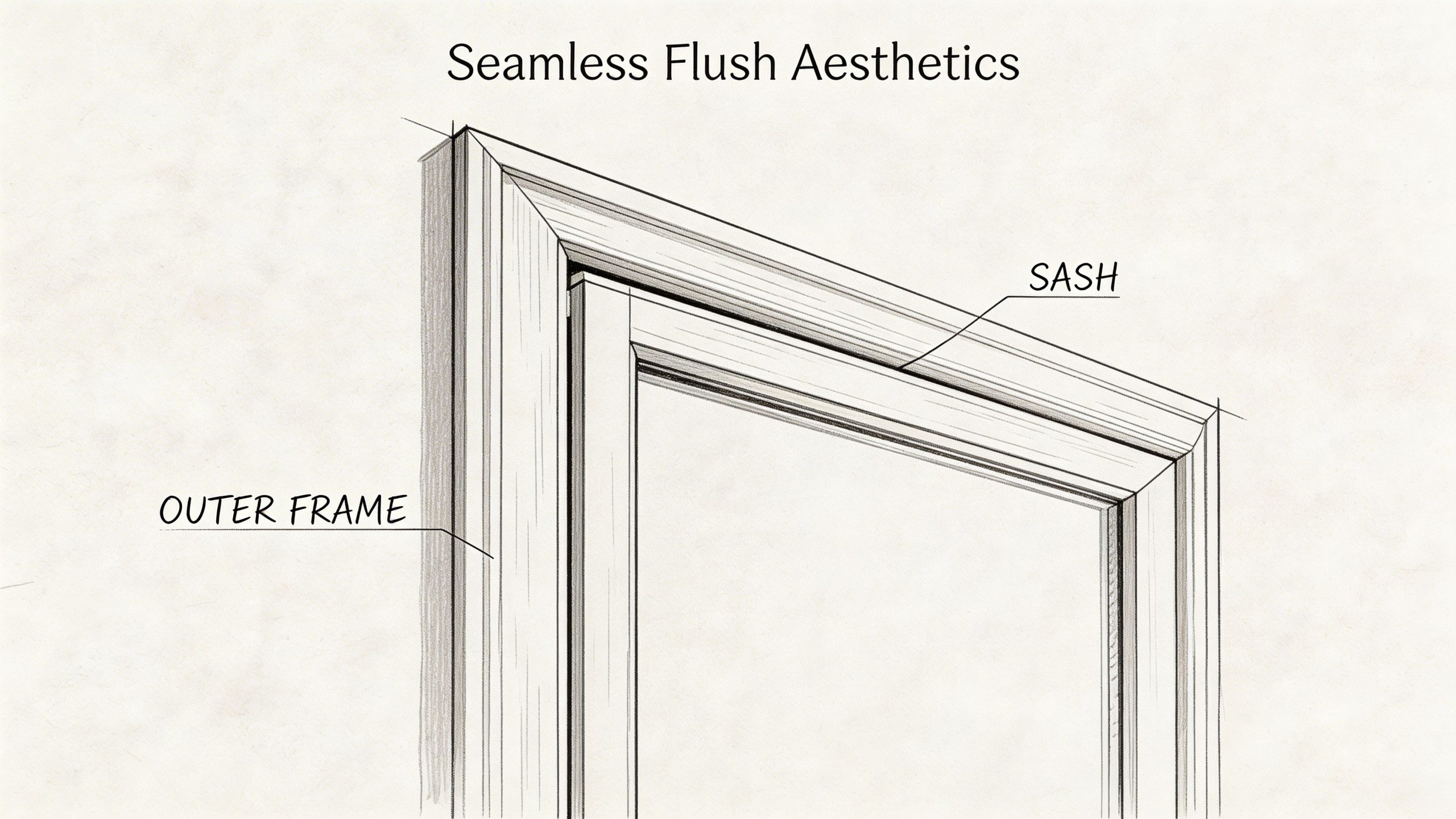
On a Yorkshire stone elevation, every line is already doing a lot of work. You’ve got reveals, lintels, cills, and often irregular masonry. A bulky window profile adds visual noise. A flush one sits more neatly inside that composition.
That’s why this style suits so many northern property types:
The visual benefit isn’t just “traditional”. It’s proportion. Flush casement windows usually look lighter and more settled in the opening.
Colour, glazing bar layout, hardware finish, and frame depth all matter. The wrong combination can make even a flush design feel artificial. The right one ties the window back to the age of the house.
On period properties, the eye notices mismatch faster than it notices quality. If the proportions are wrong, no finish will rescue it.
A close look at the sash-to-frame relationship helps explain why the design is so effective:
Some homeowners try to make an old house look “more period” than it ever was. That often leads to overworked detailing and fussy glazing patterns.
Flush casement windows work best when they support the building that’s already there. In Harrogate, York, and across West Yorkshire, the strongest projects usually keep things measured. Clean frame lines. Appropriate hardware. Nothing forced.
That’s a key aesthetic advantage. They preserve character without turning the house into a pastiche.
Period appearance used to mean compromise. With modern flush casement windows, it doesn’t have to.
The design helps because the sash closes tightly into the frame. That reduces unwanted air movement and gives the window a more controlled seal than many older units can manage.
With the right specification, modern flush casement windows with 28mm double glazing can achieve whole-window U-values as low as 1.2 W/m²K. That’s better than the Part L requirement of 1.4 W/m²K for new dwellings and 1.6 W/m²K for replacements in the same source material. The same specification is also described as delivering up to 20-30% better air permeability than standard casements, and for a typical semi-detached home in Harrogate that could mean £25-40 off annual heating costs, according to Allan Brothers’ flush casement technical guide.
That’s the technical side. In plain terms, the house feels less draughty, rooms hold temperature more evenly, and cold spots around the frame are reduced.
Most homeowners don’t buy windows because they enjoy discussing U-values. They buy them because the front bedroom is cold, the lounge gets draughts, or the existing frames rattle in winter wind.
A flush casement window solves those problems best when three things come together:
If one of those is weak, the brochure performance won’t show up in the house.
Better glazing can’t compensate for poor fitting. A badly installed premium window still performs like a problem.
Security is another area where modern flush casement windows are far ahead of older joinery. Contemporary systems commonly use multi-point locking, which secures the sash at several points rather than relying on a single catch.
That gives a tighter close and better resistance in daily use. Hardware choice matters here. If you’re comparing window and door security components more broadly, this explanation of a sash lock is useful because it clarifies how locking mechanisms differ and where each type is typically used.
In Yorkshire and the North, windows don’t just need to look right on a still summer day. They need to cope with exposed sites, driving rain, and repeated temperature swings.
The flush format works well because it combines heritage styling with an effective seal and modern hardware. What doesn’t work is treating performance as an optional upgrade. On a period home, comfort and appearance need to be solved together.
If your property sits in a conservation area, the window choice is only half the job. The other half is getting the specification and approval route right.
Here, many homeowners encounter difficulties. They choose a product that looks acceptable in isolation, but not one that satisfies both planning expectations and current performance standards.
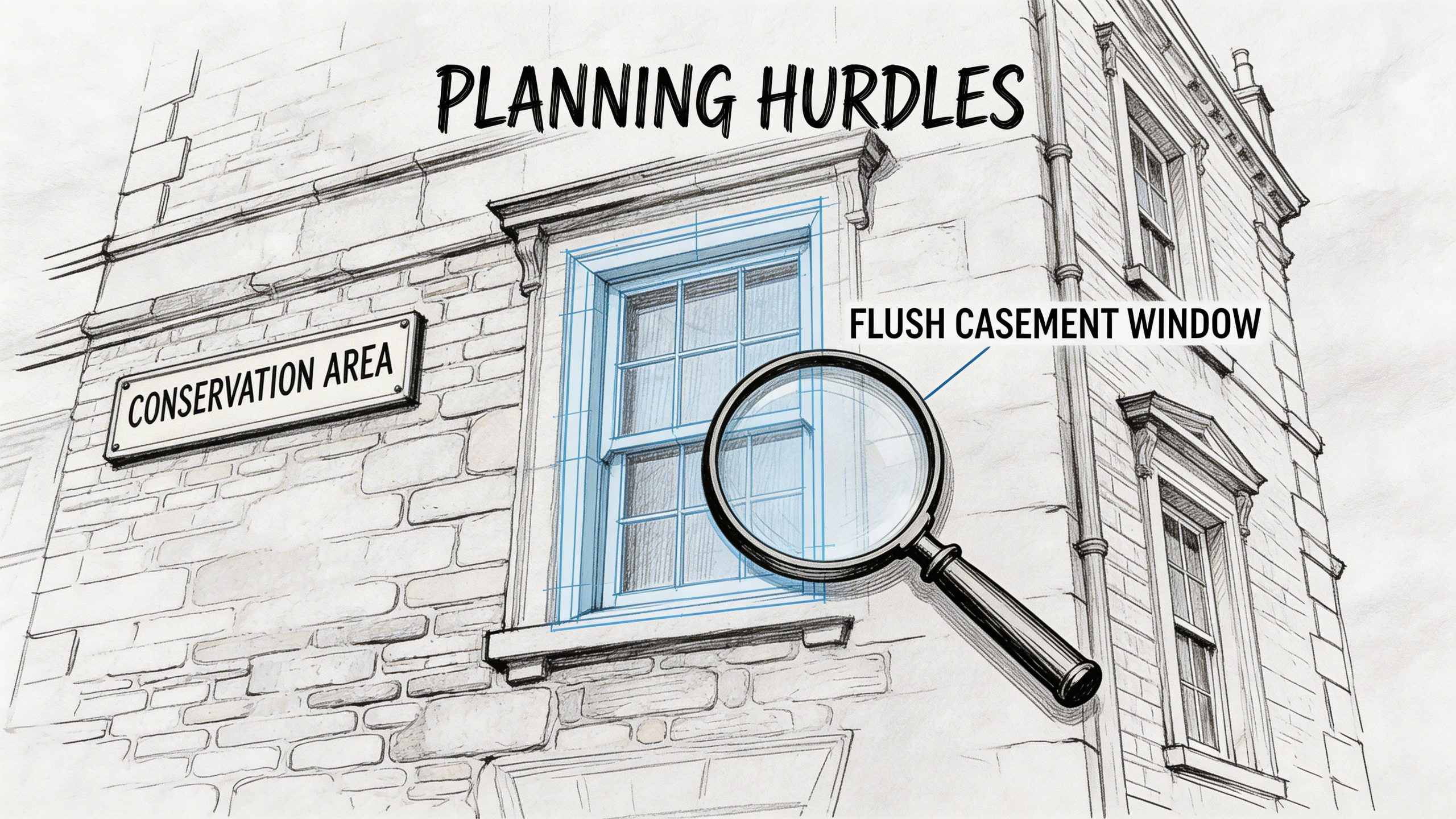
UK Building Regulations Part L (2021 updates) require windows to have a U-value of 1.4 W/m²K or less. This presents a challenge in conservation areas like those in Harrogate or York, where slimmer frames are required. This has led to a rise in bespoke solutions like using slimline double glazing or high-performance secondary glazing to meet regulations without altering the property's historic appearance, as explained in this flush casement guidance on planning and compliance.
That tension is real. Planning officers often want traditional sightlines. Building regulations require modern thermal performance. The right answer is usually a carefully customized specification rather than an off-the-shelf unit.
If you’re replacing windows in a heritage-sensitive property, take it in this order:
Check the property status
Confirm whether it’s listed, in a conservation area, or affected by an Article 4 Direction.
Match the window to the building
The profile, frame depth, opening style, bar layout, and finish all need to relate to the age of the house.
Resolve thermal compliance early
Don’t leave glazing decisions until the end. Part L compliance can affect frame choice, sightlines, and whether a secondary layer is needed.
Speak to the local authority before ordering
A short early conversation can prevent a costly wrong turn.
For some older properties, especially where the original external appearance must remain almost untouched, secondary glazing becomes the practical answer. It can improve thermal performance while preserving the existing look of the main window opening.
For homeowners exploring that route, it’s worth reviewing specialist options for secondary glazing because it often solves the compliance problem without forcing a visually heavier replacement frame.
In conservation work, the smartest solution is often the least visible one.
Flush casement windows are often viewed favourably because their face line is closer to traditional joinery than many stormproof replacements. That doesn’t guarantee approval, but it usually gives you a better starting point.
What doesn’t help is trying to push a generic modern window into a heritage context and hoping the colour will disguise it. Planning officers look at shape, depth, detailing, and how the frame sits in the opening. They should.
The cost of flush casement windows varies widely because the final price isn’t driven by one thing. Material, glazing choice, finish, ironmongery, access, and whether the property needs bespoke heritage detailing all affect the figure.
That’s why headline prices can be misleading. A simple replacement in a straightforward opening is one job. A conservation-led installation in an uneven stone property is another.
Cheap windows can become expensive if they age badly, need frequent remedial work, or look out of place from day one. Better flush casement systems usually justify themselves over time through durability, lower upkeep, and a more convincing finish.
That durability has improved significantly. Modern flush casement windows now include advanced features such as multi-point locking systems and durable modern finishes, with many installations lasting over 40 years with minimal maintenance, according to Residence Collection’s overview of modern flush casement development.
Care depends on material, but the routine is generally straightforward:
External cleaning is part of ownership too, especially on taller elevations. If you want a realistic guide to the real cost to clean windows, that breakdown is useful for budgeting routine maintenance sensibly rather than guessing.
The right way to think about flush casement windows is as a long-term building upgrade, not just a purchase. If they suit the house, perform well, and don’t become a maintenance burden, they usually prove their value over years rather than months.
For homeowners in Harrogate, Yorkshire, and the wider North, local knowledge matters. Period homes in York, Leeds, Hull, Manchester, Newcastle, and the surrounding towns don’t all follow the same pattern, and neither do their planning pressures or architectural details.
Glass Tech brings a regional understanding that’s difficult to fake. That includes considerations for older stone properties, conservation expectations, and the practical side of fitting glazing products into homes that rarely have perfectly square openings or straightforward access.
The other advantage is breadth. A company that already works across specialist glazing, secondary glazing, windows, and detailed residential installations tends to approach a period property more carefully. That matters when one decision affects appearance, comfort, and compliance at the same time.
If you want to understand the background, standards, and local approach behind the business, the best place to start is the Glass Tech about us page.
They can, depending on the frame system and the property. On period homes, the main issue isn’t just whether triple glazing fits. It’s whether the added thickness affects sightlines, frame proportions, and planning acceptability.
No. They suit period homes particularly well, but they can also work on new builds and modern renovations where a flatter, more refined external look is preferred.
The main visual difference is that flush casement windows sit level within the frame, while stormproof windows project outward with an overlapping lip. Flush designs usually look more traditional. Stormproof styles can look more overtly modern.
Sometimes, yes. But listed buildings need a more cautious approach. Material, glazing detail, bar layout, and the extent of replacement all matter. Approval depends on the property and the local authority, not just the product label.
That depends largely on material. Timber needs more regular care. uPVC and aluminium are lower maintenance, but all windows still benefit from cleaning, seal checks, and occasional hardware inspection.
In many cases, yes. If the house relies on traditional proportions and understated detailing, flush casement windows usually preserve the character of the façade far better than bulkier alternatives.
If you’re weighing up flush casement windows for a period home in Harrogate, Yorkshire, or across the North, Glass Tech can help you assess the style, specification, and practical route for your property. Whether you need advice on heritage appearance, secondary glazing, or a full replacement project, the team offers experienced guidance grounded in real installation work.

A professional team of experts providing glass and glazing solutions covering the whole of Yorkshire & more...
Whether it's Leeds, York, North Yorkshire, Birmingham, Hull, Liverpool, Machester, Newcastle or Nottingham, get in touch to find out how we can help you with your bespoke glass project.